
Edgar Degas had limited formal training in painting, studying at the École des Beaux-Arts in Paris for a year before he went to Italy for three years from the summer of 1856. On his return to Paris, where he set up his first studio in 1859, he followed convention and worked mainly in oils.
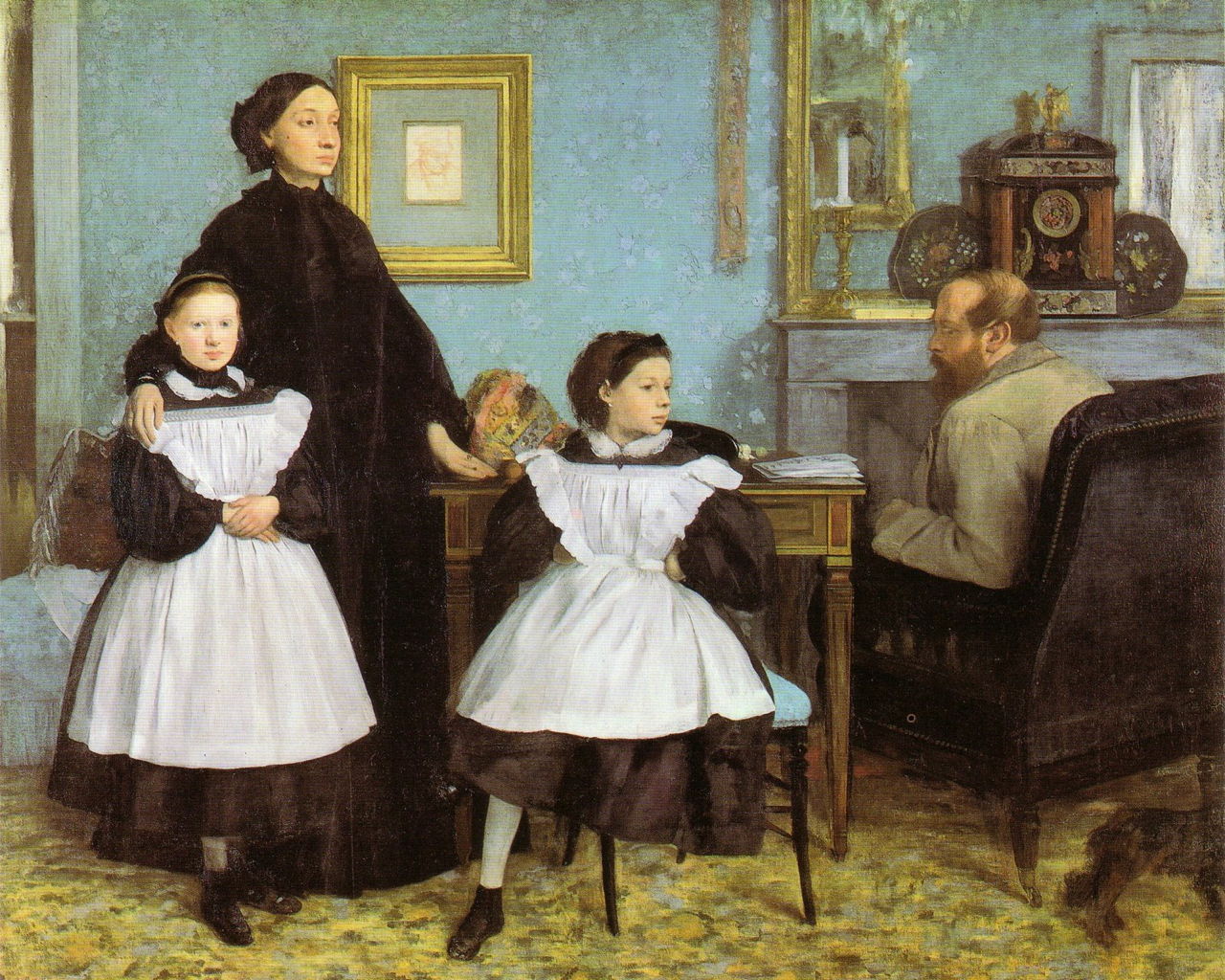
Degas painted some small portraits early in his career, but his first major work is that of The Bellelli Family, which he laboured over for nearly ten years between 1858-67. He started this when he was staying with the family in Naples.

He also made several landscape sketches, some in oil on paper, others like this View of Naples (1860) in watercolour. None seems to have been developed into anything more substantial, though.
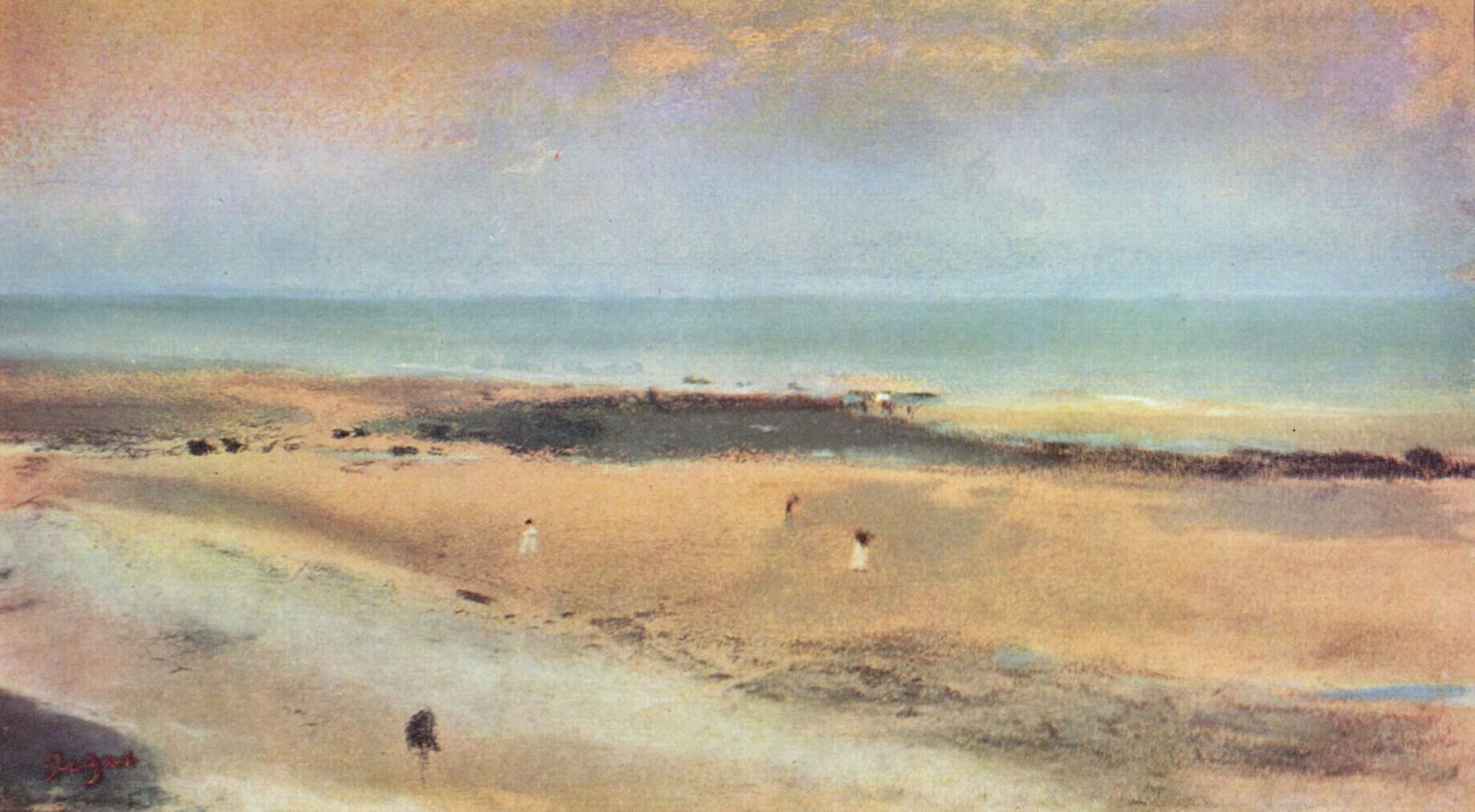
In the summer of 1869 he travelled to the Normandy coast of France, where he visited Édouard Manet and painted some landscapes in pastels. Among those is Beach at Low Tide (c 1869-70) emphasising its flatness and emptiness. He then seems to have become more experimental in his technique, for example wetting his pastels to apply them with a brush, and combining them with print-making techniques he had been teaching himself. Among his goals seems to have been to reduce the amount of binder in his paint in a bid to apply pure colour.

From the mid-1870s in his paintings of the Ballet at the Paris Opéra, here from 1877, Degas experimented with another method of reducing the binder in his paint layer, by applying pastel over a monotype. He first created this painting on a non-absorbent surface, and while that was still wet used that to make a print on paper, which he completed by applying soft pastel on top.

As his ballet paintings progressed to smaller groups, they focussed more on their form and movement, as in Danseuse basculant (Danseuse verte) (Swaying Dancer, Dancer in Green) (1877-79). This is painted in a combination of pastel and gouache. By this time he had experimented technically in three main areas: the use of peinture à l’essence, oil paint with the drying oil largely removed, a rich variety of wet and dry techniques with soft pastels, and print-making, in particular his re-introduction of the monotype.
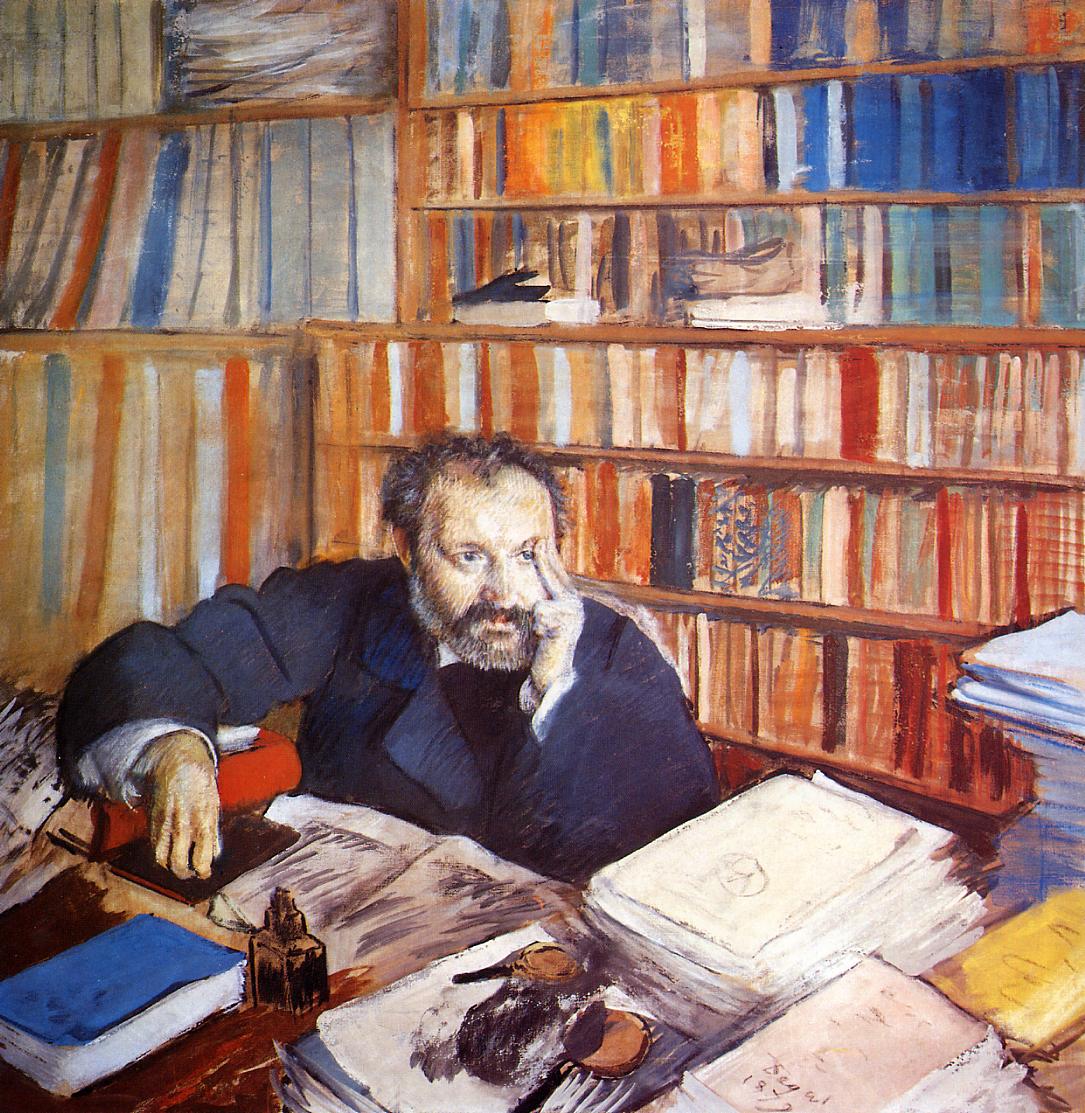
Degas’ Portrait of Edmond Duranty (1879) was unusually painted in gouache with pastel on linen. His friend Duranty is clearly thinking over his next piece of writing, which could have been as influential as his essay The New Painting, published in 1876, often used as a benchmark against which to compare Degas’ work.
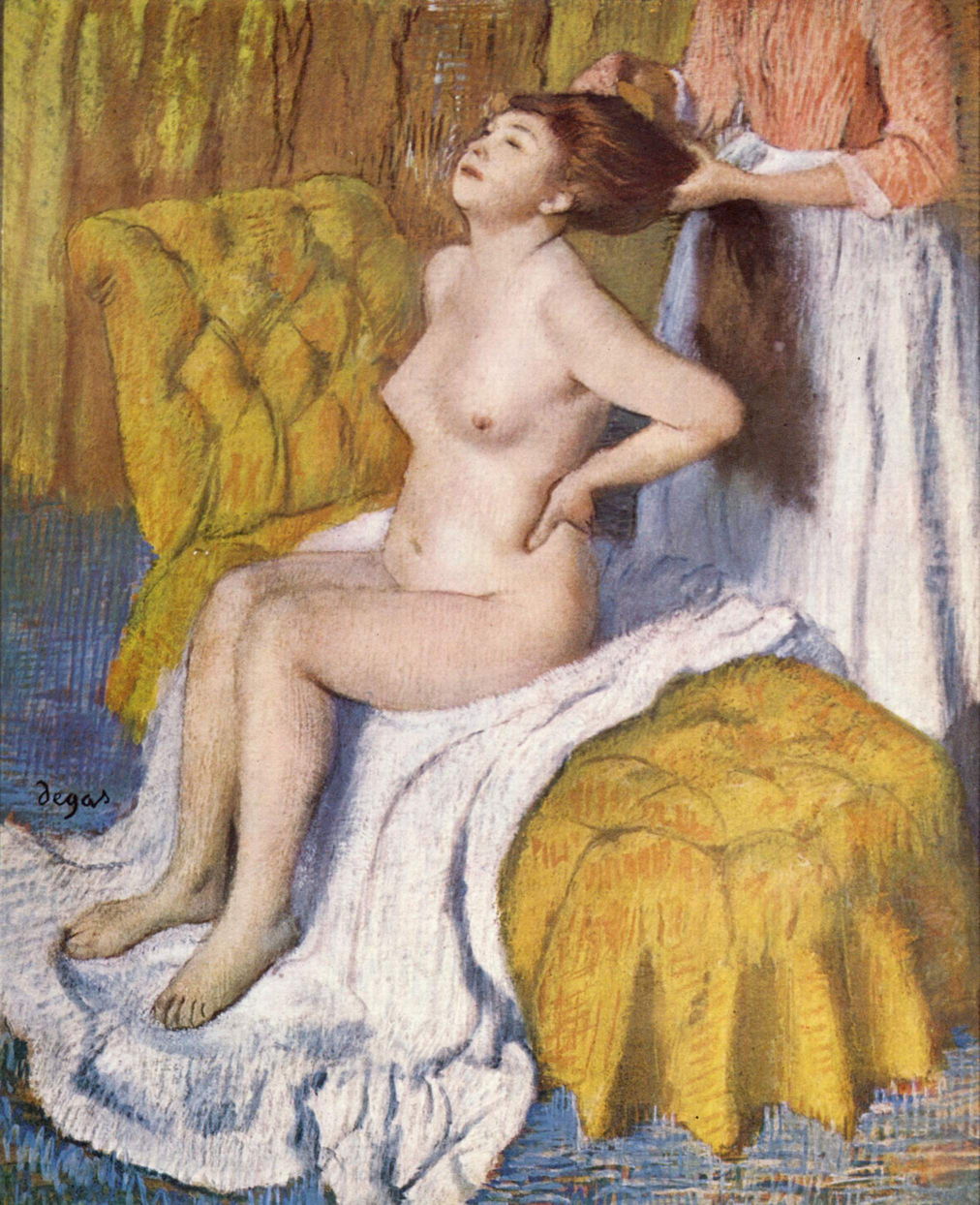
This pastel painting of a Woman Having Her Hair Combed from about 1885 shows some of the textures he created using his techniques, from smooth flesh to the frizz of hair.

This later period of his work also brought an increasing number of paintings of women bathing and dressing, culminating in pastel paintings formed from vigorous vertical or diagonal strokes, such as Woman Sponging Her Back (c 1888-92). The contrast with the previous work is stark.

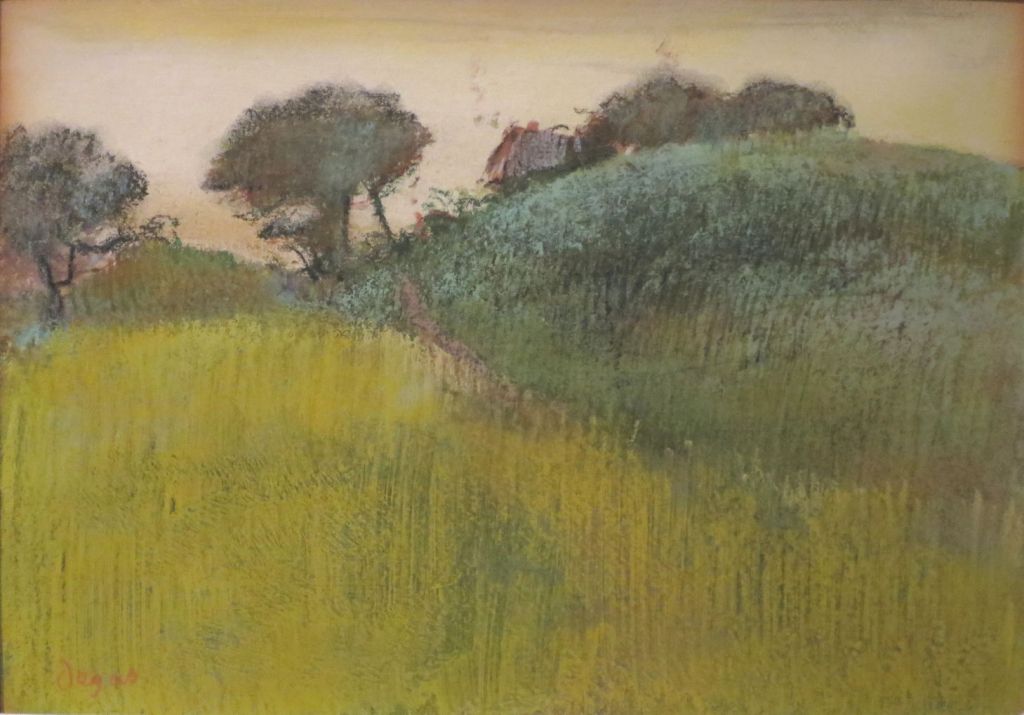
Degas’ late landscapes are based on similar combinations of media, as in his Wheat Field and Green Hill from the early 1890s, in which he applied soft pastels on a monotype using oil-based ink or paint.

His remarkable composite work, made using peinture à l’essence, of a Dancer Fastening Her Shoe (c 1893-98), brings together four different views of the same dancer fastening her left shoe. This may have been inspired by Muybridge and Marey’s composite photos of human motion, and may well have reflected his own experiments in photography.

Degas’ gelatin silver photographic print of After the Bath, Woman Drying Her Back from 1896 is one example of his many experiments with photography.
Most of the other more orthodox French Impressionists were remarkably conservative in their choice and use of media, sticking to oil on canvas for almost their entire careers. Degas was the odd man out, not just for what he painted, but for how he did so.
 The Eclectic Light Company