
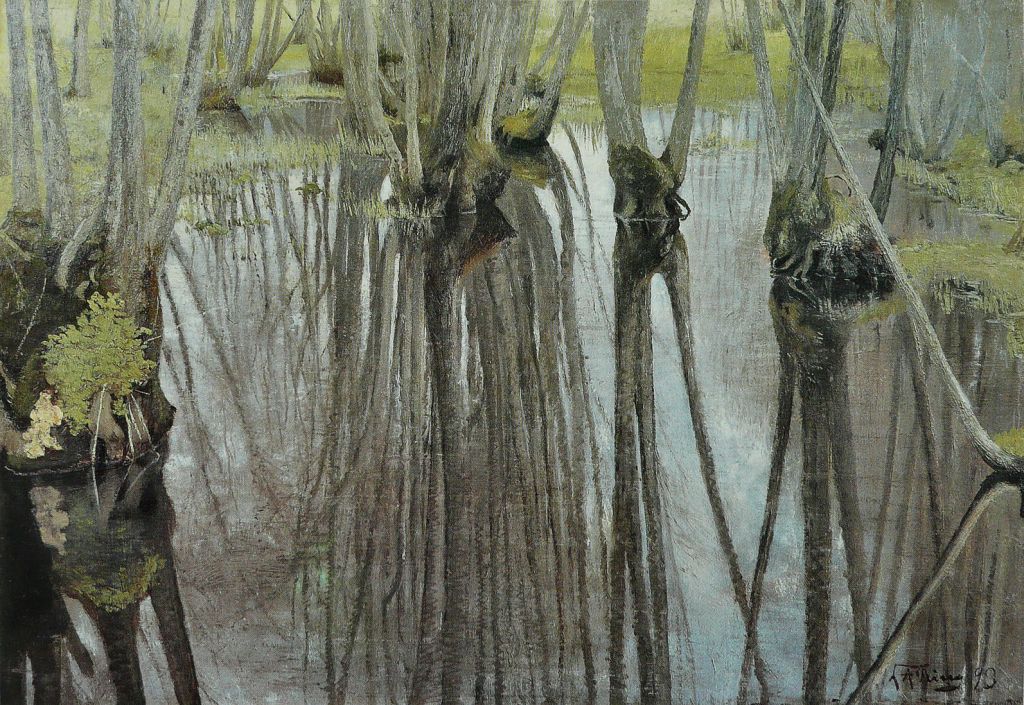
Many humans and animals are fascinated by reflections. Whether they’re images of themselves seen in mirrors, or an inverted copy of a landscape seen on the surface of a lake, we can spend embarrassingly long periods just staring at them. For visual artists, those reflections have been a technical challenge and, for those who rise to it, an opportunity to display their painting skills. This series sets out to describe and illustrate how, from the early Renaissance to the twentieth century, masters have painted reflections.
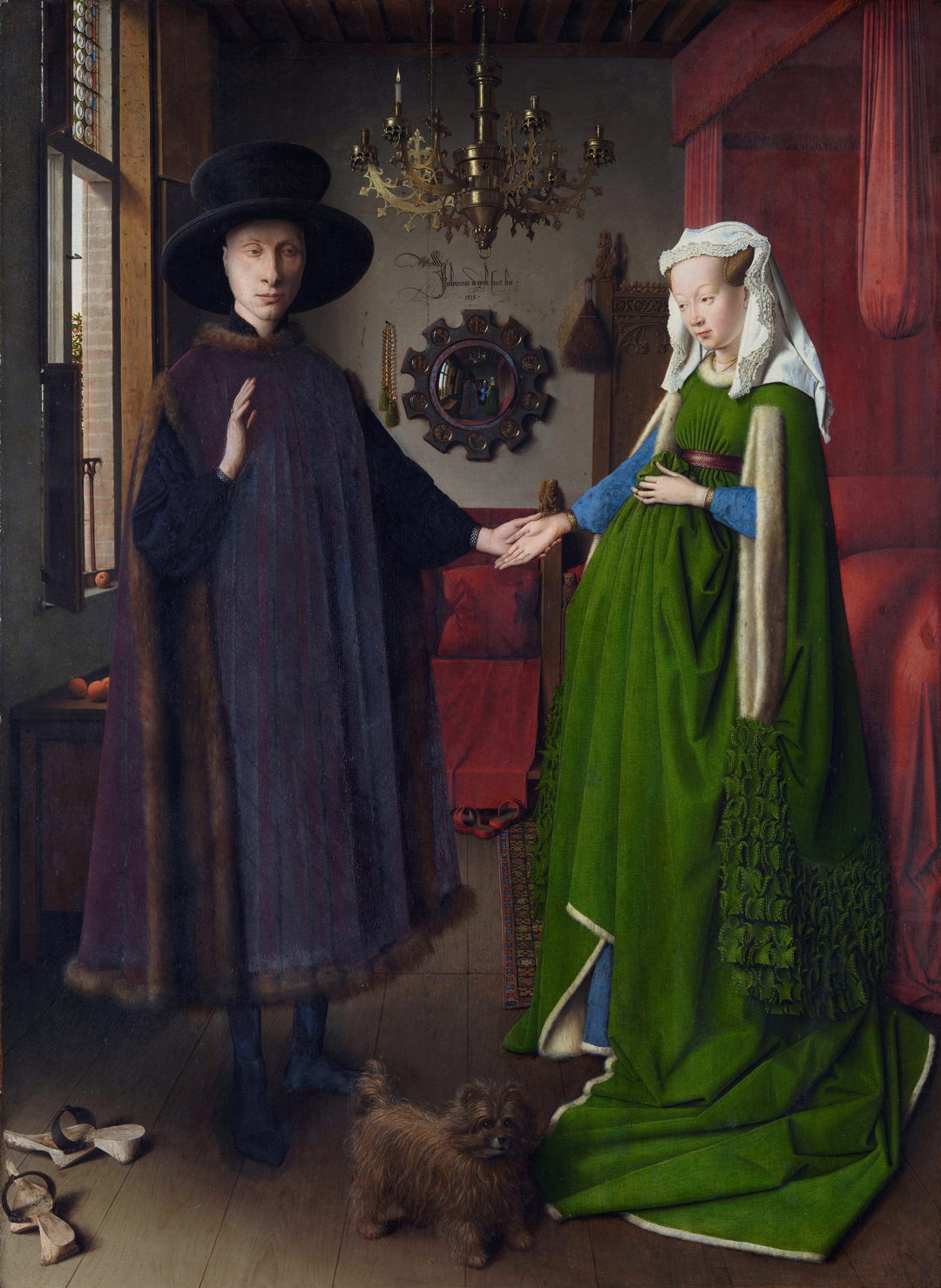
Optical effects are one of the central themes in the Northern Renaissance, as seen in Jan van Eyck’s most famous painting The Arnolfini Wedding (or similar variations), completed in 1434. Between this newly-wed couple holding hands next to their marital bed, in the midline of the painting is a prominent circular convex mirror. The reflection is probably the first example of mirror-play in European art, as it shows a view of the room looking in the opposite direction, past the couple to another two figures, who might be the artist and another.


Look in the landscape behind Jan van Eyck’s Madonna of Chancellor Rolin, probably painted the following year, and you’ll see one of the earliest examples of the meticulously accurate depiction of reflections on water.

In some paintings, reflections are essential to their narrative. Caravaggio’s brilliant Narcissus of 1594-96 uniquely combines chiaroscuro with reflections to provide just enough visual clues to tell this myth so effectively.
The optics of reflections appear to have confounded some painters, while others have deliberately flouted physics for effect, in this case what has become known as the Venus Effect.

Although often illustrated by one of Titian’s paintings of Venus, the canonical example must be Velázquez’ Venus at Her Mirror, also known as The Toilet of Venus or the Rokeby Venus, from 1644-48. It shows the goddess Venus, whose face is blurred in a false reflection in a mirror being held by her son Cupid. The theme was common, seen in paintings by Titian and Rubens, with Venus sat upright. Giorgione and others had posed her reclining and facing the viewer, making her pose here unusual. Most other paintings of Venus set her in a landscape: here she rests on luxurious even sensuous fabrics.
No matter how convincing her face might appear in the mirror, a moment spent placing yourself in the same position confirms that the image in the mirror is wholly imaginary, and optically incorrect.
Pierre Bonnard is among the most prolific and inventive of mirror-players.
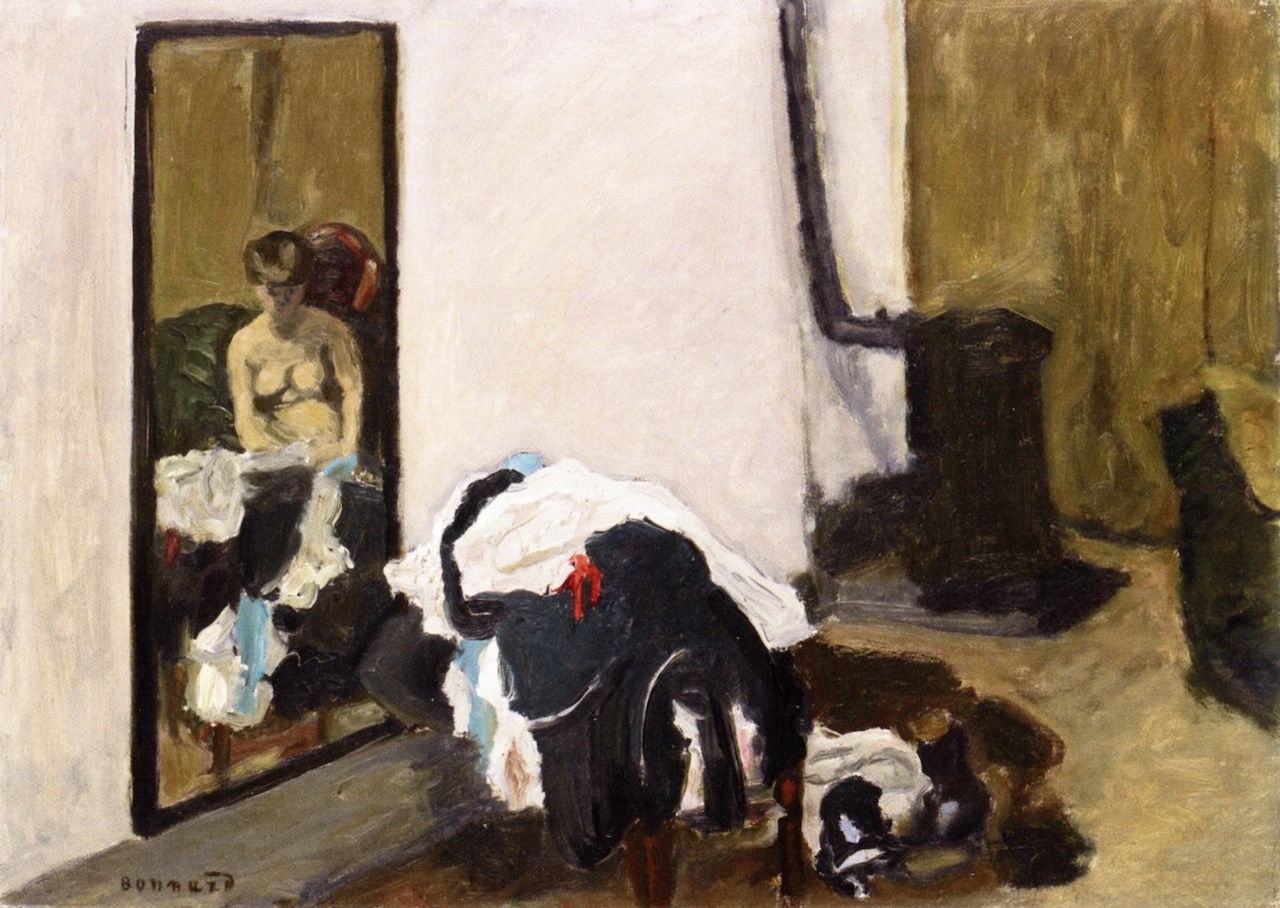
In his Woman Getting Dressed from 1906, it’s the mirror at the left that reveals the subject, who is sat beyond the right edge of the painting, getting dressed. Venus has here become a pile of discarded clothing.
As landscape painting became popular, many of the most proficient sought out locations where they could demonstrate their skills at getting them right. Others used reflections as their theme.

In the last two years of Vincent van Gogh’s life, he painted this landmark nocturne Starry Night over the Rhône (1888) with its many shimmering reflections.
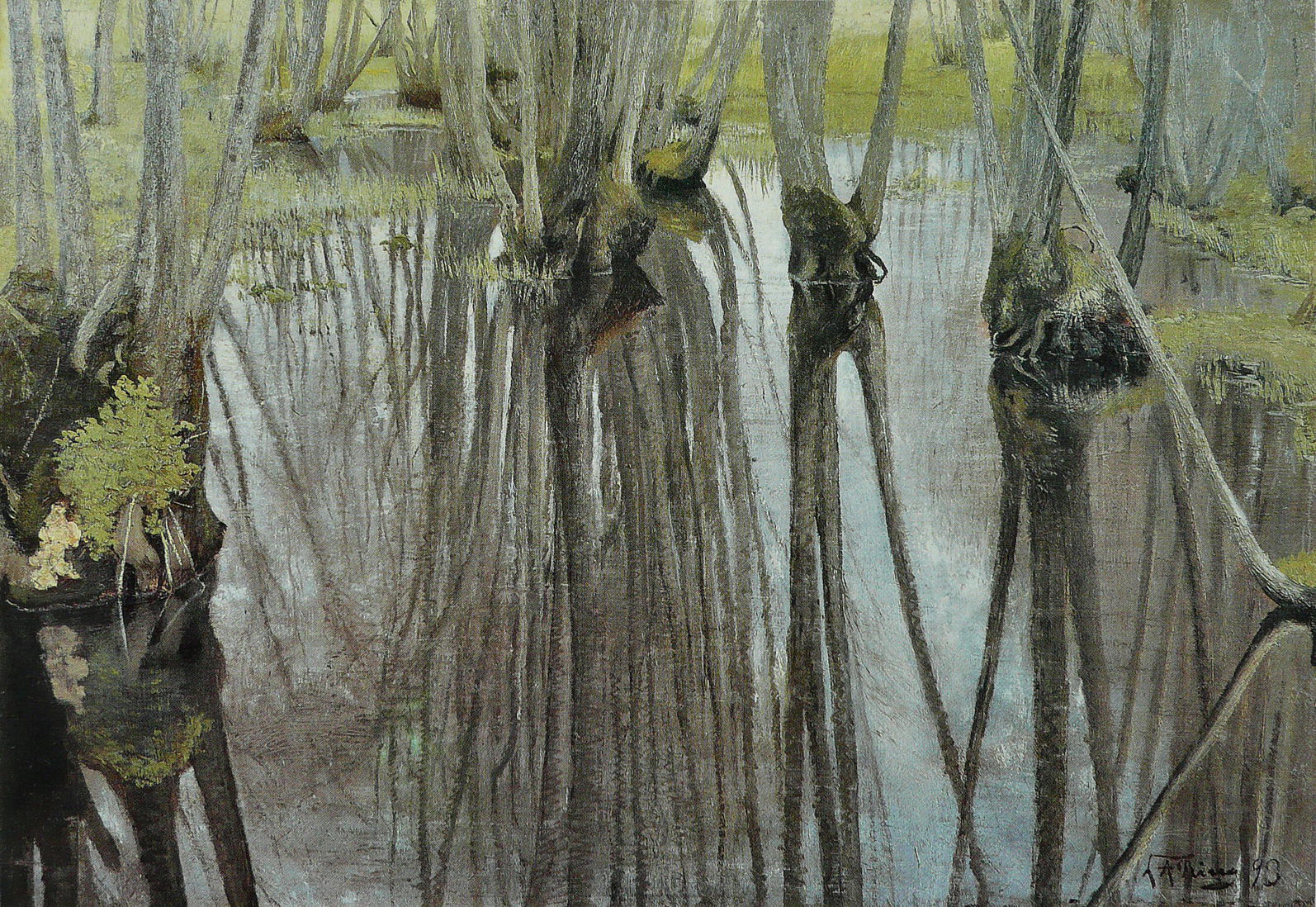
Alder Trunks from 1893 is one of Laurits Andersen Ring’s finest landscapes, and has earned its place in the Danish Royal Collection. He shows these old coppiced alders almost entirely in reflection.
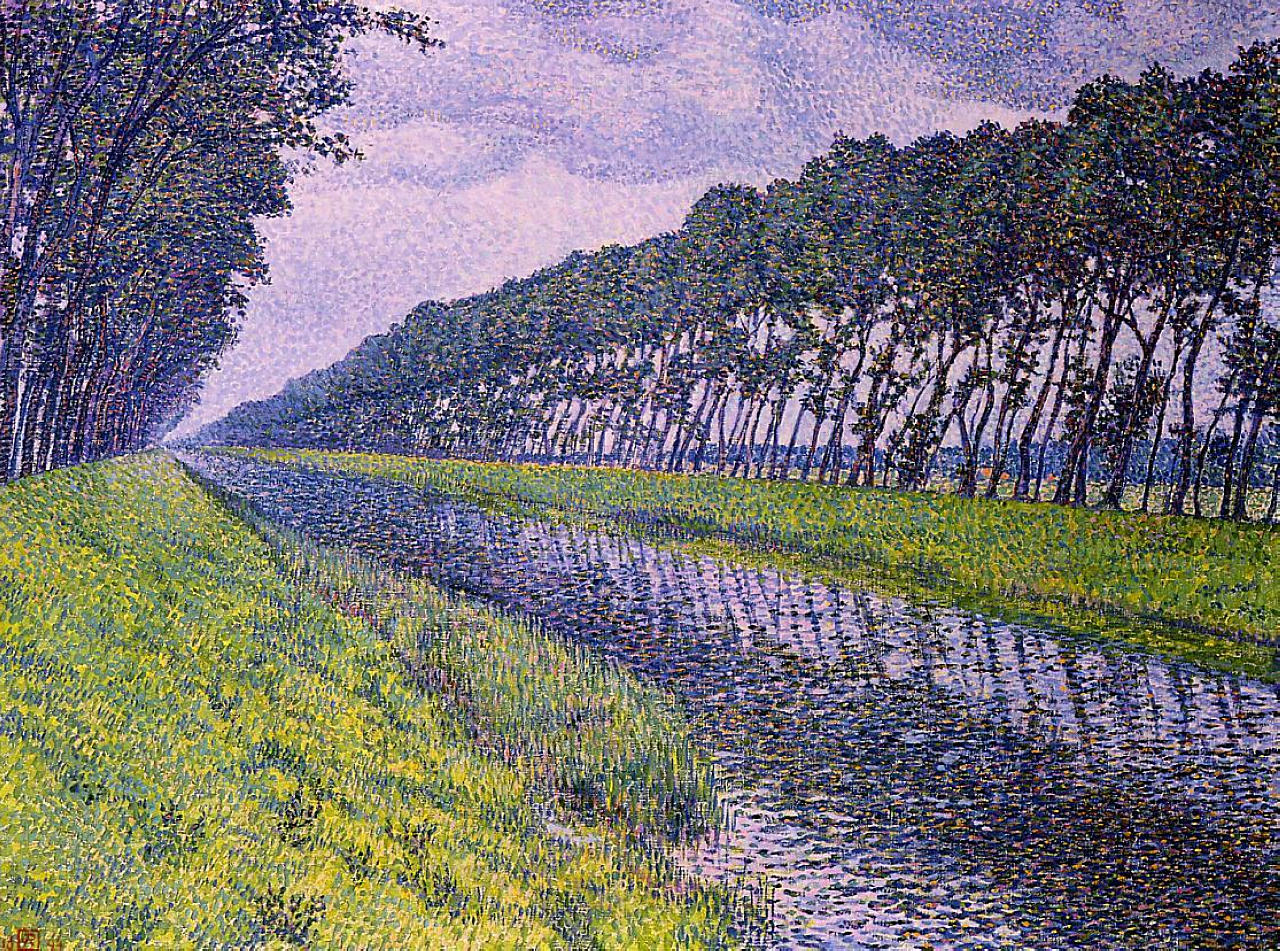
Théo van Rysselberghe’s eye-catching geometry in his Canal in Flanders (1894) combines radical perspective projection, intense rhythm and meticulous broken reflections.
Reflections are also used by some of the Surrealists.
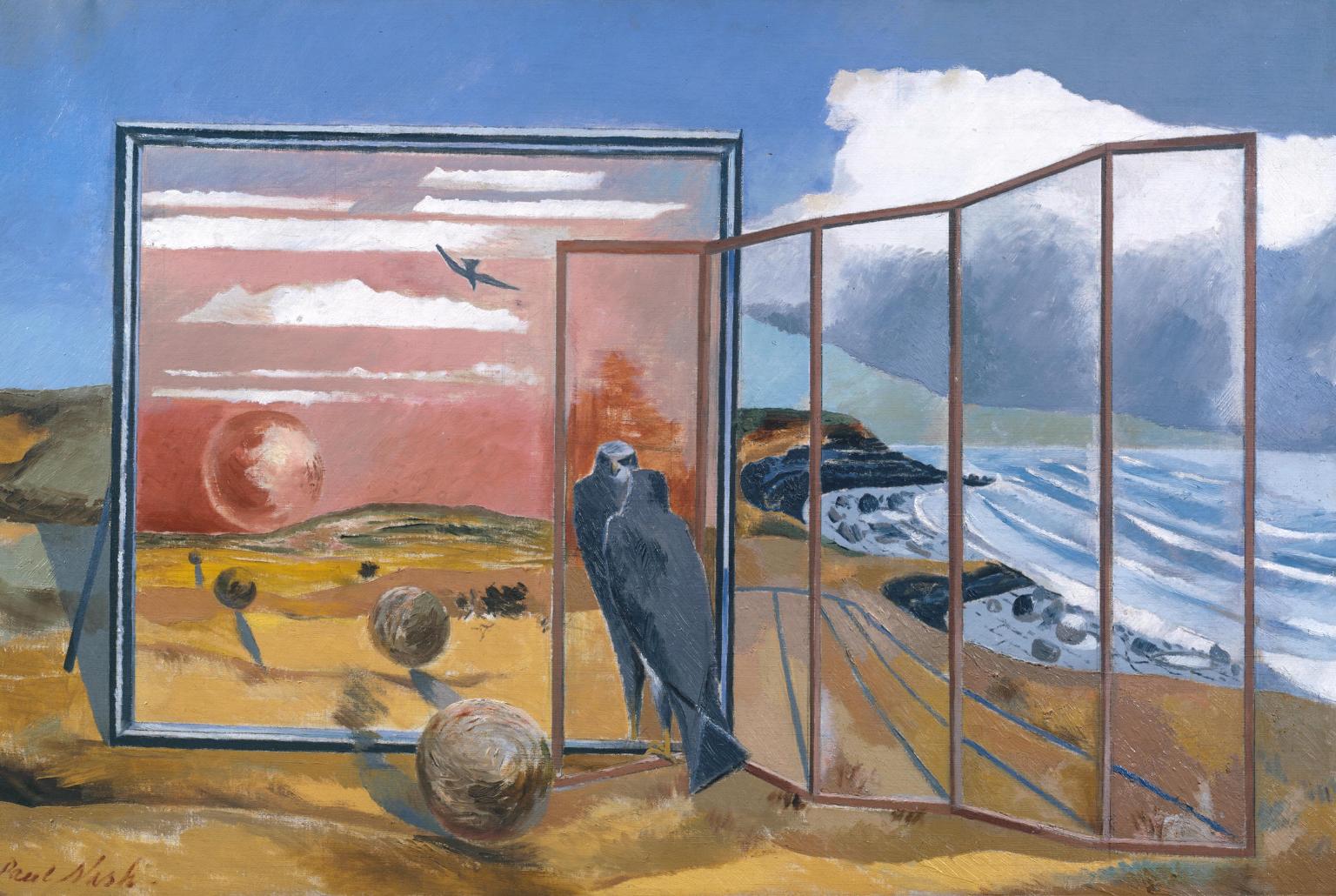
Paul Nash’s Landscape from a Dream (1936-38) was inspired by Freud’s theories of the significance of dreams as reflections of the unconscious. This collection of incongruous objects is gathered on the Dorset coast, a landscape Nash associated with the praeternatural. Dominating the scene is a large framed planar mirror, almost parallel with the picture plane. Stood at the right end of the mirror is a hawk staring at its own reflection, which Nash explained is a symbol of the material world. To the left, the mirror reflects several floating spheres, referring to the soul. The reflection shows that behind the viewer is a red sun setting in a red sky, with another hawk flying high, away from the scene.
I hope you’ll join me in the reflections to come in this series.
 The Eclectic Light Company