
Many of the masters were content to paint with the same media that they originally learned in their youth, but some pushed their experimentation beyond mere technique. Among the most experimental of them all is Francisco Goya (1746–1828), who tried three media that were unusual if not almost unique. This article shows examples of each.
Oil on tinplate
Painting with oil paint on a copper sheet was well established, if uncommon by the time that Goya trained, and the use of tinplate as a support was more unusual among masters of his standing. Tinplate consists of a thin sheet of wrought iron or steel ‘pickled’ in acid and coated with a thin layer of tin to impede rusting. Although an ancient practice, production of tinplate at scale didn’t occur until the seventeenth century, and later became widely used for the production of ‘tin’ cans.
When Goya was convalescing from his serious illness, in 1793, he painted a series of about fourteen works, most of which are on tinplate, and sent them to a connoisseur to be shown to the members of the academy. I show here just four of them.

The Strolling Players (1793) is the lightest of these, showing a small cast of itinerant actors in the commedia dell’arte of the time. This appears to be set on the bank of the River Manzanares in Madrid, with a packed audience behind its stage.
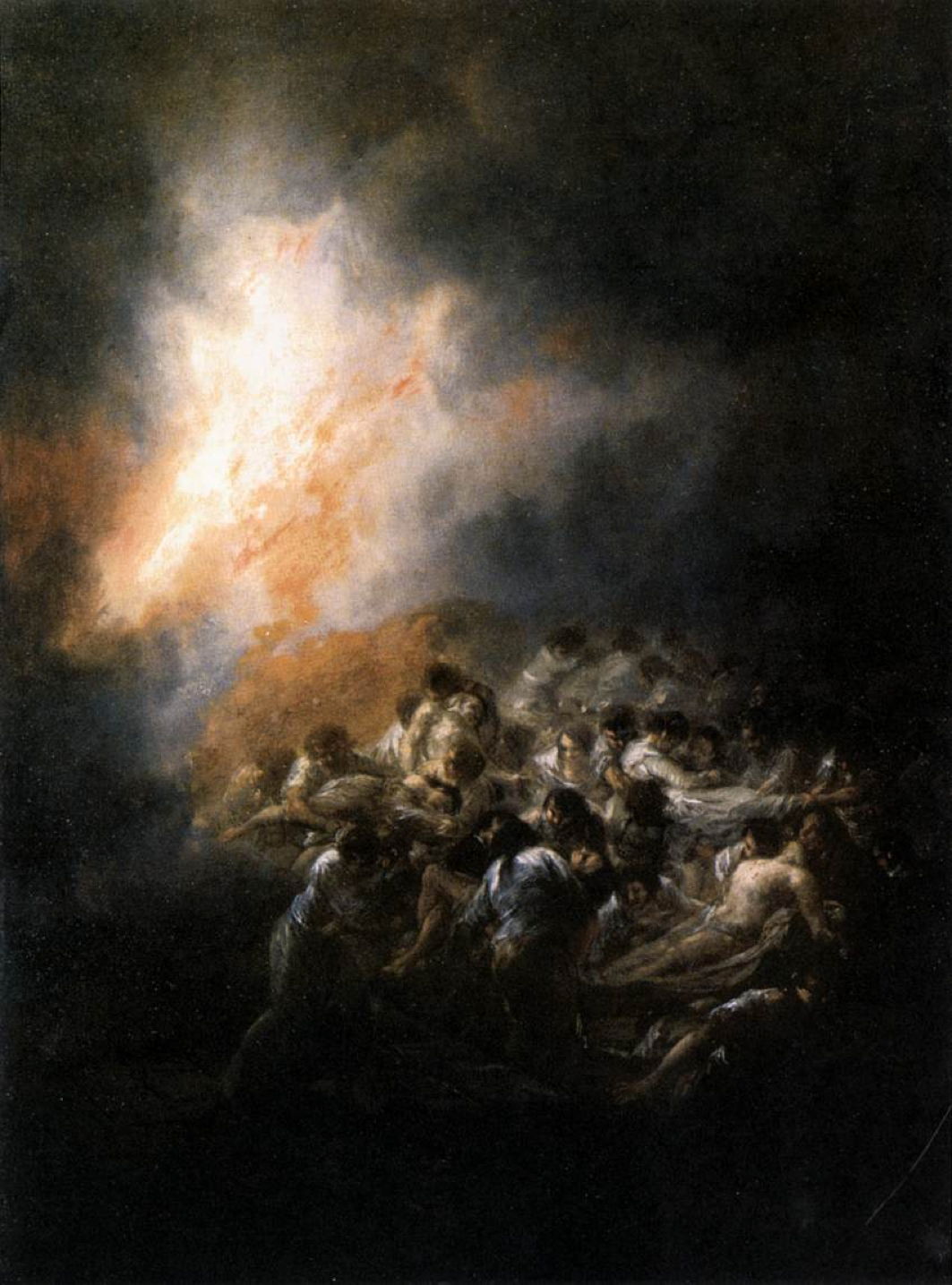
Fire at Night (1793-94) is a dramatic painting relying on subtle suggestion for its effect. A seething mass of people are removing casualties from the burning building at the left. There are flames and thick black smoke billowing up into the night sky, and its victims are dressed for bed.
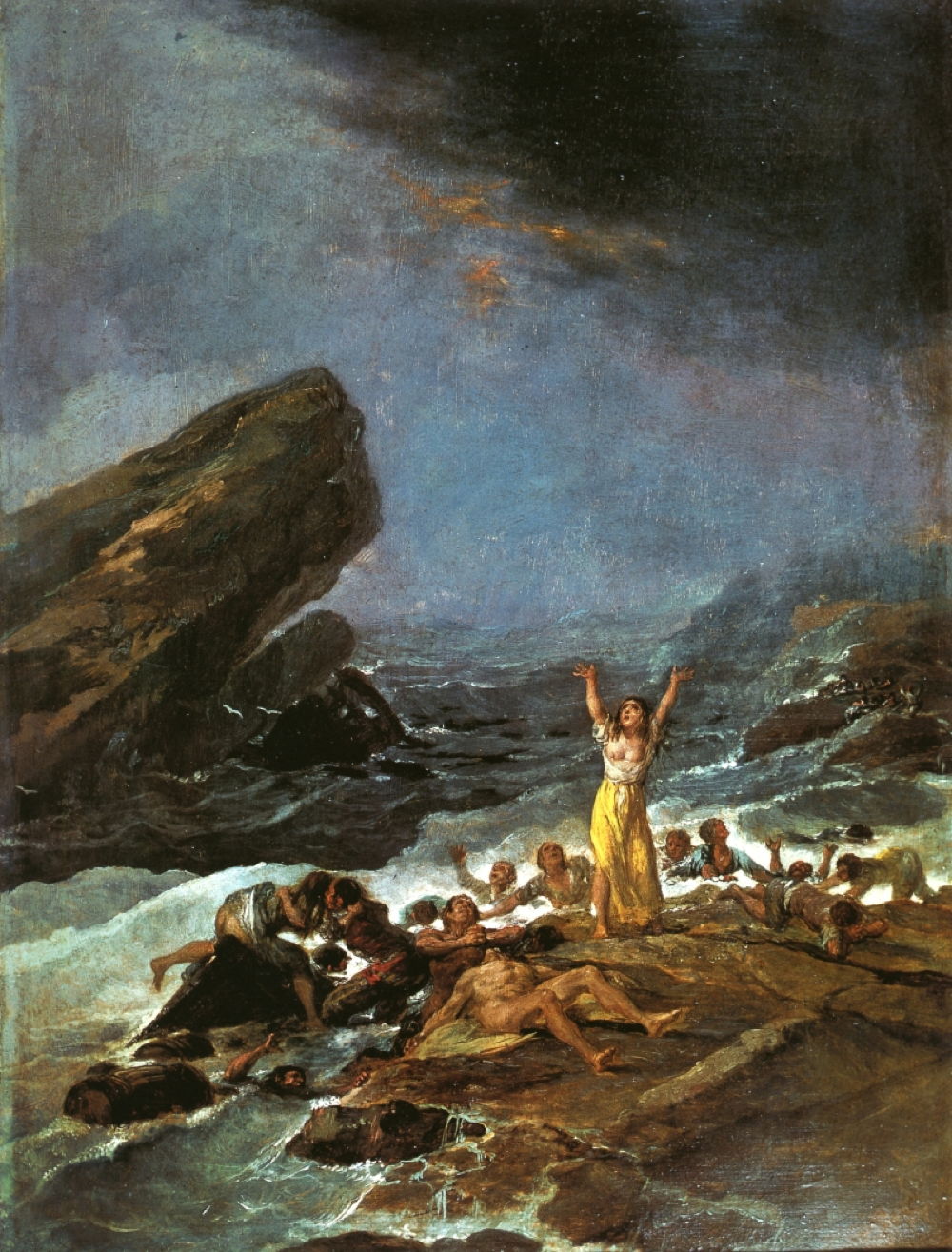
Although it has been suggested that The Shipwreck (1793-94) might show the Biblical flood, the breaking waves and rocky coastline make it more likely to show survivors coming ashore from a stricken vessel, and this is confirmed by a couple of barrels as flotsam to the left.

The last of these, showing the Yard of a Madhouse (1794), perhaps sets the scene for Goya’s future paintings, with its disturbing glimpse into the tormented lives of those effectively imprisoned as a result of mental illness. They wrestle and shriek down in the gloom beneath its walls, while there’s the bright light of hope in the sky above.
Oil on plaster
Over twenty-five years later, Goya abandoned the city of Madrid as it descended into chaos, and lived in his villa Quinta del Sordo with his housekeeper, where he decided to decorate its walls with his own paintings. For this he ignored his previous experience painting frescos, and applied oil paint direct to the plaster. The results are his Black Paintings, a collection of his nightmare visions which have since been transferred to canvas and hang now in the Prado. Of the fourteen, I show just three here.

Saturn Devouring His Son is the most famous of these Black Paintings, and the most horrific, as a portrayal of the Titan Cronus eating one of his sons to ensure they wouldn’t grow up to usurp him.

Witches’ Sabbath (The Great He-Goat) refers back to Goya’s earlier paintings of witchcraft for the Duchess of Osuna, with the black-cloaked figure of the devil incarnate as a billy-goat, sat in front of a mass of hideous women gathered at their Sabbath.
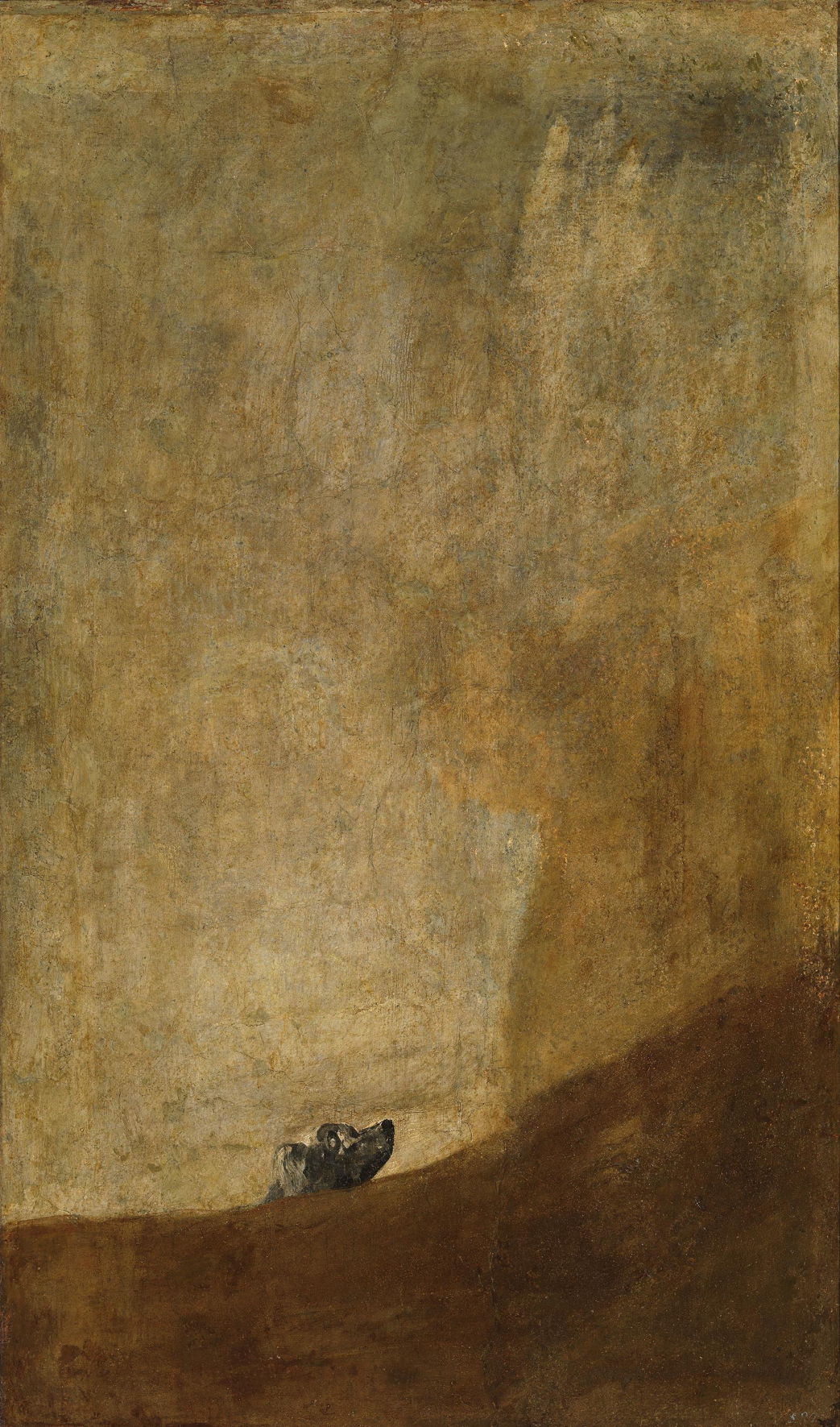
Of all these Black Paintings, it’s The Dog that’s the most artistically radical. It shows the head of a dog gazing upwards from behind a darker sloping foreground. There are suggestions of another image in the right half of the painting, but that’s now thought to have been the remains of earlier marks on the plaster.
Watercolour on ivory
During the winter of 1824-25, Goya painted some of the most remarkable works of his career, using watercolour on a prepared support of ivory. He first applied a binder, either egg white or gum arabic, then blackened the thin sliver of ivory with carbon, possibly mixed with a little egg yolk. He next allowed a drop of water to fall on it, which lifted off part of the black ground, leaving chance highlights, which he used as the basis for his painting.
In terms of technique, these owe more to his printmaking than his painting, and are fascinating experiments he appears to have devised himself, based on a practice among some painters of miniature portraits on ivory. Goya reported that he had made about forty of these, of which only ten are known today, and a further twelve are known from reproductions or records. Here are four of the survivors, of which the largest is less than 9 by 9 centimetres (3.5 x 3.5 inches).

Maja and Celestina combines one of his young Majas with an old woman who is thought to have represented the legendary procuress known as Celestina.
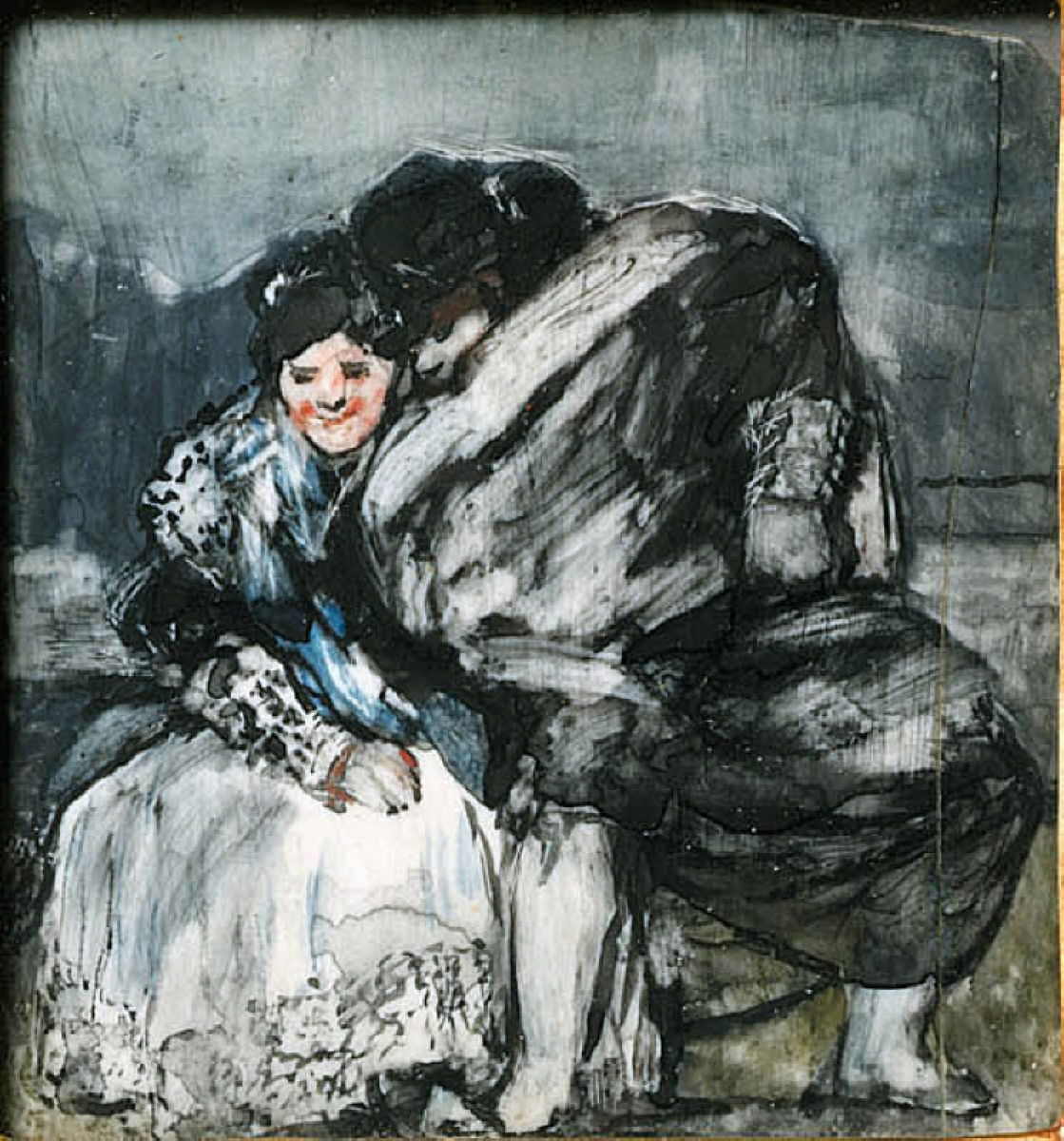
Seated Woman and Man in Spanish Cloak, Majo and Maja is another reference to his much earlier paintings.
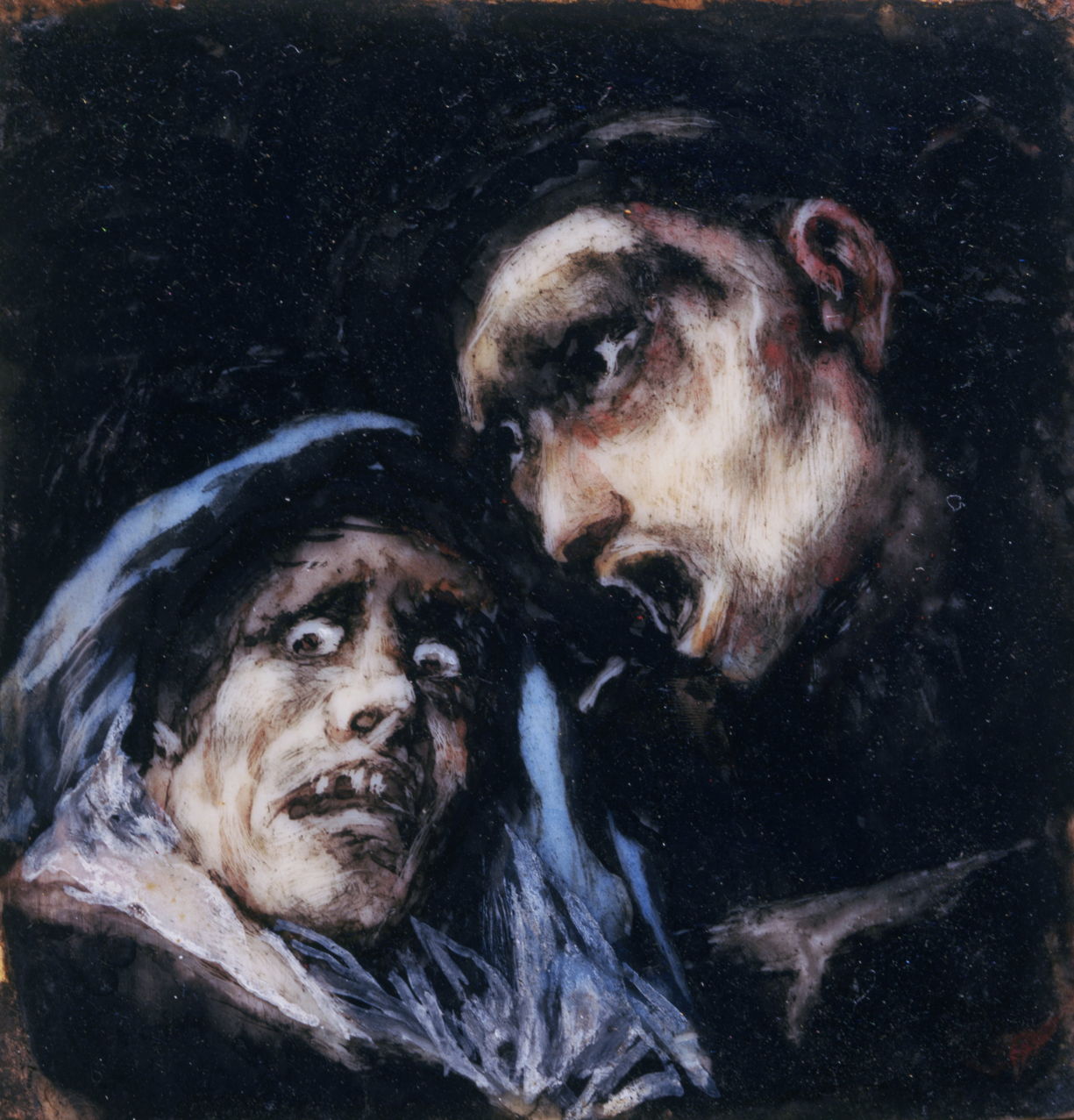
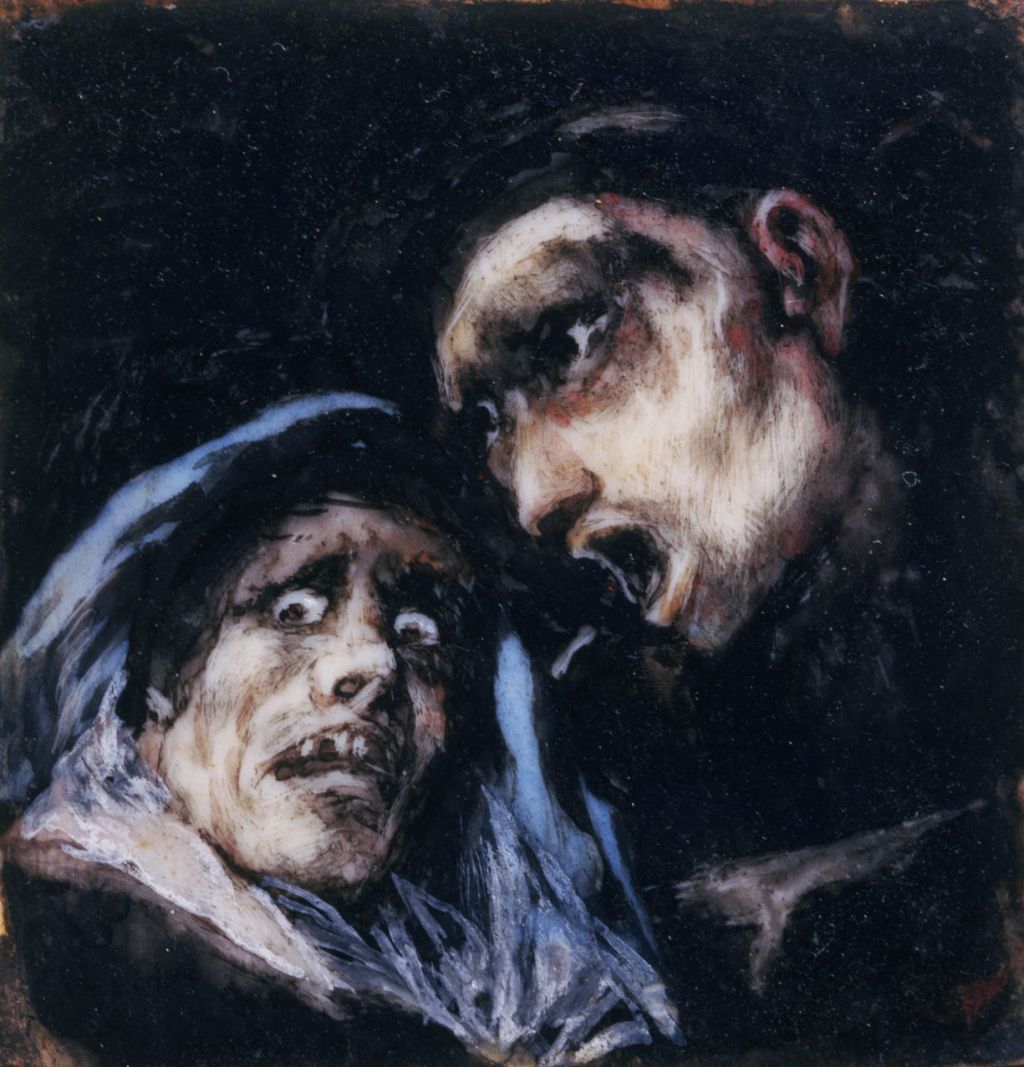
The faces of this Monk Talking to an Old Woman come straight from those who populated his Black Paintings.
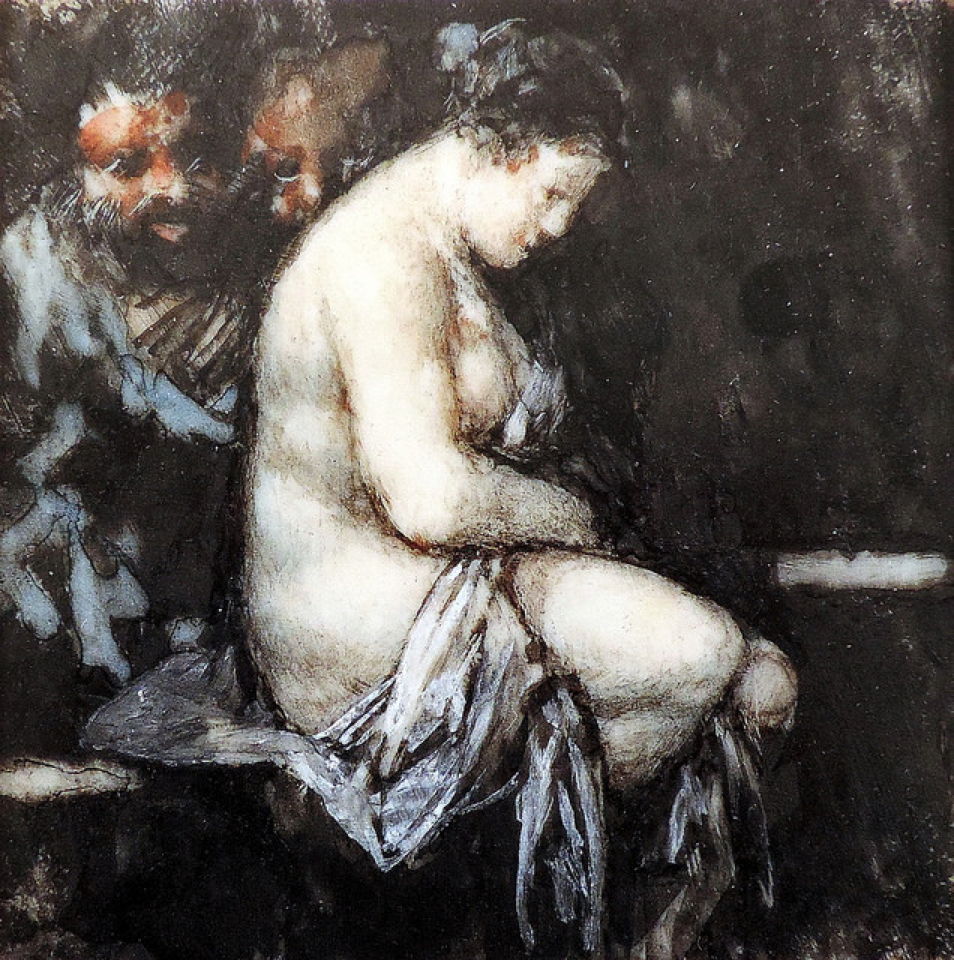
Although this painting has been identified as showing Susanna and the Elders, that is by no means certain, if strongly suggested by its composition.
 The Eclectic Light Company