
This weekend, as my series on painting in the Dutch Golden Age draws to a close, it’s time to pay a visit to the city of Amsterdam, centre of trade and commerce, and one of the most multicultural cities in Europe since the seventeenth century. At the start of this selection of paintings of its canals and buildings, its population was around 170,000, and by the end of tomorrow’s sequel that had reached over 650,000.

Egbert van der Poel established his reputation painting major fires in the Dutch Republic. Although it has been claimed that these were seldom based on his personal observations, this sketch of The Fire in the Nieuwe Kerk, Amsterdam, in 1645, was made in front of the motif using washes with touches of pen and brown ink. Perhaps he was the first ‘ambulance chaser’ who travelled out to sketch fires, from which he painted his famous brandjes in the studio.

At some stage, Aert van der Neer also started painting destructive fires, including this undated Fire in Amsterdam by Night. This shows one of the broader canals in the city, with residents already taking to boats in case they needed to evacuate.

In the summer of 1652, Jan Abrahamsz Beerstraaten seems to have witnessed the destruction by fire of part of the centre of Amsterdam, which formed the basis of his studio painting of The Old Town Hall of Amsterdam on Fire, 7 July 1652 (1652-55). Local inhabitants are walking in orderly queues to boats, in which they escape from the scene.

Gabriel Metsu followed the subjects of his genre paintings beyond the home, here into The Vegetable Market in Amsterdam in about 1660-61. The mistress stands with a metal pail on her arm, detached from the housekeeper to the left of centre, who is bargaining with one of the vendors. Other figures are drawn from a broad range of classes, and there’s produce ranging from cauliflowers to chickens.

Meindert Hobbema’s view of The Haarlem Lock, Amsterdam from 1663-65 shows a working lock with a raising bridge, and the masts of many ships in the harbour beyond. This lock may form the entrance to the Haarlemmertrekvaart, a canal dug in 1631 to facilitate transit by boat between Amsterdam and the city of Haarlem to its east.
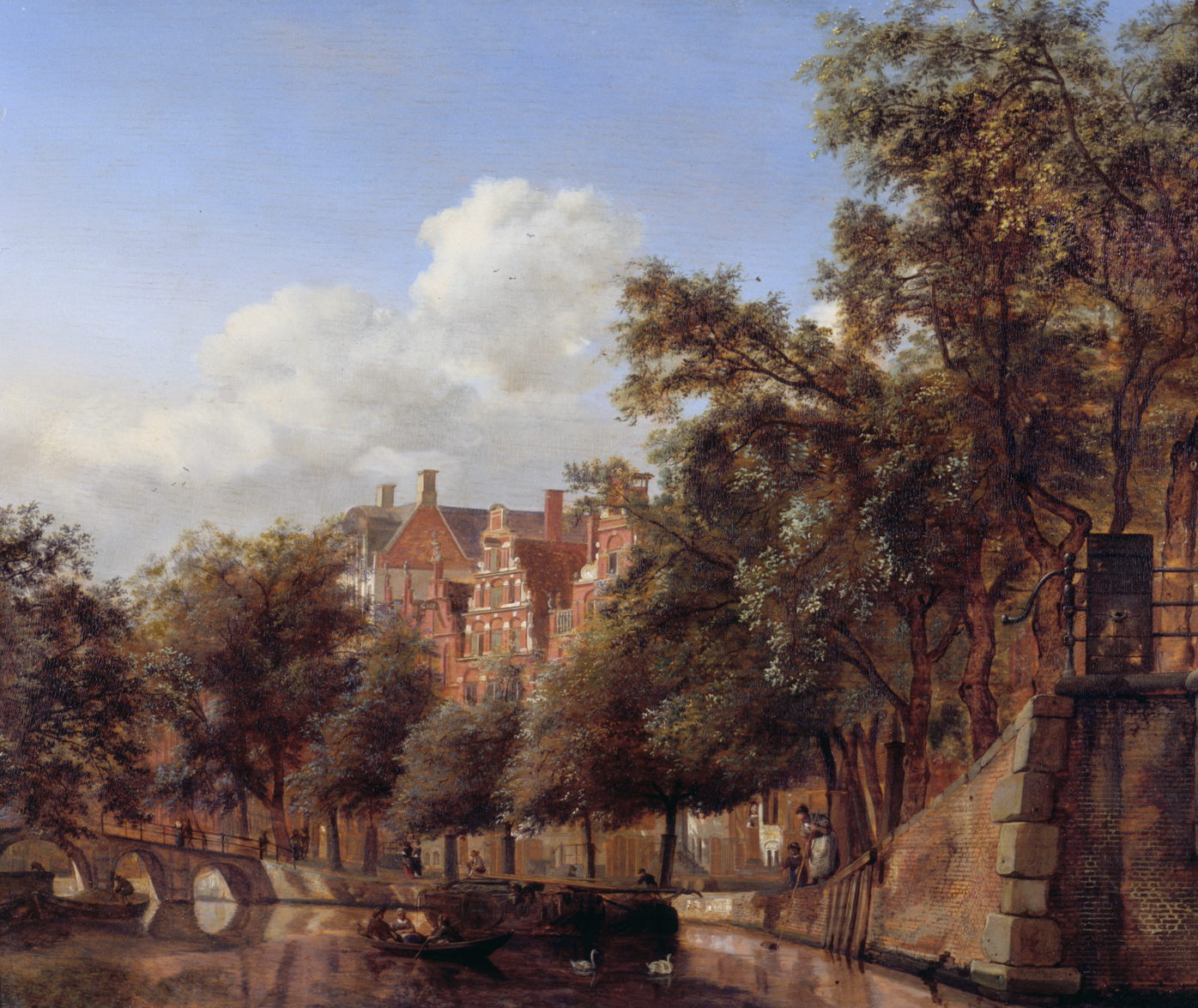
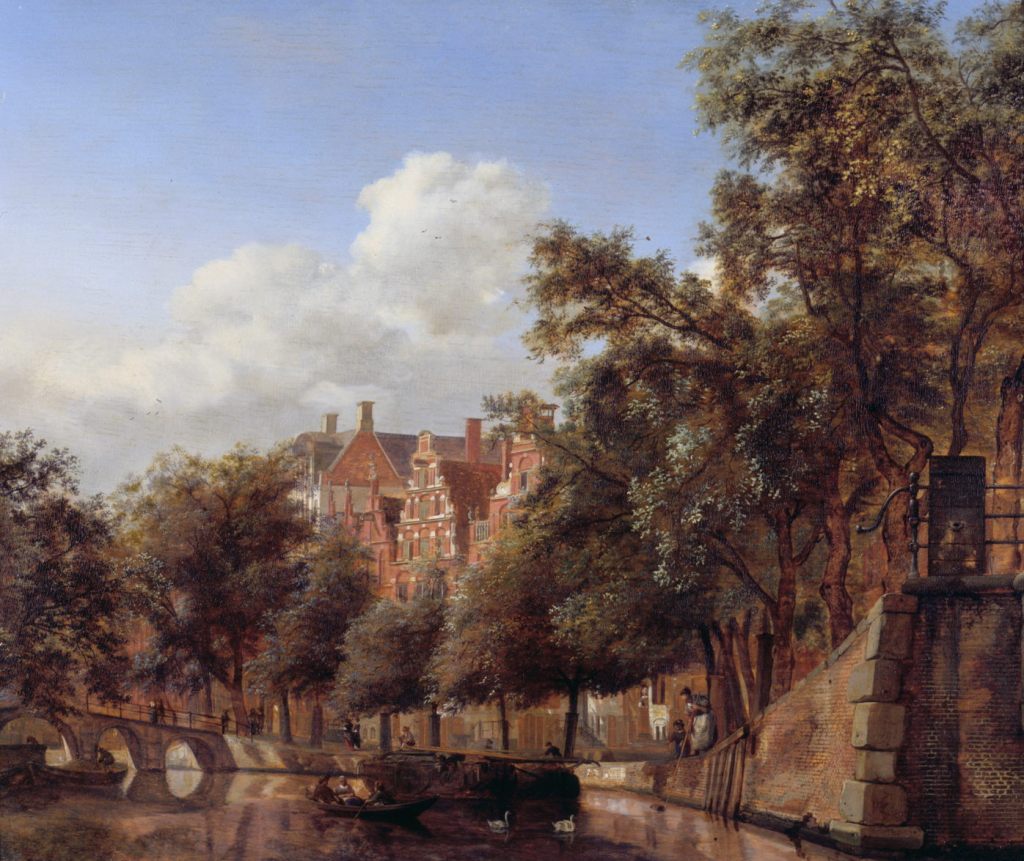
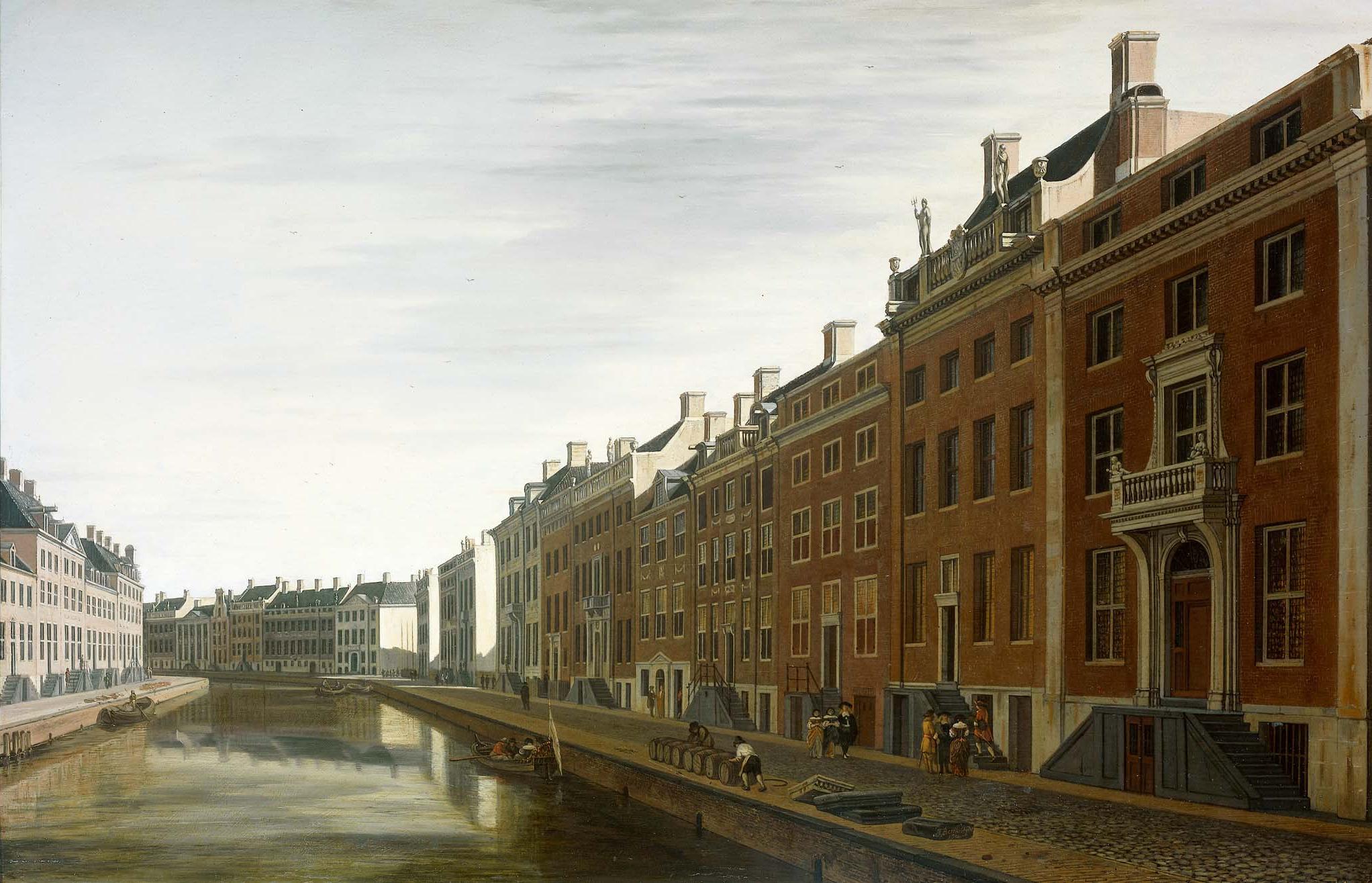
Jan van der Heyden’s View of the Herengracht, Amsterdam from about 1670 shows this canal that has become famous for its large and elegant houses. These were built from 1612, and are finest along this section known as the Golden Bend. Below is a contrasting view from 1672, in Gerrit Adriaensz Berckheyde’s The Bend in the Herengracht near the Nieuwe Spiegelstraat in Amsterdam.
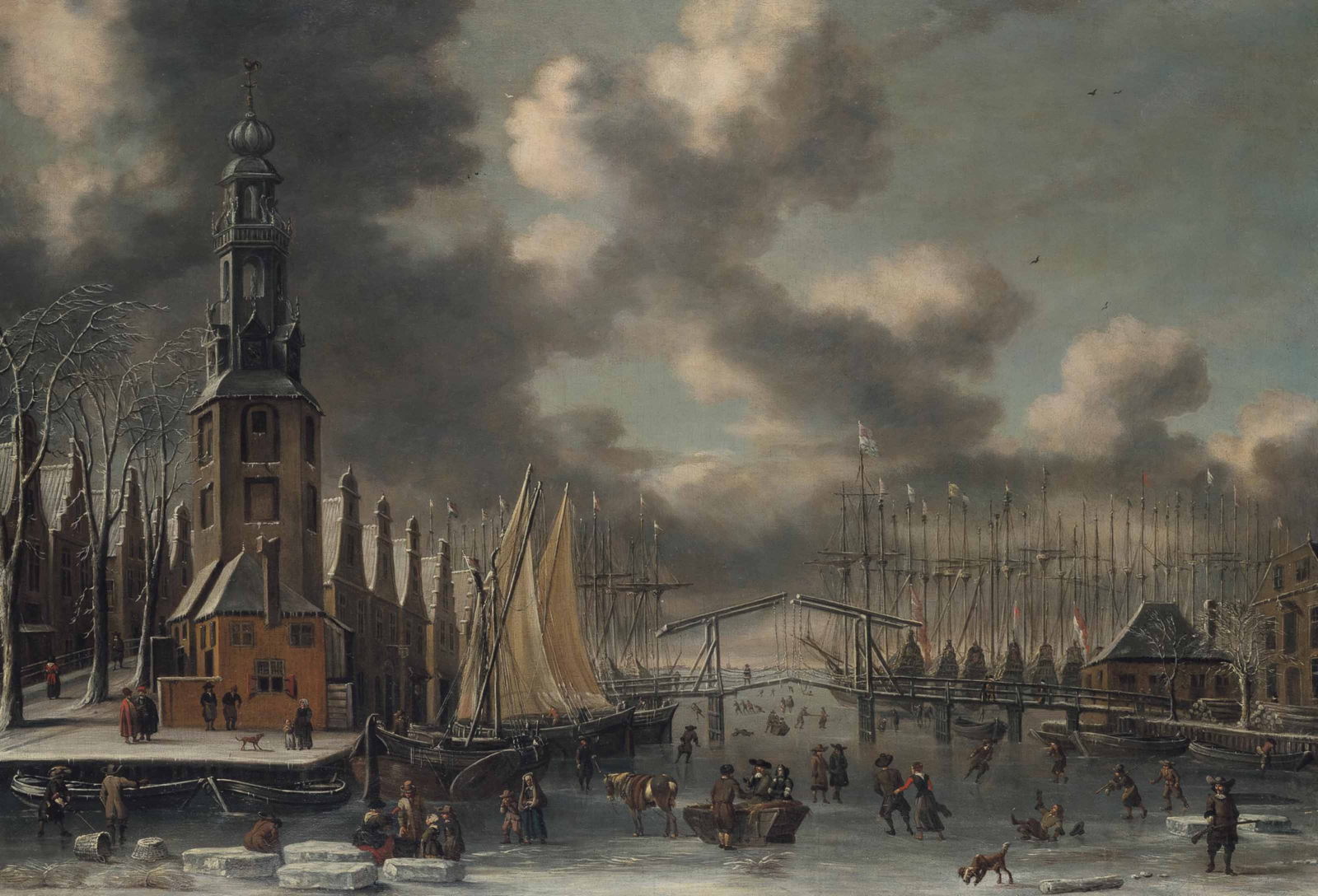
In 1676, Thomas Heeremans and Abraham Storck joined forces to paint this Winter Landscape with the Montelbaanstoren, Amsterdam. The Montelbaanstoren is the prominent tower in the left foreground, and the canal seen is the Oudeschans. The tower was built in 1516 as part of the city’s defences, and its upper section was extended in 1606, bringing it to a height of 48 metres (almost 160 feet).
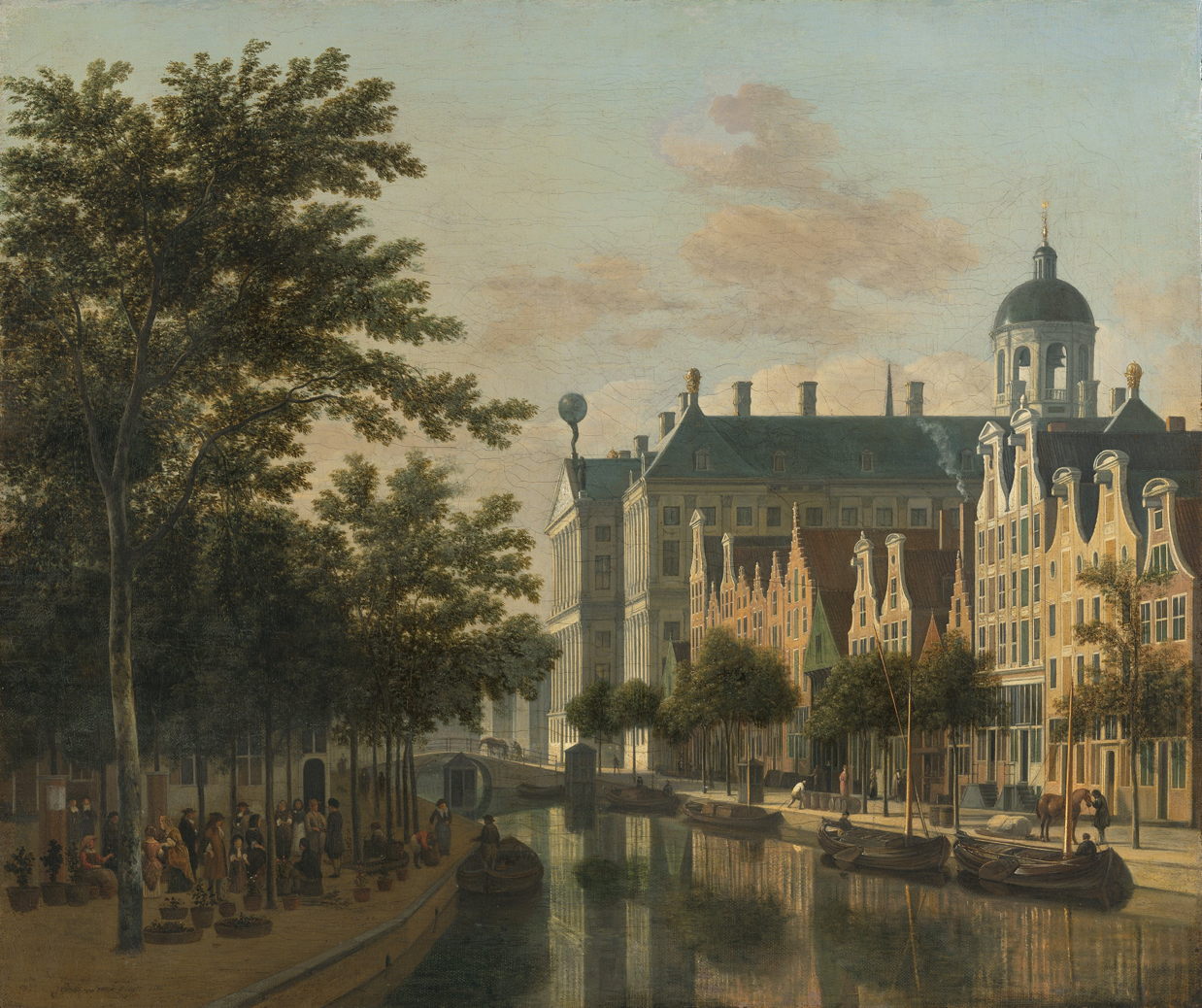
Berckheyde’s The Nieuwezijds Voorburgswal, Amsterdam from 1686 shows the canal running at the rear of the City Hall that was covered over two centuries later in 1884 to create a street. The City Hall was built between 1648-65, and features an octagonal tower seen here at the right. Mounted on its roof, at the centre of the painting, is a sculpture by Artus Quellinus of Atlas supporting a celestial sphere. On the opposite bank is a small flower market. By this time the population of Amsterdam had risen to more than 220,000, many of them immigrants.
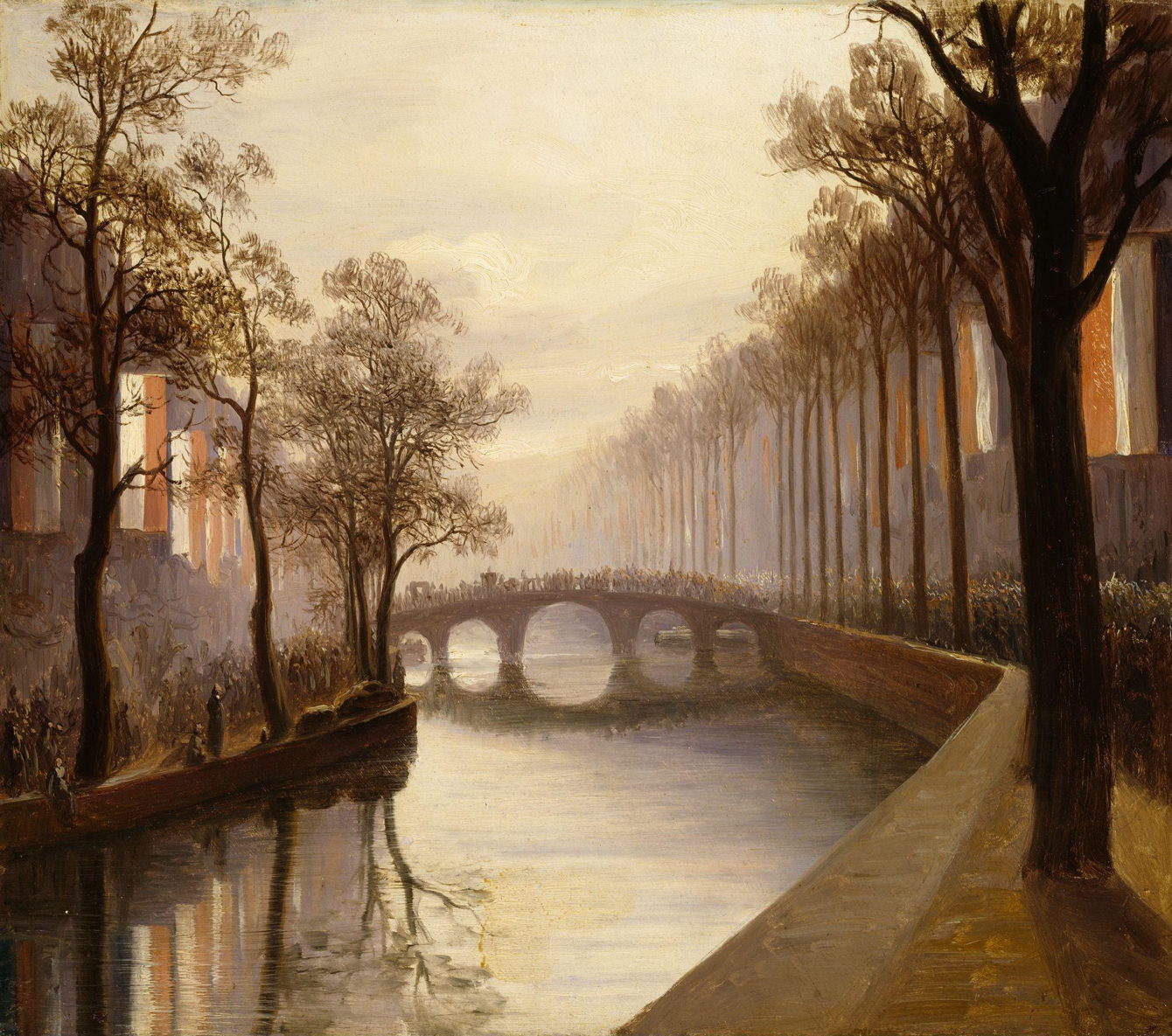
The Norwegian landscape artist Thomas Fearnley appears to have visited the city late in 1840, when he painted King William II’s Ceremonial Procession in Amsterdam, 27 November 1840 in oils on paper. Neither the artist nor the king survived long after this grand event: Fearnley succumbed to typhoid in 1842, and King William II died suddenly in 1849.

Charles Leickert is better known for his winter landscapes of frozen waterways in the Netherlands, but his Urban Landscape from 1856 shows active trading taking place beside a canal most probably in Amsterdam, where he was a member of the Royal Academy at the time.
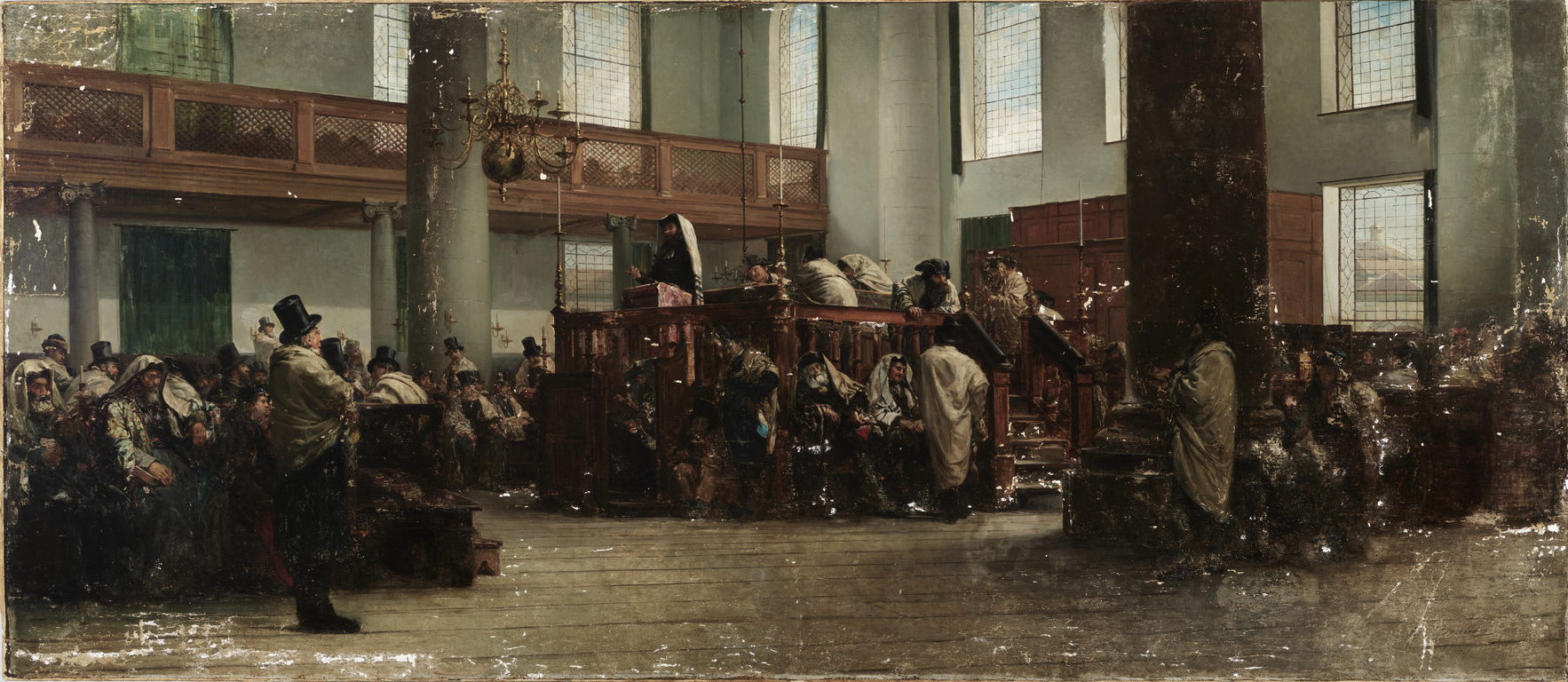
Jacob-Emile-Edouard Brandon is one of the forgotten artists who exhibited at the First Impressionist Exhibition in 1874. One of his few surviving paintings is this Portuguese Synagogue at Amsterdam 22 July 1866 from 1867, which was awarded a medal at the Salon of that year. This was probably Europe’s most famous and picturesque synagogue at the time. The sermon was being delivered by the distinguished Talmudist David de Jahacob Lopez Cardozo (1808-1890), who was appointed ab bet din there in 1839.
 The Eclectic Light Company