
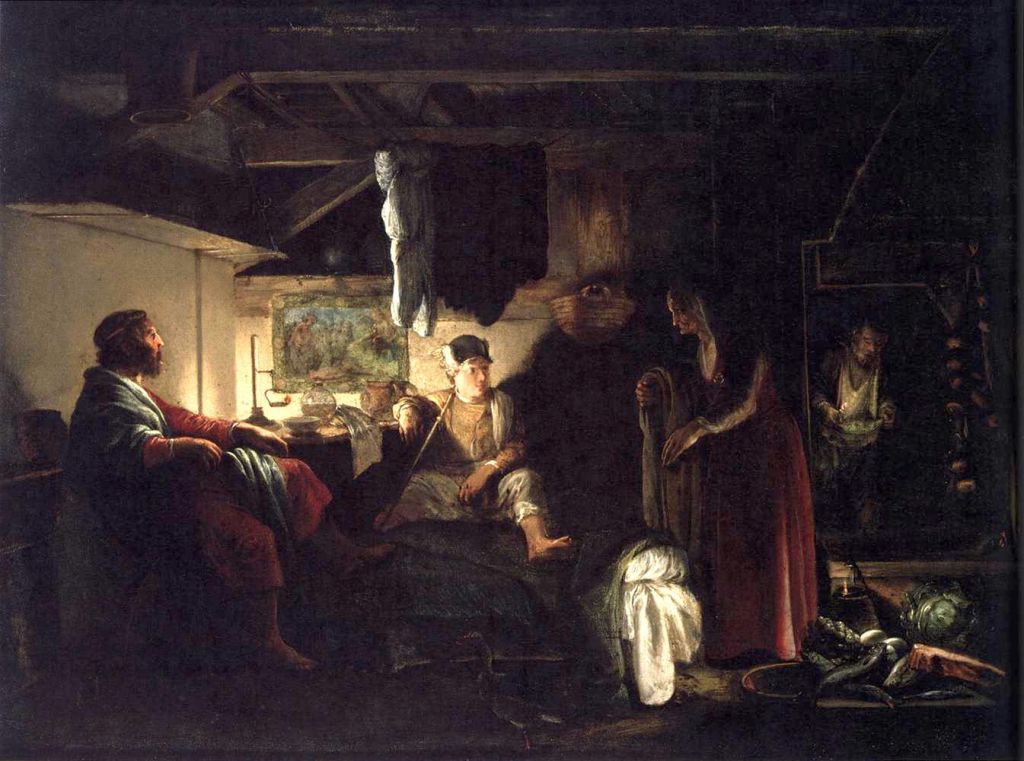
The vast majority of oil paintings have been made on supports of wood or stretched fabric. But over the centuries a wider variety of materials have been used, including sheets of metal, slate and other stone, glass, and most recently elaborately-structured composite materials. They all meet the primary requirement, that of rigidity, but vary in their dimensional stability, weight, and suitability to retain paint or an appropriate ground.
The most commonly-used of these alternative supports has been copper sheet, which has long been used as the support and ground for enamelling, and forms plates for various methods of making prints. Although a relatively expensive metal, it’s highly malleable and was worked into uniformly thin sheets even in ancient times. This and tomorrow’s articles show some examples of oil on copper.
The challenge to painters who chose to paint on copper was ensuring good adhesion to the metal surface. Traditional recipes stress the importance of thorough cleaning and de-greasing, and some recommend treatment of the copper using cloves of garlic or their juice. Like many metals, copper does slowly corrode when exposed to the atmosphere, and ensuring complete coverage of bare metal by ground or paint was important to prevent that. In practice, surviving oil on copper paintings have generally remained in fine condition, lack visible cracking, and don’t appear to suffer delamination.
In return, the painter gets a very smooth surface on which they can develop fine detail. The dark natural colour of the metal was widely used for chiaroscuro effects, and the surface of the paint layer is usually so smooth that varnishing was unnecessary.
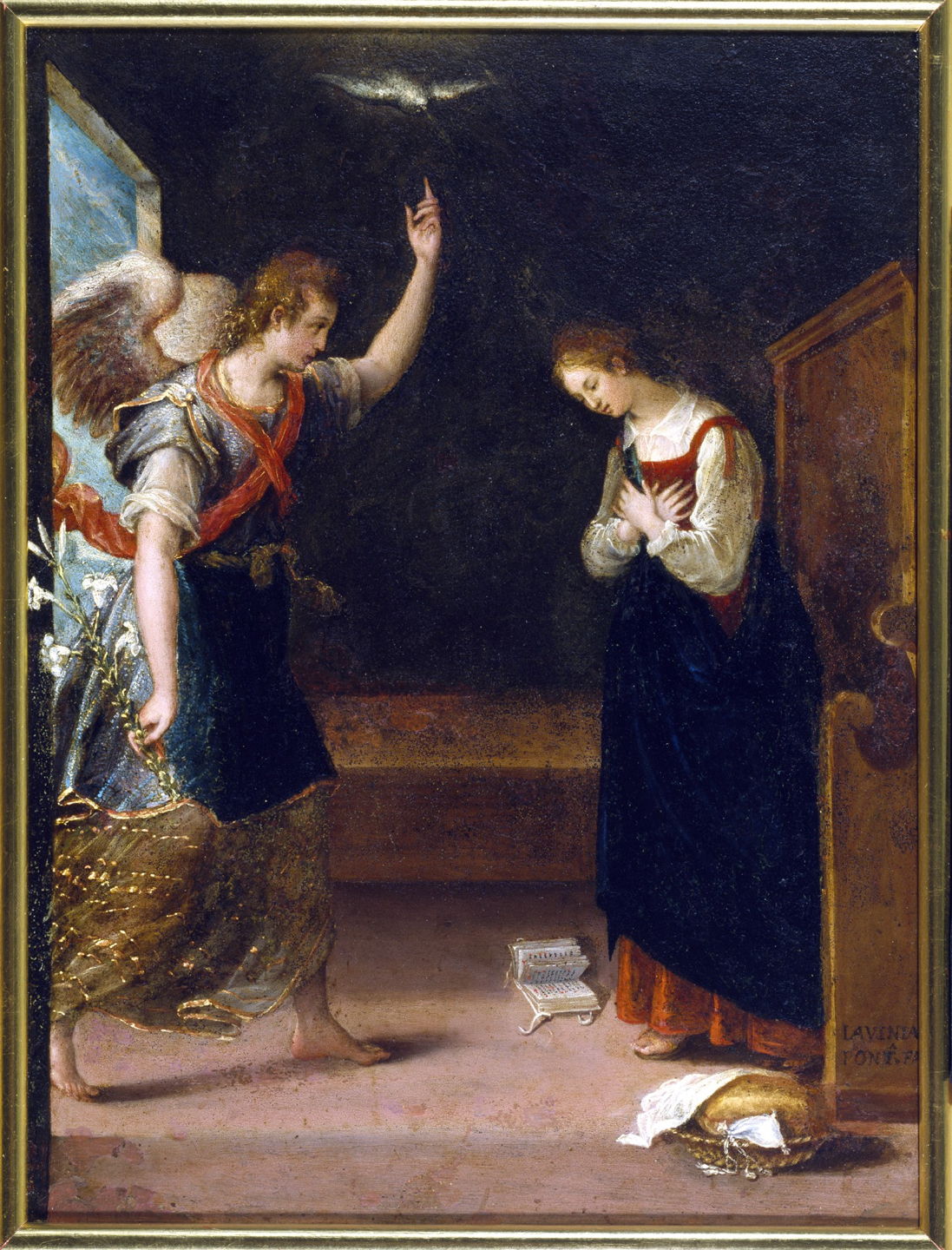
Most of the earliest surviving paintings on copper date from the first half of the sixteenth century. Lavinia Fontana’s striking painting of The Annunciation from about 1575 is a good example from the time that copper came into vogue in both the north and south of Europe.

Bartholomeus Spranger was another early adopter, as shown in his Hercules and Omphale from about 1585. At 24 by 19 cm (9.5 by 7.5 inches), this is even smaller than Fontana’s painting above.
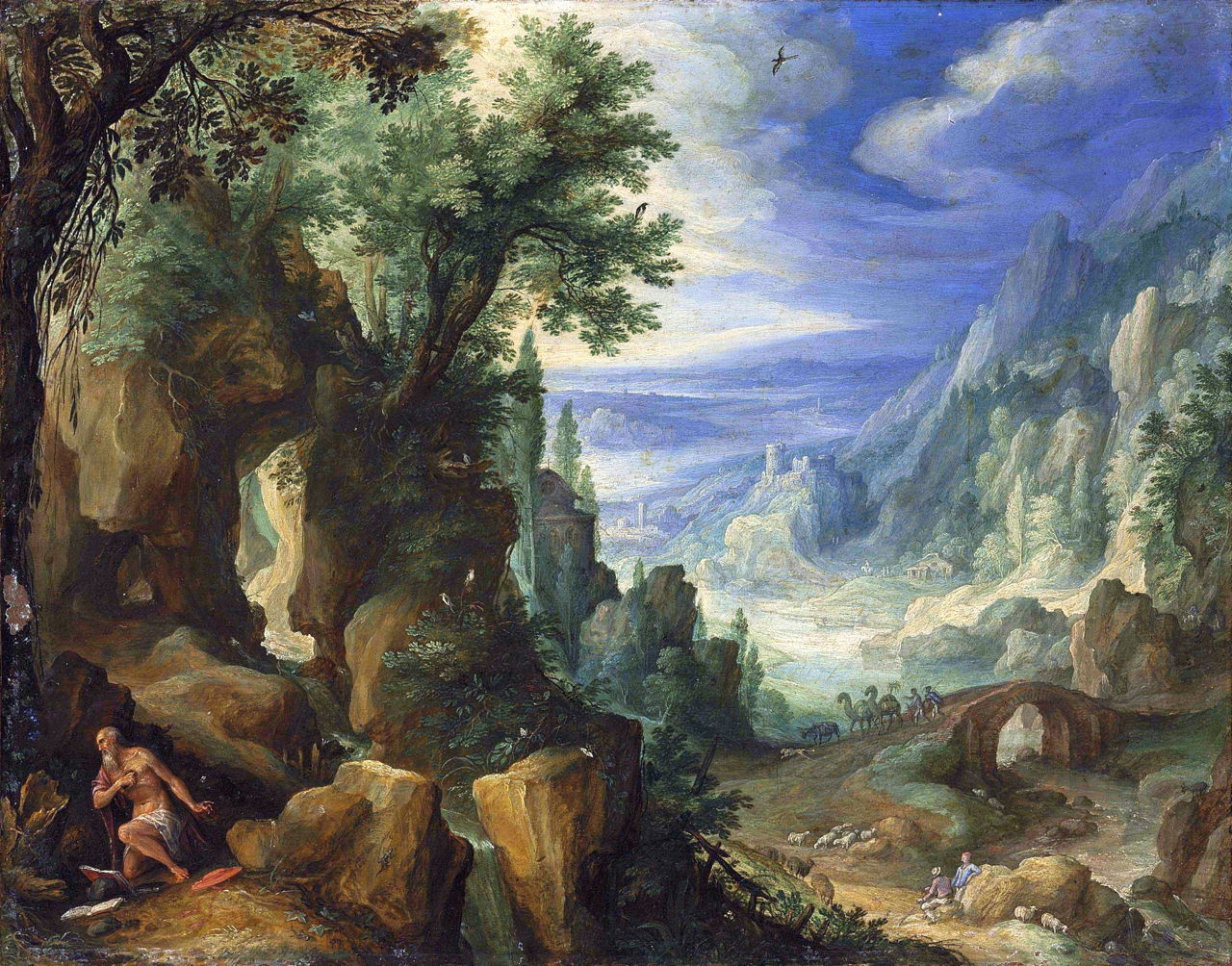
Although Paul Bril seems to have adopted more conventional supports, his Mountainous Landscape with Saint Jerome from 1592 was painted on copper. This demonstrates how fine details can become, in the foliage and far distance.

Jan Brueghel the Elder was among many others who painted on copper at this time. By the early seventeenth century, there were twenty-five master coppersmiths in Antwerp alone who provided plates for painting. His Juno in the Underworld from 1596-98 is another fine example of the detail that could be achieved on copper’s smooth surface.
Adam Elsheimer was probably the greatest exponent of painting on copper, a skill he may have learned when he worked in Venice as an assistant to Hans Rottenhammer, another enthusiast for copper supports.

Adam Elsheimer’s small The Conversion of Saint Paul (c 1598) is an original composition showing the outcome of a mediaeval skirmish, with all the horses in trouble, and Paul’s mount stretched out on its back in severe distress.

His Saint Elizabeth of Hungary Bringing Food for the Inmates of a Hospital from about 1598 looks larger than its 27.8 by 20 centimetres (11 by 8 inches) plate, as it develops fine details.

Adam Elsheimer’s The Great Flood (c 1600) is an example of how effective copper can be for nocturnes. It’s nighttime, and the dense clouds are lit only by flashes of lightning. The population of a village is processing up to higher ground to escape the rising floodwaters.
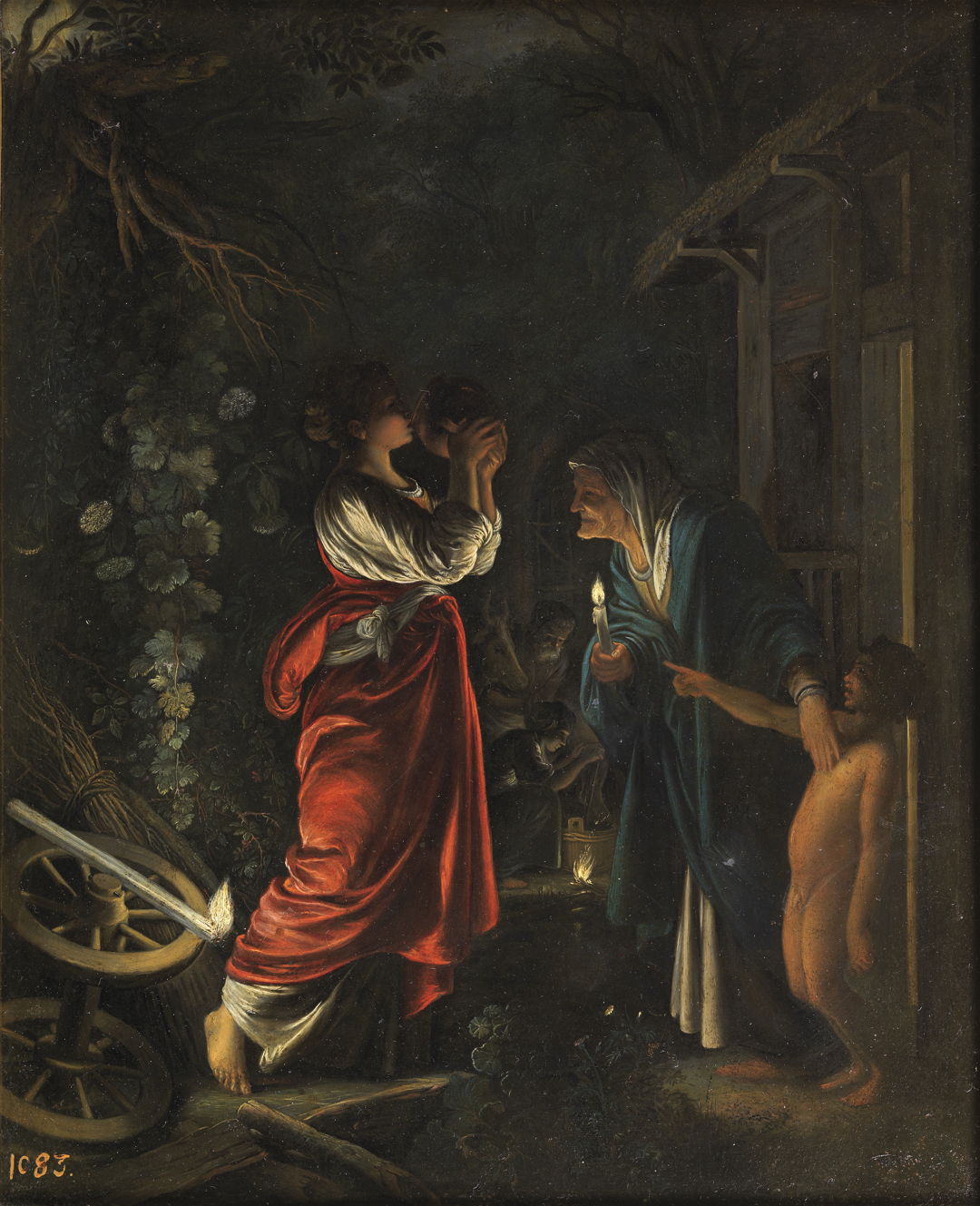
He developed this further in his chiaroscuro Ceres at Hecuba’s Home in about 1605.

Perhaps his greatest achievement was in one of his last paintings on copper, Jupiter and Mercury with Philemon and Baucis (1609-10). This shows Philemon (right) and Baucis (centre right) giving their hospitality generously to Jupiter (left) and Mercury (centre left), in their tiny, dark cottage. This is a mere 16.5 by 22.5 cm (6.5 by 9 inches).
 The Eclectic Light Company