
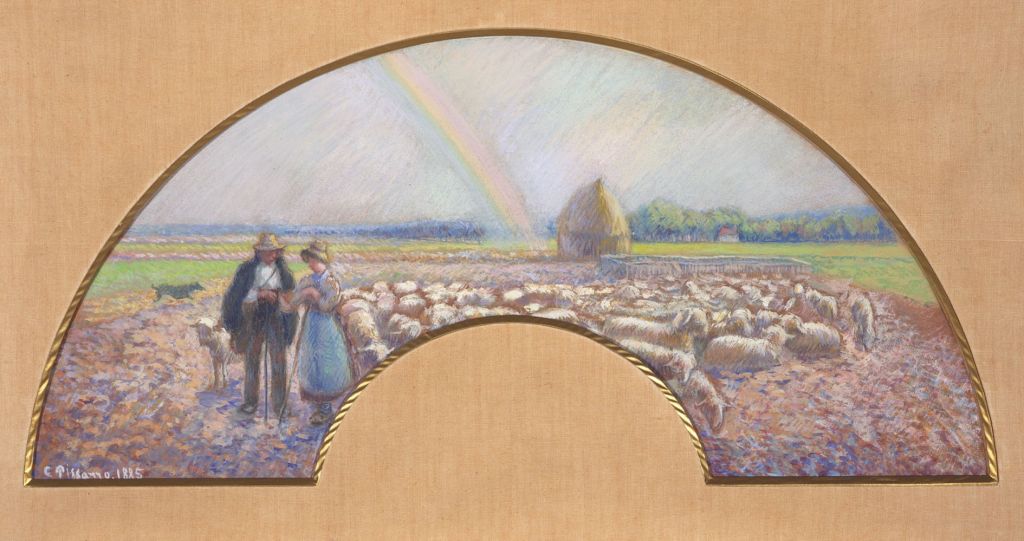
One of the more popular supports for European paintings of the late nineteenth century was the hand fan, typically made of paper stretched over thin wooden slats. Like the fans themselves, these had originated in East Asia, where they had been used for fine art painting since well before 1600.
Hand fans, held and wafted to force convective cooling in hot conditions, didn’t appear spontaneously in Europe, but seem to have been brought from the Middle East at the time of the Crusades. Following the Renaissance they became more elaborate, a fashion accessory that could be used for surreptitious communication between lovers when in company.
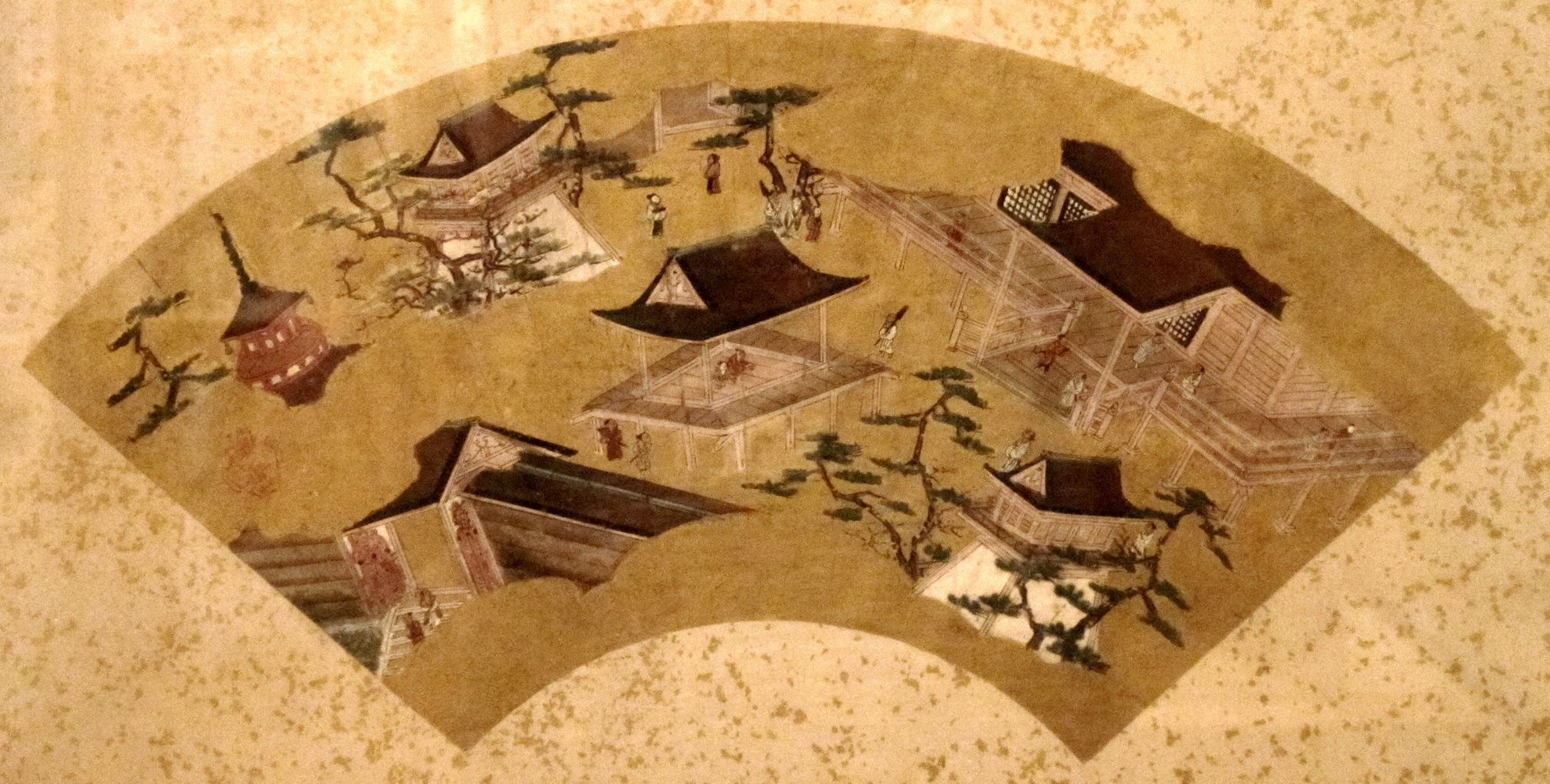
This exquisite painting of a View of Kyoto by Kanō Munehide was made in ink and colour on gold paper during the Momoyama period, most probably in the early 1580s.
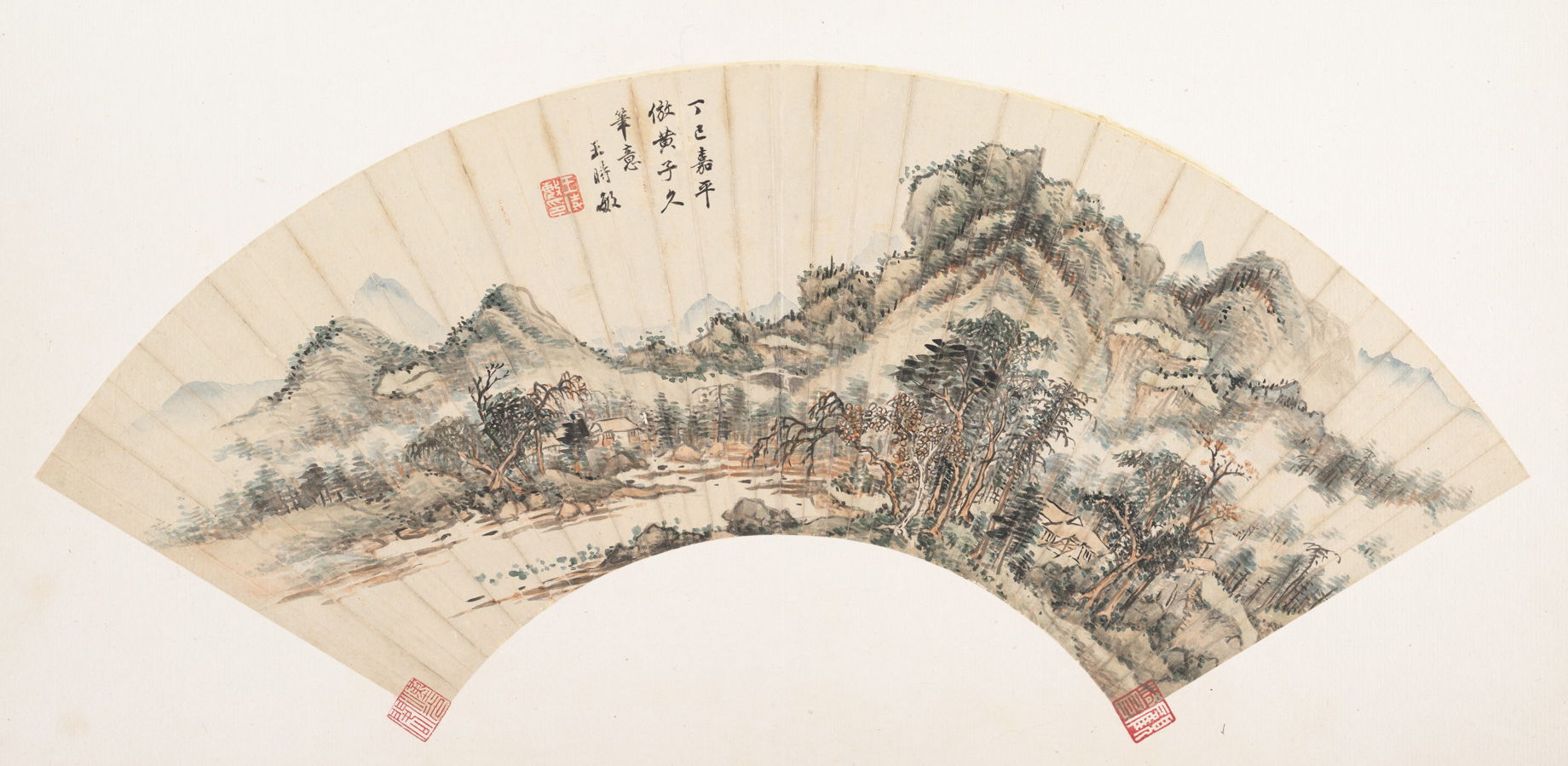
Wang Shimin’s 王時敏 untitled folding fan was painted in 1677, and uses the same media.
Although a few European artists do seem to have painted the occasional fan, by and large those made in Europe were decorated by illustrators rather than established fine art painters. Many of the fan-makers in France were Huguenot craftsmen, Protestants in a Catholic state who suffered repeated oppression, and most were forced to leave before they gained equal rights with the French Revolution at the end of the eighteenth century.
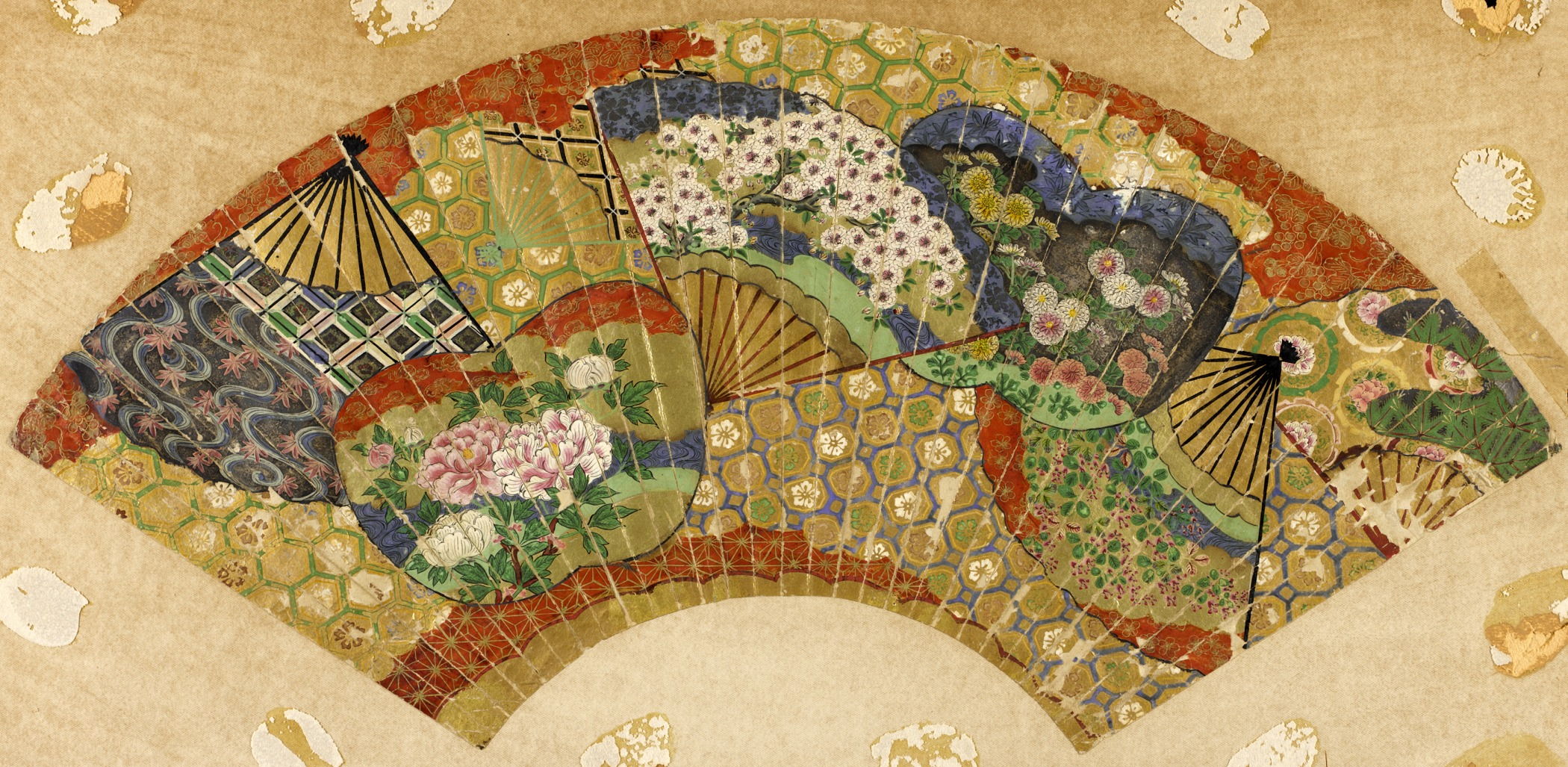
When trade between Japan and Europe started to re-open in the middle of the nineteenth century, this was a more typical example of a decorated fan that appeared in Europe, a Performance Fan with Design of Fans on Water.
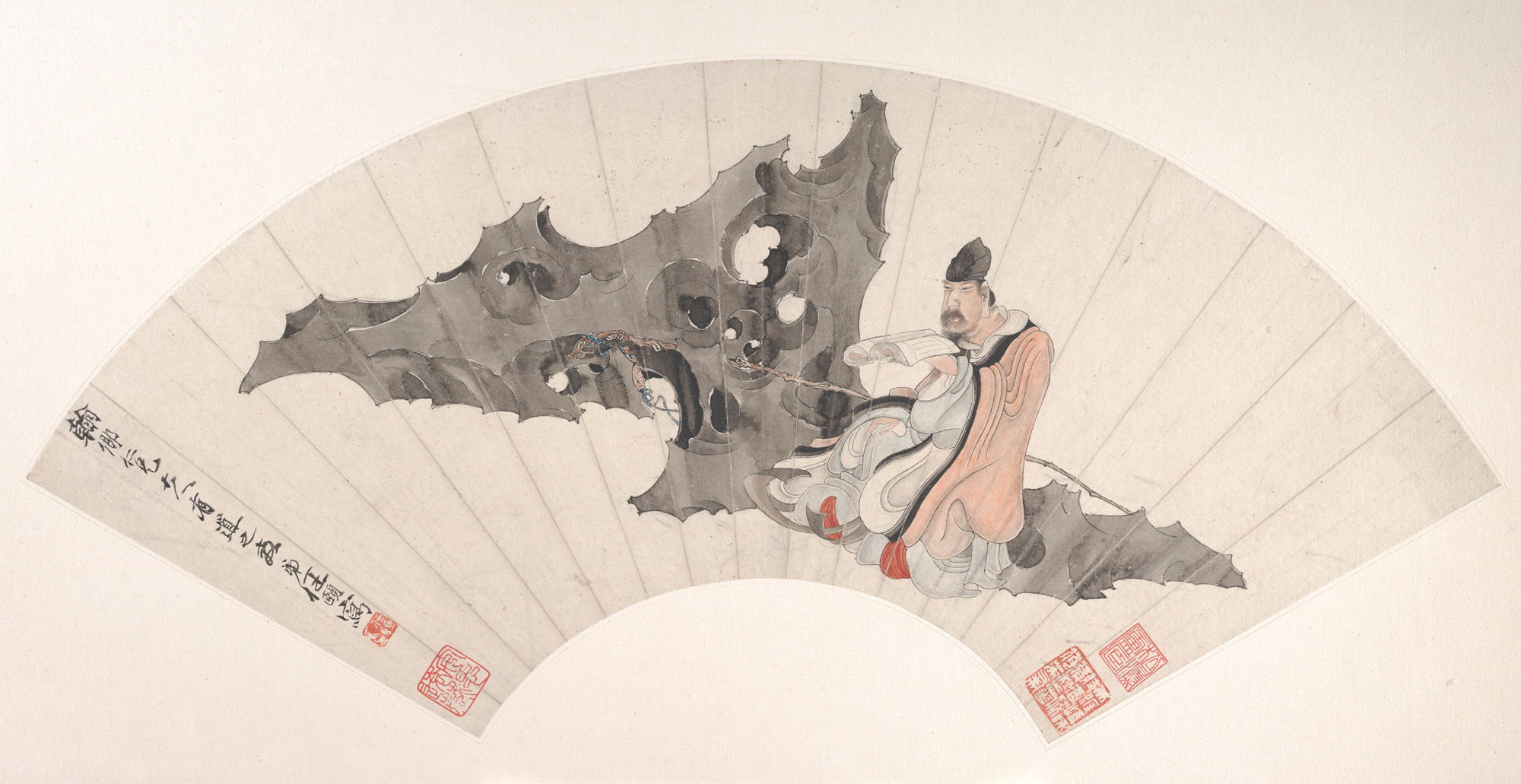
When France and most of the rest of Western Europe was swept by enthusiasm for everything Japanese, in the latter half of the nineteenth century, some of the painted fans coming from East Asia were different, clearly the work of artists like Ren Yi 任頤 (Ren Bonian) whose Scholar on a Rock from about 1880 isn’t mere decoration.
Several of the French Impressionists were enthusiastic collectors of Japanese art, and their own work fell under the spell of Japonisme. I’ve been unable to discover which of them first explored the potential of the fan as a form of painting, but it seems to have happened in the five years following the First Impressionist Exhibition of 1874.
The two who were early enthusiastic painters of fans were Edgar Degas and Camille Pissarro. At the time, both were broke and desperately seeking means of increasing the meagre income they made from painting. Decorated fans may have seemed a good little earner at a time when the more affluent were looking for novelties, particularly those that could be given discreetly to a mistress.
It appears to have been Degas who encouraged Pissarro to paint fans, in the hope that the Impressionist Exhibition of 1879 would have a whole room devoted to these works. Although that didn’t happen, a few examples of painted fans have survived from this early period.
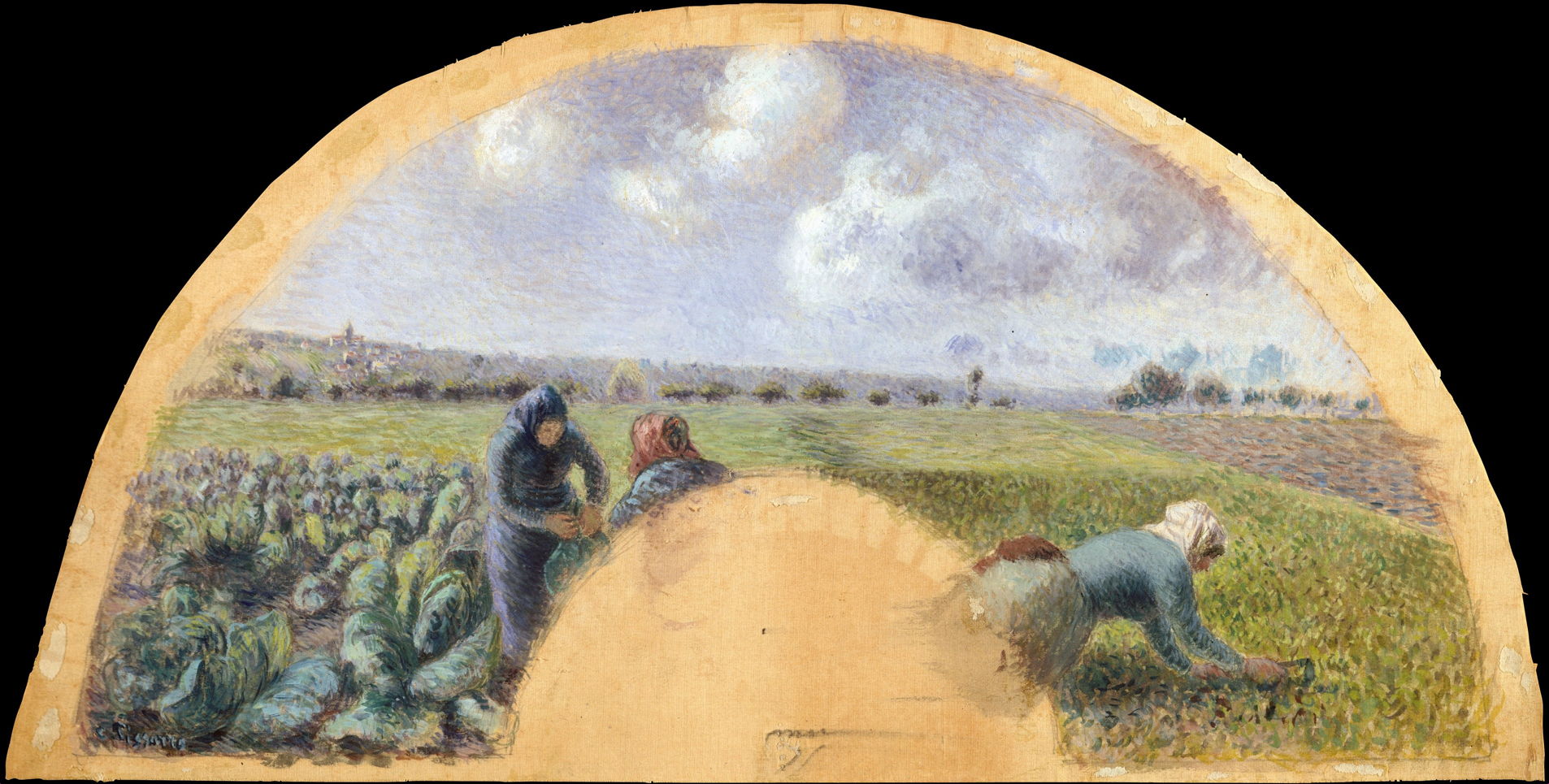
Pissarro’s The Cabbage Gatherers is thought to have been painted between 1878-79, and shows countrywomen harvesting cabbages in the fields near Pontoise. This was most probably shown at the Impressionist Exhibition, although not in its own room as Degas had hoped.
This was bought fairly quickly by one of Pissarro’s first American collectors, Louisine Elder, who was to become Mrs. H. O. Havemeyer, thus a major patron of the arts in general and Impressionism in particular. Thanks to the mediation of Mary Cassatt acting as Elder’s agent, Pissarro sold his first fan, and it was shipped to his first American collector.
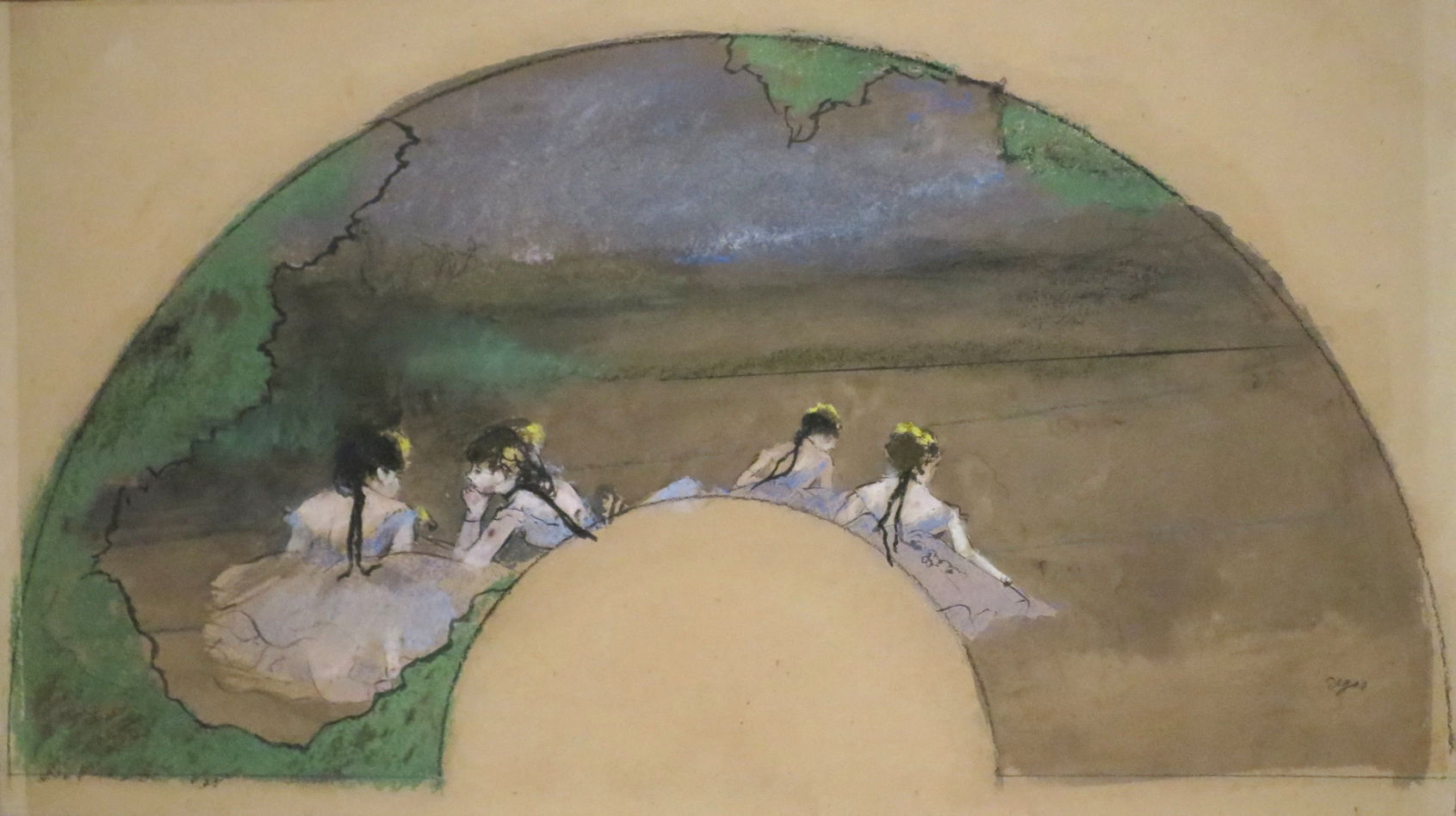
The only painted fan I can find by Degas is his Dancers on the Stage from about 1879. Whereas Pissarro had worked in gouache on silk, Degas used pastel with ink and wash on paper, which could have been cut out and mounted in the fan mechanism itself.

Over the next decade, Pissarro painted more fans, including this view of The Railway Bridge at Pontoise from about 1882-83, again using gouache and watercolour on silk. His motif here is reminiscent of Monet’s paintings of a similar bridge at Argenteuil almost a decade earlier.
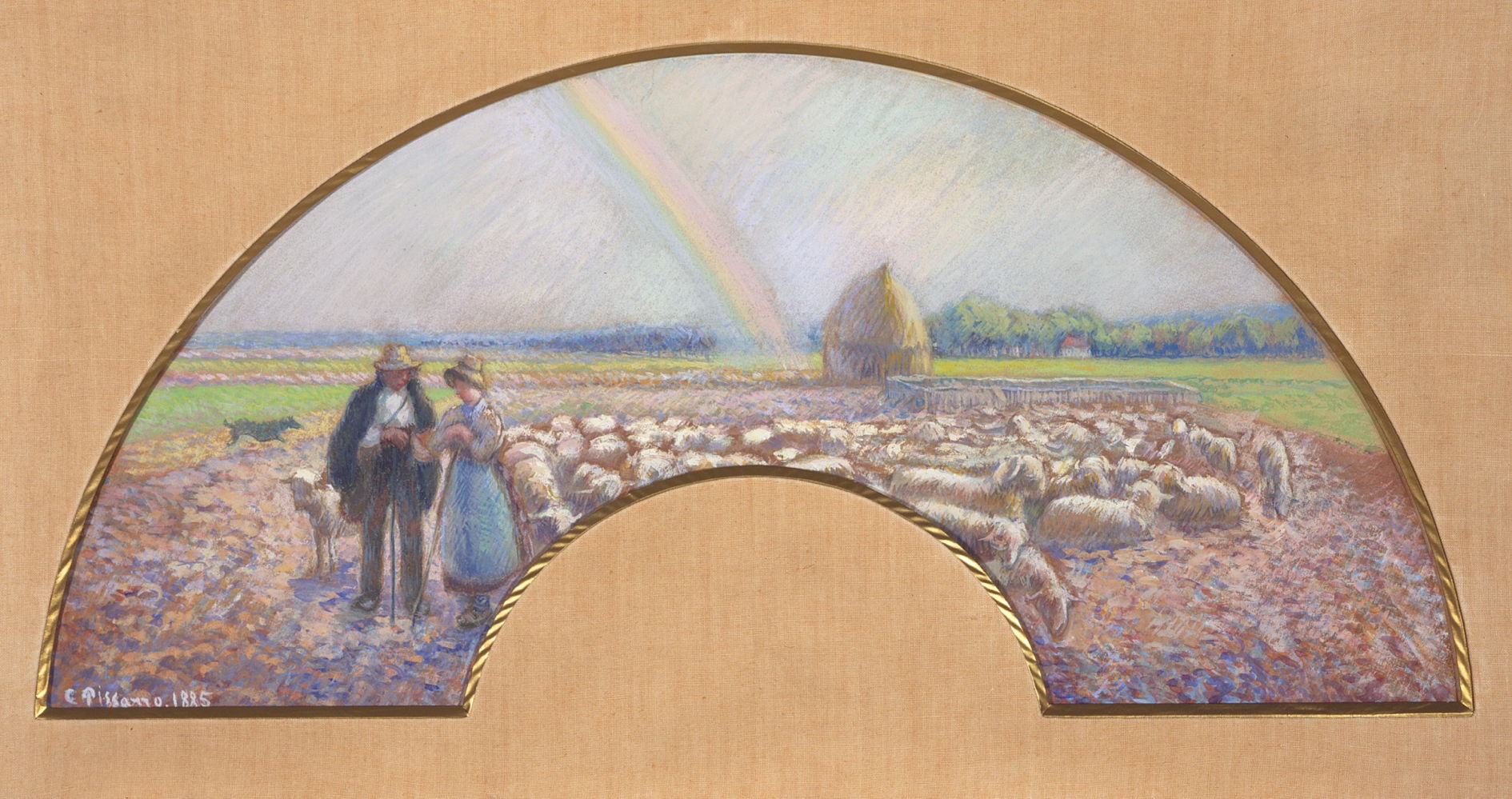
Pissarro used the same media for his Shepherds in the Fields with a Rainbow from 1885, but then seems to have stopped painting fans, just as others were starting.
 The Eclectic Light Company