

In this article and tomorrow’s sequel I look back over some of the paintings, artists and articles that I find most memorable among those published here in the last year.
George Bellows (1882–1925)
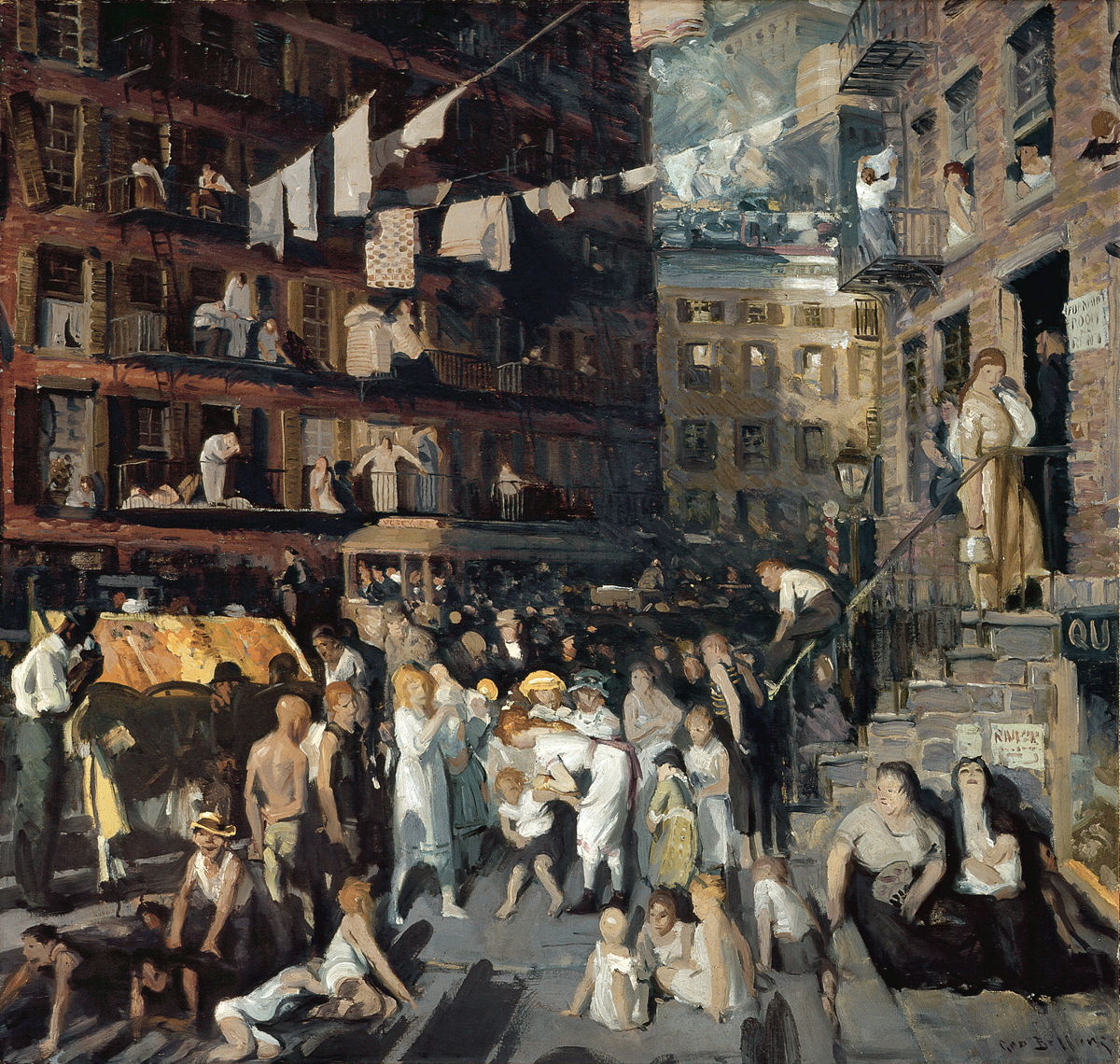
January marked the centenary of the death of US artist George Bellows, whose famous Cliff Dwellers (1913) shows the largely immigrant population of tenements in Lower East Side, New York City. In 1916 this was the first painting to be purchased by the county of Los Angeles for its new museum of art, where it remains today.
Commemorating the centenary of the death of George Bellows 1
Commemorating the centenary of the death of George Bellows 2
Ovid’s Metamorphoses: King Midas

Through the first half of the year, I was completing my retelling of Ovid’s Metamorphoses with the aid of paintings of its myths. That of King Midas is widely known, but only its first part. He realised how disastrous it was that everything he touched turned into gold, and pleaded for that to be removed. He later objected to the victory of Apollo over Pan in a music contest, for which Apollo transformed the king’s ears into those of an ass, as shown in Émile Lévy’s painting of The Judgement of Midas from 1870.
Urban Revolutionaries

I followed up my earlier series looking at life in the country with one showing paintings of city life. The young woman asleep in John Roddam Spencer Stanhope’s Robin of Modern Times (1860) is generally agreed to be one of those who abandoned the country around London to become prostitutes in the city.
Vilhelm Hammershøi’s interiors

One of the more popular articles in my series on interiors was that showing the remarkable paintings of the Danish artist Vilhelm Hammershøi (1864–1916). Room in the Artist’s Home in Strandgade, Copenhagen, with the Artist’s Wife from 1901 is one of many in which he explores the effects of light pouring in through his apartment’s windows.
Hats with meaning

One of the more unusual paintings featured in a compilation of depiction of hats is Carl Gustaf Hellqvist’s large account of Valdemar Atterdag Holding Visby to Ransom, 1361 from 1882. There’s a rich range of military helmets, and one obvious conical hat being worn by a Jew.
Napoleons of paintings

One weekend in March, I traced the history of the Napoleons of France. Ary Scheffer’s account of The Retreat of Napoleon’s Army from Russia in 1812 (1826) shows this march of death starting from Moscow in the middle of October 1812, which took until the middle of December to clear Russian territory. In the appalling winter weather, Napoleon’s Grande Armée is claimed to have shrunk from 100,000 to around 22,000.
Napoleons of paintings: 1 Victories
Napoleons of paintings: 2 Defeat
John Singer Sargent (1856-1925)

In April we marked the centenary of the death of the expatriate American artist John Singer Sargent (1856-1925), including this view of workers Bringing Down Marble from the Quarries in Carrara, painted in 1911. These marble quarries in the north of Tuscany, Italy, provided most of the fine white and blue-grey marble for classical Roman buildings and statuary, and that for Michelangelo’s famous statue of David in 1501-04.
Commemorating the centenary of John Singer Sargent’s death: 1 Pupil
Commemorating the centenary of John Singer Sargent’s death: 2 London
Commemorating the centenary of John Singer Sargent’s death: 3 Venice
Commemorating the centenary of John Singer Sargent’s death: 4 Travels
Commemorating the centenary of John Singer Sargent’s death: 5 War
Commemorating the centenary of John Singer Sargent’s death: 6 Post-war
Lovis Corinth (1858–1925)
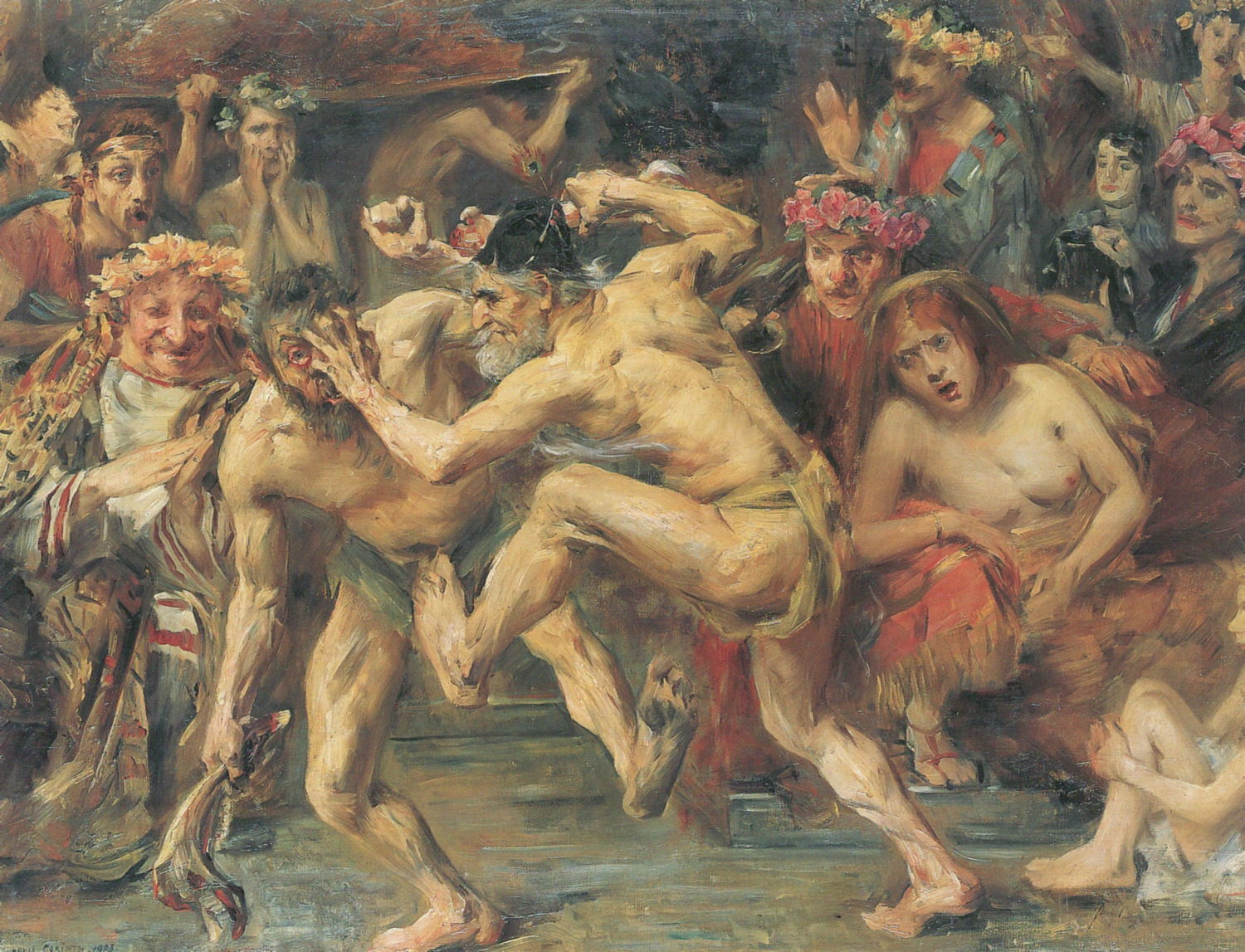
A couple of months later, we marked the centenary of the death of the great modern narrative painter Lovis Corinth (1858–1925), who is the more remarkable for recovering from a major stroke over a decade earlier. His Ulysses Fighting the Beggar (1903) shows a story from book 18 of Homer’s Odyssey, before the slaughter of the suitors.
Corinth captures the fight as Odysseus (centre) is getting the better of Irus (left of centre), with various suitors and bystanders watching. Although painted loosely, the artist has taken care to give each face its own expression, ranging from amusement to apprehension. The end result is a raucous collage of human emotion.
British Music Halls

My series on interiors devoted an article to paintings of music halls in Britain, including Walter Sickert’s The Music Hall, from 1888–89. Among more than five hundred music halls around Britain at the time, Sickert made the Bedford in Camden Town, London, his favourite. The first there, known as the Old Bedford, opened in 1861 and was destroyed by fire in 1898. Its successor was the New Bedford, which was larger and even featured electric lighting. Among others who frequented the New Bedford was the novelist Virginia Woolf, and its performers included Charlie Chaplin before it finally closed in 1959.
Paintings of Oslo

Although we’re familiar with Edvard Munch’s more famous paintings of the central street in the city of Oslo, he painted numerous others, including Karl Johan in the Rain from 1891. This shows it rising up towards the Royal Palace in the distance, with its pavements crowded with black umbrellas.
 The Eclectic Light Company