
In this third and final look at some of the paintings completed a century ago in 1925, I turn to narrative works, and those leading into the modern art that was to become dominant.
Inevitably, as he approached the age of seventy, John Singer Sargent faced increasing criticism of his outdated style and refusal to embrace the new styles of Cubism or Futurism. After the First World War he spent more time in the USA working on his series of murals in the Boston area.

He started his huge masterpiece of Orestes Pursued by the Furies in 1922 and completed it in 1925, just prior to his death. Over the 100 square feet of its canvas, it shows a young and naked Orestes cowering under the attacks of the Furies as he tries to run from them. The swarm of no less than a dozen fearsome Furies have daemonic mask-like faces, blond hair swept back, and hold out burning brands and fistfuls of small snakes.
Sargent has gilded the flames on the brands to make them shine proud like fire. The isolated woman who stands in Orestes’ way is no Fury, though: she wears a gilded crown, and with the clean incision of a stab wound above her left breast can only be his mother Clytemnestra. There’s a profusion of arms, eight of them clutching snakes and thrust in Orestes’ direction.


This vast canvas of The Danaïdes (c 1922-25) also decorates the entrance to the Library of the Museum of Fine Arts in Boston.

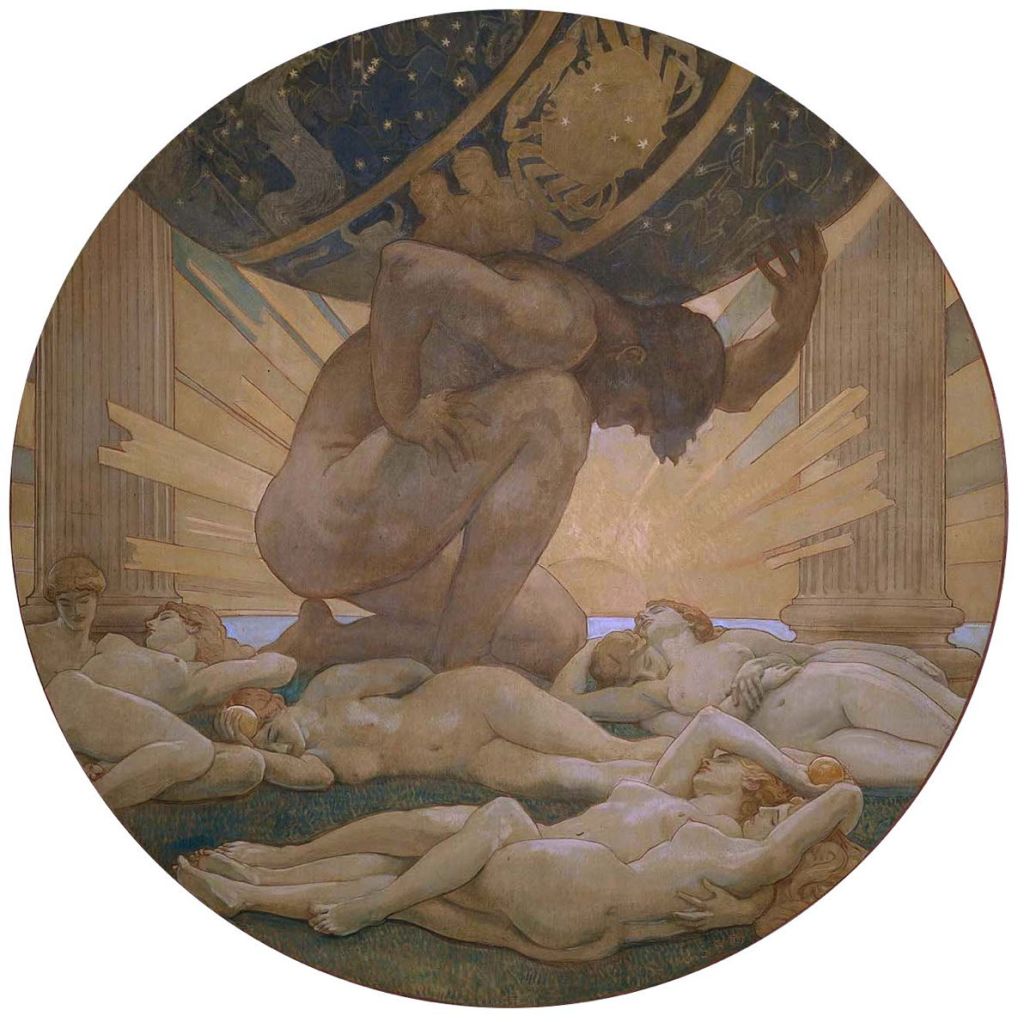
Atlas and the Hesperides, painted over a similar period, shows the giant still carrying the heavens on his shoulders, as seven naked Hesperides sleep on the ground around him.
In 1922, Sargent had co-founded Grand Central Art Galleries and its associated academy the Grand Central School of Art, in New York City. The former held a major exhibition of his work in 1924, following which the artist returned to London, where he died on 14 March 1925.
Another great narrative painter was in the final months of his life.

Lovis Corinth painted Ecce Homo at Easter 1925, as an act of meditation to mark the festival. It shows the moment that Pilate presents Christ to the hostile crowd, just before the Crucifixion. Christ has been scourged, bound, and crowned with thorns, and Pilate’s words are quoted from the Vulgate translation, meaning behold, the man. In keeping with his earlier contemporary interpretations of the scenes of the Passion, Pilate (left) is shown as an older man in a white coat, and the soldier (right) wears a suit of armour.
Corinth completed this in four days. This was bought for the Nationalgalerie in Berlin in 1929, but in 1937 was condemned by the Nazi party as being ‘degenerate art’. Thankfully, it escaped destruction when it was bought by the art museum in Basel in 1939.

The Beautiful Woman Imperia was one of the last paintings that Corinth completed in the late spring of 1925, and his final fleshly work. It’s based on Balzac’s anthology of tales Cent Contes Drolatiques from 1832-37, and shows the courtesan Imperia, naked in front of a priest, in surroundings suggesting contemporary decadent cabarets.
Although much of the work of the next generation of painters remains protected by copyright, I am able to show paintings from two, Anita Rée (1885–1933) and Oleksandra Ekster (1882–1949).
Between 1922 and 1925, Anita Rée stayed and painted in the fishing village of Positano, on the Amalfi Coast of Italy. Over this period her work matured to a modern style, and she painted several of her most important works.

Rée’s Semi-Nude Before a Prickly-Pear Cactus is often assumed to be a self-portrait, and certainly resembles her other self-portraits, except in one prominent detail: its blue eyes.
Rée not infrequently used breasts in motifs and designs, such as her delightful series of Double-Breasted Postcards sent to friends on honeymoon in 1929. Although she made inevitable sensual associations, in other paintings they’re central to her depictions of motherhood, and become symbols of feminine power.
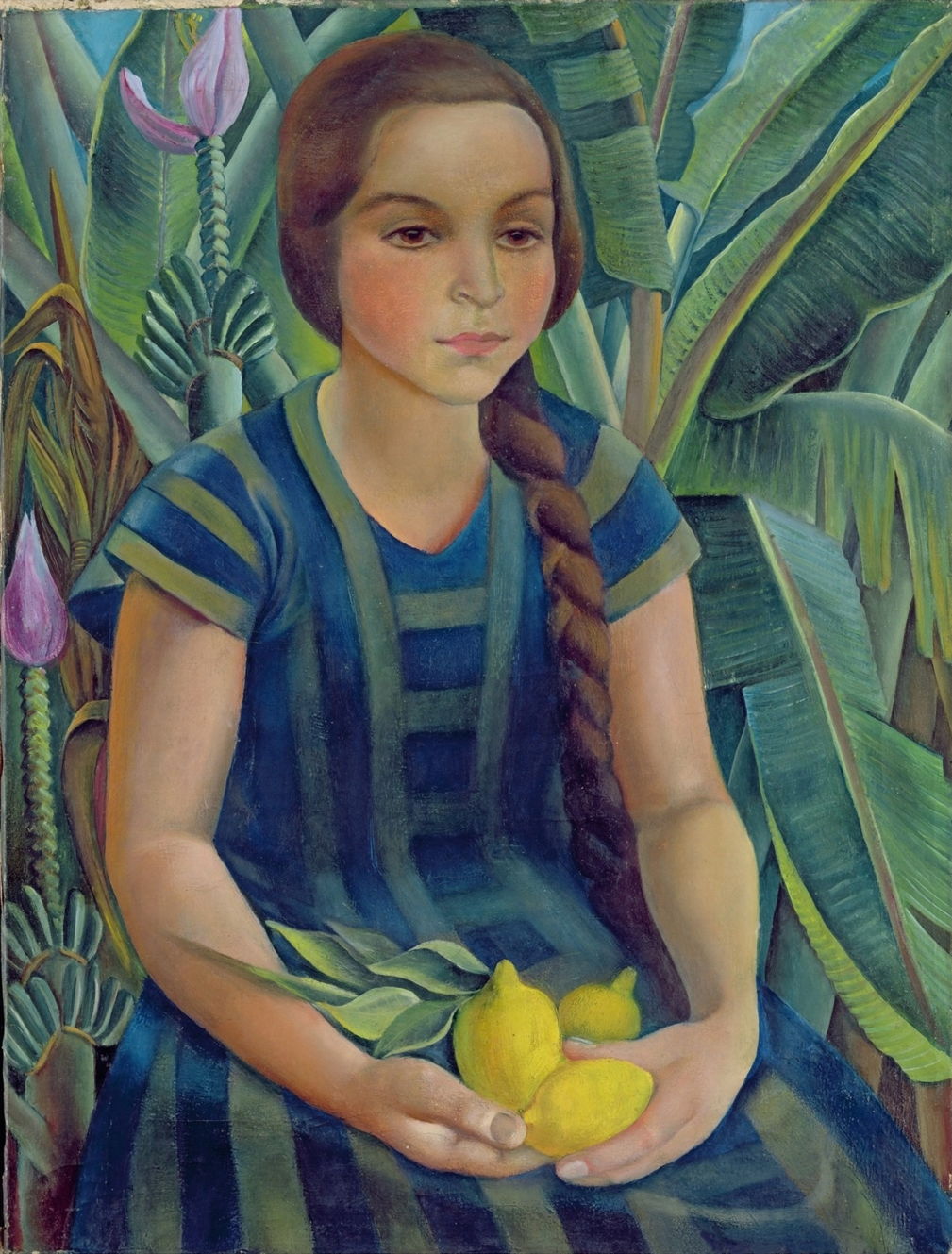
Of all her many insightful portraits, my favourite is that of Teresina (1922-25), a girl looking wistfully into her future, clutching some lemons, the major local crop, amid dense tropical plants.
In 1924 Oleksandra Ekster and her husband emigrated to Paris, where they remained for the rest of their lives. In the late 1920s she was a professor at Fernand Léger’s Academy of Contemporary Art in Paris.
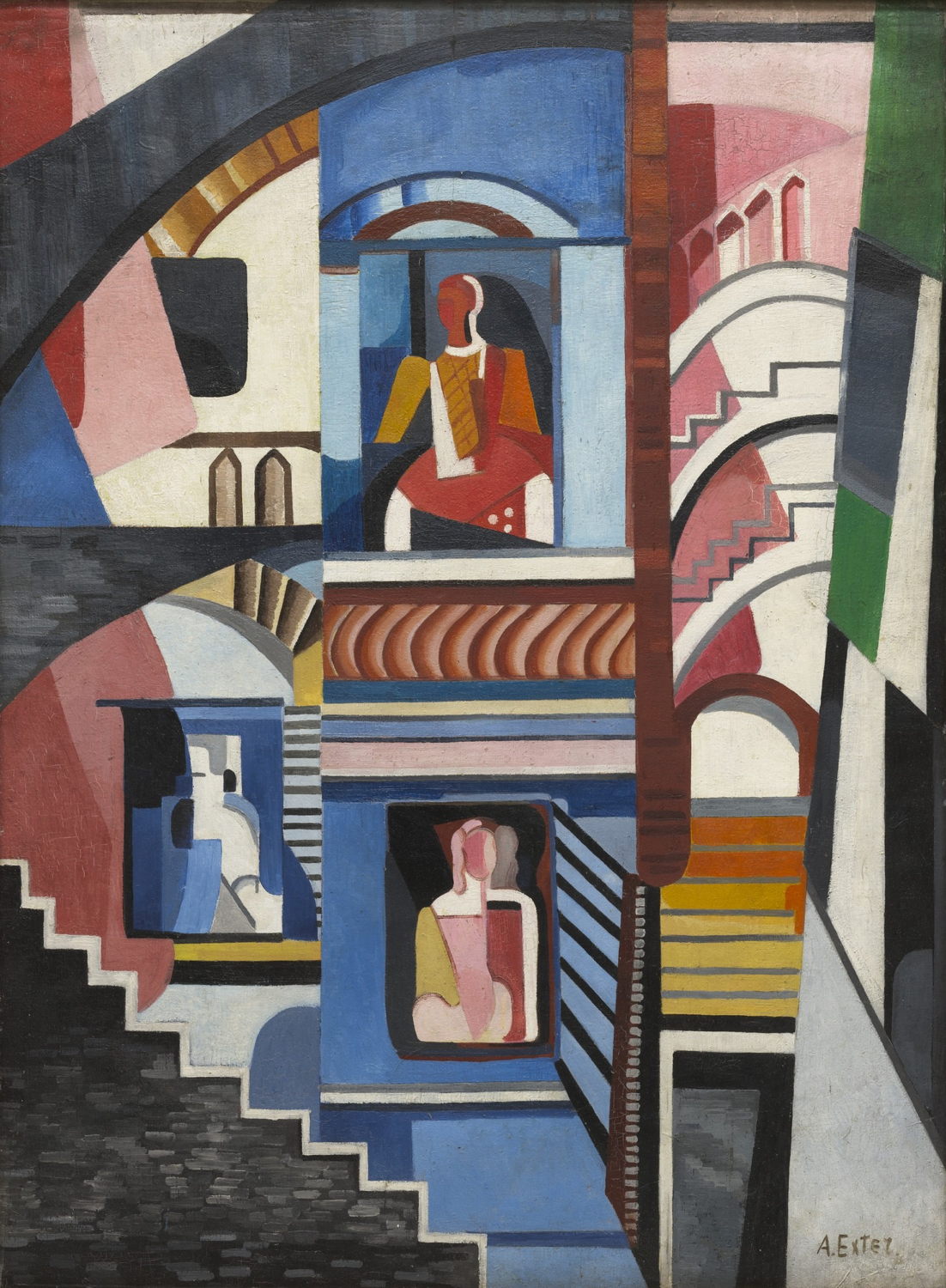
Her Theatrical Composition refers to her long involvement in stage design.
 The Eclectic Light Company