

By the end of the nineteenth century, travelling to the coast in summer had become widely popular, and the masses living and working in industrial cities did so en masse on the railways. Once there, many went for a dip in the sea for its claimed health benefits. Beachgoers and swimmers no longer hid their bodies with the use of bathing machines, and some were even starting to wear lighter dress, and cautiously reveal much of their legs and arms.
With the new century came a new accommodation between fashion and modesty, in progressive adoption of clothes designed for wear when bathing, and on the beach.
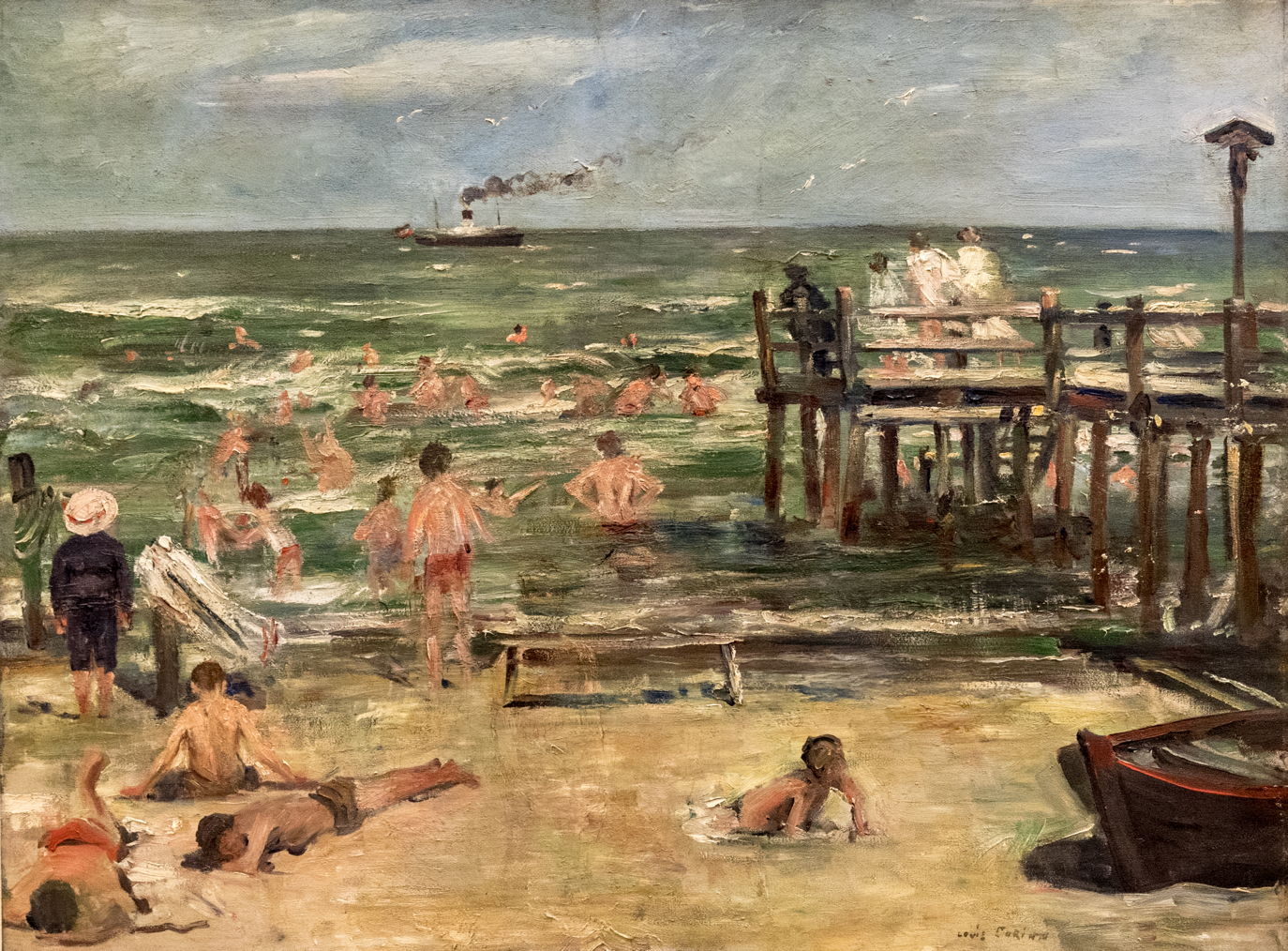
In Lovis Corinth’s view of Swimming in Horst – Ostsee (1902), the more bracing waters of the Baltic are proving popular with these men in their bathing trunks.
As French artists were moving to live on the Mediterranean coast, they came across what was claimed to be an older local tradition of bathing naked. Or maybe it was just an excuse for painting nudes in a landscape.

Henri-Edmond Cross’s Bathers or Happy Bathing, started in 1899 and completed in 1902, certainly appears consistent with that claim.
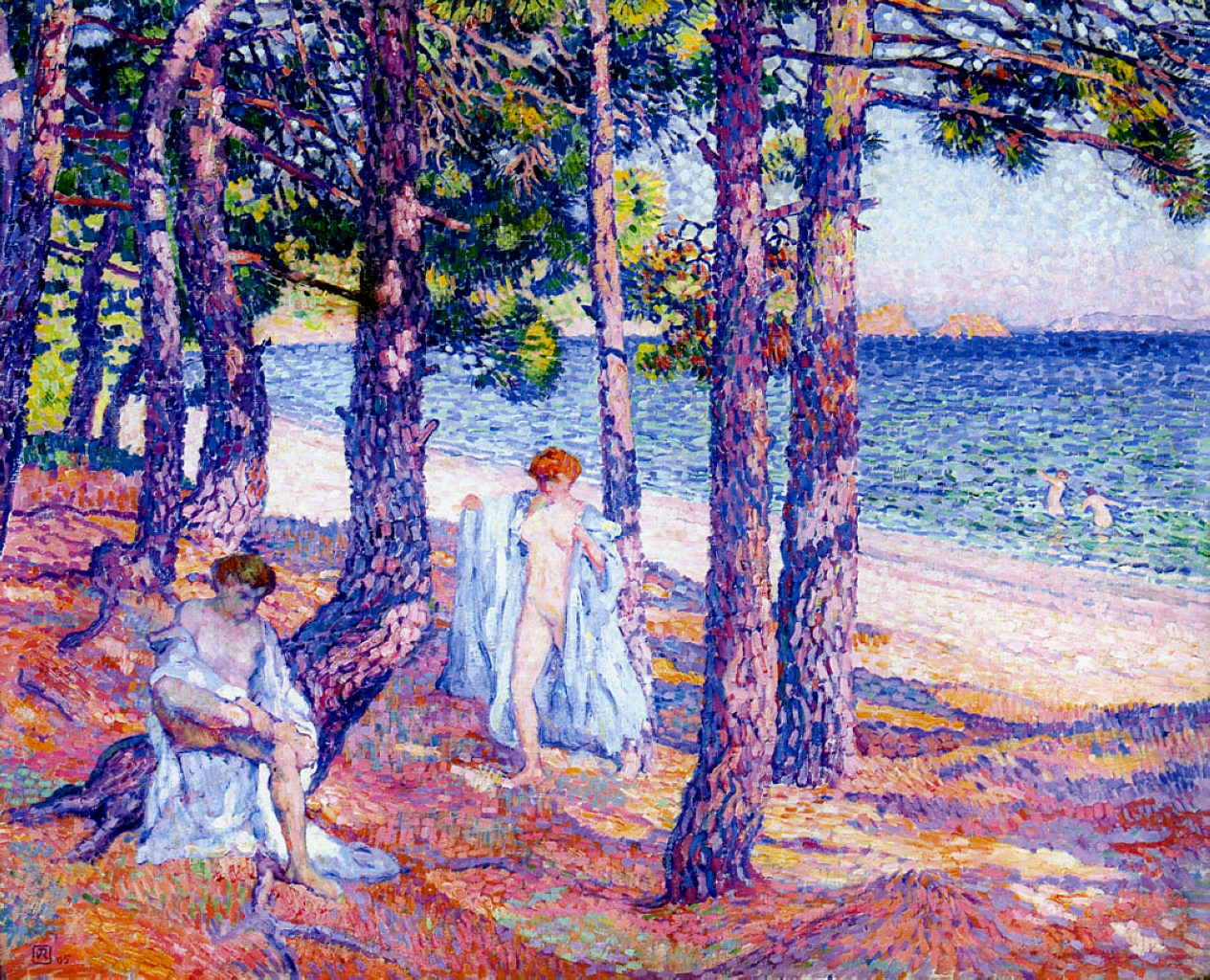
In Théo van Rysselberghe’s secluded Bathers under the Pines at Cavalière (1905), these young women appear to follow that tradition and go naked. This beach has changed enormously over the last century: this has become a popular resort at Le Lavandou, near Saint-Tropez, where beachwear isn’t now as optional as it was then.
In the early twentieth century there was renewed interest in ‘healthy’ outdoor living, into which some incorporated nudity, so leading to naturist movements.

The Danish artist Laurits Tuxen, who just over a decade earlier had painted a portrait of Queen Victoria, found A Young Nude Woman Sunbathing in the Dunes in Skagen in 1906. The queen would not have been amused.

For the more traditional families in eastern Spain, there had been little relaxation in dress in spite of increasing visits to the beach. Joaquín Sorolla’s Beach of Valencia by Morning Light (1908) shows mothers still modestly clad, some with their heads covered, although their children splashed unconstrained.

Some of Sorolla’s other beach paintings of his native Valencia show more relaxed dress among adults, including After the Bath, also from 1908.

When the former Nabi artist Maurice Denis spent the summer of 1912 in Brittany, he found a curious mixture of dress among these Female Bathers at Perros-Guirec.

On the other side of the Atlantic, beach dress had progressed on Good Harbor Beach in Gloucester, MA. Adults were then wearing light clothing exposing their arms and legs, as shown in Louise Upton Brumback’s bold and crisp style, and those down in the water wore bathing costumes.

But still not those in Maurice Denis’ Wave from 1916, who remained naked in the Midi.
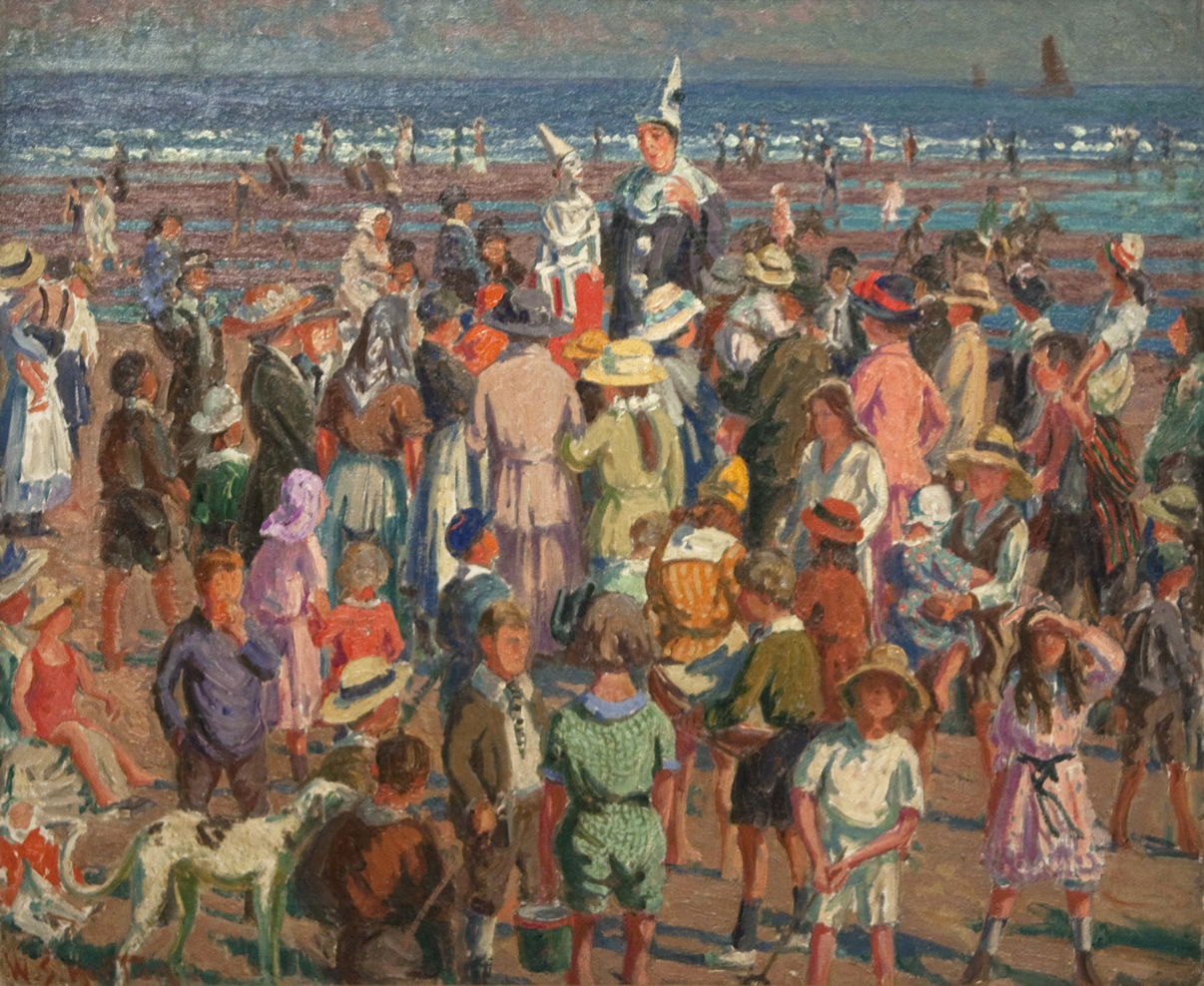
When William S Horton, a native of Grand Rapids, Michigan, painted this Punch and Judy show taking place in 1920 on the beach at Broadstairs, Kent, its beachgoers also remained more traditionally clothed. This is a family beach resort at the extreme eastern tip of the south-east coast of England, which tolerated some bared arms and lower legs, but many of the women and girls still wore hats.
The oddest fact of all, though, is that on most of those beaches, there have never been any legal restriction on clothing, or even a ban on nudity. What we wear on the beach has largely been determined by social conventions.
 The Eclectic Light Company