
When Europeans started to visit beaches and swim there for pleasure, they did so for their health. In the late eighteenth century medical authorities recommended that bathing in the sea should be undertaken to heal chronic diseases and bring health. Although the original edicts advocated this should be performed in winter, people appear to have largely ignored that part, and started flocking to the coast in summer for a dip in the sea.
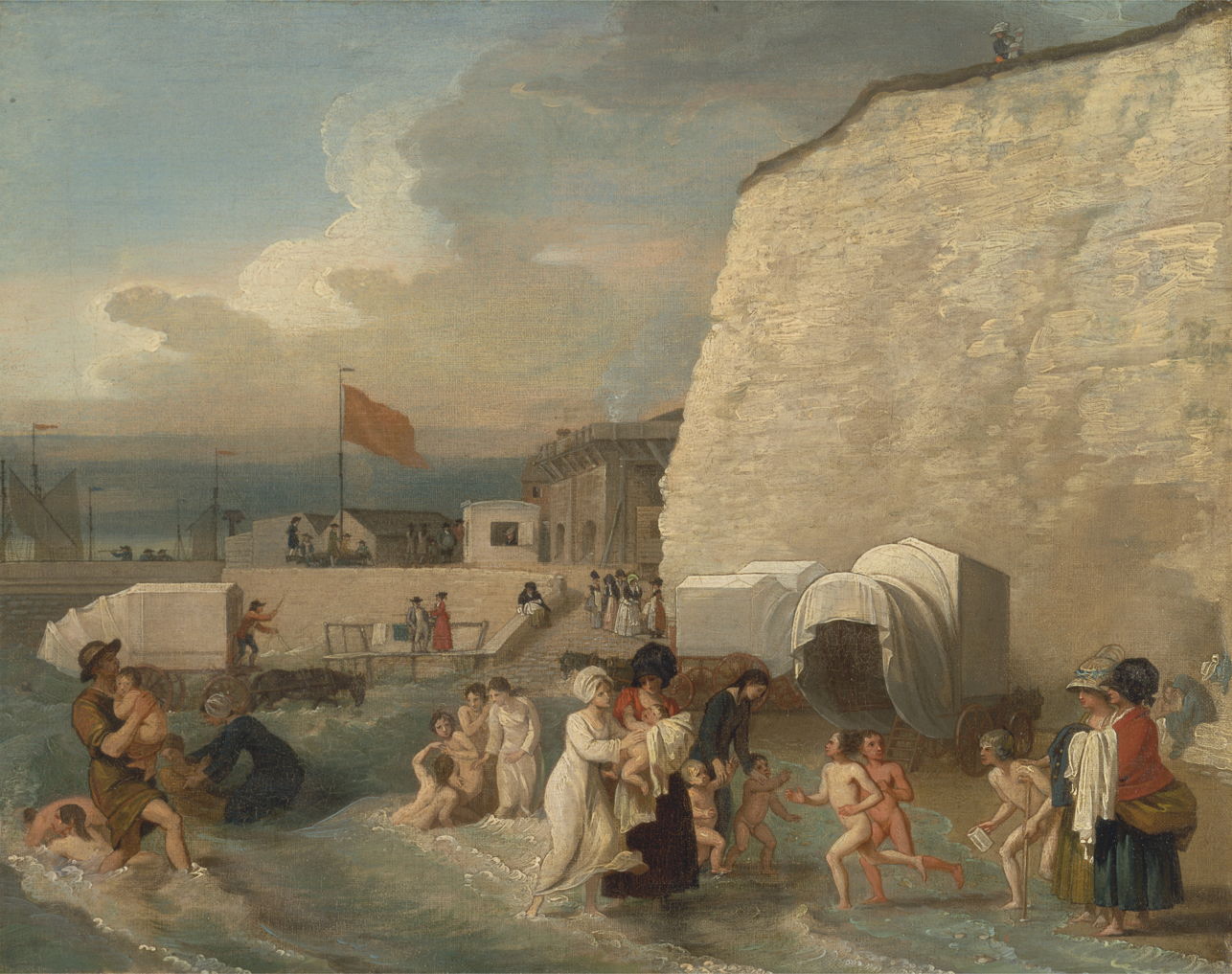
Benjamin West’s painting of The Bathing Place at Ramsgate, from about 1788, appears to have been commissioned by William Russell Birch (1755-1834) for a collection of engravings of British landscapes, published in 1790 under the title Délices de la Grande Bretagne. West shows the novel experience of bathing in the sea from one of the covered horse-drawn ‘bathing machines’, at the nascent resort on the Kent coast at Ramsgate. This had been growing in popularity following its adoption by members of the royal family and nobility, despite the typical English weather shown here. While children are seen completely unclothed, adults are dressed to bathe in gowns, full-length for women but above-knee for men.
For most this didn’t become practical until the advent of the railways in the following century, whose early destinations included some of those developing coastal resorts.
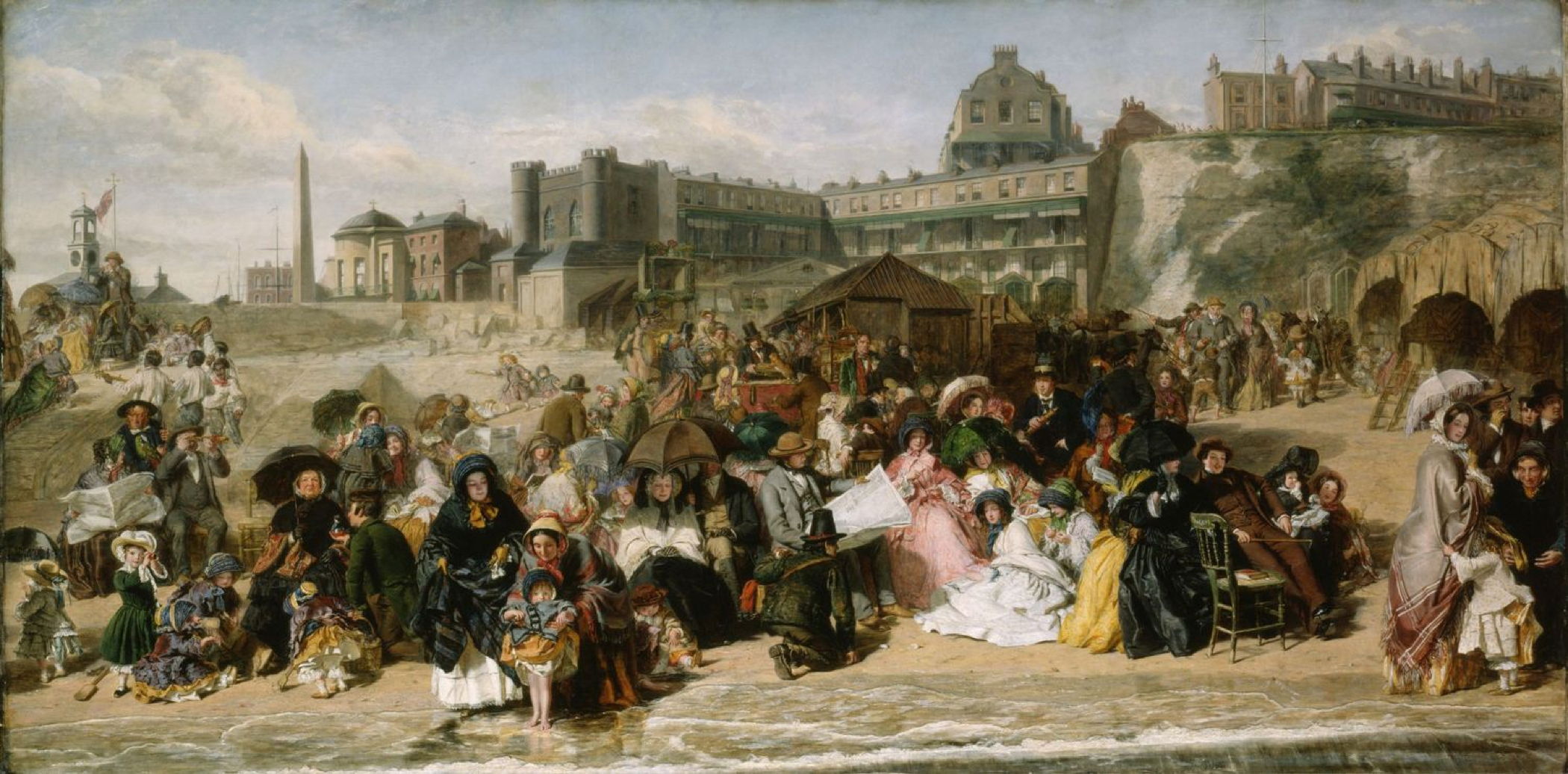
Seventy years later, William Powell Frith’s painting of the almost identical view of Ramsgate Sands (1854) proved his breakthrough, and the first of his great social panoramas. In 1846, Ramsgate was connected by railway to London, from where the masses came to bathe in its waters. Frith holidayed there in 1851, when he made his first sketches on which he based this work. His beach is an eclectic mixture of different classes, reflected in their clothing and activities. By this time, greater modesty had prevailed. Although there’s an array of changing tents at the right, no one has made use of them, and even small children are wrapped up in full dress.
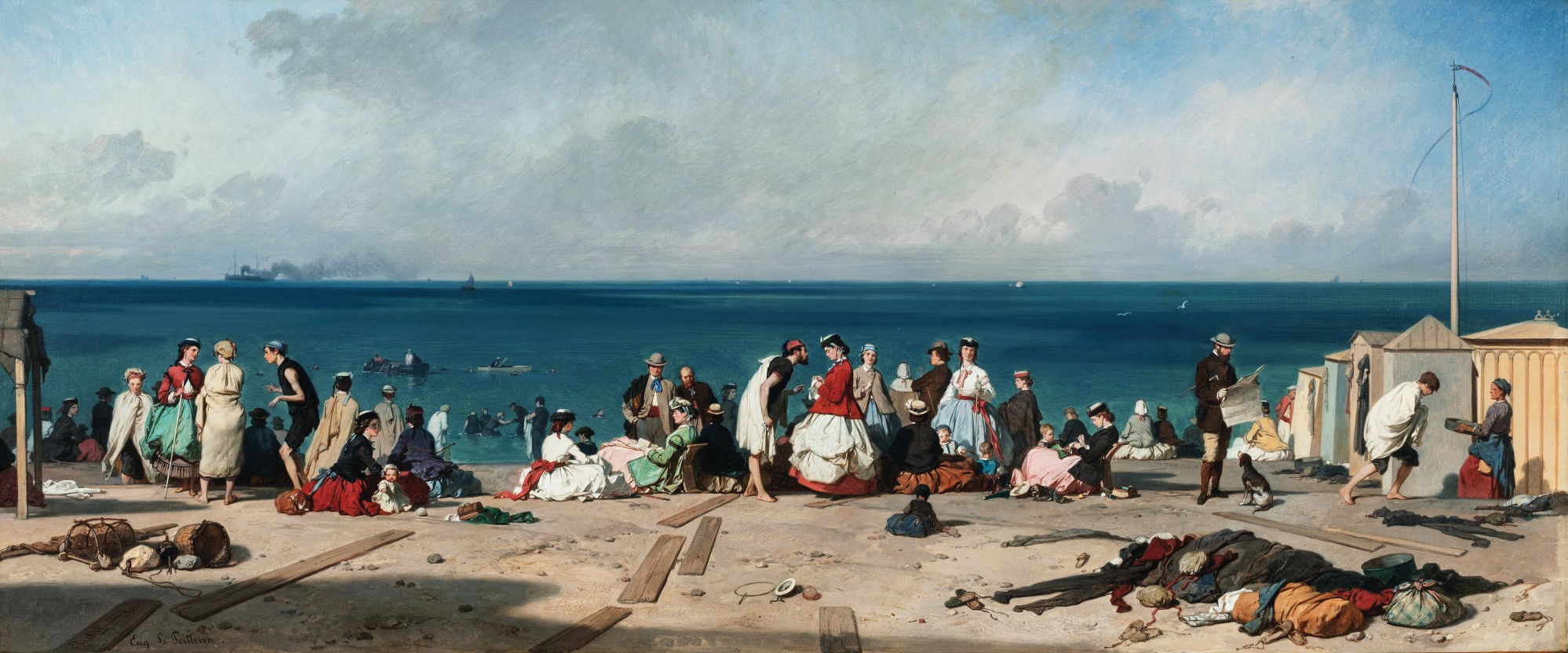
Over on the other side of the Channel a decade later, Eugène Lepoittevin’s Bathing, Étretat Beach (1864) shows the French enjoying the beach. A few bathers have donned more liberal dress for their healing dip, but clothing largely remained unaltered for their visit to the beach. This painting was exhibited at the Salon in 1865, where it was so successful that it was bought by Emperor Napoleon III.
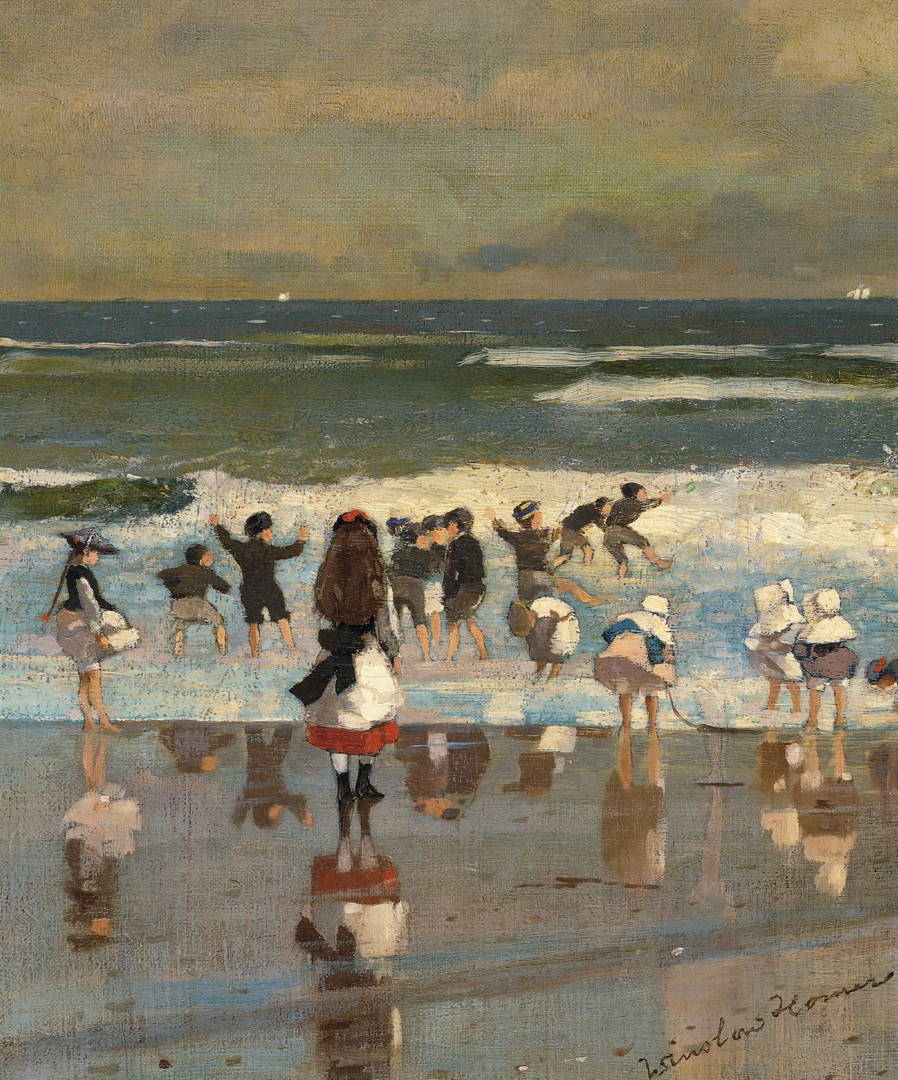
I suspect this small oil sketch by Winslow Homer showing a Beach Scene (c 1869) was painted on the east coast of the USA, although he had visited France between 1867-68. At least these children were able to bare their legs for a paddle.
During the late nineteenth century bathing dress developed in some parts of Europe.

Frédéric Bazille began this Summer Scene, also known as Bathers, when he was on holiday in Montpellier during the summer of 1869. Although set on the banks of the River Lez there rather than a beach, these young men have stripped down to what could be either underwear or bathing trunks.
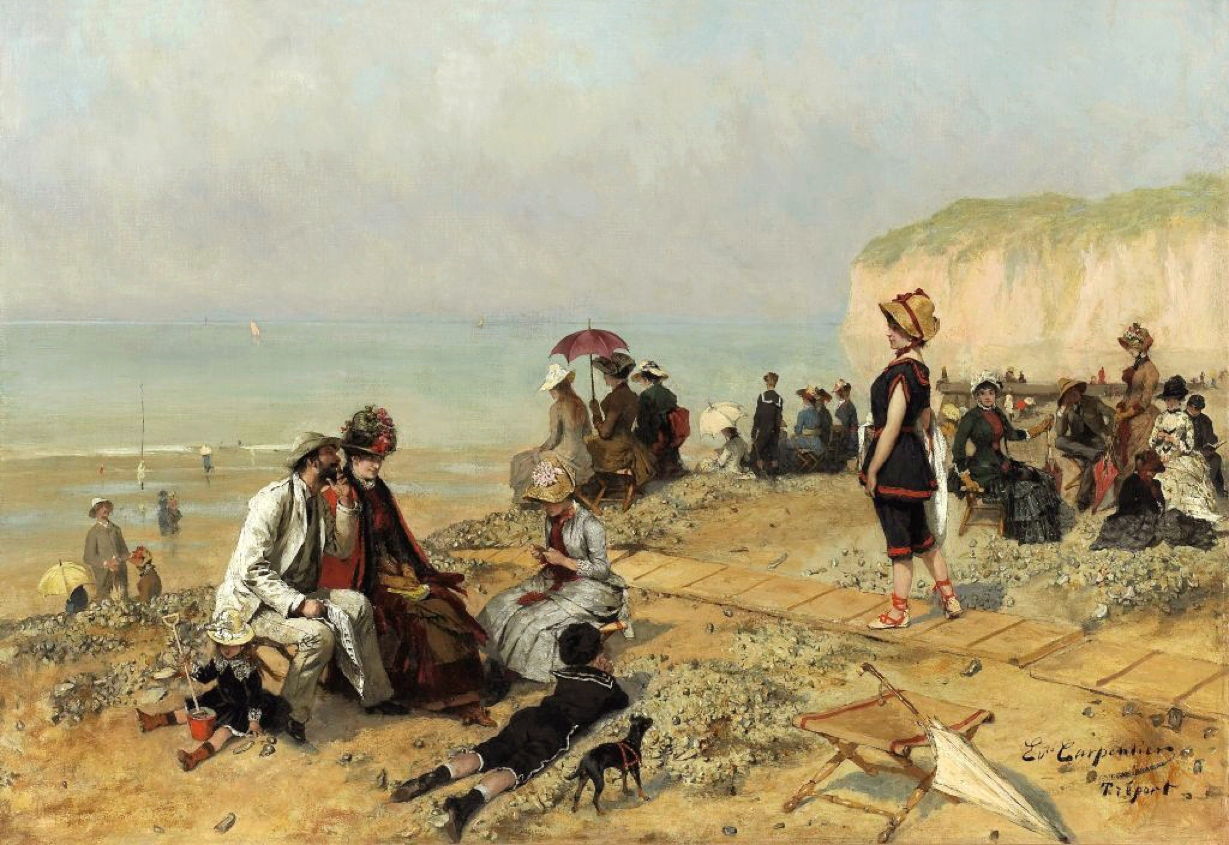
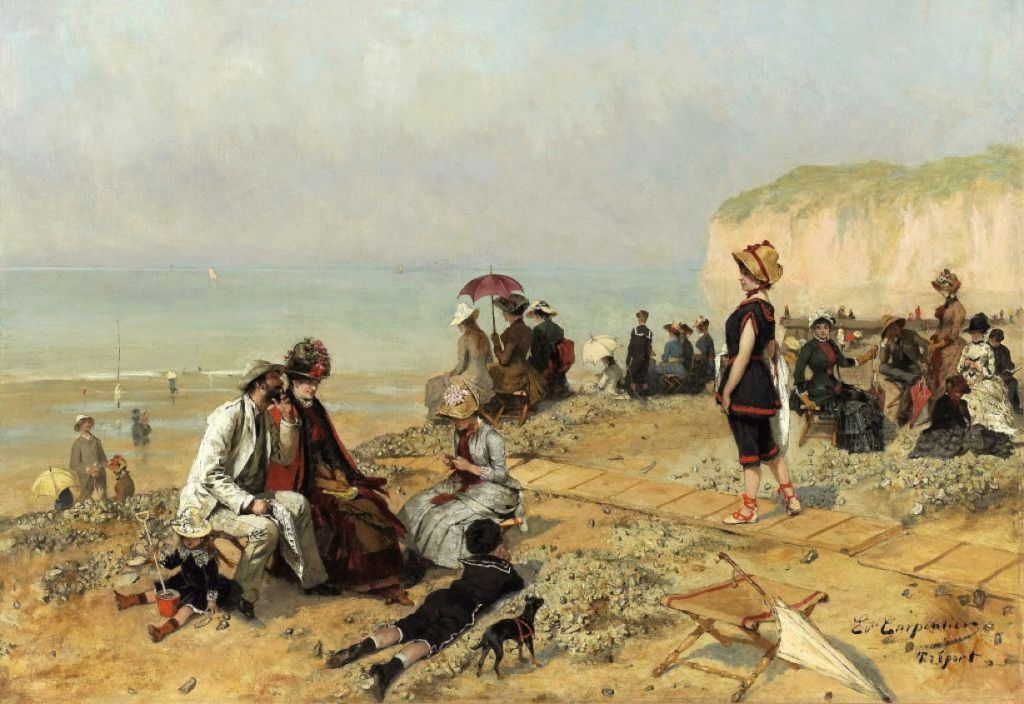
Le Tréport is another small resort on the Channel coast of France near Dieppe, which had become a popular place to ‘take the waters’, and is shown in Évariste Carpentier’s Le Tréport, Bathing Time from 1882. The young woman at its centre has dressed herself in a radically revealing bathing suit, and is drawing the attention of others who are still wearing everyday clothing.
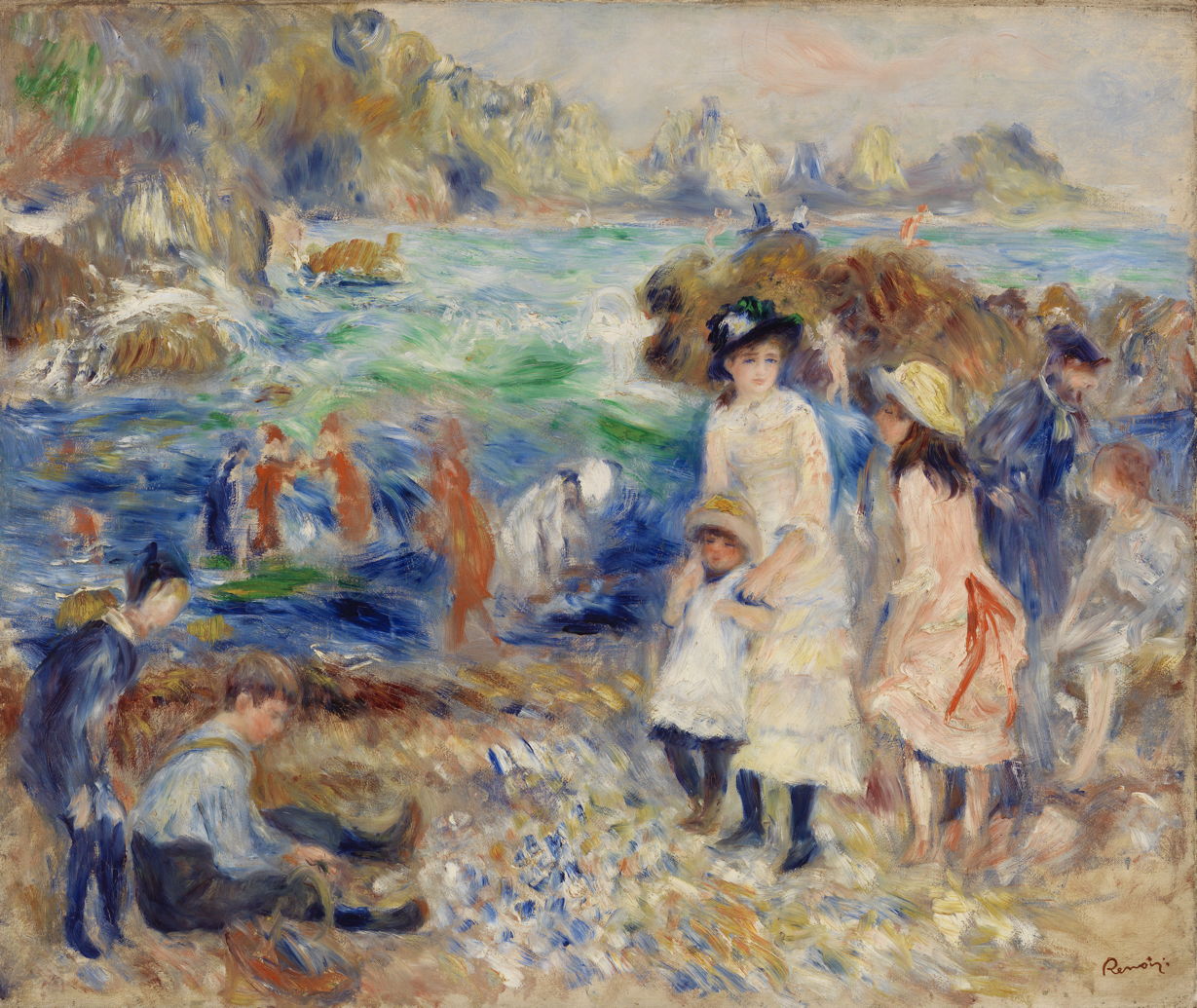
When Pierre-Auguste Renoir took a holiday on the small island of Guernsey in 1883, he made several oil sketches of beach scenes there, including Children on the Seashore, Guernsey. Although much closer to France than to the south coast of England, Guernsey, its larger sibling Jersey, and several smaller islands have remained steadfastly British, and the children here remain modestly dressed.
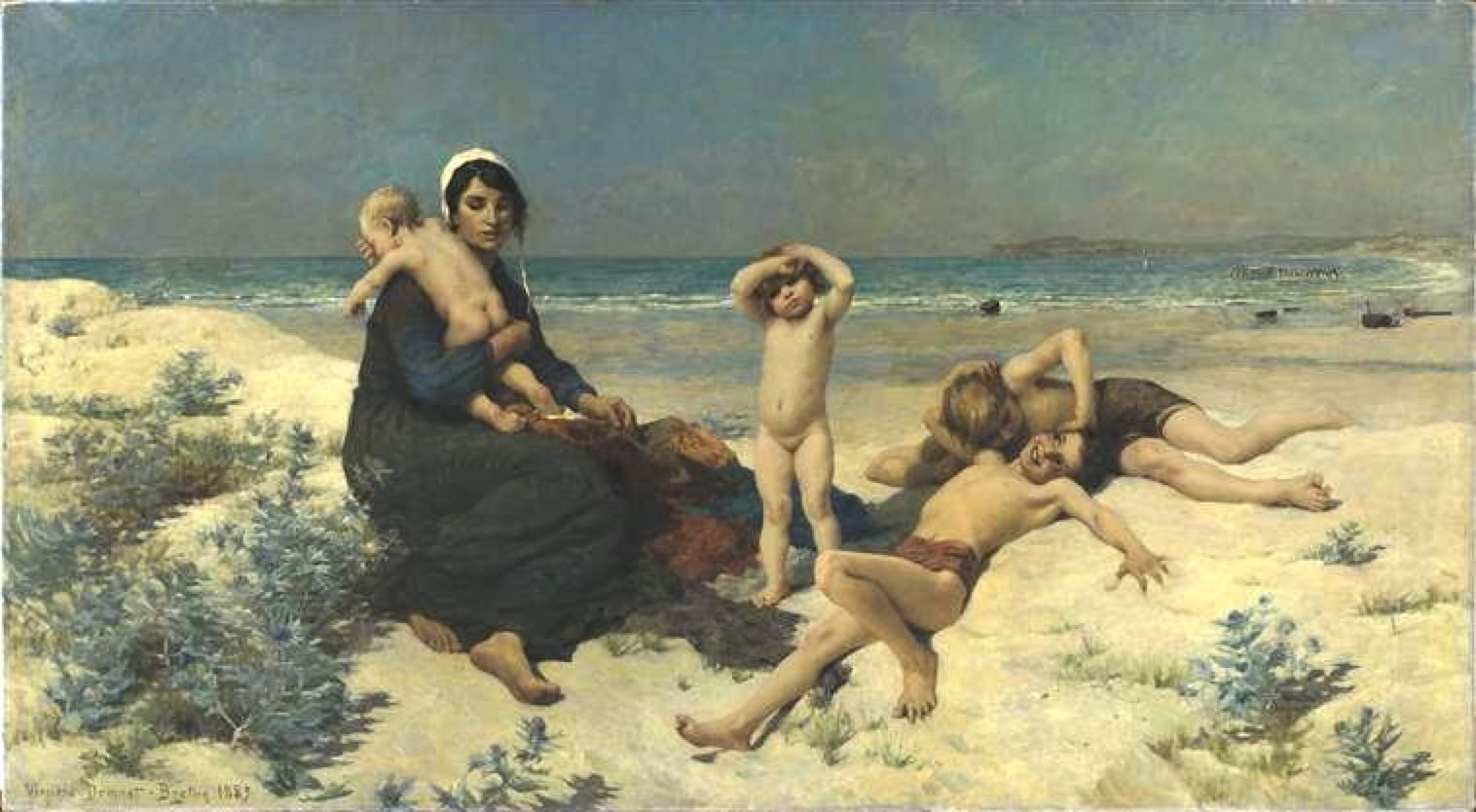
Further from the crowds on the north coast of France, Virginie Demont-Breton’s family, the wife and children of a fisherman, enjoy fine weather in fresh air with a natural bath on The Beach in 1883.
 The Eclectic Light Company