
Next week, on 14 June, marks what is most likely the centenary of the death of the Belgian painter Emile Claus. This isn’t certain, though, and I have two other possible dates of 14 May or 5 June. Indeed, it’s not even clear whether he should be known as Emile or Émile. This is largely because he spent the years of the First World War in London, and when he returned to his native country his art had been overtaken and forgotten.
Emile Claus was born in 1849 to a large family in Sint-Eloois-Vijve, a village on the bank of the River Lys in West Flanders, Belgium. He showed early enthusiasm and ability at drawing, and with the support of a leading musician of the day, gained admission to the Academy of Fine Arts in Antwerp in 1869.
He completed his studies there in 1874, collecting the second prize for excellence, and went to work in de Keyser’s studio in Antwerp. In 1875 two of his paintings were accepted in the Brussels Salon, he was elected to the Artistic and Literary Circle of Brussels, and he started to receive commissions for work. For three years he shared studio with his friend Évariste Carpentier.
In 1879 he travelled to Spain and North Africa, where he painted numerous oil and watercolour studies in an academic realist style.
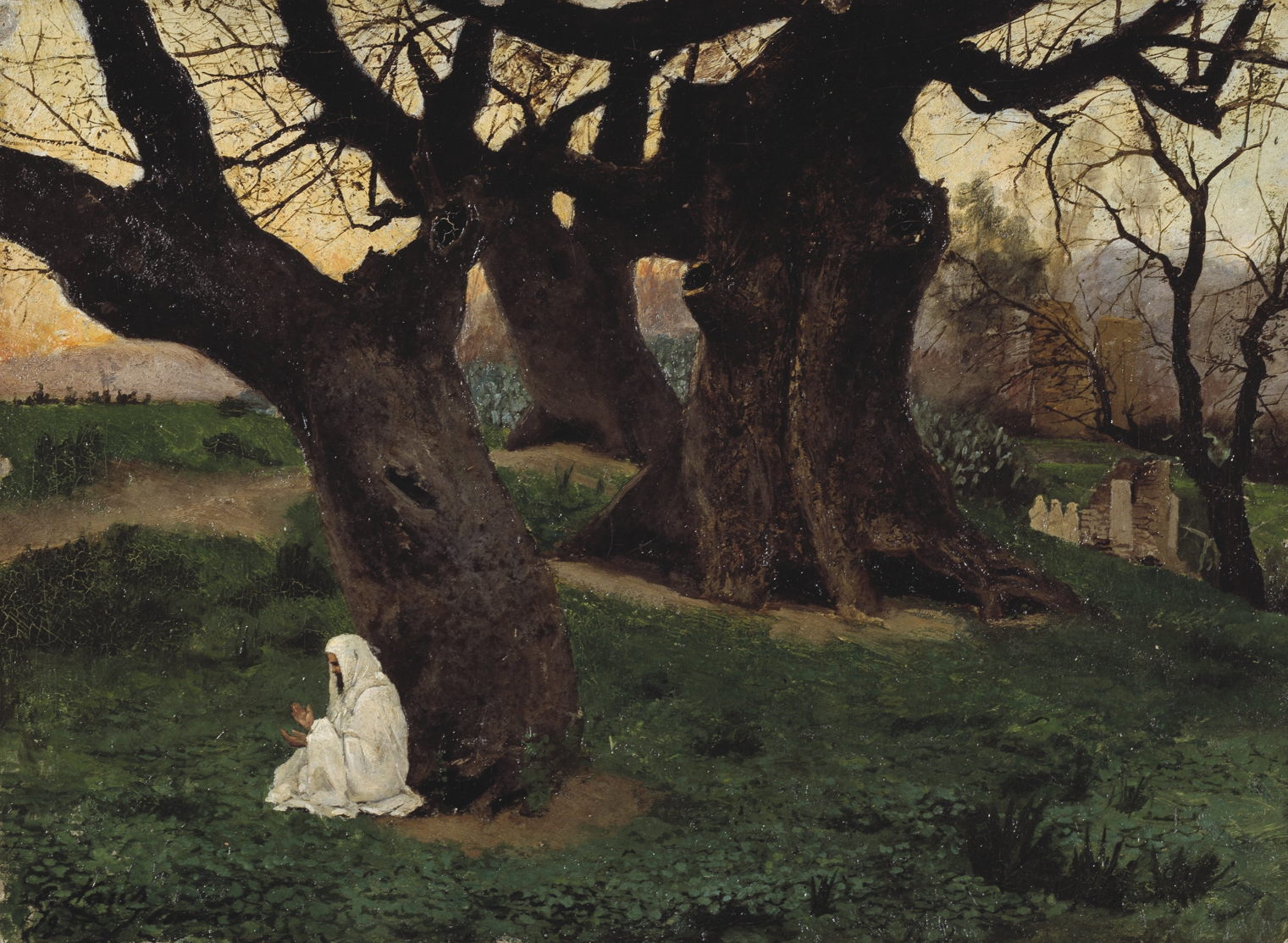
Landscape in Algeria from 1879 is one example of these, and could be considered to be from the Barbizon School, although at the time in France, Impressionism was at its height.
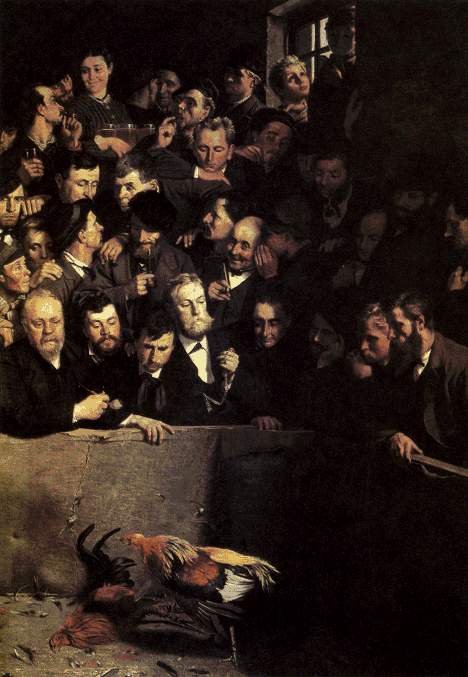
In 1882 his painting Cock Fight in Flanders was accepted for the Paris Salon and the Universal Exposition in Amsterdam. Later that year he fell in love with the countryside around the River Lys, and started to paint his first rural landscapes there.
In 1885, he developed his rural landscapes of the Lys area further, and his masterpiece The Old Gardener was exhibited in the Antwerp Salon.
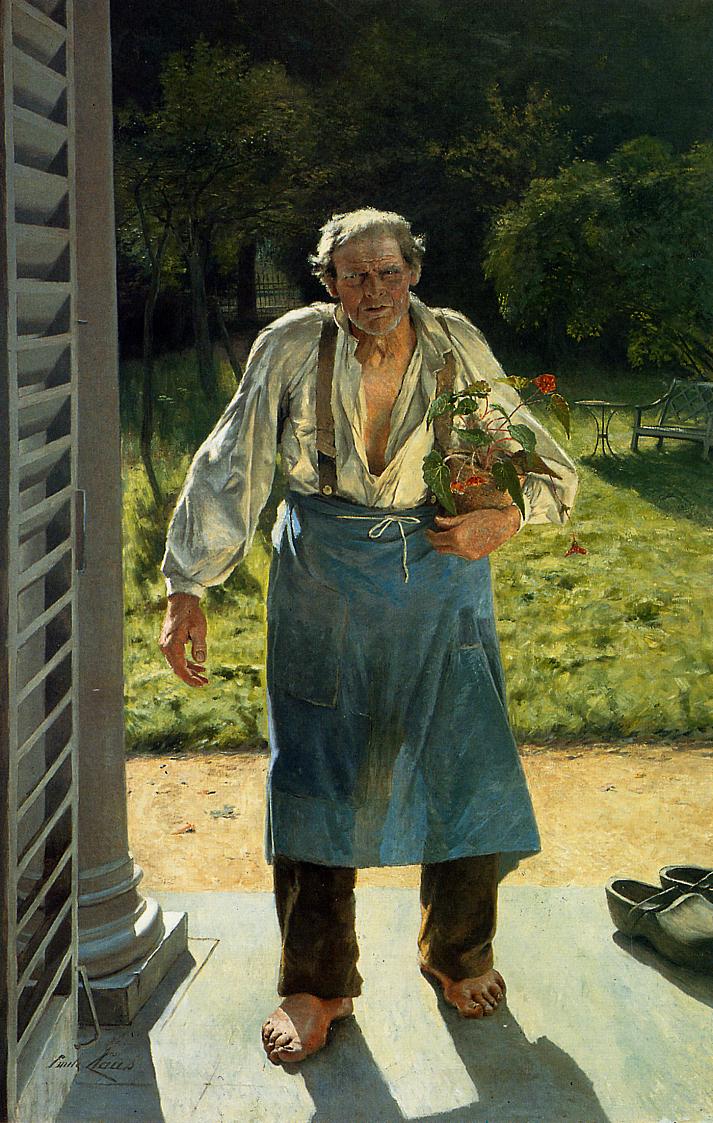
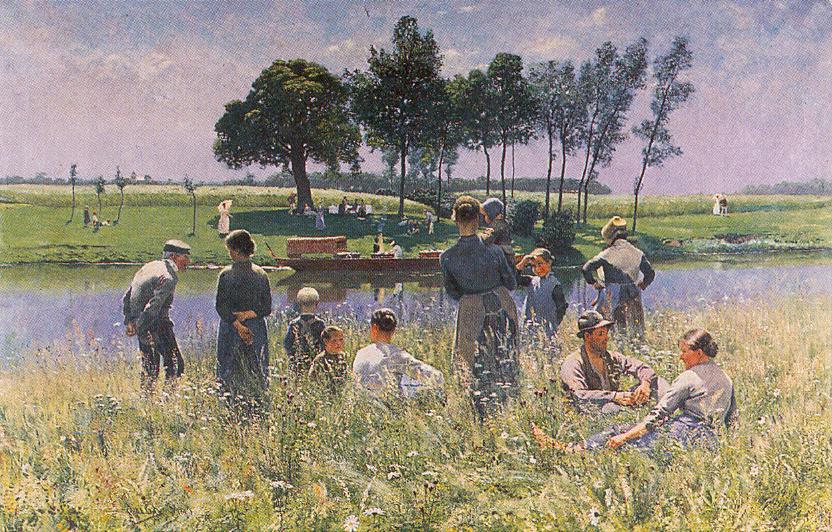
The Old Gardener was also exhibited at the Brussels Salon in 1887, together with The Picnic (below), set on the banks of the River Lys. This counterbalances the family group in the foreground with the row of trees on the opposite bank. His work was compared favourably with contemporaries Jules Bastien-Lepage and Cornelius van Leemputten (1841-1902), who also painted realist rural scenes rich in light and colour. King Léopold II purchased The Picnic.
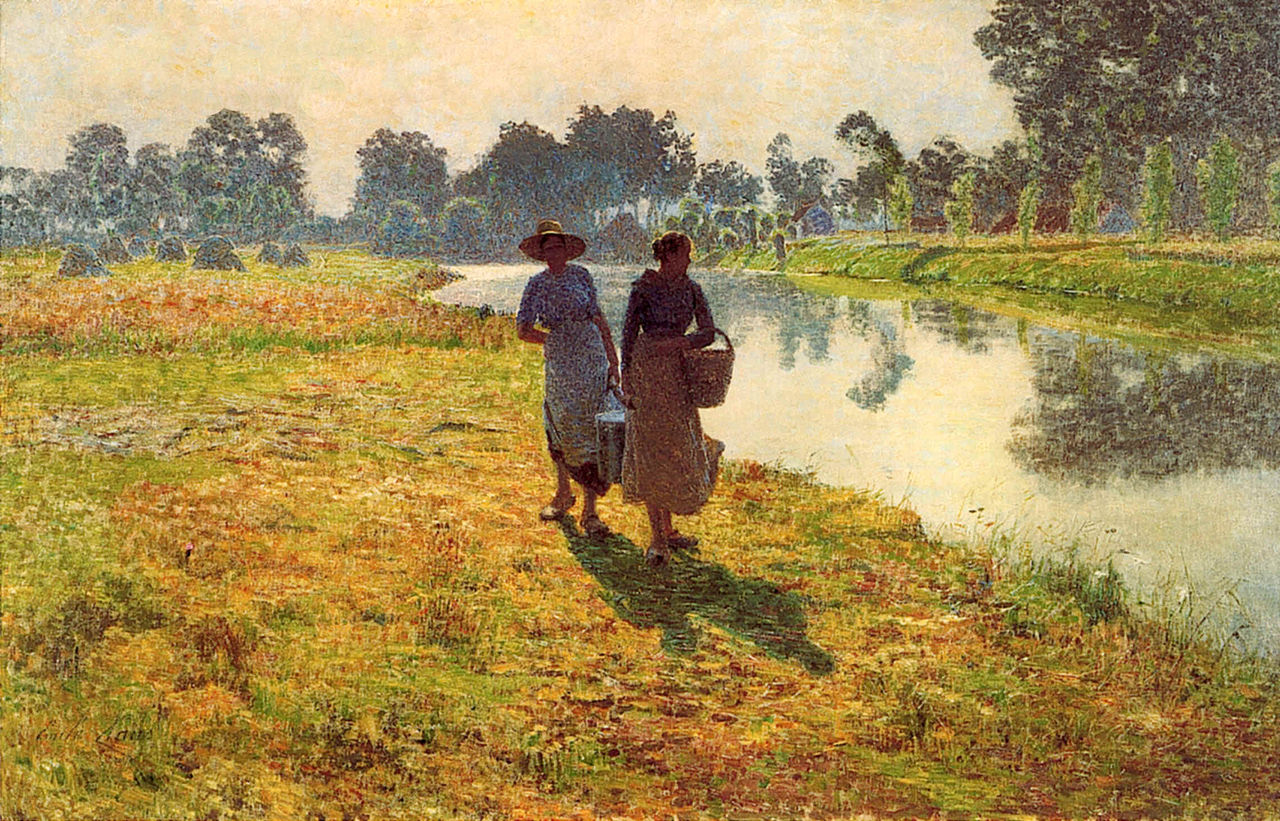
In 1888 he moved to Paris, where he fell under the influence of the Impressionists, particularly Monet, Sisley, Renoir, and Pissarro. He also came to appreciate the work of Anders Zorn, Le Sidaner, and other painters represented by art dealer Georges Petit. As a result his style moved from meticulous realism to a gentle impressionism, with rich light and colour, anticipated in his Young Peasant Women beside the Lys (1887).

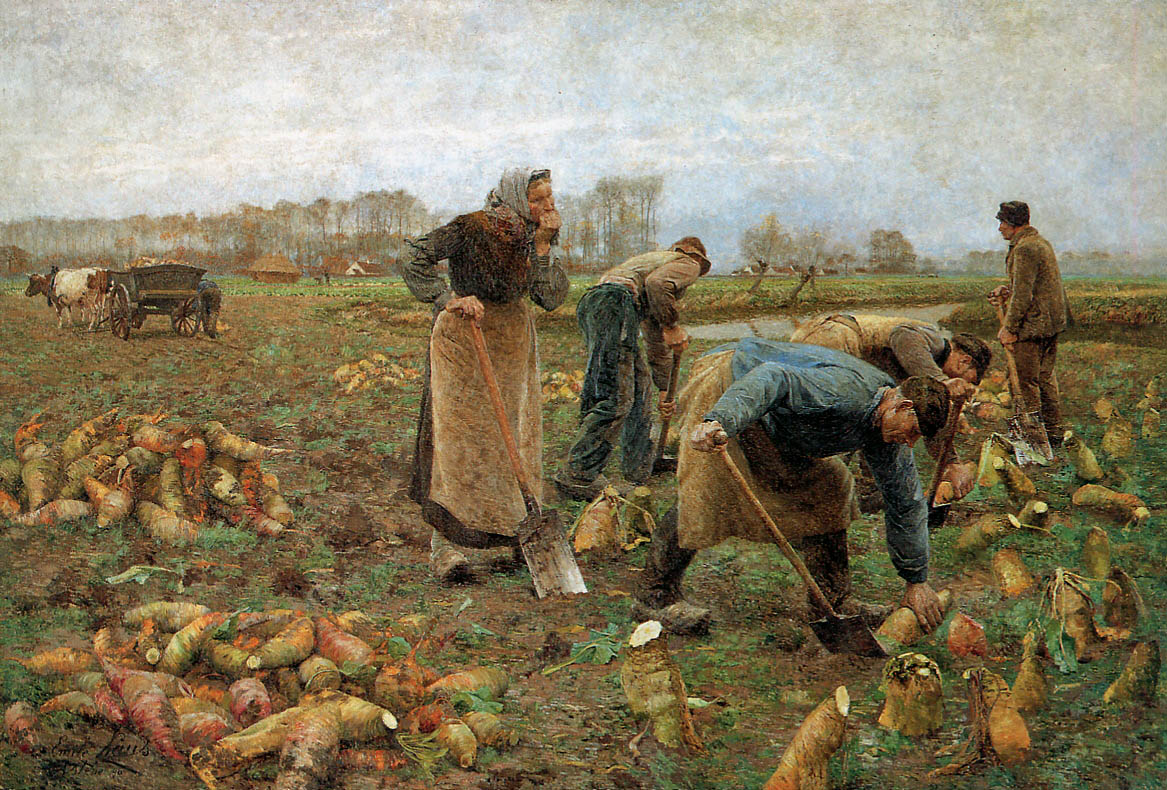
The Beet Harvest (1890) shows local farmworkers prising beet from the frozen ground in the winter.
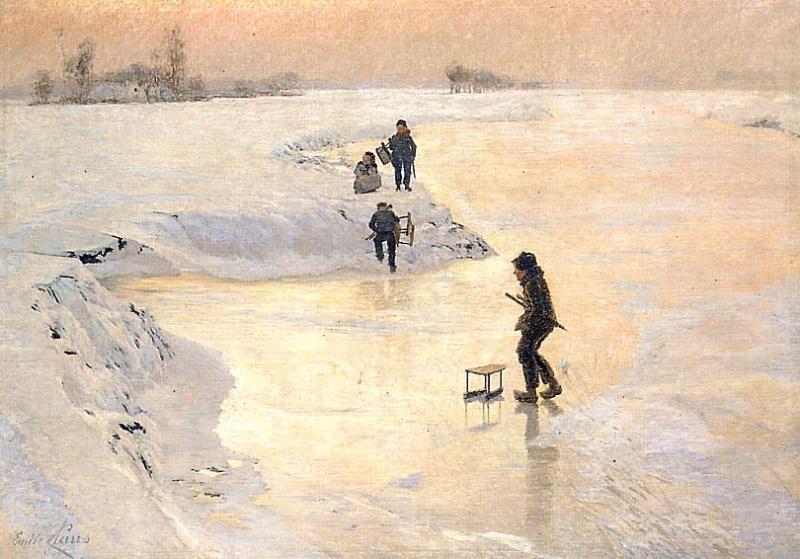
The Ice Birds from 1891 was inspired by a contemporary novella, and shows a flooded swampy area near Waregem when frozen over in winter.
His most successful and productive period was between 1893 and 1900. His works during that period were well received at the Brussels and Paris Salons, La Libre Esthétique (successor to Les XX), and others. This culminated in the award of the Gold Medal of the Universal Exposition in Paris.
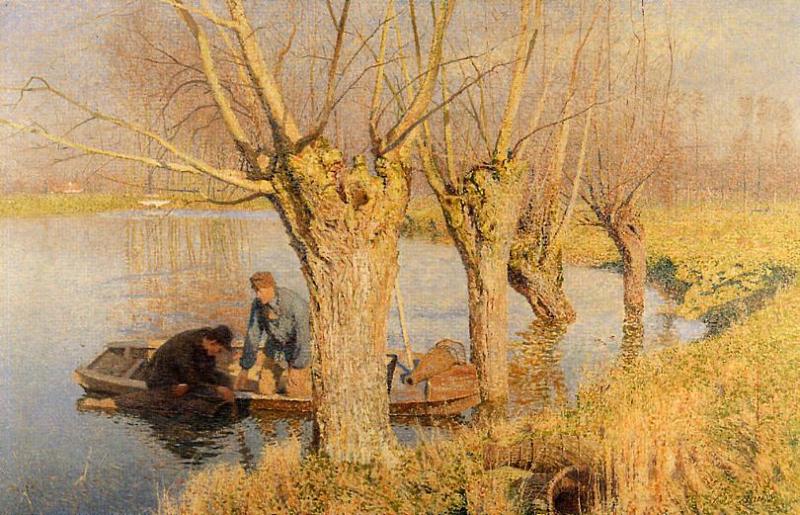
Bringing in the Nets (1893) appears to have been painted on the bank of the Lys in late autumn.
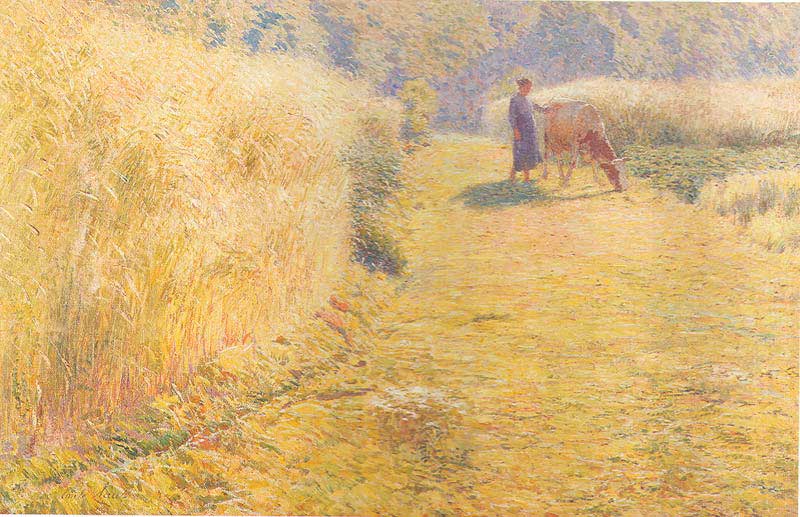
By this time, light was flooding his canvases, as seen in this view of Summer from 1893.
References
Lemonnier C (1908) Émile Claus, G van Oest, available from archive.org.
Ekonomidès C (2013) Émile Claus (1849-1924), Bibliothèque de l’Image. ISBN 978 2 8144 0032 0.
 The Eclectic Light Company