

One of the largest man-made structures, bridges have long been popular in landscape paintings, whether as the primary subject or an accessory. Even the most humble wooden or stone bridge has a satisfying geometry about it that contrasts with natural forms without looking out of place. More vertically substantial bridges can, from the right position, add height to a view that otherwise would consist almost entirely of sky.

When the pre-Impressionist Johan Jongkind returned to Paris in 1859, he painted this classical view of Le Pont de la Tournelle, Paris (1859), in which the bridge is almost the sole subject.
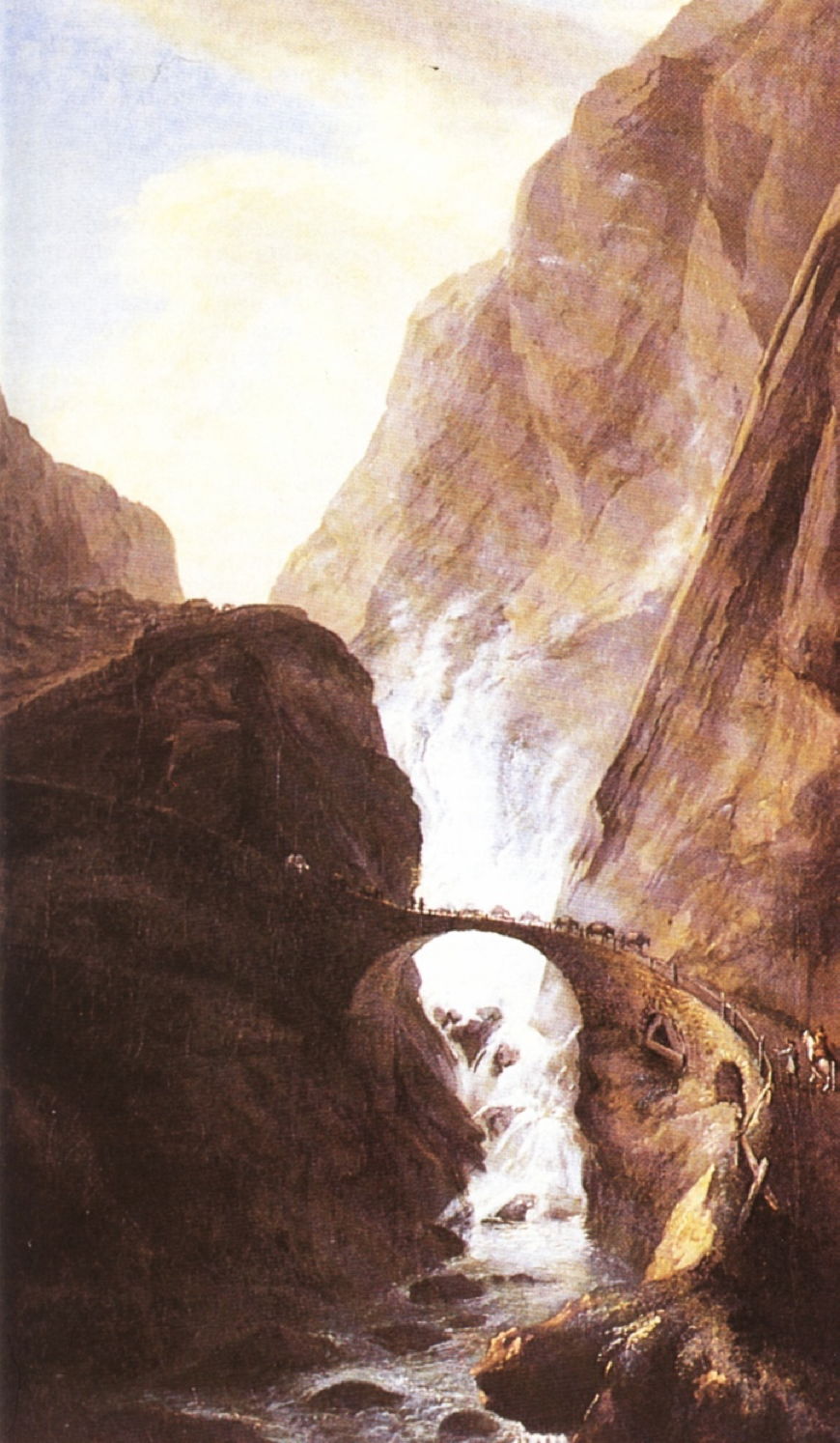
Caspar Wolf’s view of the Devil’s Bridge in the Saint Gothard Pass, from 1777, is devoted to this bridge across the Schöllenen Gorge and its dramatic setting.

Vincent van Gogh’s view of The Langlois Bridge at Arles with Women Washing, painted when he was at Arles in 1888, also incorporates some washerwomen. This is one of four oil paintings, a watercolour, and at least four drawings which he made of this motif, with the aid of a perspective frame that he had made for himself.
The horizontal extent of a bridge can also be used to counterbalance the vertical mass of large buildings such as a cathedral.
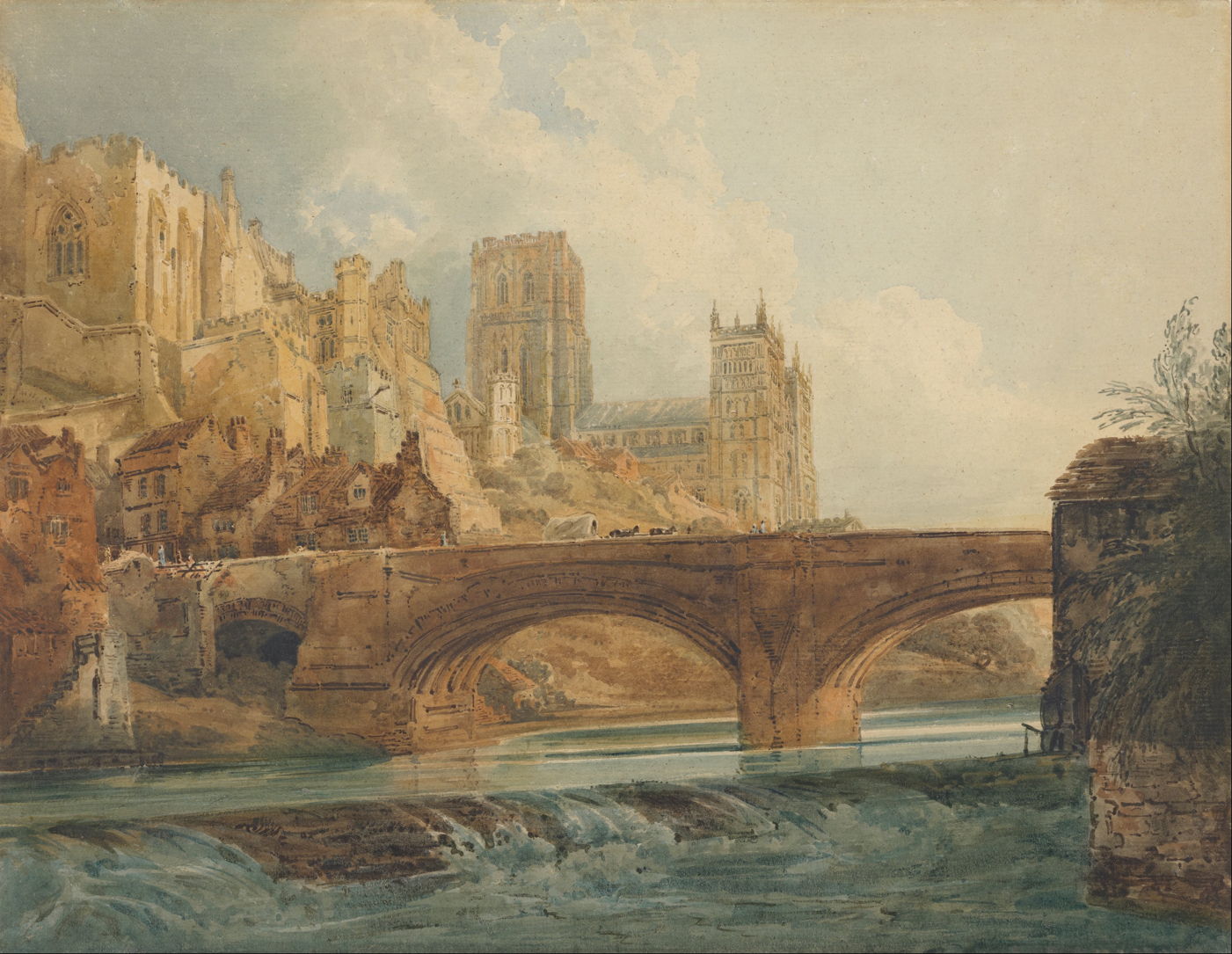
Thomas Girtin’s wonderful view of Durham Cathedral and Castle (c 1800) strikes an interesting balance between Framwellgate Bridge over the River Wear in the foreground and the castle and cathedral behind.

Claude Monet was an early enthusiast for railway bridges, and seems to have fallen in love with The Railway Bridge at Argenteuil, shown here in 1873. He, Camille and his son had moved out to Argenteuil at the end of 1871, leaving Monet to commute the short distance into the centre of Paris by train. His staffage includes the steam train crossing the bridge, two boats sailing under it, and a couple of walkers on the path running alongside the river.

Monet liked this bridge so much that he painted it again the following year, this time angling the bridge to add depth, with another steam train crossing it.
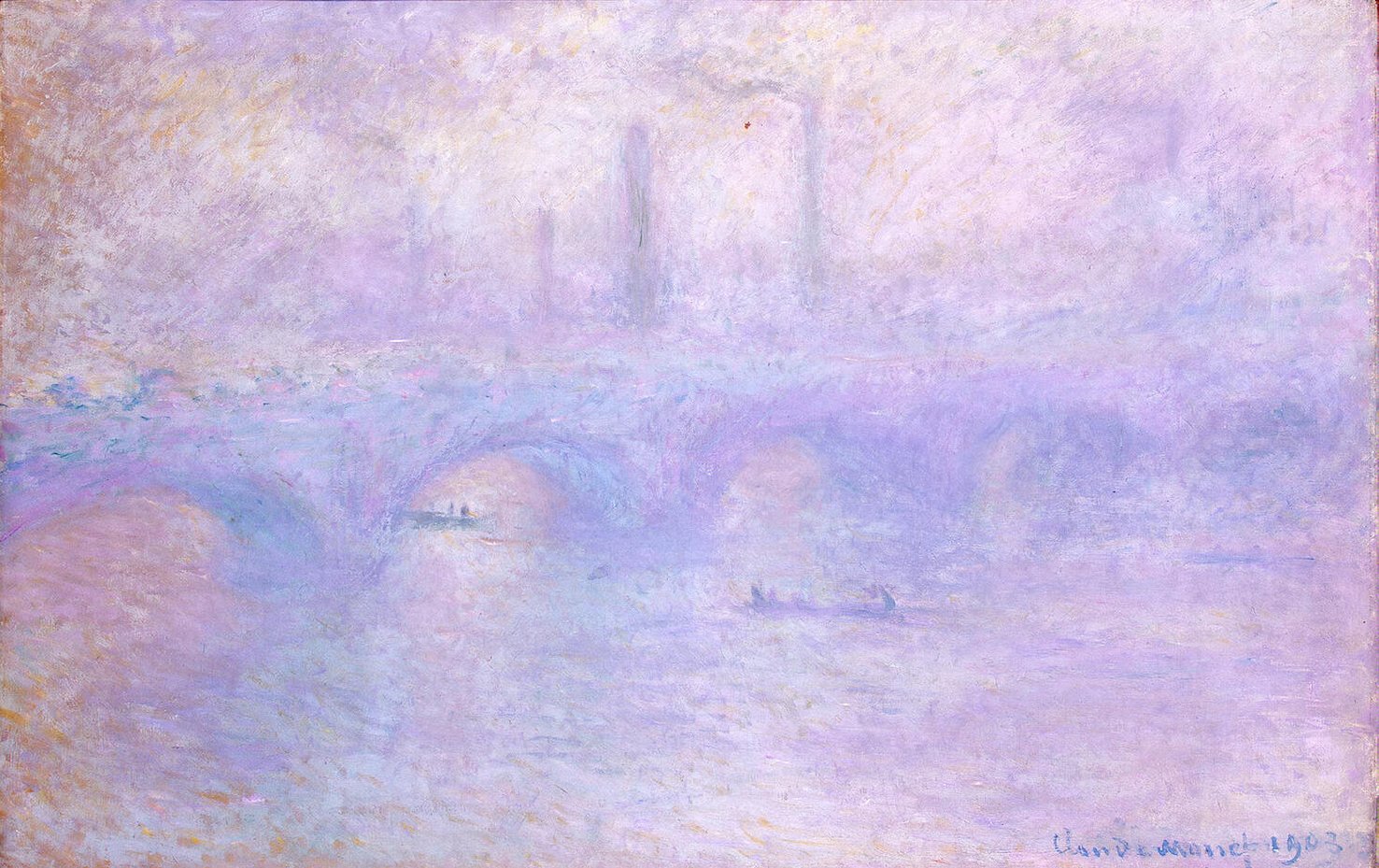
In the early twentieth century, Monet returned to London and painted a series of Charing Cross Bridge and Waterloo Bridge, here an example from 1903. This demonstrates how he could paint a bridge with the merest hint of its form and colour.
The geometric form of bridges can also be exploited for their novelty.

When he was staying nearby, Alfred Sisley seized the moment and painted one of his most unusual views of a bridge, in his Under Hampton Court Bridge from 1874. This carefully aligned projection of the bridge is symmetrical about the centreline of the painting, and the composition is balanced with trees at the left and a building at the right.

Late in his career, Camille Pissarro suffered from eye problems that prevented him from painting in front of the motif. He worked around those by painting elevated views from hotel rooms, such as this of Pont Boieldieu in Rouen, Rainy Weather from 1896. We seldom view bridges from above, and his series of views of this bridge in different weather conditions was well received. Pissarro returned to Rouen in the autumn of that year, and again in 1898, making it one of his favourite motifs there.

One of Gustave Caillebotte’s most remarkable paintings is The Pont de l’Europe from 1876. This doesn’t show one of the popular bridges over the River Seine in Paris, but a roadbridge over the railway yards at Gare Saint-Lazare, a large plaza formed at the confluence of six avenues. This scene is highly contemporary and dominated by the heavy trusses forming the bridge, and steam from a passing train. Its perspective projection is unusual, to say the least, and potentially photographic.

Félix Vallotton pushed beyond even Gustave Caillebotte’s unconventional views of bridges in his Le Pont Neuf from 1901. One of the oldest of the great bridges of central Paris, Vallotton here uses a combination of unusual composition and perspective to make the familiar almost unrecognisable.
If there’s one painting of a bridge which encapsulates the great changes brought during the early twentieth century, it’s surely Joseph Stella’s Cubist masterpiece of Brooklyn Bridge, painted in 1919-20.
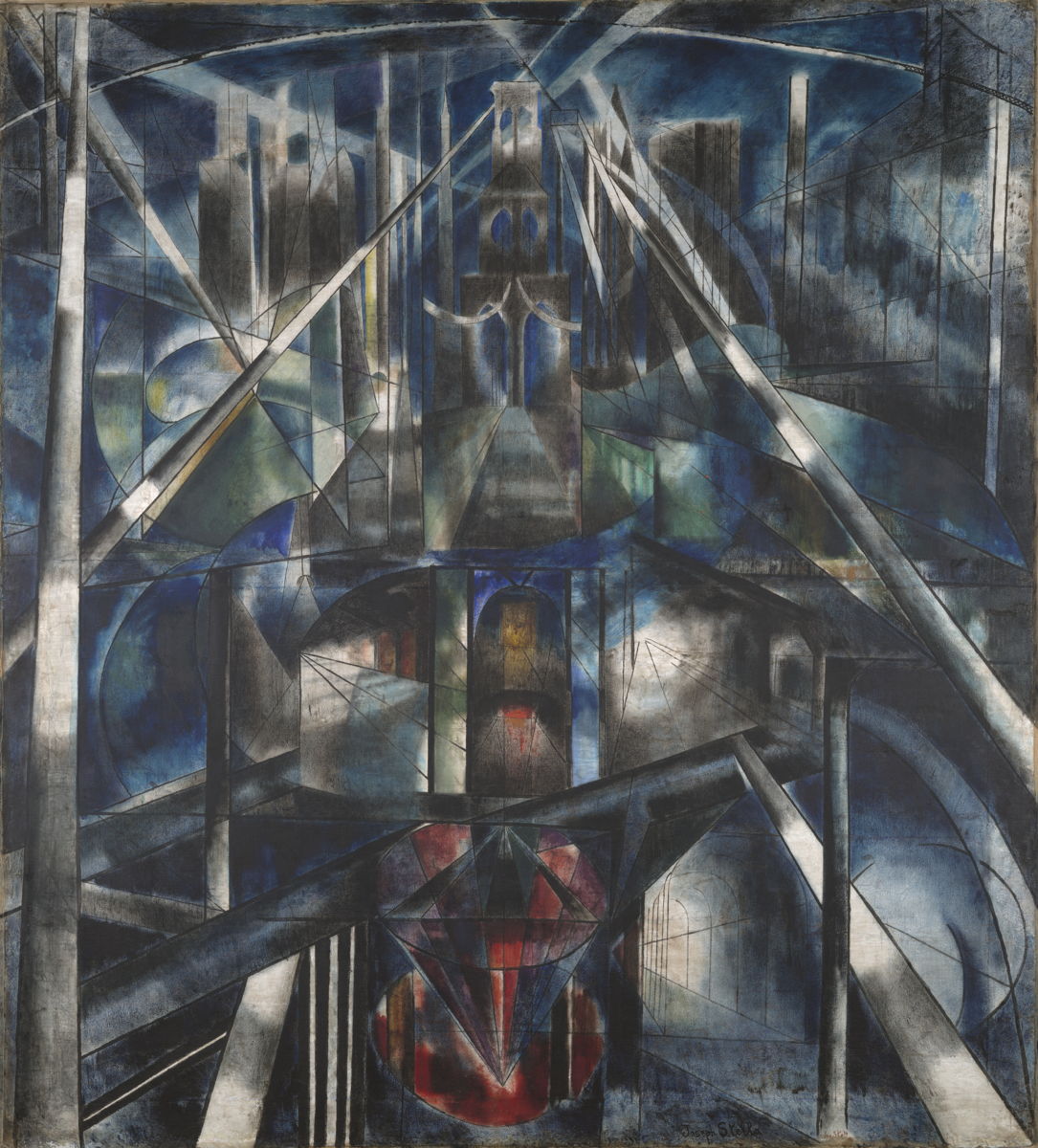
That’s the point at which we should move on to the letter C, for Cubism, perhaps?
 The Eclectic Light Company