

It had long been thought that the city of Pompeii and surrounding towns were buried by ash, lava and rock from the catastrophic eruption of Mount Vesuvius on 24 August 79 CE, but more recent research arrives at a date later that autumn, probably around 24-25 October. The site was then abandoned until it was rediscovered by chance in 1592, but it was another century before limited attempts were started on excavating the remains. In 1763, the city was identified, and by the end of the eighteenth century more organised work was under way. The story of what had happened there soon became sufficiently popular as to inspire artists to paint imagined scenes from the last years of Pompeii, and showing the eruption of Vesuvius.

In 1840, Théodore Chassériau visited the excavations and made sketches that he turned into his acclaimed painting of The Tepidarium in 1853. This shows a carefully composed group of women in the warm room prior to their proceeding to a hot or cold bath, and is traditionally understood to have been the most richly decorated of spaces in classical Roman baths.
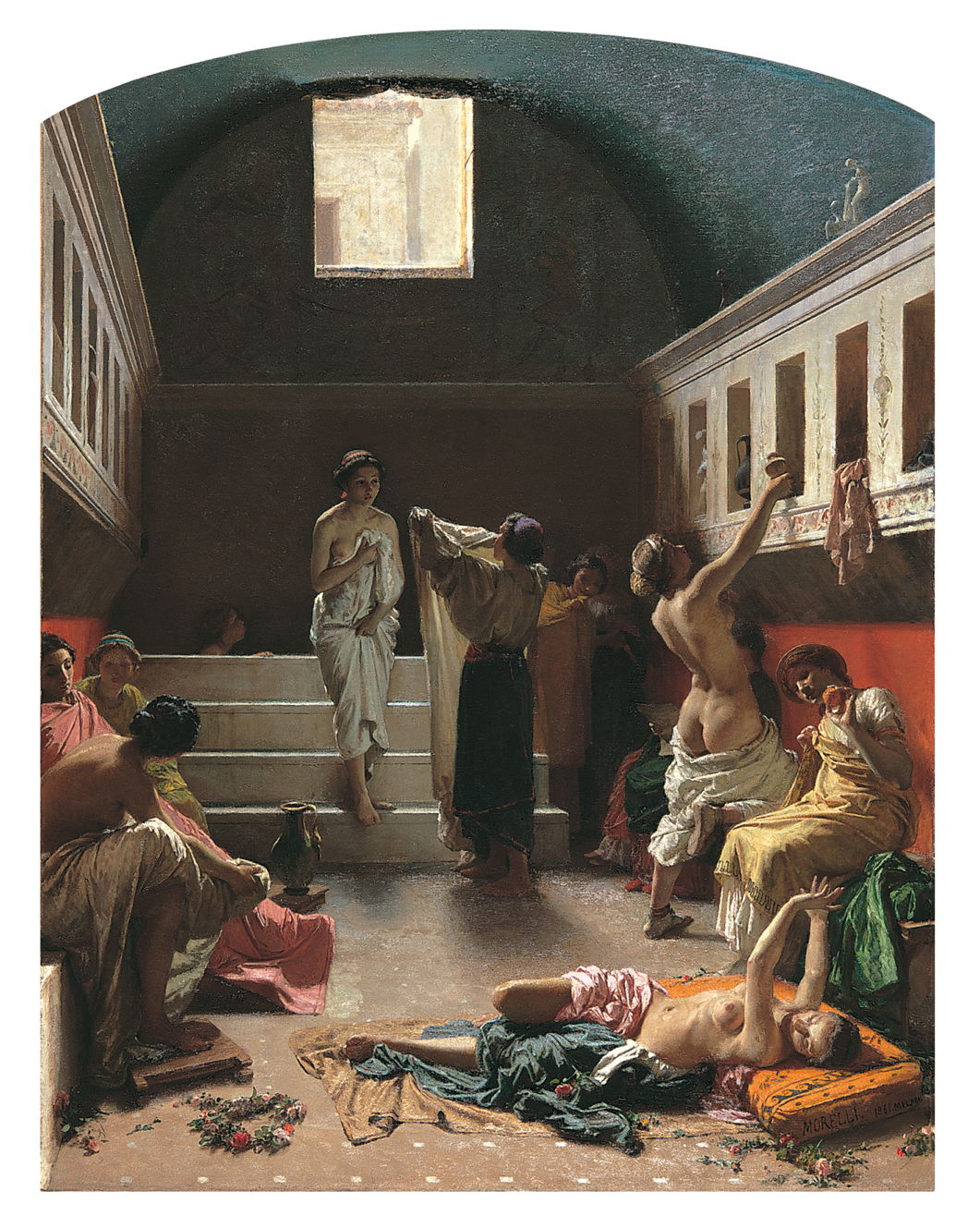
Domenico Morelli had particular interests in mediaeval and classical history. The Pompeian Bath from 1861 is his exquisitely painted recreation of a scene from one of the city’s baths.
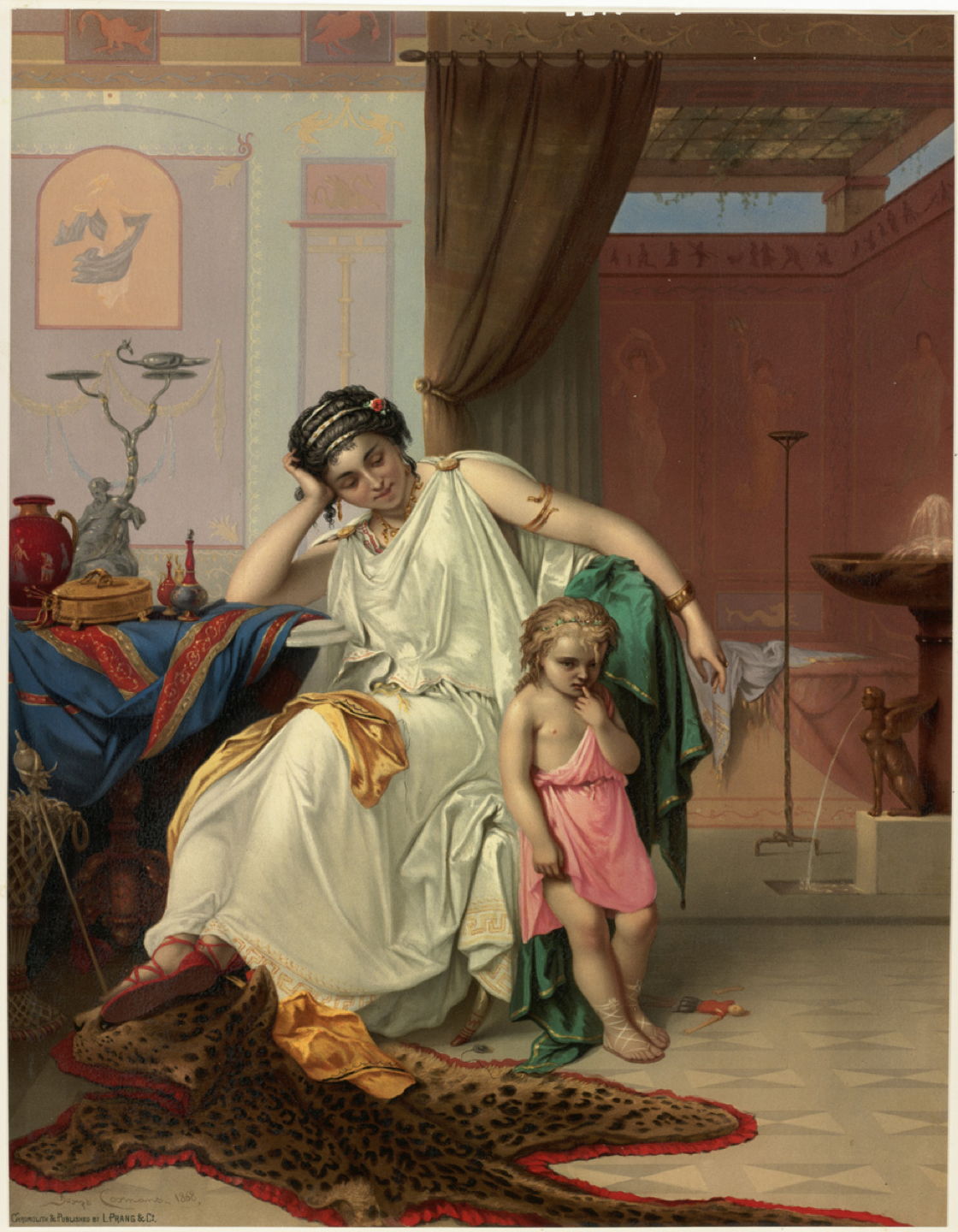
A Family Scene in Pompeii (1858) is a chromolithograph of one of Pierre Olivier Joseph Coomans’ first paintings inspired by his visit to the ruins of Pompeii the previous year. It appears to be based on proposed reconstructions of everyday objects and interior decor, and is painted in highly finished Salon style.
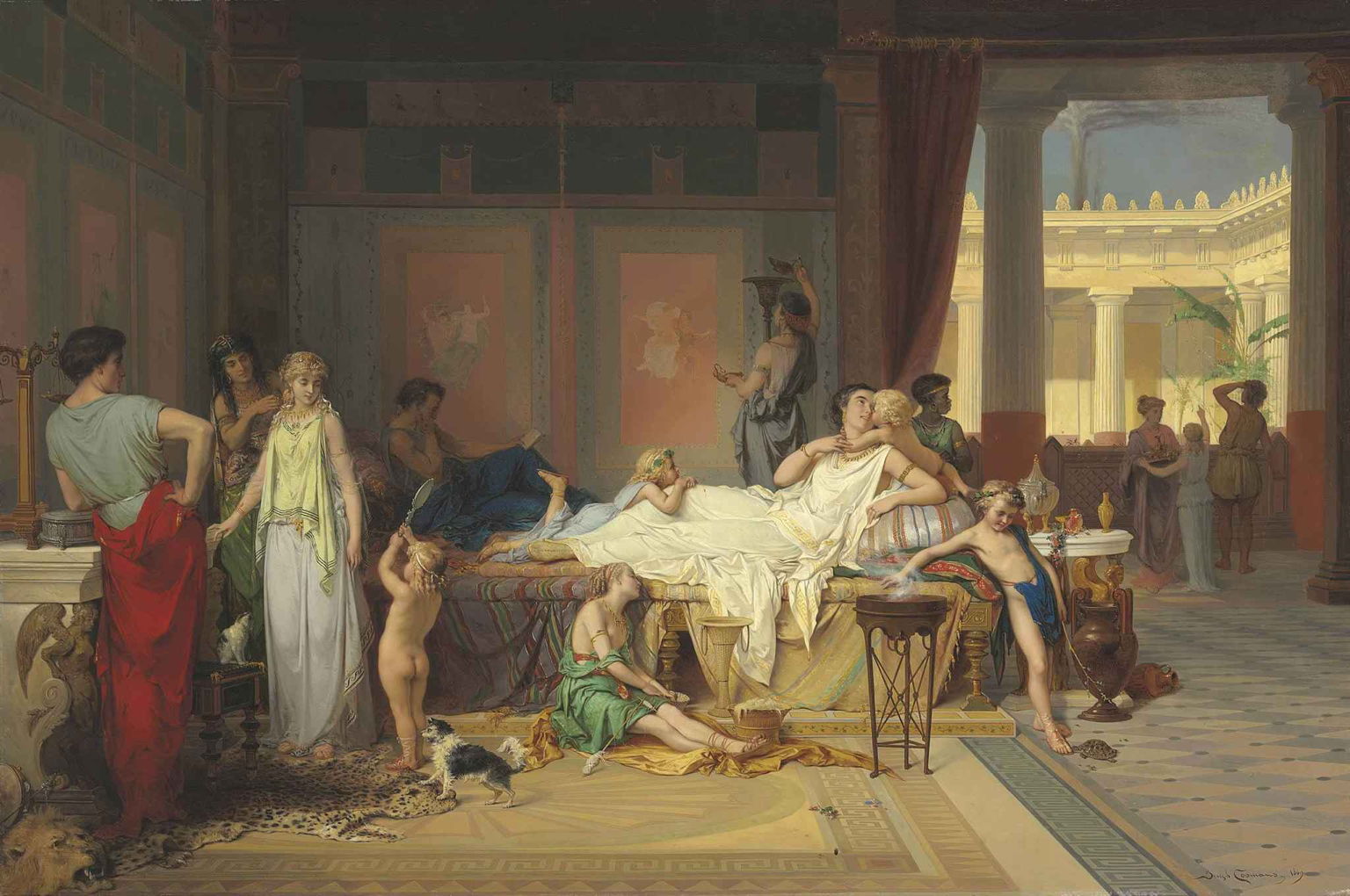
Coomans became most enthused about trying to depict Pompeii in the fateful hour or so before disaster struck. The Last Hour of Pompeii – The House of the Poet (1869) is a detailed reconstruction showing a crowded interior of a spacious villa complete with family pets such as a couple of cats and a tortoise. In the distance, plumes of black smoke rise from the growing eruptions of Vesuvius, which was shortly to engulf and kill everyone present.
For landscape artists, envisioning the eruption of Vesuvius became the goal.
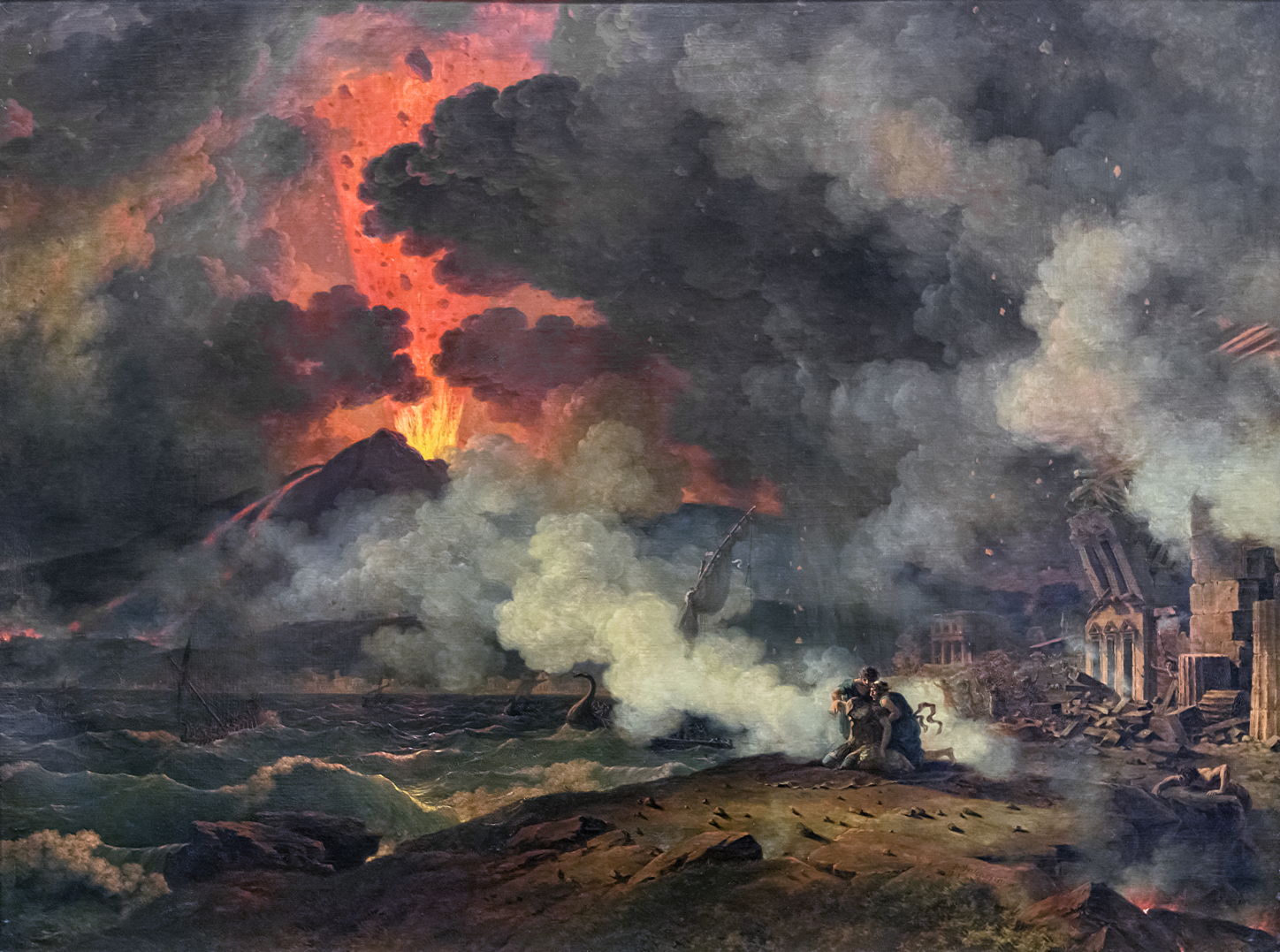
Late in his career, Pierre-Henri de Valenciennes painted this vivid reconstruction of the destruction of Pompeii in the Eruption of Vesuvius Starting on 24 August 79 AD (1813).

As far as I can tell, the British artist John Martin never visited Italy, let alone witnessed Vesuvius erupting, but painted a series of large works of apocalyptic visions, among them The Destruction of Pompeii and Herculaneum in 1822. This is a Romantic and highly wrought depiction of the eruption.
Martin was careful to base this imaginative view on local geography. It’s seen from the town of Stabiae, some distance away on the shore of the Bay of Naples. Herculaneum, in the left distance, has already been swallowed up by lava flows, whose flames and smoke rise above its site. Pompeii, in full view at the foot of the volcano, is still seen clearly, with its circular theatre and basilica. In the foreground are some of the survivors who have fled in the vessels being tossed around in huge waves below.
This painting was first shown to the public in London in 1822, when it was part of a programme of entertainments which mixed art with spectacle. It had originally been commissioned by Richard Greville, and in 1867 was purchased by the National Gallery in London. Later transferred to the Tate, it was in storage in the gallery’s basement when that was badly flooded in 1928. Initially written off as damaged beyond repair, it was eventually painstakingly restored in 2011.
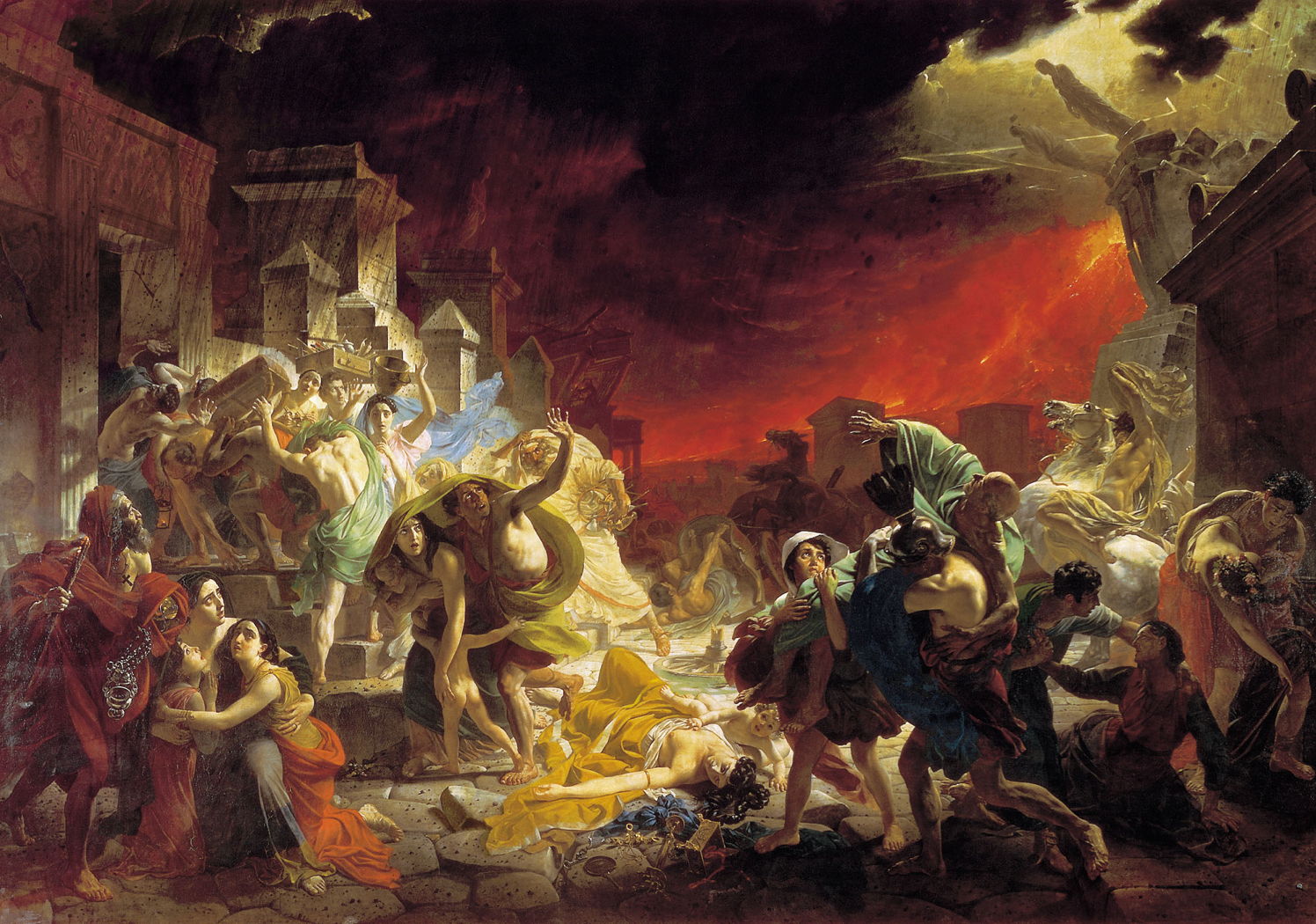
Karl Pavlovich Bryullov visited Pompeii in 1828, when he was living in Rome and painting portraits and genre works. Some time between 1830 and 1833, he painted The Last Days of Pompeii, with its close focus on the chaos, destruction, and death among the people in the streets of the town. To avoid overwhelming the viewer with the spectacle, he has carefully hidden the volcano behind collapsing buildings at the right.
Other artists made a visual record of the remains as they were unearthed.

Giovanni Battista Piranesi visited the site late in his life, during the early days of its excavation, and made drawings including this of The Tomb of the Istacidi, Pompeii in about 1777.
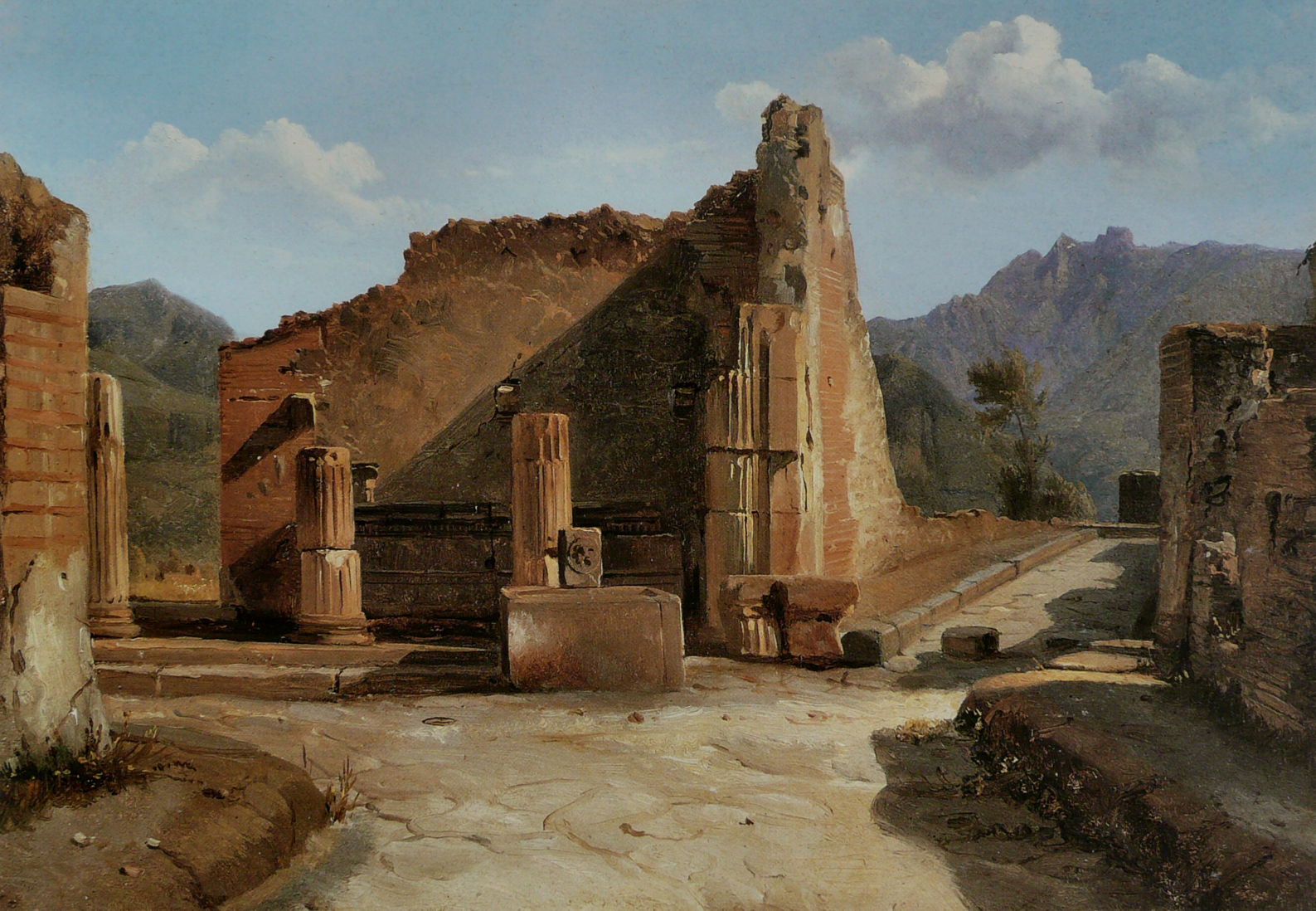
When Achille Etna Michallon was in Italy, he must have visited the ruins at Pompeii, where he painted The Triangular Forum in Pompeii, for which I have no date, but suspect this must have been around 1819-20.
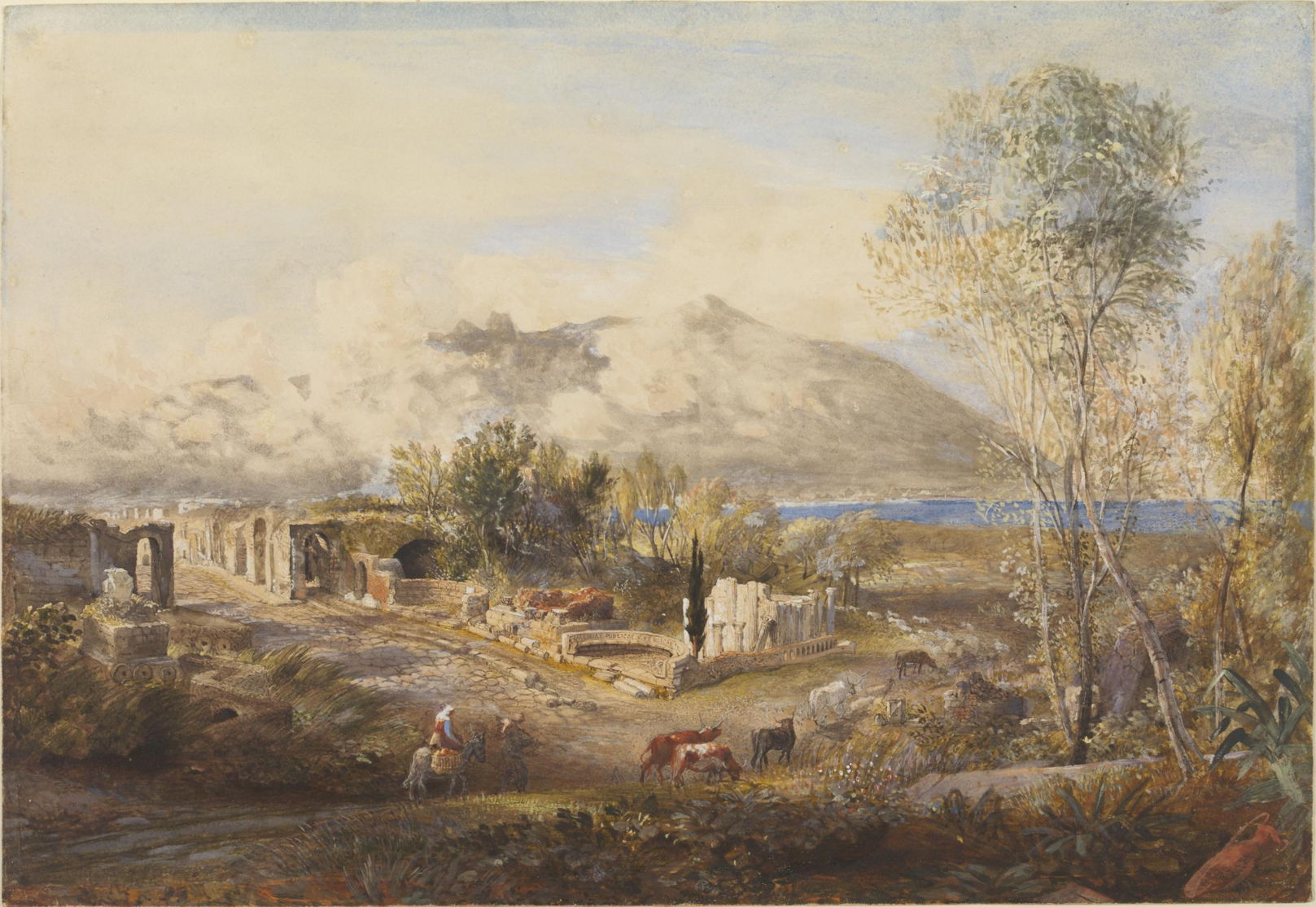
During Samuel Palmer’s extended honeymoon in Italy, he visited the excavations, where he painted Street of the Tombs, Pompeii in 1837. This shows the ruins in the foreground, with the backdrop of the volcano Vesuvius and a sliver of deep blue water.
 The Eclectic Light Company