

The Himalaya not only contain the world’s highest mountain peak, Everest, but more of the highest than any other mountain chain in the world. For Western artists, they have been so far off the beaten track that few have even seen them at first hand, let alone painted them.
Until Mount Everest was identified and surveyed accurately in the middle of the nineteenth century, it was presumed that the more visible Kangchenjunga was the highest.
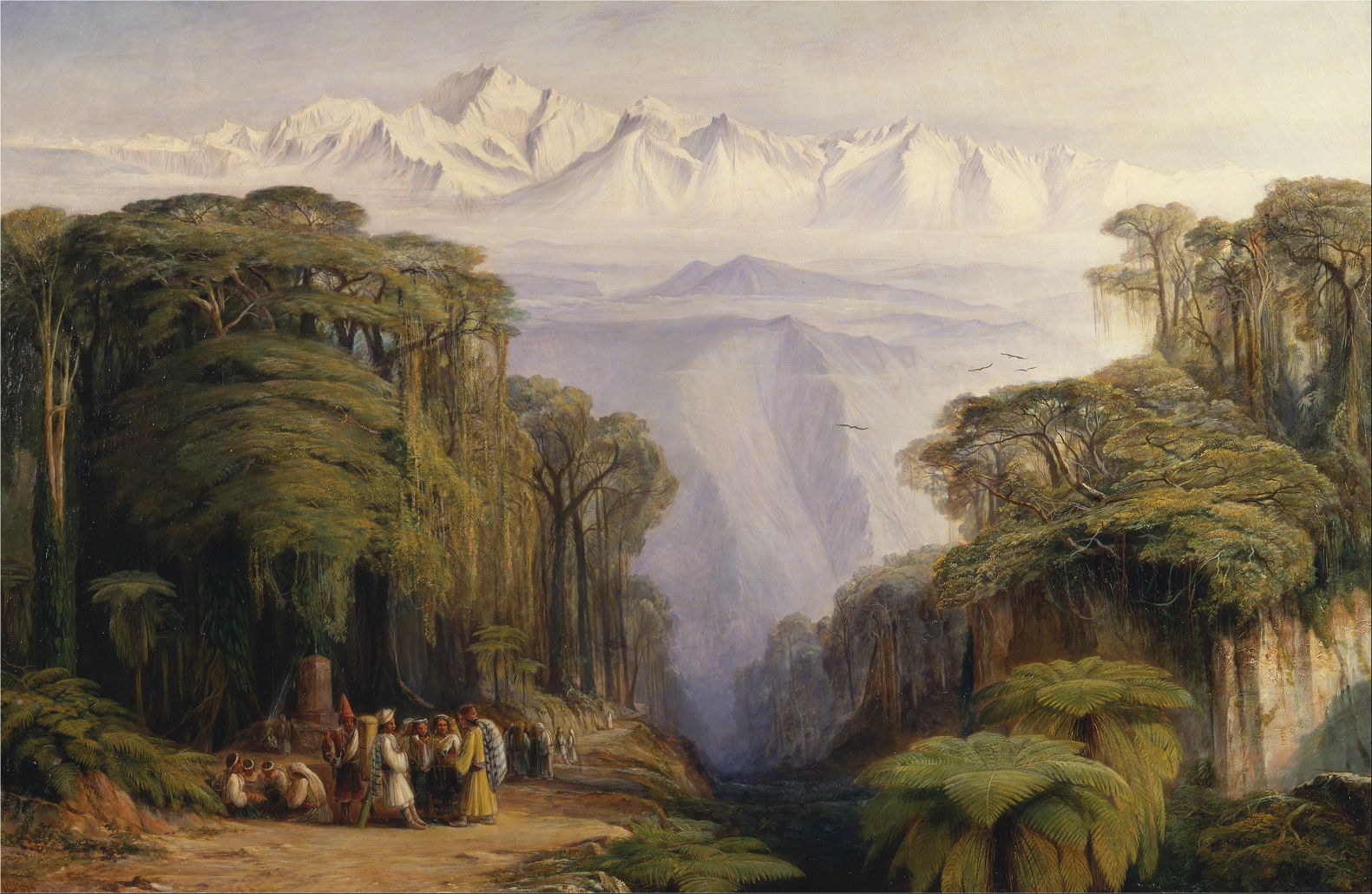
Although Edward Lear painted this view of Kangchenjunga from Darjeeling in 1879, when it had already lost its crown, this painting remains really special.
Darjeeling is a town high in the Lesser Himalaya, at an elevation of just over two thousand metres (over 6,500 feet), in the far north of West Bengal, India. Famed for its tea plantations, it became a ‘hill station’ for British residents of India in the early nineteenth century, and just a couple of years after Lear painted this view, it was connected by the Darjeeling Himalayan Railway to New Jalpaiguri.
Kangchenjunga is now, and was then, ranked the third highest mountain in the world, with an elevation of 8,586 metres (28,169 feet). Its first successful ascent wasn’t made until 1955; because it’s a sacred mountain, teams who attain the summit stop short to avoid its violation. The Kangchenjunga massif is best viewed from Darjeeling, about eighty miles away. Kangchenjunga itself is the obviously highest peak, to the left of the centre of the ice-covered massif seen here.
The previous year, the pioneer botanical artist Marianne North had visited northern India, and painted mountain views in addition to its plants.
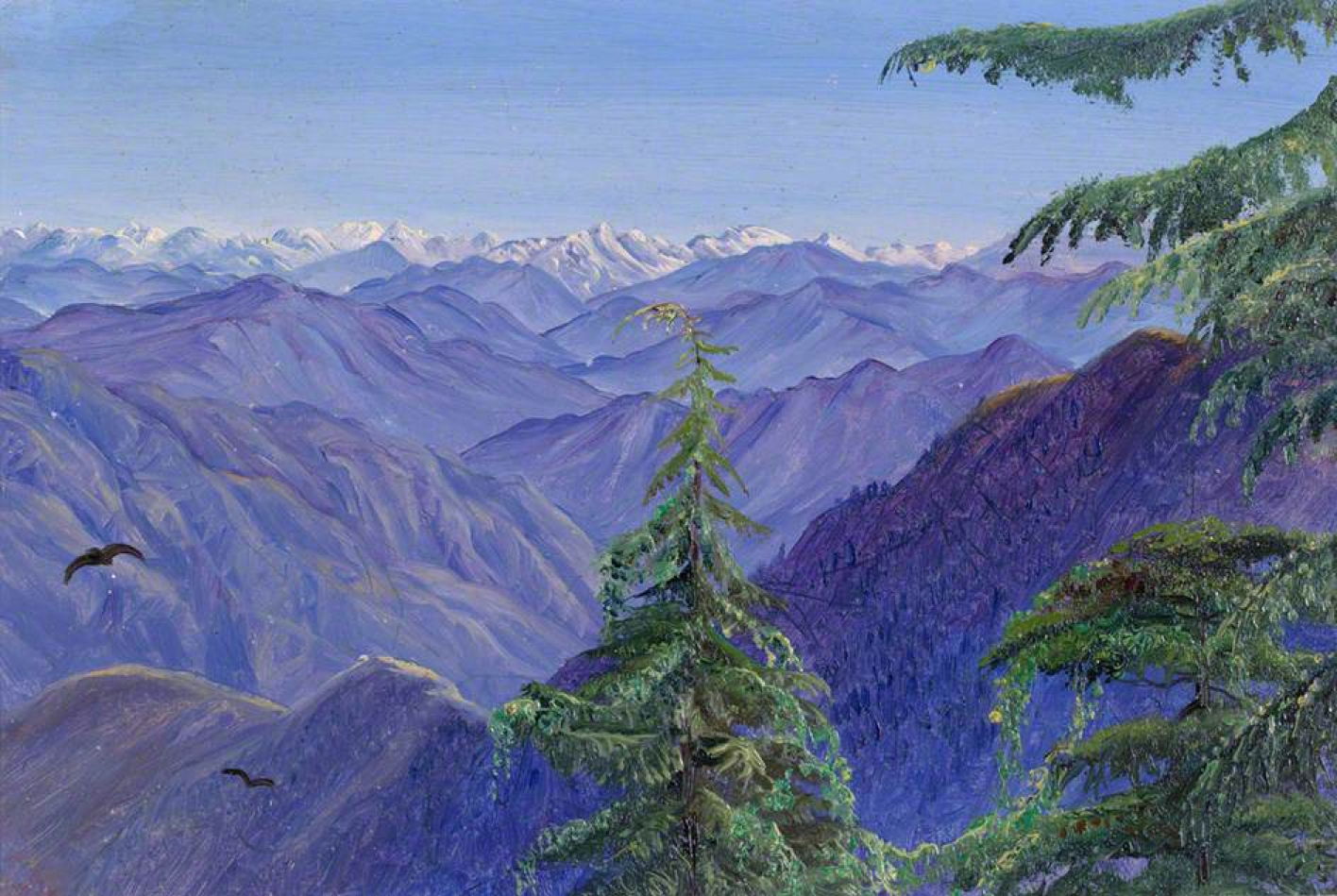
North’s breathtaking mountain view From Nahl Dehra near Simla (Shimla), Himachal Pradesh, India (1878) shows the rugged hills near the capital city of Himachal Pradesh, in the Western Himalaya. From 1864, that city was the summer capital of British India because of its far more equitable climate.

Mount Everest or Deodunga from Sundukpho, North India (c 1878) is another impressive view of the Himalaya.
The name Deodunga had been widely used before it was formally renamed, although its Tibetan name is Qomolangma. The Great Trigonometrical Survey of India had started work in 1802 in the south of the sub-continent, and finally completed in 1871. In 1847, when Kangchenjunga was considered the highest peak in the world, early observations from that survey suggested there might be a mountain higher still. It wasn’t until 1852 that Radhanath Sikdar identified what’s now known as Mount Everest as the world’s highest mountain, and that was confirmed in 1856. It’s now officially considered to reach an elevation of 8,849 metres (29,032 feet), and its summit was first reached by Tenzing Norgay and Edmund Hillary in 1953.
As far as I’m aware, until recent times, only one European artist has lived in the Himalaya for any significant period. Nicholas Roerich (1874–1947) painted many works showing the mountains there, either as landscapes or settings for symbolist or mythical scenes.
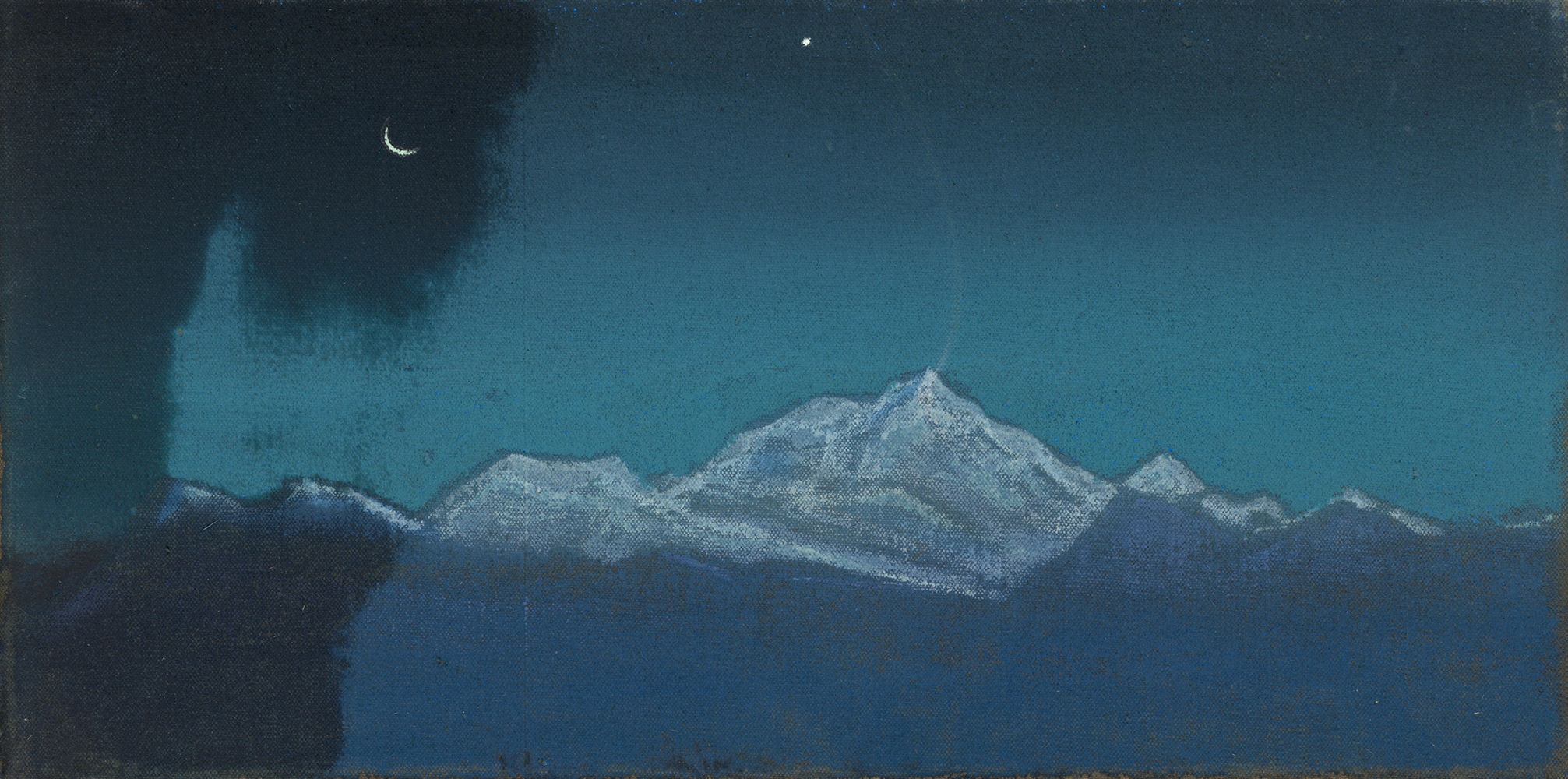
Himalayas, Sikkim (c 1928-29) appears to be a ‘tempera’ sketch made on canvas in the Himalaya. This is now an Indian state which borders on Tibet and Nepal, and includes Kangchenjunga.
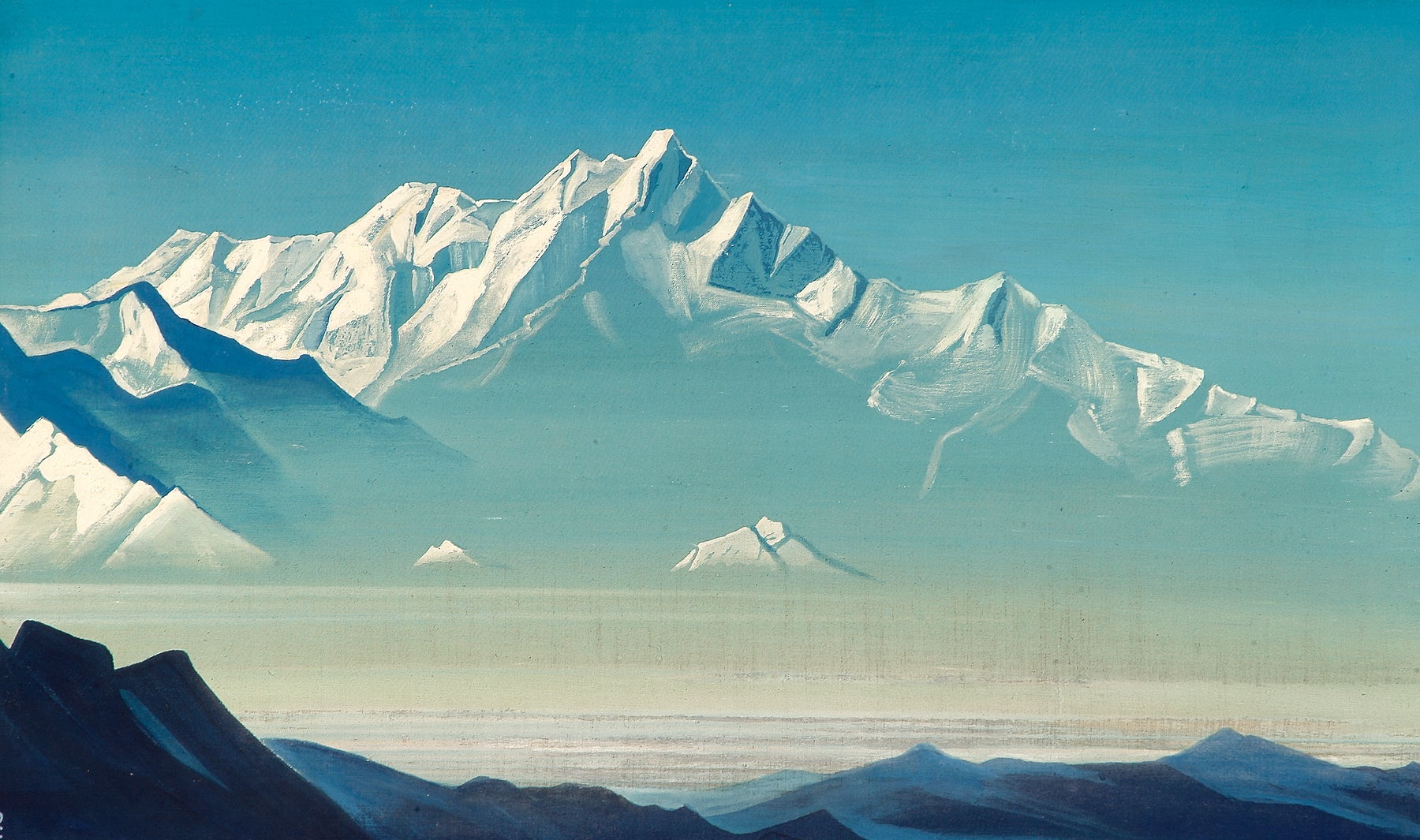
Mount of Five Treasures (Two Worlds), from his Holy Mountains series, was painted in 1933, and probably shows the distinctive form of Kangchenjunga’s peak.

Tibet, Himalayas (1933) shows a Buddhist monastery high up in the mountains, with a prayer flag at the left.
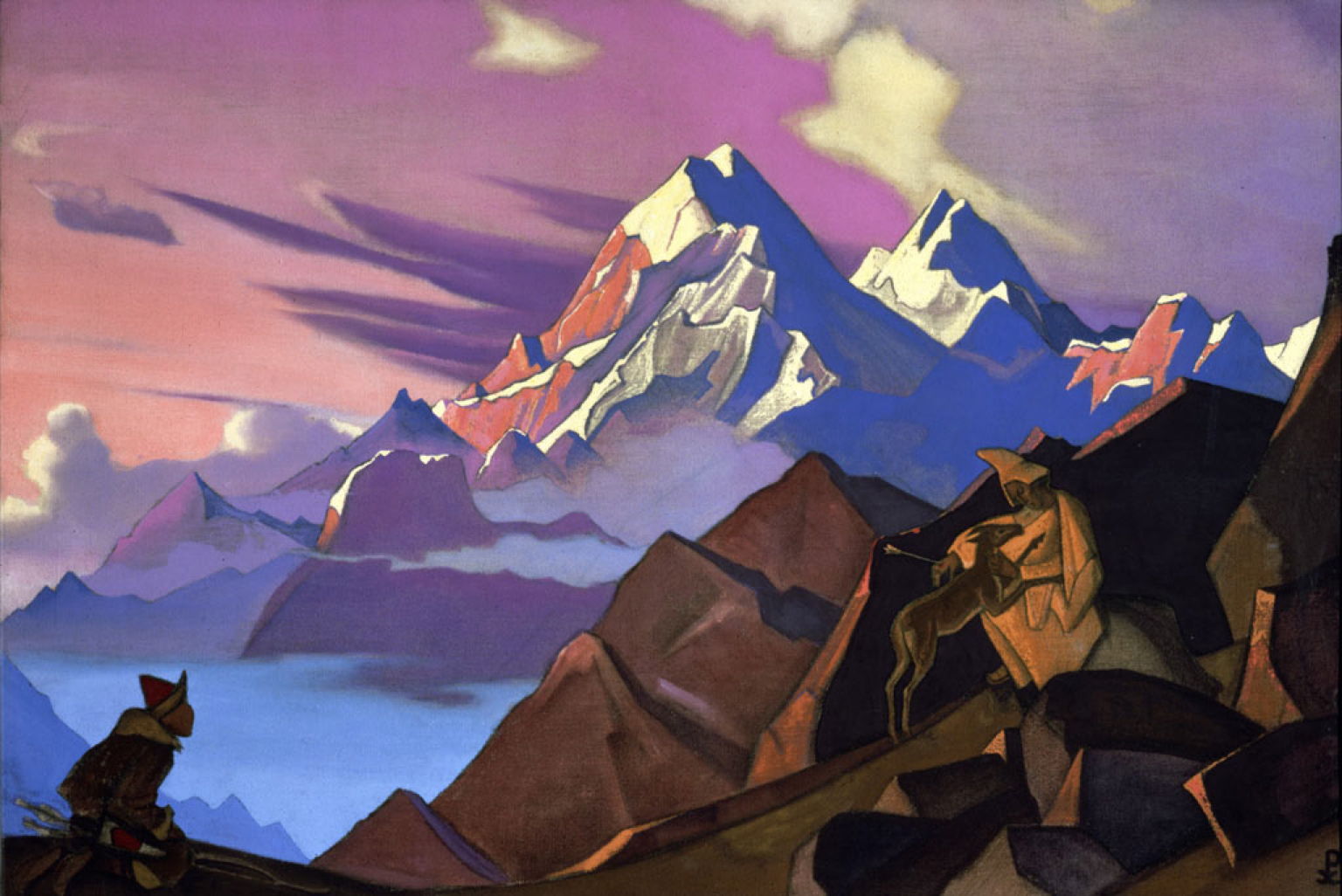
He painted Compassion in 1936, setting a narrative drawn from Indian writings against Himalayan peaks.
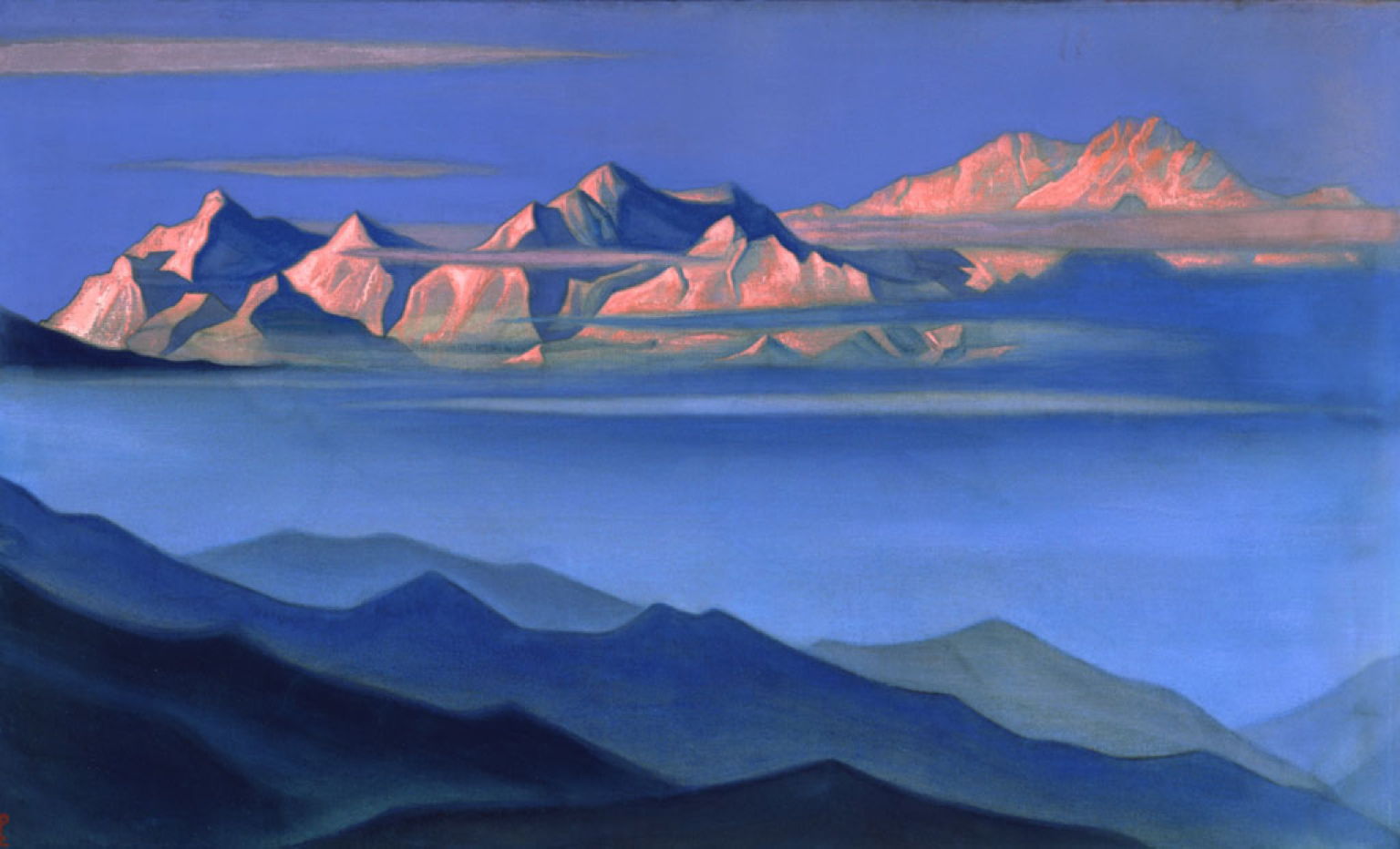
Roerich painted this superb view of the distant mountain Kangchenjunga in 1944, when still living in India. Like Edward Lear’s, this view may have been painted from Darjeeling, and shows the mountain in the rich light of dusk.
 The Eclectic Light Company