

Five hundred years ago today, on 16 October 1523, in the Tuscan town of Cortona, the Renaissance master Luca Signorelli died. (Some claim that he actually died at the end of November that year, but the consensus is for 16 October.) Although now usually overlooked, he is thought to have painted frescos in the Sistine Chapel from 1481, and was among the artists summoned by Pope Julius II to paint in the Vatican Palace in 1508.
Signorelli was born in Cortona in Tuscany, Italy, in about 1441, and was apprenticed to Piero della Francesca in Arezzo. By the 1470s he was running a workshop that was in great demand, and his paintings increased in importance during the 1490s.
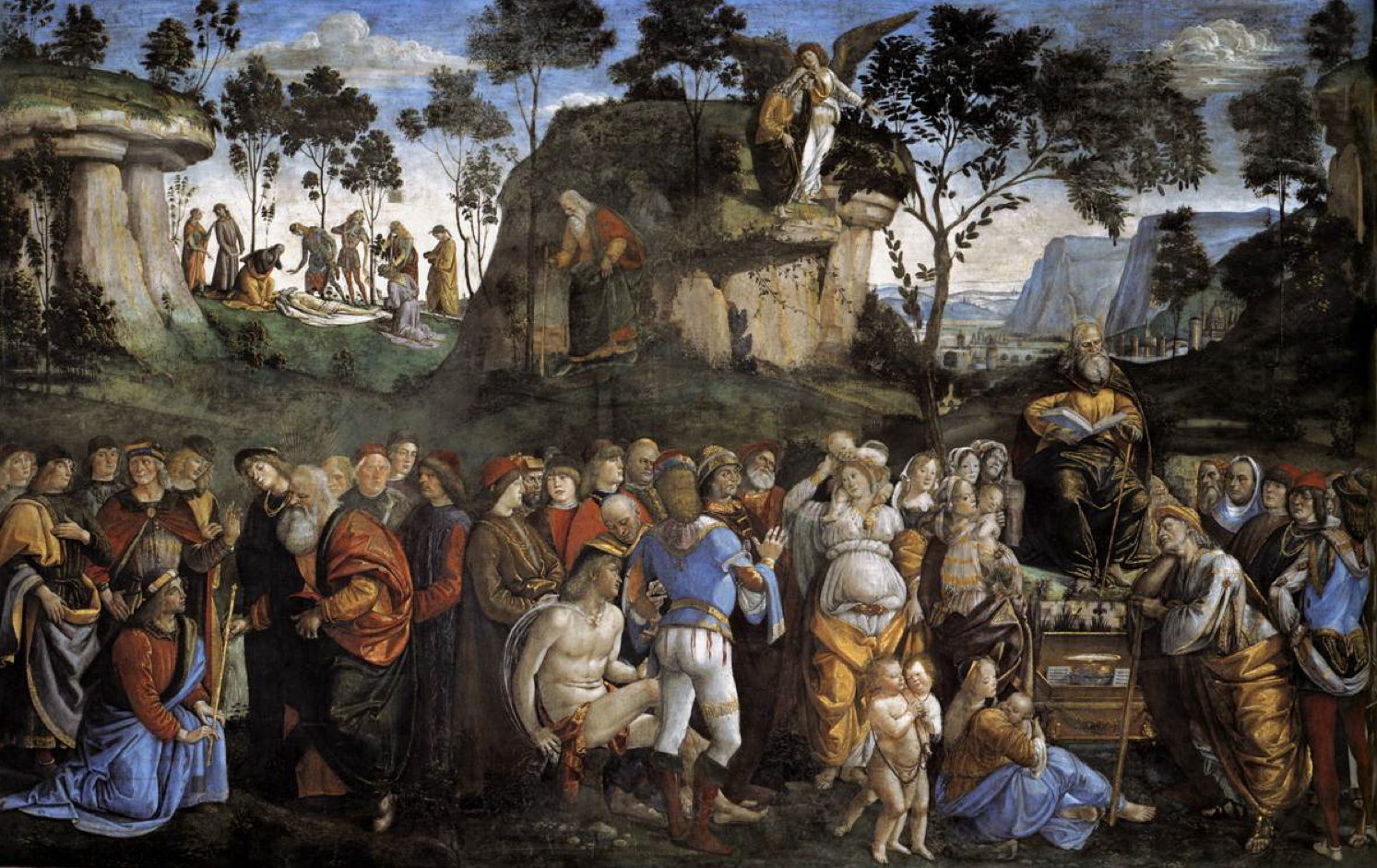
In 1481, he is thought to have been summoned to the Vatican to paint this fresco of The Testament and Death of Moses in the Sistine Chapel there.
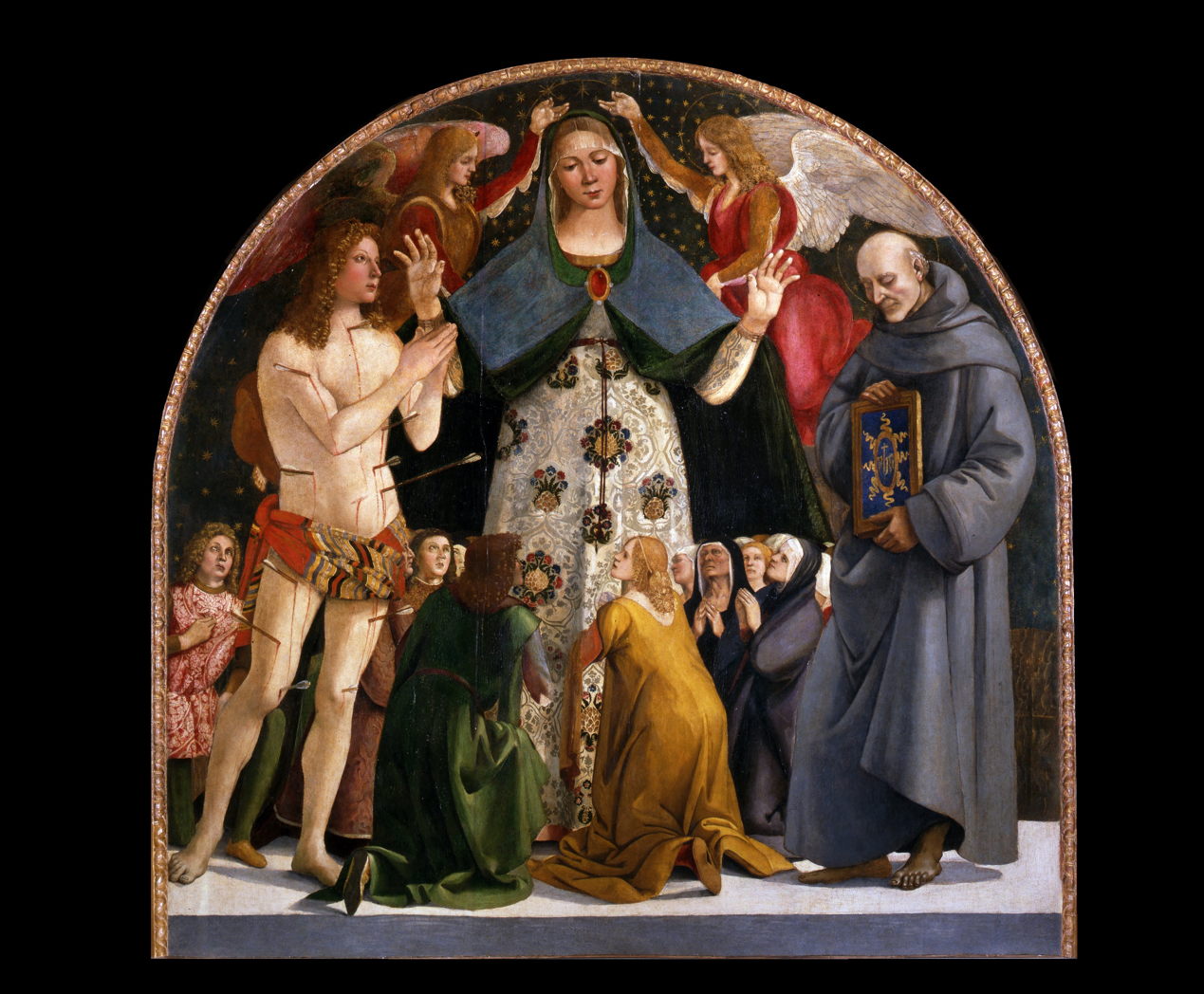
Among his surviving easel paintings from about 1490 is this Madonna of Mercy and Saints Sebastian and Bernardino da Siena, painted in tempera.
Towards the end of the century, he was commissioned to paint series of large frescos, first at the Monastery of Monte Oliveto Maggiore, near Siena, where he told events from the life of Saint Benedict. From there he went to the cathedral in Orvieto, a city in Umbria, where he started work in 1499 on his greatest work, depicting the events of the Apocalypse and Last Judgement.

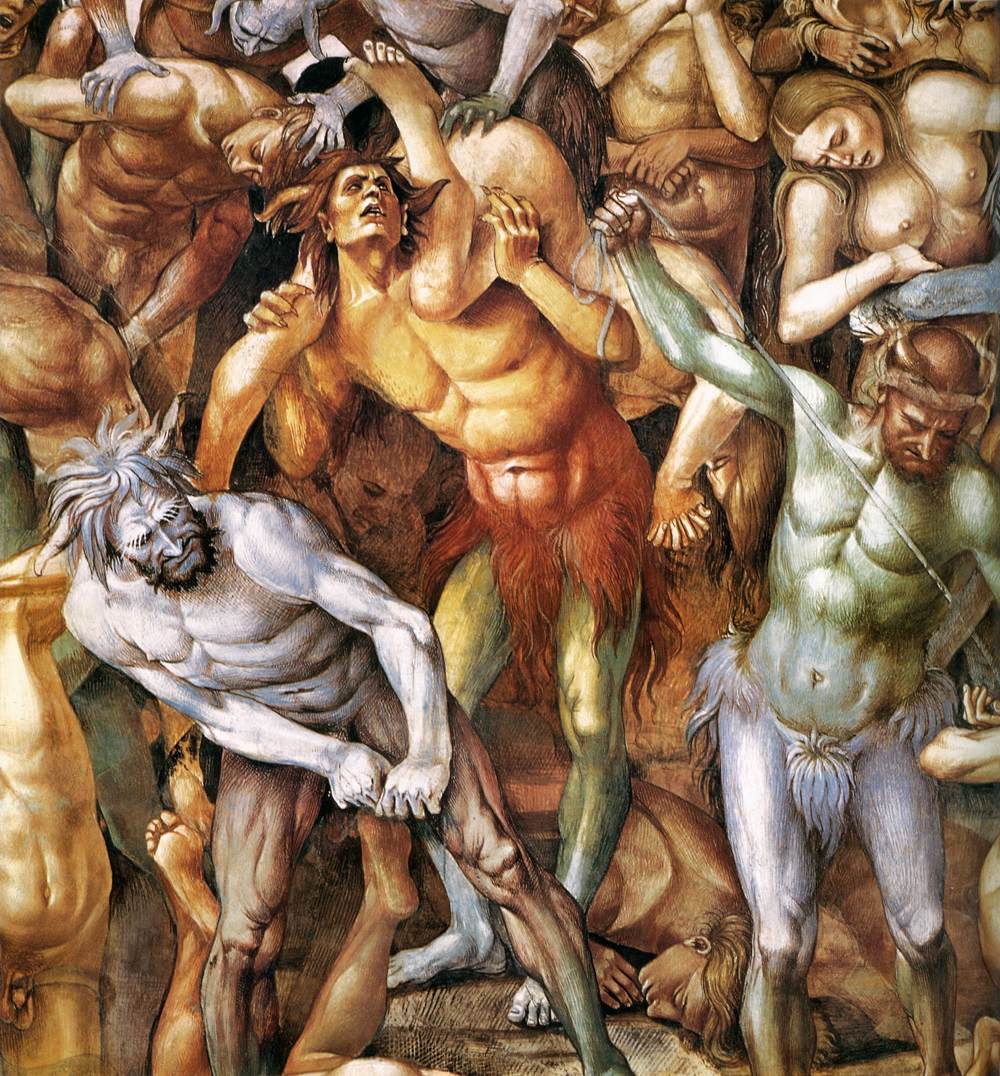
The best-known of Signorelli’s large frescos in the San Brizio Chapel in Orvieto shows the seething mass of The Damned (1499-1502). He uses colour coding to indicate the role of individuals, and there’s precious little sign of flames, fire, or even rocks, just a dense mass of people being tormented, as shown in the detail below.

The start of the series is his Sermon and Deeds of the Antichrist (1499-1502), where the Antichrist of the title stands on a box, and has been identified as Pope Alexander VI. It’s often claimed that the artist included a self-portrait in the left foreground, shown in the detail below, with Fra Angelico standing behind him. However, this probably isn’t correct, as Fra Angelico isn’t dressed as a Dominican friar, and Signorelli doesn’t resemble a portrait of the artist owned by Vasari, the first art historian, who was a distant relative of Signorelli.

Signorelli studied human anatomy, and frequently drew studies to improve the accuracy of his figures. Many among his crowd scenes show marked foreshortening, and in his day he became famous for those. It’s claimed that Michelangelo used some of those figures in his own frescos in the Sistine Chapel.
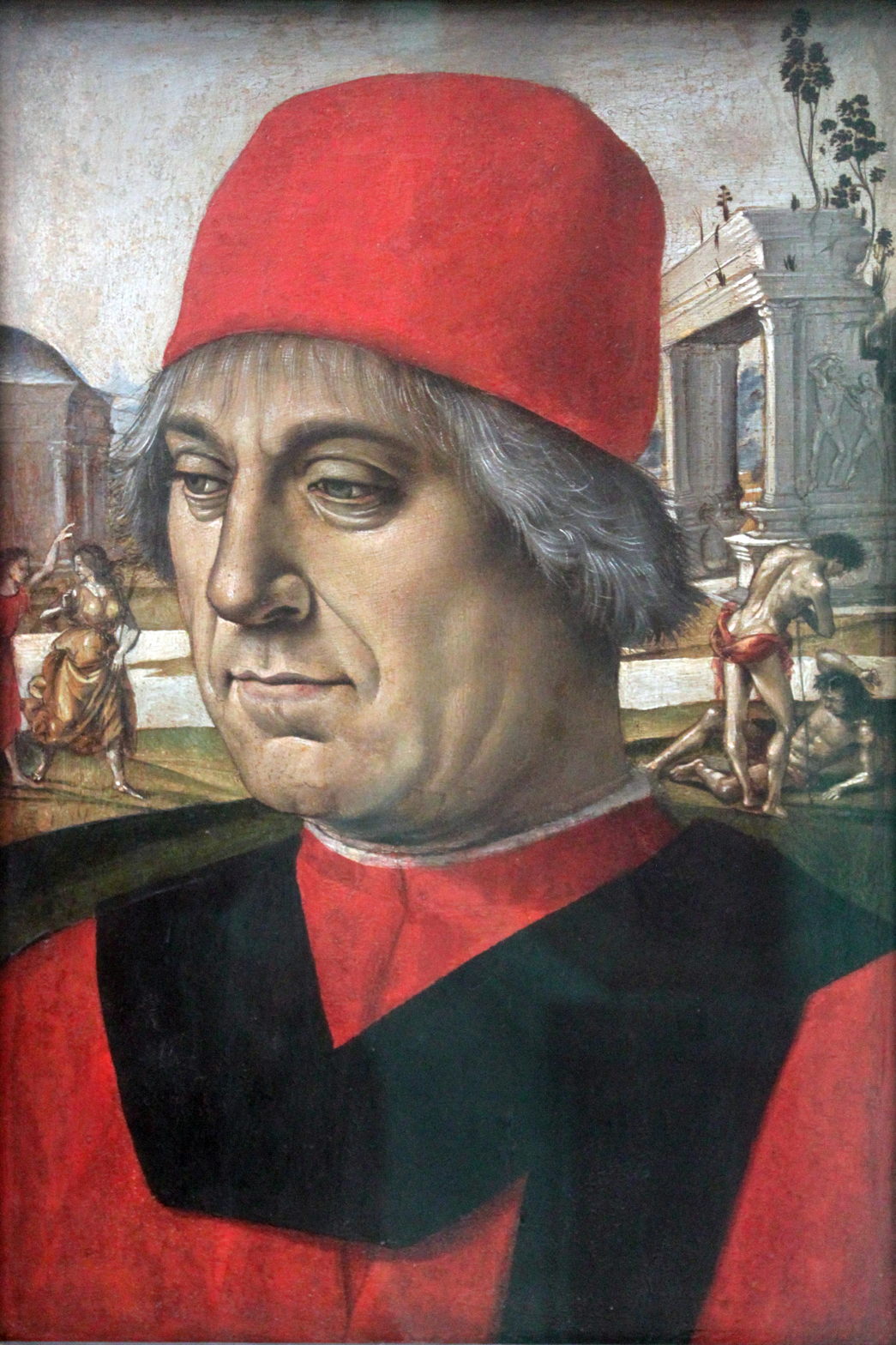
In addition to these major religious works, Signorelli painted several portraits, among them this Portrait of a Man from about 1492-1510, again in tempera on a poplar panel.
He lived into his early eighties, quite a remarkable achievement for the day, and apparently was still painting within a year of his death in 1523. His paintings provide insight into Renaissance beliefs, and those frescos in the cathedral at Orvieto should surely be mandatory viewing for all aspiring politicians, to remind them of what could await them in the future.
 The Eclectic Light Company