
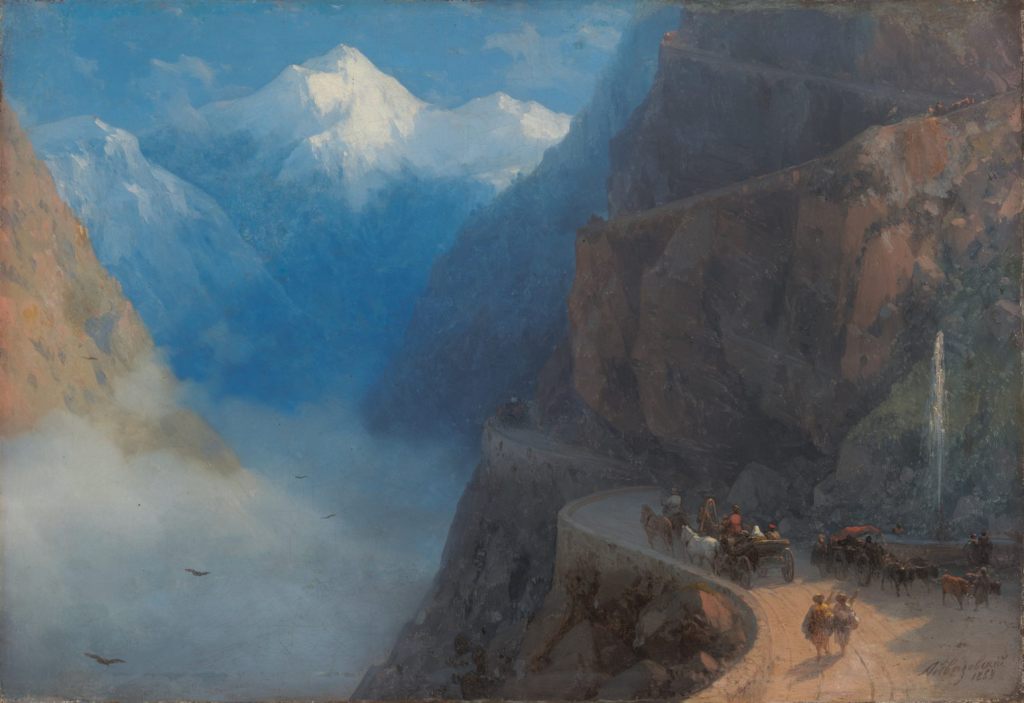
Like other lands around the coast of the Black Sea, the Caucasus Mountains were well known to ancient and classical Mediterranean civilisations. They were even incorporated into some myths, including the horrific fate of Prometheus.
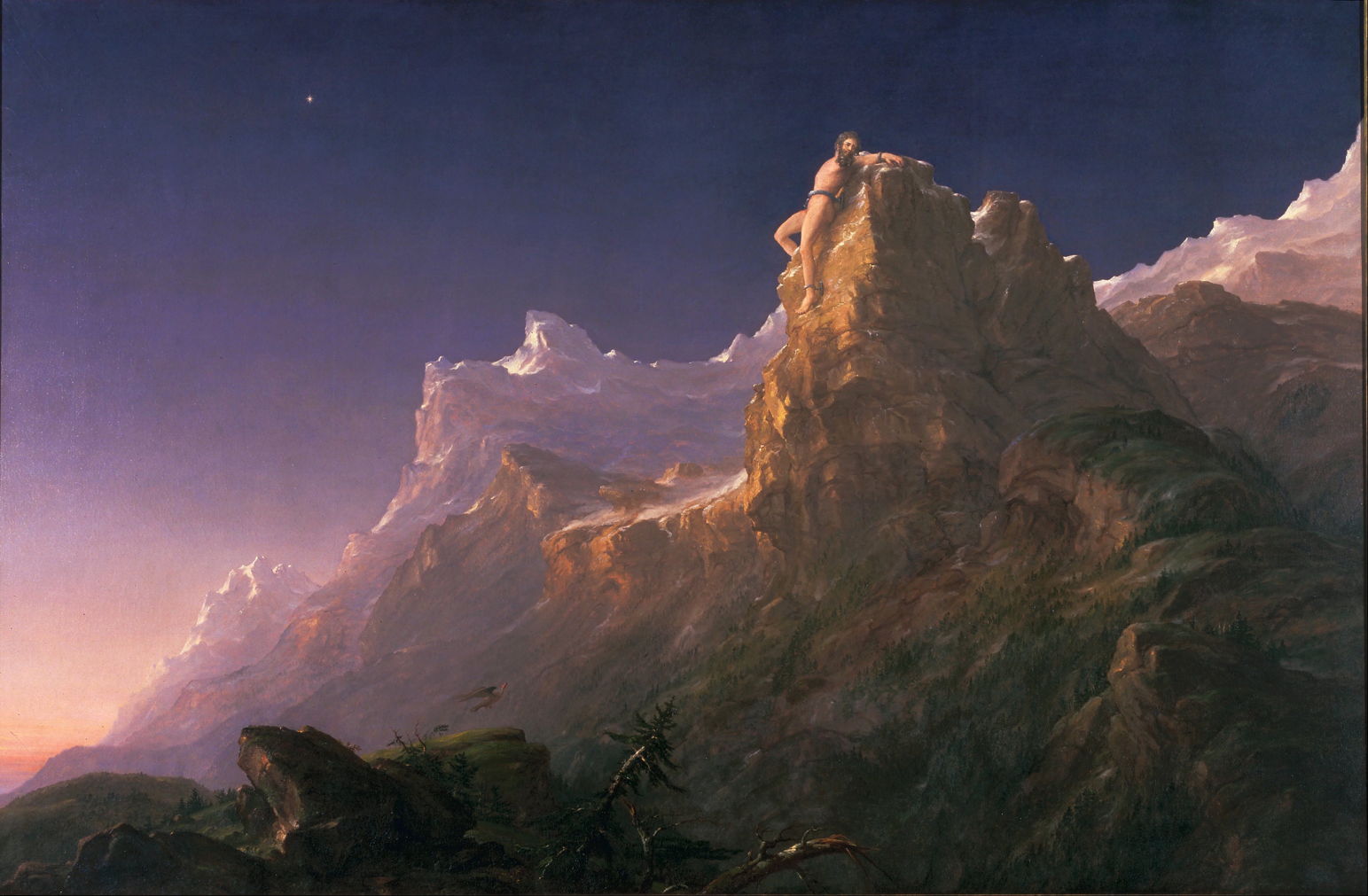
Thomas Cole’s romantic landscape from 1847 was inspired by later versions of the story, in which Prometheus was chained to a rock pillar in the Caucasus Mountains. The eagle is seen in mid-air in the valley, starting its ascent to feed from his liver, the sentence handed down by Zeus for Prometheus stealing fire from the gods and giving it to early mortals.
The Caucasus Mountains stretch in a band from the north-east coast of the Black Sea to the west coast of the Caspian Sea, forming a natural barrier between the south-eastern edge of Europe and Asia. The highest peak, Mount Elbrus, rises to 5,642 metres (18,510 feet), and there are at least seven other named peaks that exceed 5,000 metres (16,400 feet) elevation. Passes through the Caucasus have been vital routes for millennia, and were a key section of the Silk Route linking Europe with Asia. Kingdoms have come and gone over the centuries, but recent exploration of these mountains didn’t start until eastern Georgia was annexed by the Russian Empire in 1801.

Paul von Franken’s Watchtower in the Caucasus from 1863 is one of the earlier depictions of the most famous mountain and pass in the Caucasus: Mount Kazbek or Kazbegi, from the Georgian Military Road that leads up to the Dariel Pass. Kazbek is a dormant volcano, and reaches a peak of 5,054 metres (16,581 feet). It lies on the modern border between Georgia and Russia, and is here seen from the south, as is most usual.

Ivan Aivazovsky visited what is now Georgia in about 1868, when he painted Tiflis, now Tbilisi, capital of Georgia, with the peaks of the Caucasus in the far distance.
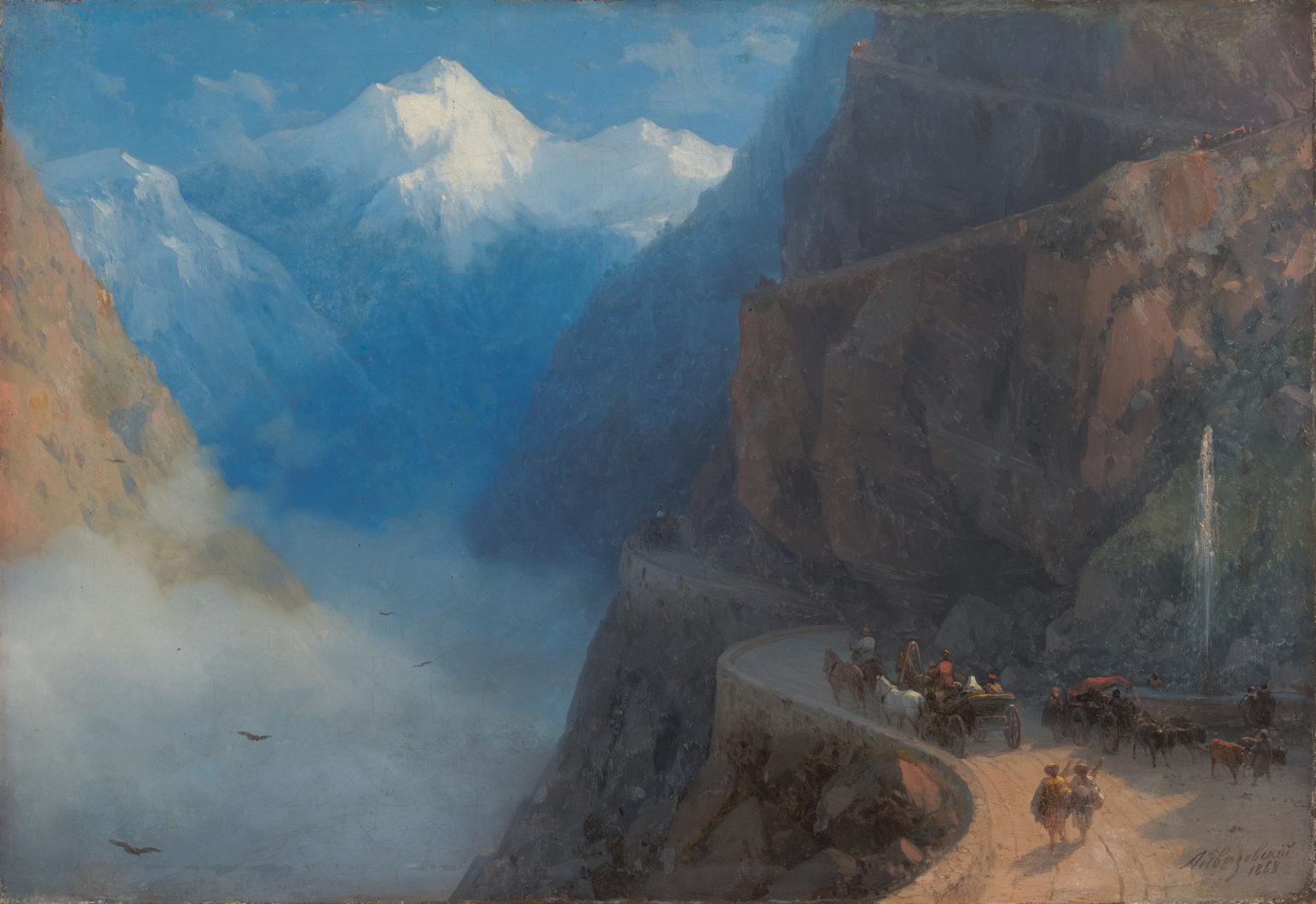
That year he also travelled From [Kvemo] Mleta to Gudauri, further south on the Georgian Military Road. Gudauri is now a popular ski resort, although I believe the road leading to it has been improved substantially since this was painted!
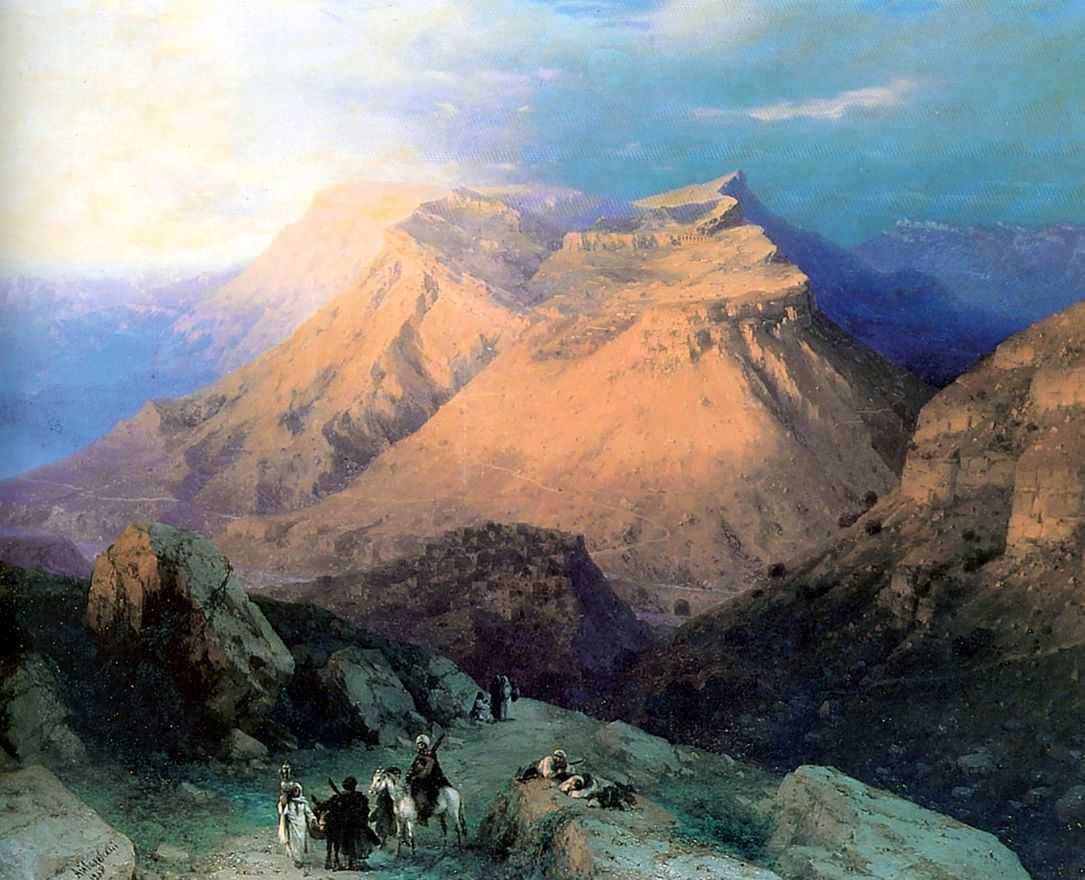
Aivazovsky travelled on, and the following year was an early visitor to the mountainous wilderness of the eastern end of the Caucasus Mountains, where he painted this Mountain Village Gunib in Dagestan (1869). Dagestan forms much of the western coast of the Caspian Sea.
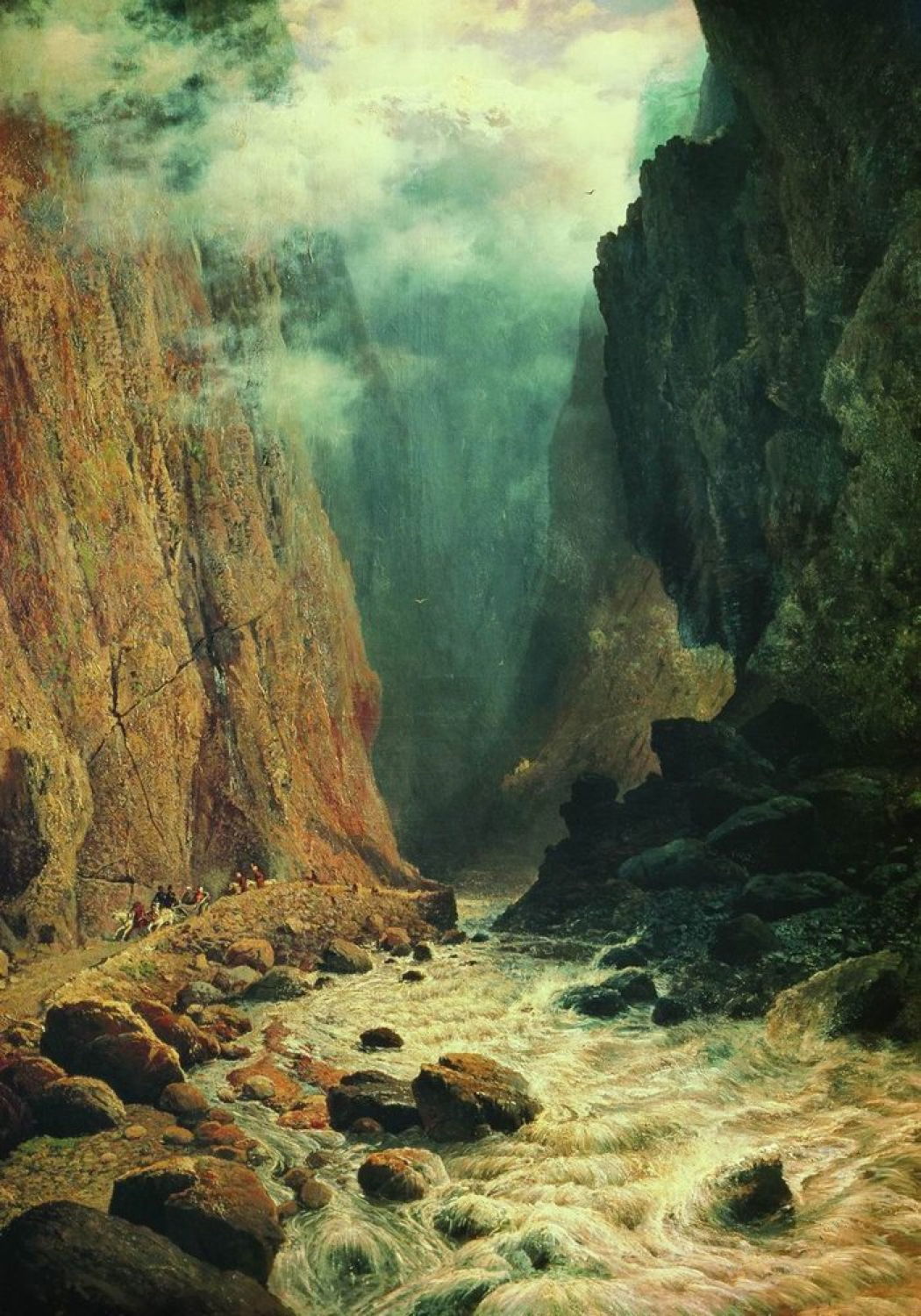
Rufin Sudkovsky’s Darial Gorge from 1884 shows the long and narrow gorge carving its way through the granite of the centre of the Caucasus Mountains, connecting Russia and Georgia. It’s one of only two crossings of the central section of these mountains. He shows its dramatic and near-vertical rock walls towering above a small group of travellers on the road next to the River Terek, with Mount Kazbek in the distance.

Arkhyp Kuindzhi’s Darial Pass. Moonlit Night, painted following a visit in 1890-95, shows a section of the Military Road in the tranquil conditions of summer.
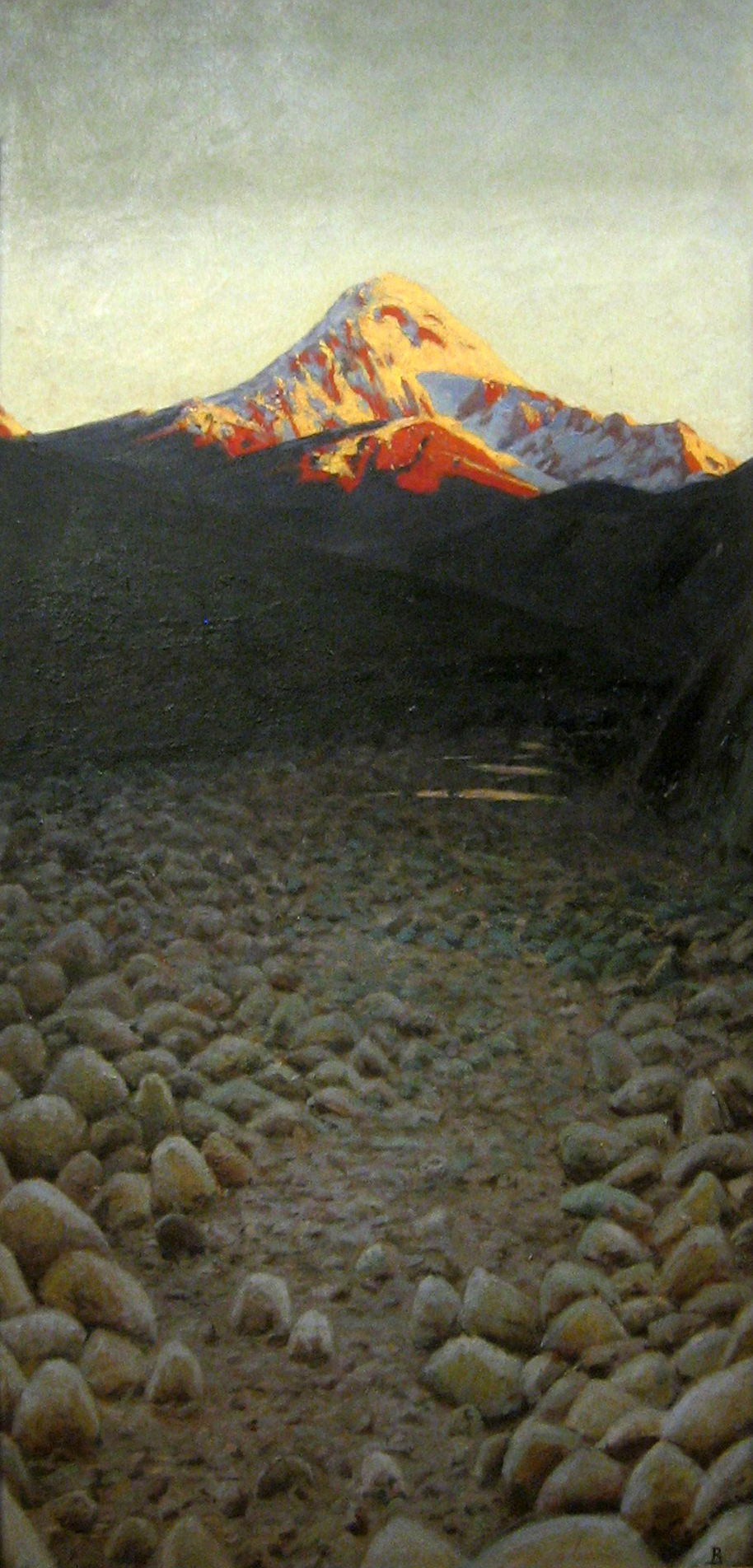
Vasily Vasilyevich Vereshchagin was another artist who made his way to paint Mount Kazbek in 1898.
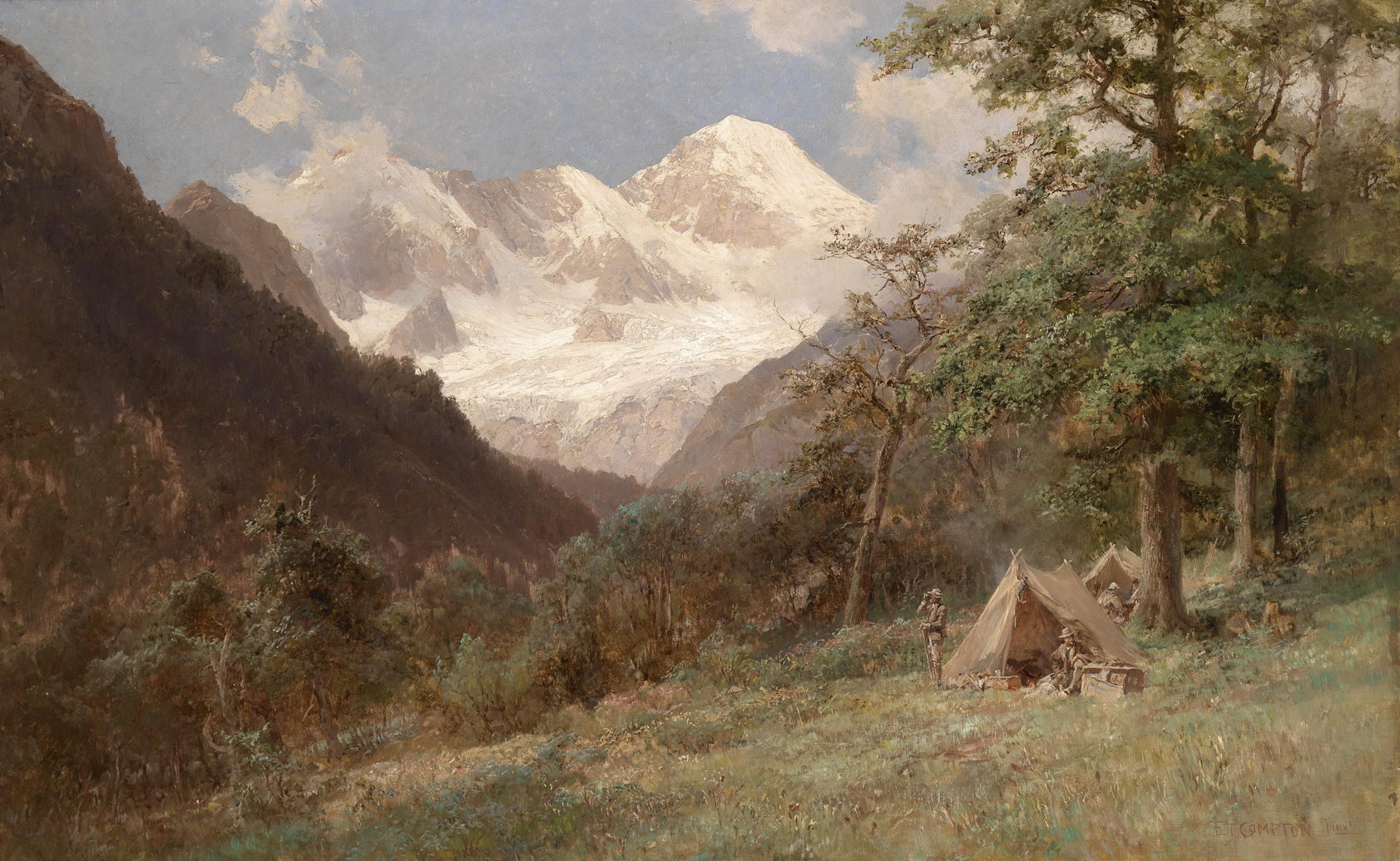
Edward Theodore Compton’s undated painting of the Caucasus Mountains was probably made in the late nineteenth or early twentieth centuries, and shows a small group of explorers ascending the foothills towards the rugged peaks in the spine of the range.
I finish with a painting by Niko Pirosmani, the only artist included here who was a resident of this area. He remains the most famous Georgian artist, whose ‘primitive’ paintings weren’t fully appreciated until after his death.
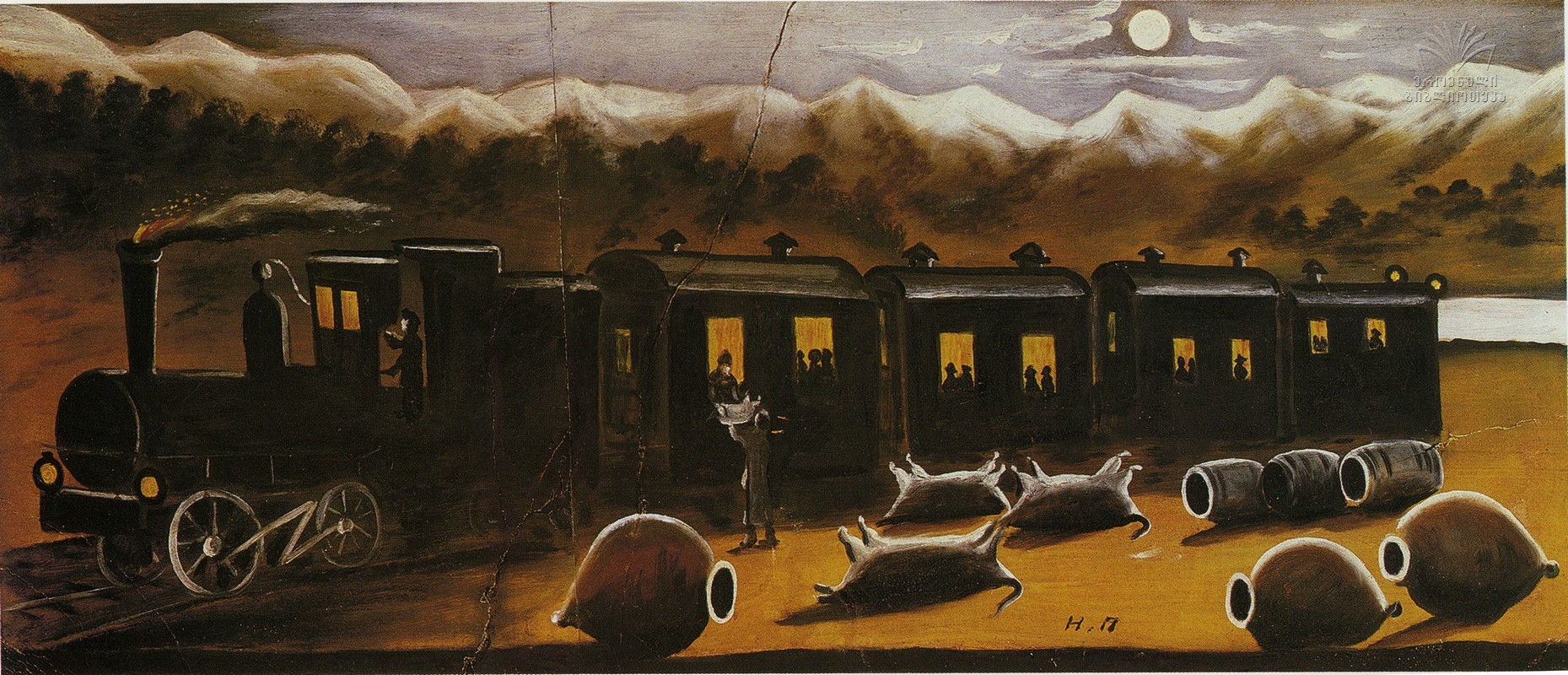
Georgia has had railways since 1871, when its first route opened near the Black Sea in the west of the country. This was extended east through Kakhetia by 1883, to link with Baku in Azerbaijan, allowing the export of Caspian oil through the Georgian port of Batumi on the Black Sea. Pirosmani’s nocturne of Train in Kakhetia from about 1895-1918 relied on his own experience working on the railway in the early 1890s. It shows the loading or unloading of animal carcases and wine, in casks and amphora, on the plain below the foothills of the eastern Caucasus Mountains.
 The Eclectic Light Company