

Five hundred years ago, on 13 August 1523, the Netherlandish painter Gerard David died in Bruges, now in West Flanders in Belgium. Although one of the less-known masters of the Northern Renaissance, he was a prolific painter whose use of brilliant colour is unusual, with a distinctive style and originality. In this and tomorrow’s articles to commemorate his death, I show a selection of his work.
Little is known of David’s life and career. He’s thought to have been born in about 1450-60, but that’s only guesswork based on an assumption of his age from what’s believed to be a self-portrait in one of his paintings. He is known to have come from the town of Oudewater in the province of Utrecht, in the modern Netherlands. He’s thought to have studied in Italy in about 1470-80, then returned to work under Albert van Oudewater in Haarlem. In 1483 he moved to Bruges, where he was admitted to the Guild of Saint Luke the following year.
His best known secular painting tells the fate of a corrupt judge.

The story given by Herodotus about the corruption of Sisamnes, known as the Judgement of Cambyses, is today obscure. However, in 1489 it formed the basis for two paintings by David now viewed as a diptych.
Sisamnes was a notoriously corrupt judge under the rule of King Cambyses II of Persia, and accepted a bribe in return for delivering an unjust verdict.
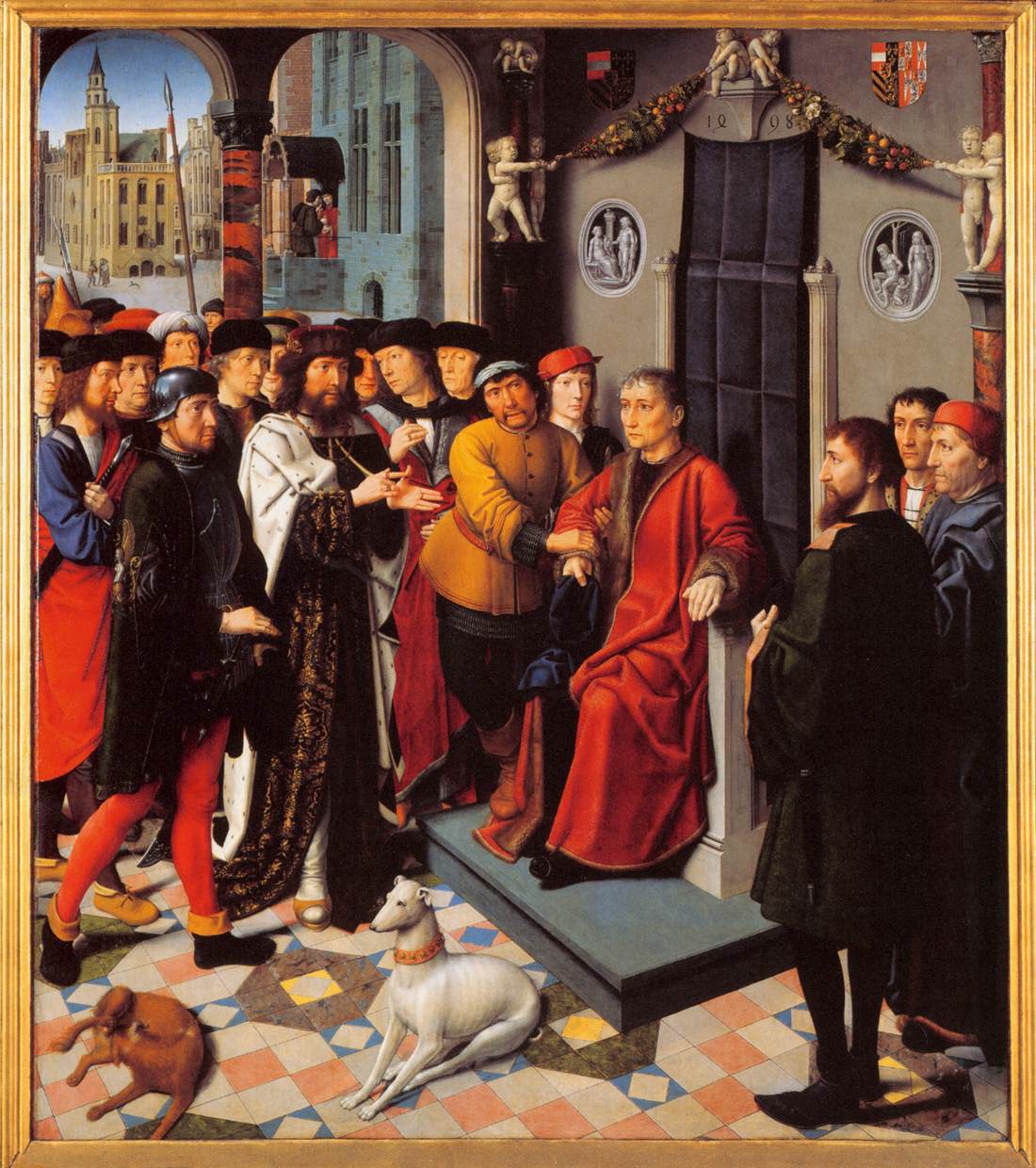
In the left panel, Sisamnes is being arrested by the king and his men, as the judge sits in his official chair. Hand gestures indicate the bribery that had been at the root of Sisamnes’ crime.
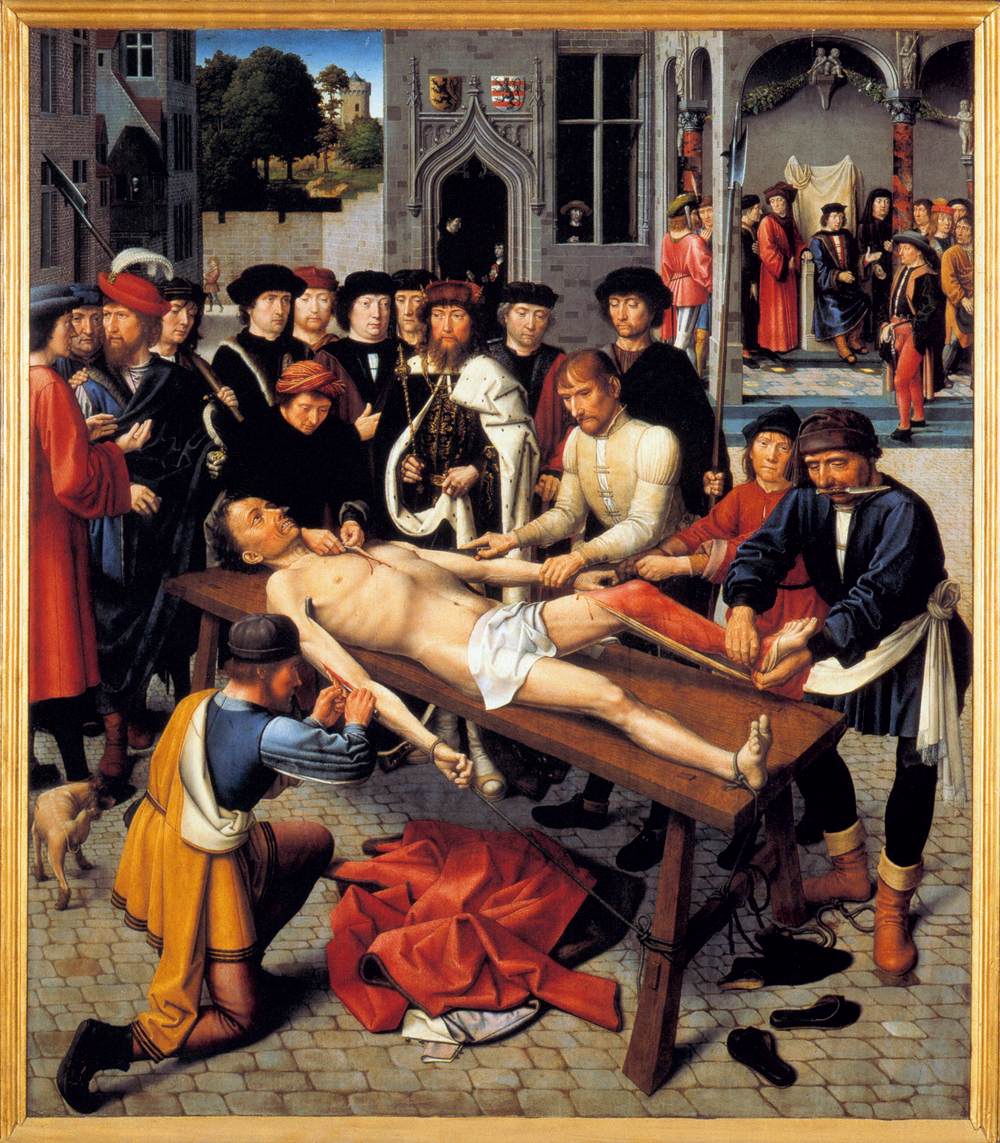
King Cambyses sentences Sisamnes to be flayed alive, as shown in the foreground of the right panel. In the upper right, David uses multiplex narrative to show the judge’s skin then covering the official chair, as a reminder to all who sit in judgement of the fate that awaits them should they ever become corrupt or unfair.
David’s gruesome diptych was a pointed reminder to the authorities in Bruges of the importance of an independent judiciary, and the penalty for any judge who was tempted by bribery or any other form of influence, cautions which have great contemporary value.
In 1494, following the death of Hans Memling, David became the leading painter in Bruges, and was established among the city’s leading citizens.
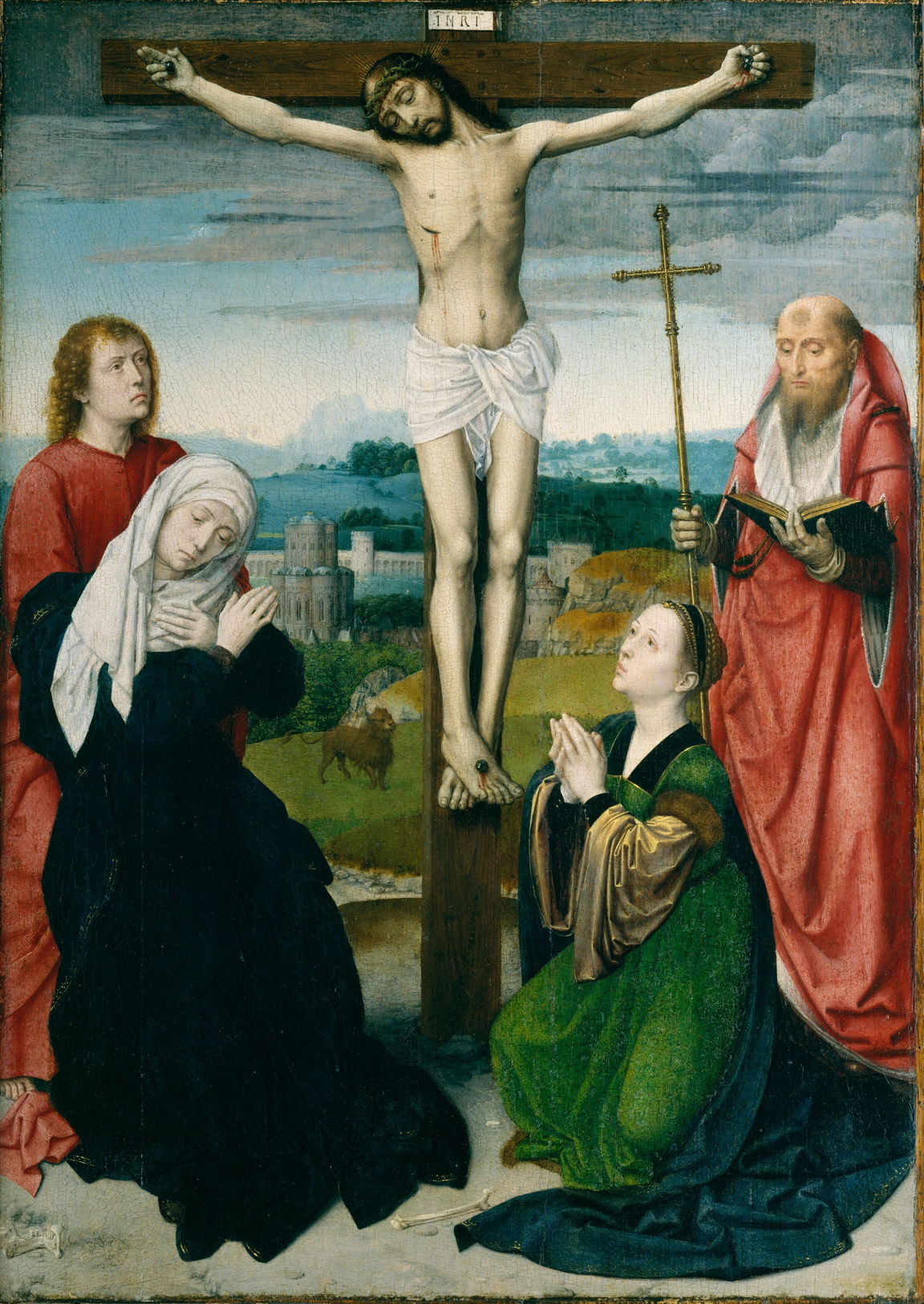
David’s Crucifixion from about 1495 is conventional, although his combination of bright reds and greens is notable.
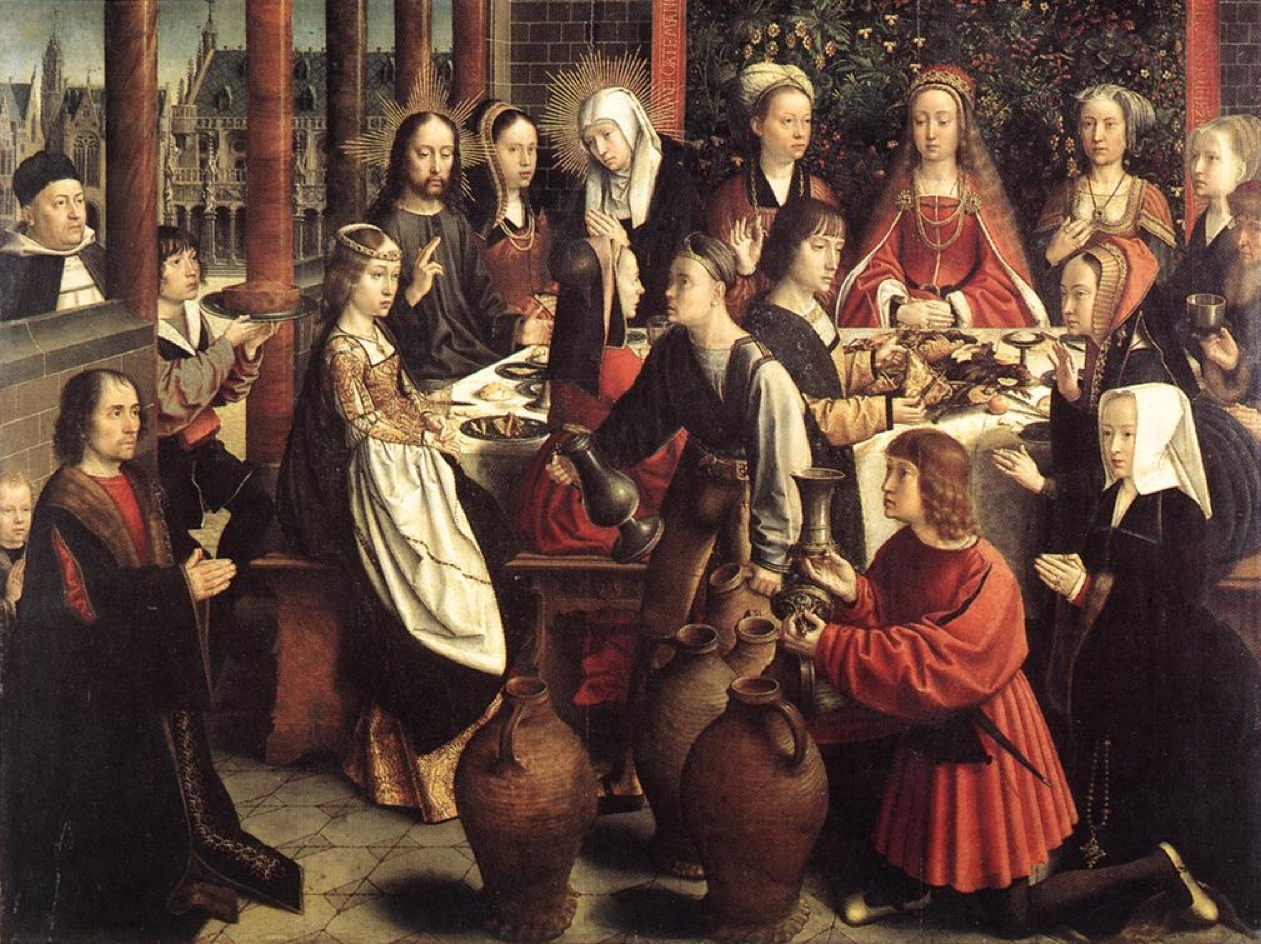
His account of The Marriage at Cana from about 1500 shows the moment that wine ran out, prior to the transformation of water into wine, as told in the Gospel of John.
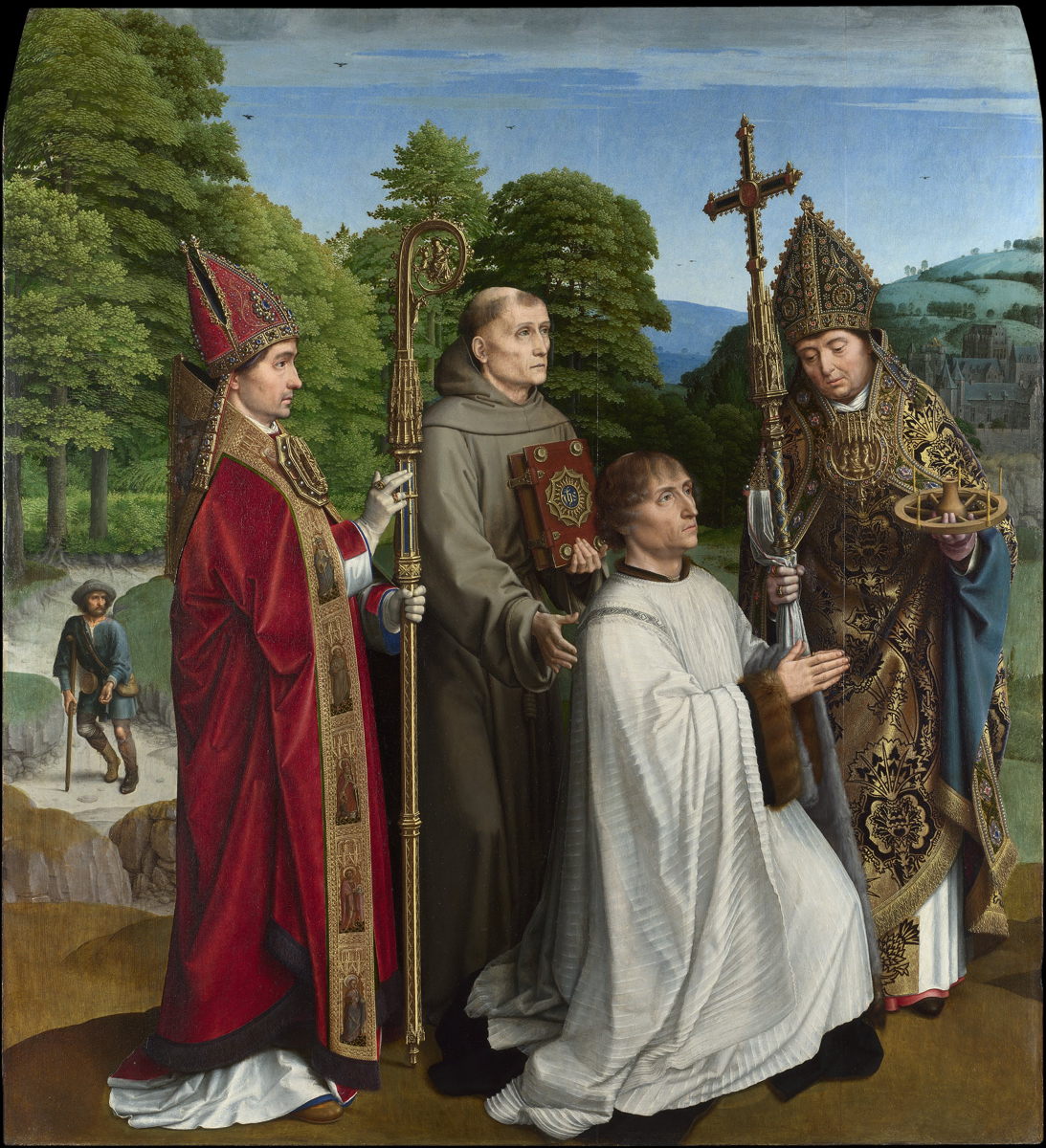
In 1502-06, David painted this commissioned scene of Canon Bernardijn Salviati and Three Saints for a chapel in the Collegiate Church of Saint Donatian in Bruges, which was being restored at the time. It donor, Canon Salviati, is shown kneeling in prayer; he was the illegitimate son of a merchant from Florence who became a canon of this church in Bruges, and died in 1519. The saints shown are, from left to right: Martin of Tours, who gave his cloak to a beggar who’s shown behind; Bernardino of Siena, and Donatus of Arezzo, all of whom are associated with Salviati and his church. Once again David uses rich colours, this time in a naturalistic landscape.
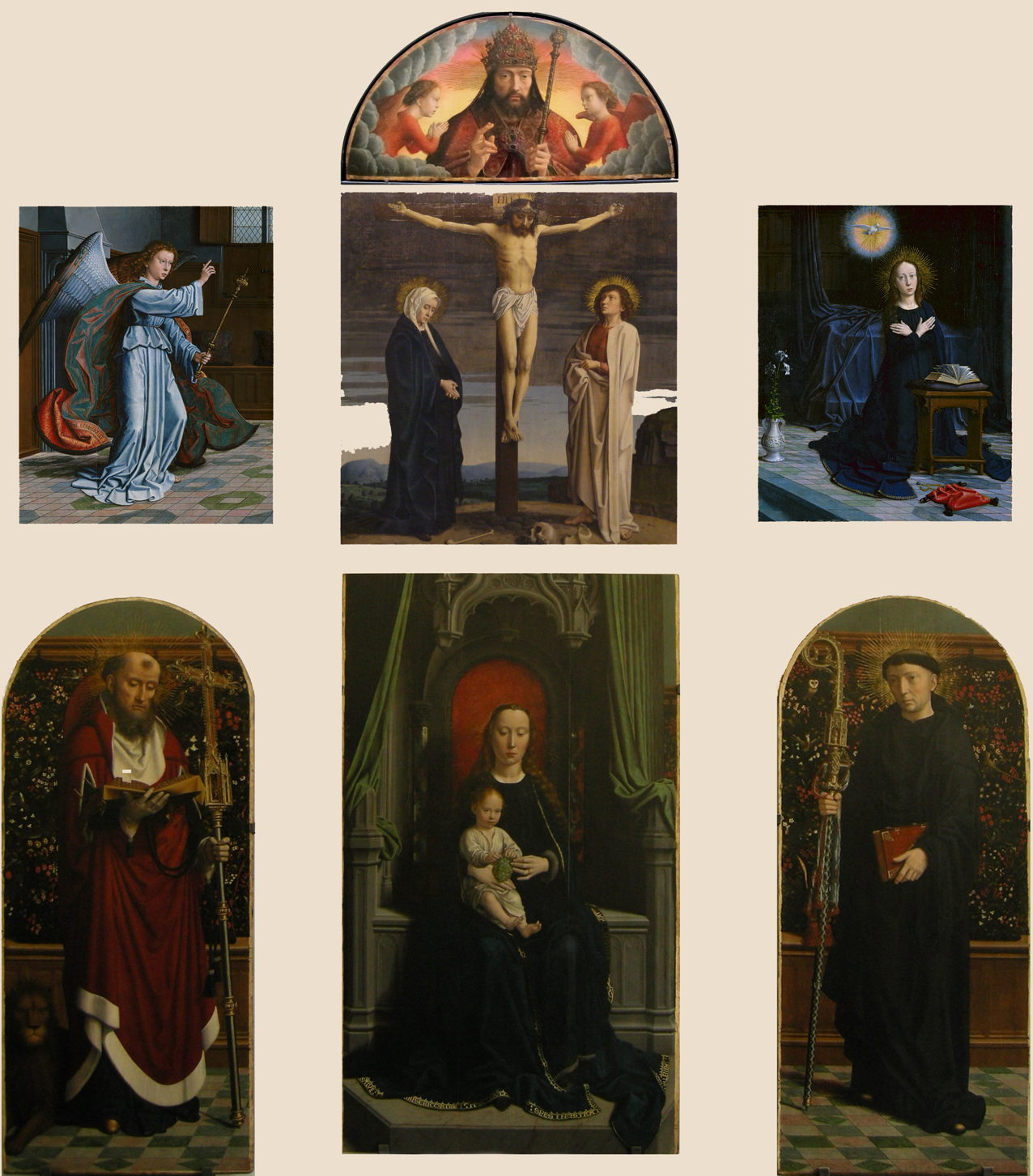
His next major work was the Cervara Polyptych, painted between 1506-10. As is so often the case, its constituent panels have been subsequently dispersed around the world. Shown here are God the Father, now in the Louvre, the Annunciation, in the Met in New York, with other panels now in the Palazzo Bianco in Genoa. These were commissioned by the wealthy banker and diplomat Vincenzo Sauli for the high altar of the church of San Gerolamo della Cervara, near Genoa in Italy. Sauli apparently had a connection with the city of Bruges.
Reference
 The Eclectic Light Company