

When Apple released the macOS Ventura 13.5 update, it was opaque about what it had changed, writing: “This update provides important bug fixes and security updates and is recommended for all users.” Apart from Ventura’s security-only updates, this is the tersest and least informative of all its release notes for macOS 13. If the bug fixes were that important, why should we not have been told what had been fixed?
What hardly anyone noticed at that time was that among those unspecified bug fixes Apple had removed one of its most important privacy features: its Privacy & Security settings had lost all control over bundled and user-installed apps in Location Services. This is how it should have looked:
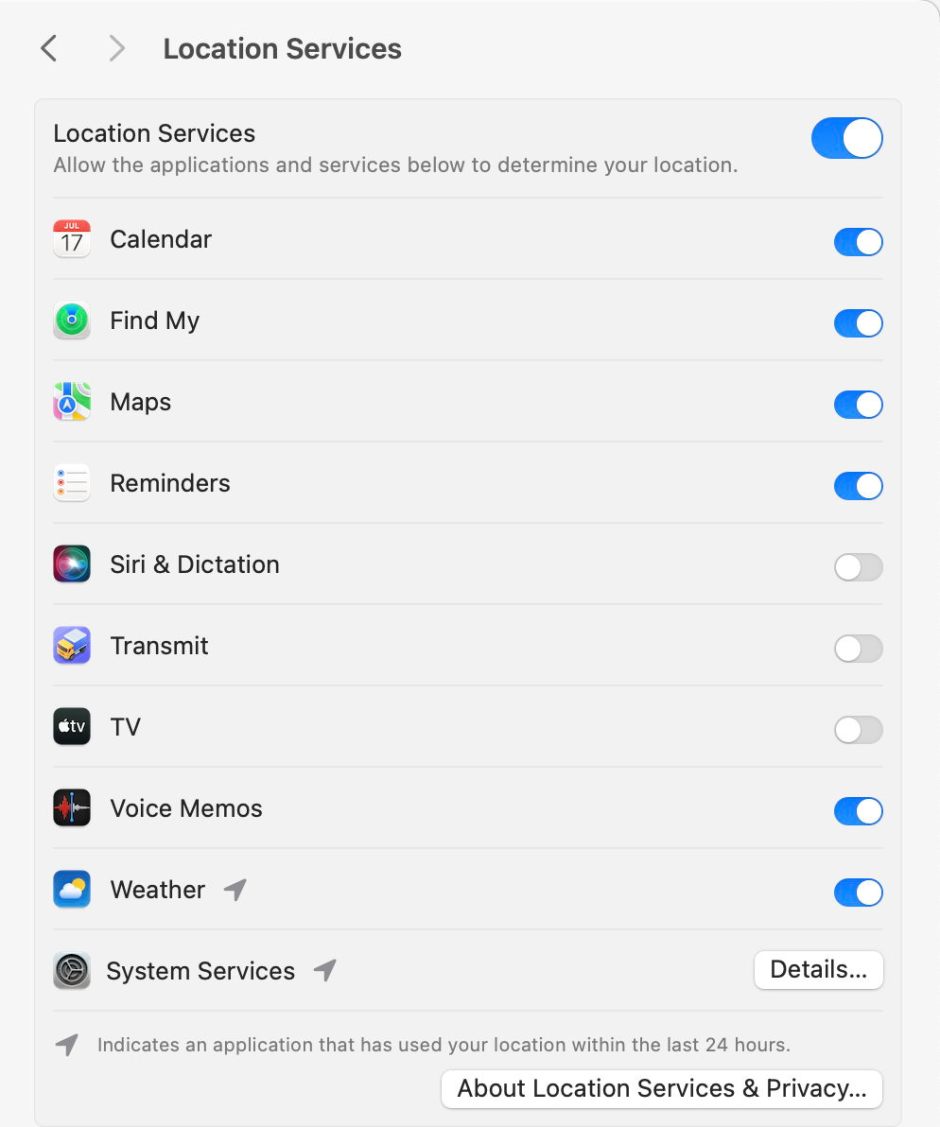
and this is what you now see in macOS 13.5:
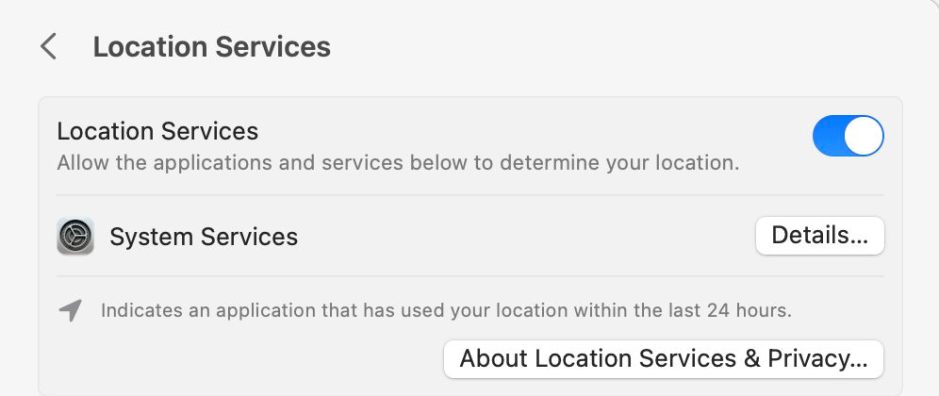
Ever since its introduction in the first betas of Ventura, System Settings has been dogged by inattention to detail. Its most significant omission from the first release of 13.0 was support for network locations, which was belatedly added back in 13.1, camouflaged in a popup menu under an ellipsis so obscure that most don’t even notice its existence, and assume it’s still missing.
Loss of control over Location Services in apps is the more serious because there’s no command tool to act as substitute. Although grouped together with settings that are managed by TCC, with its limited control using tccutil, Location Services are managed separately by locationd, for which there’s no command tool available. Its database is locked away in /var/db/locationd, where even the advanced user is denied access.
As a result, since we updated to 13.5 last Monday, apps have had free run of Location Services without our even knowing which can access our private data, let alone being able to deny that access. Apple has a whole white paper promoting its user controls and transparency with location data, yet no one noticed that most of those controls had been lost in 13.5.
It’s that inattention that I find most striking. The difference between those two screenshots is so great that we can only presume that no Apple engineer opened Location Services settings and took a careful look at it. That’s despite several small changes in build numbers across components including CoreLocationAgent.app in CoreServices, the CoreLocation Framework and LocationSupport Private Framework. Is it normal, though, for Apple to release the last minor update before dropping full support for a major version of macOS, without even checking through key windows in System Settings?
If experience is anything to go by, Apple now seems to delegate most pre-release testing and checks on macOS to third-party beta-testers, and depends on their reporting of issues using Feedback. When we fly, we expect the pilots and engineers to perform thorough checks on the aircraft and its essential functions before declaring that flight ready for takeoff. If they instead walked through the main cabin asking some of their passengers whether they thought everything seemed OK, would you fly with that airline?
It’s also quite usual for Apple to remain silent when such problems become apparent. I’ve seen some advisors on Apple Community Forums asserting that this change was no accident, but intentional, that Apple has deliberately removed one of the key privacy protections in Ventura. But as Apple failed to give us any indications as to what has changed, and hasn’t said a word since its release, maybe that inference isn’t unreasonable. It has though been reported in at least two Feedbacks, so maybe macOS 13.5.1 is just around the corner. Yet again, in the space of one month, we’re left asking how Apple can release updates that are so obviously flawed.
 The Eclectic Light Company