
This week’s Ukrainian painter is one of several who emigrated from the country after his initial training, and later established himself an international reputation. He’s Wladimir Baranoff-Rossiné (1888-1944), who was born in southern Ukraine, most probably in Kherson, and was initially known as Shulim Wolf Leib Baranov. He first studied art at the art school in Odesa, from where he graduated in 1908.
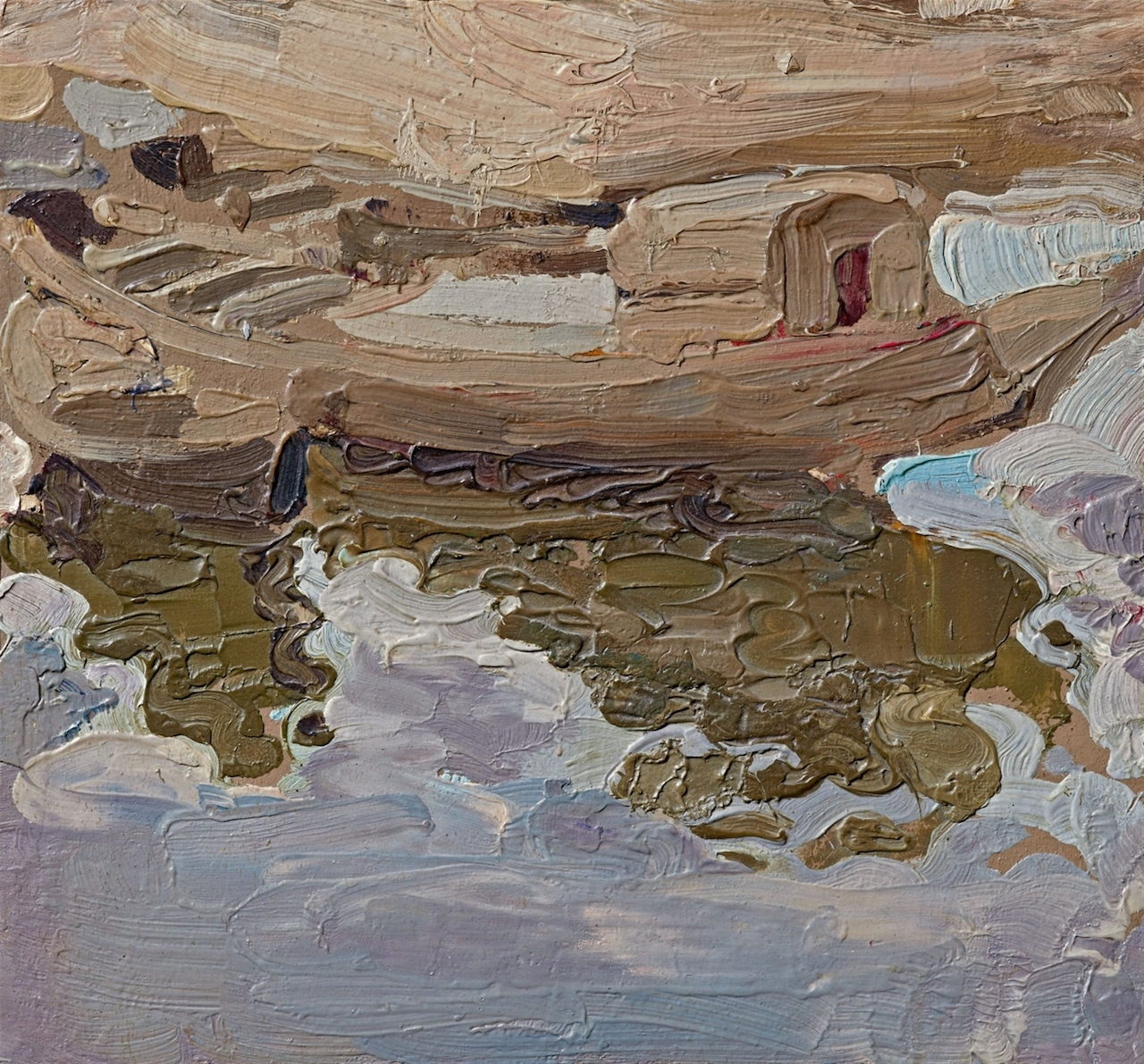
Several of his earliest surviving paintings appear to show views of the River Dnipro, including The Boats from 1905, painted when he was a student in Odesa.
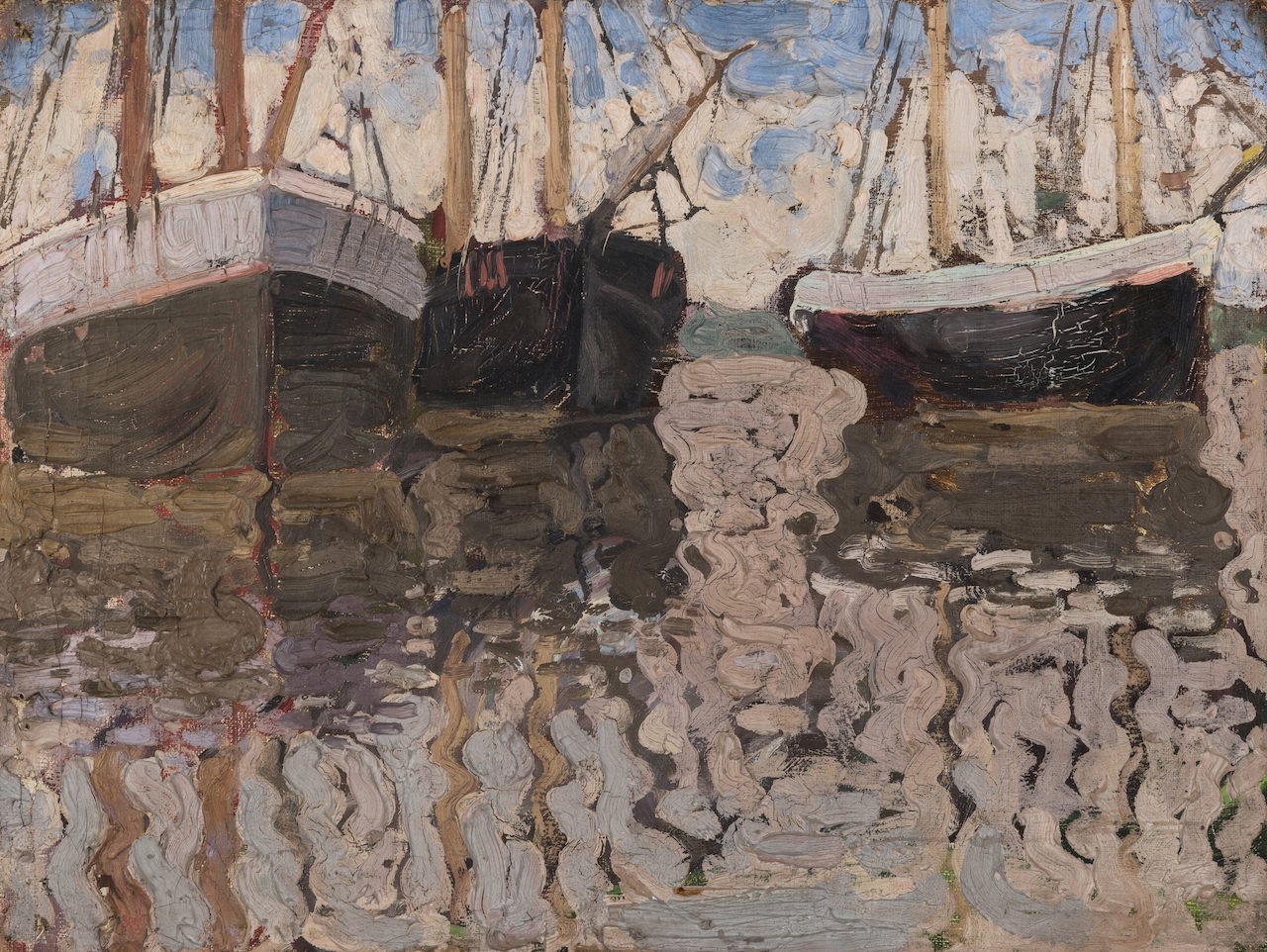
A View of Sailboats also dates from this period of 1905-08.
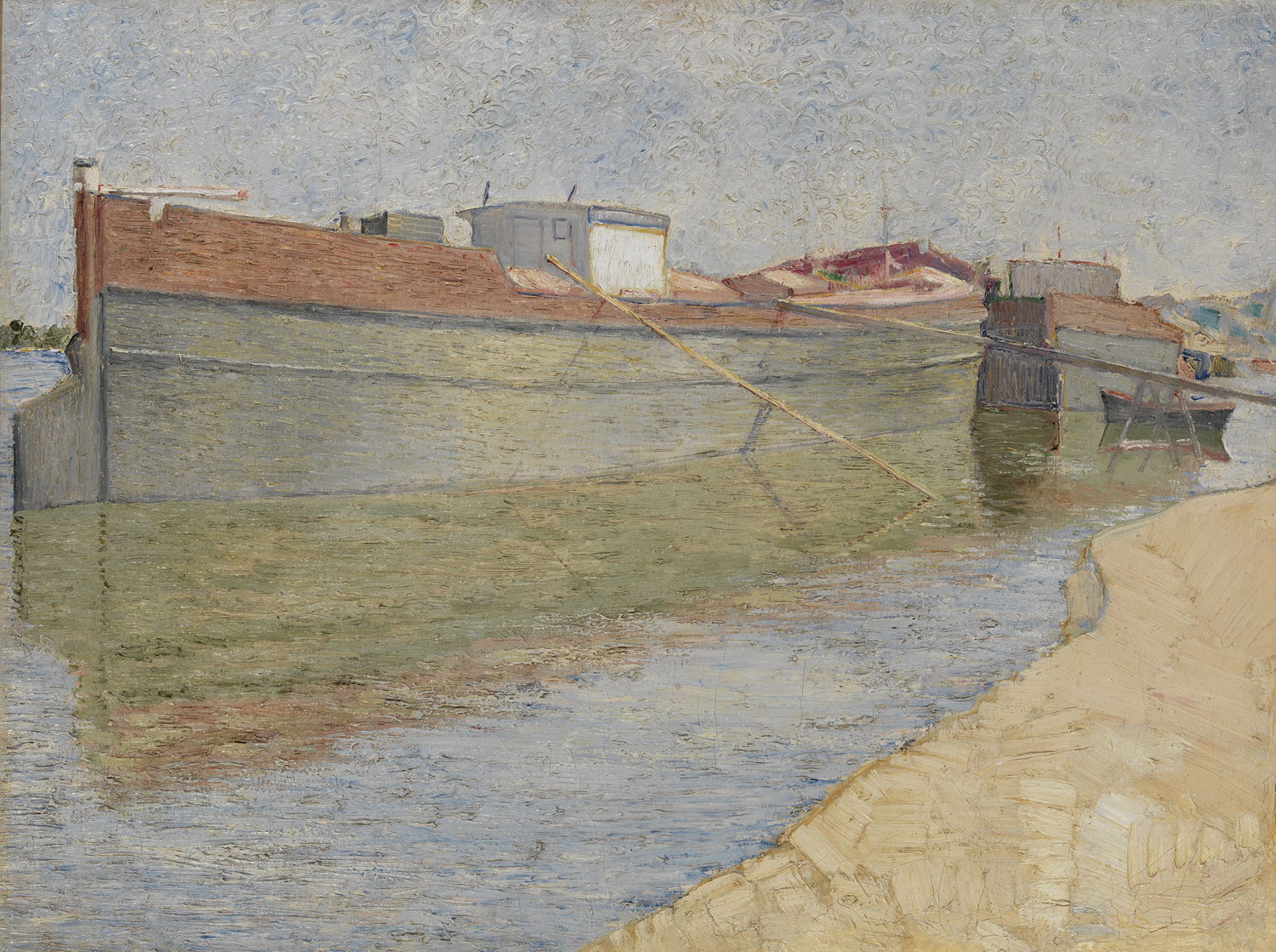
He painted this view of a Barge on the Dnipro in 1907.
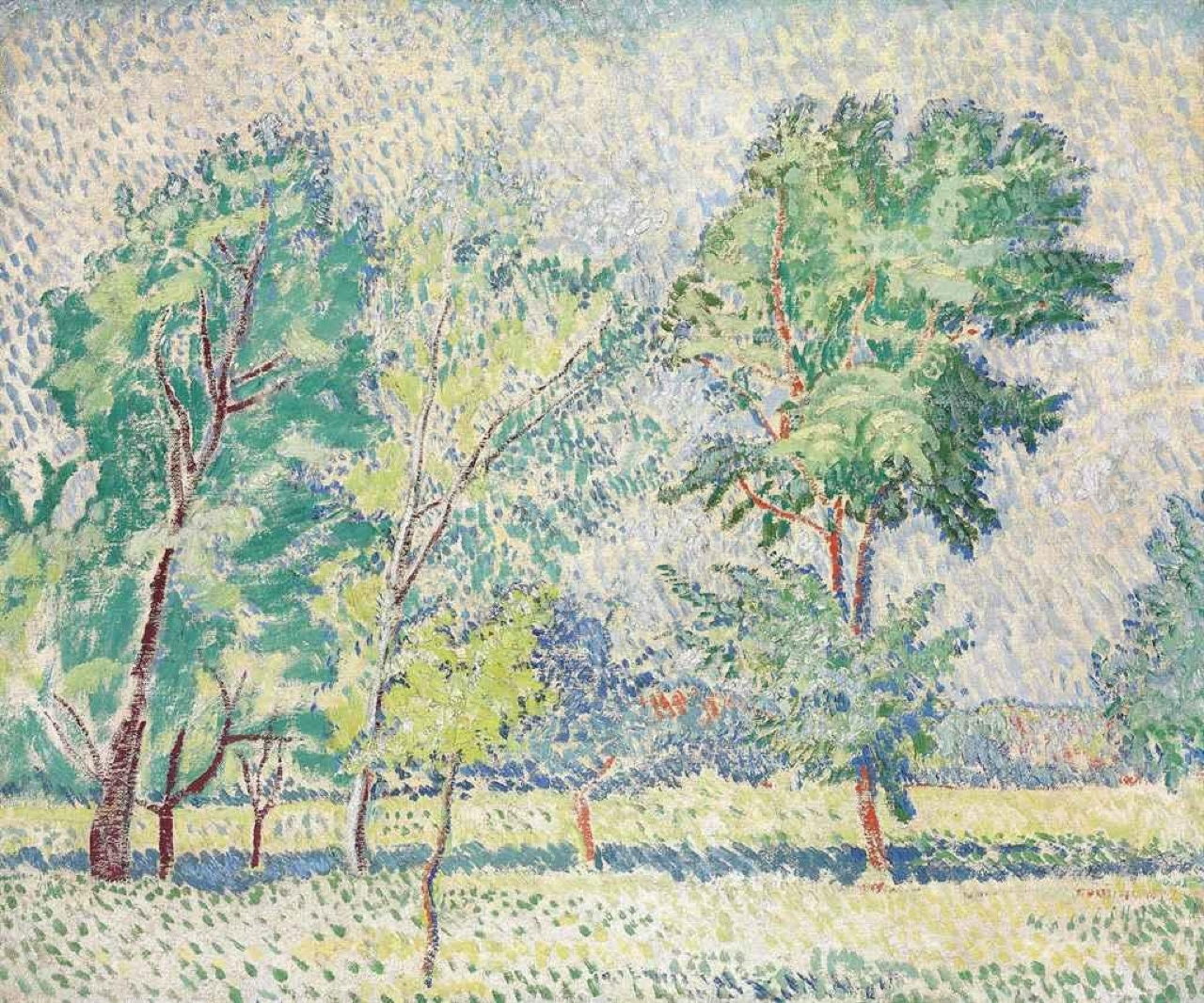
Summer Landscape (1907) has an almost Divisionist facture responsible for the textures of its different surfaces and foliage.
After completing that initial training in Odesa, he started to study at the Imperial Academy of Arts in Saint Petersburg, but was dismissed the following year for missing his classes there. He had already exhibited in Kyiv in 1908, and the following year in Saint Petersburg.
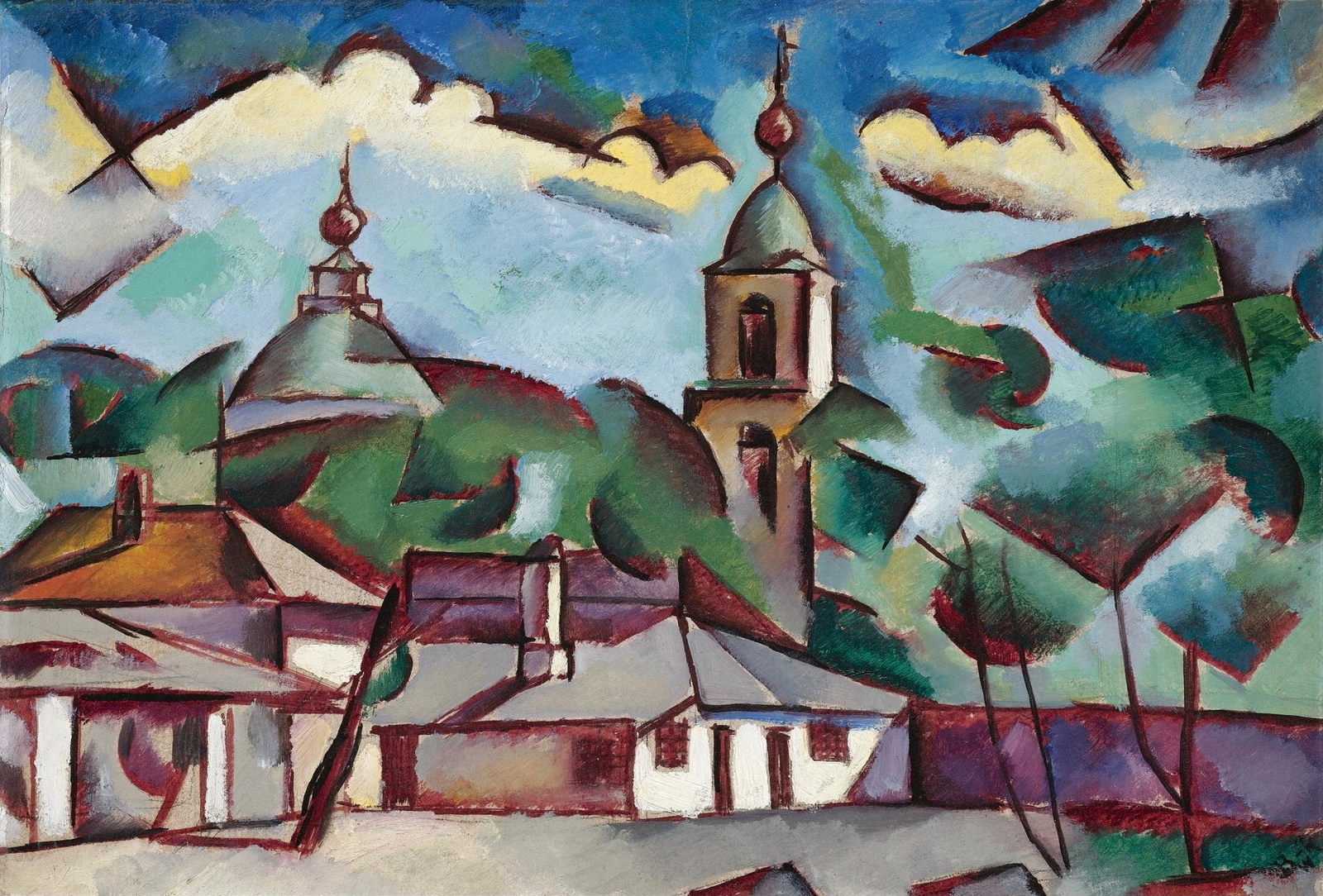
He painted this Landscape with Church in 1909, possibly when still in Russia.
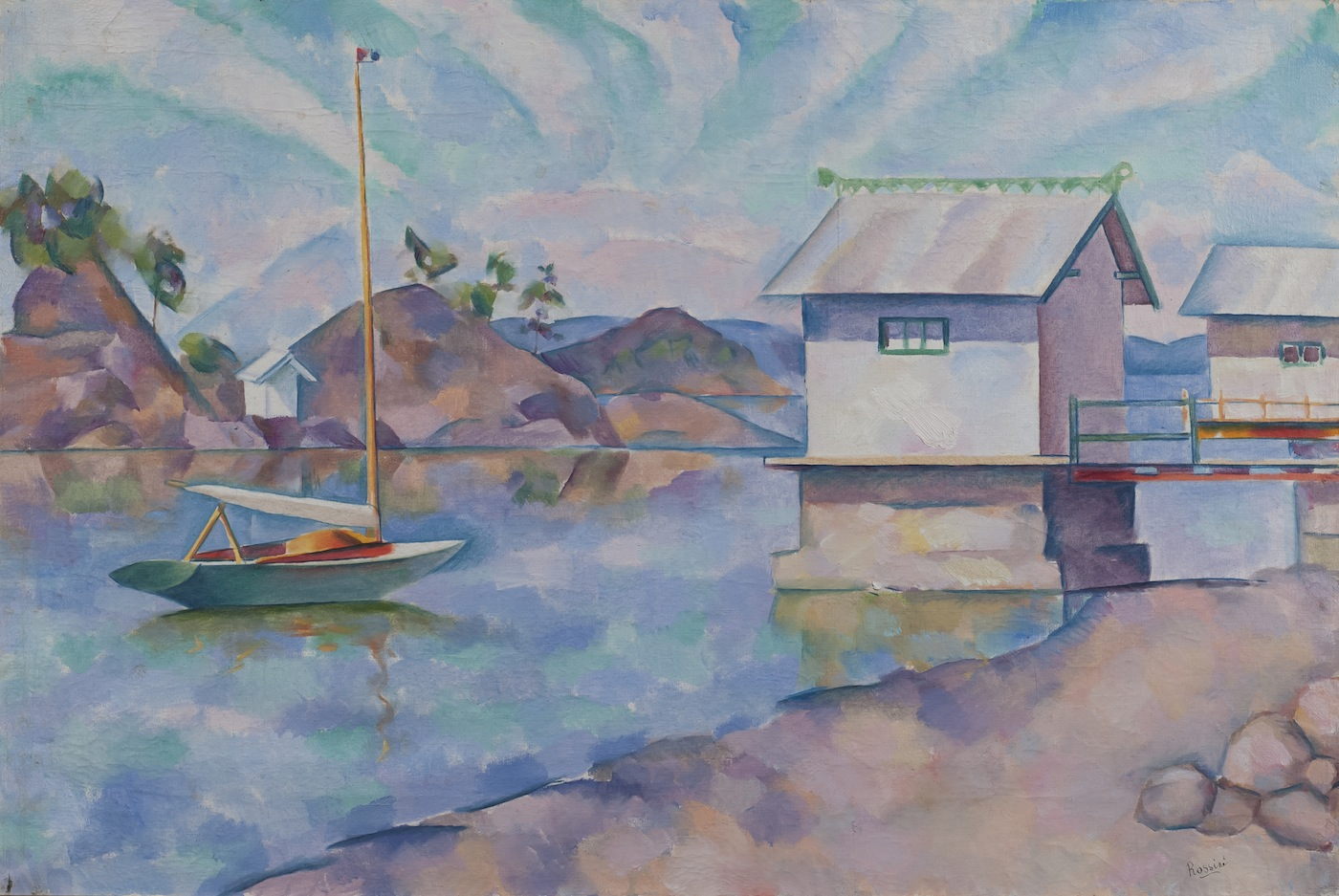
The Sailboat (1910) shows a rhythm in its sky that is suggestive of some of the late landscapes painted by Ferdinand Hodler.
In 1910, he moved to Paris, where he took the name Daniel Rossiné while he lived and worked in the La Ruche colony in Montparnasse, and transferred to sculpture in 1914.
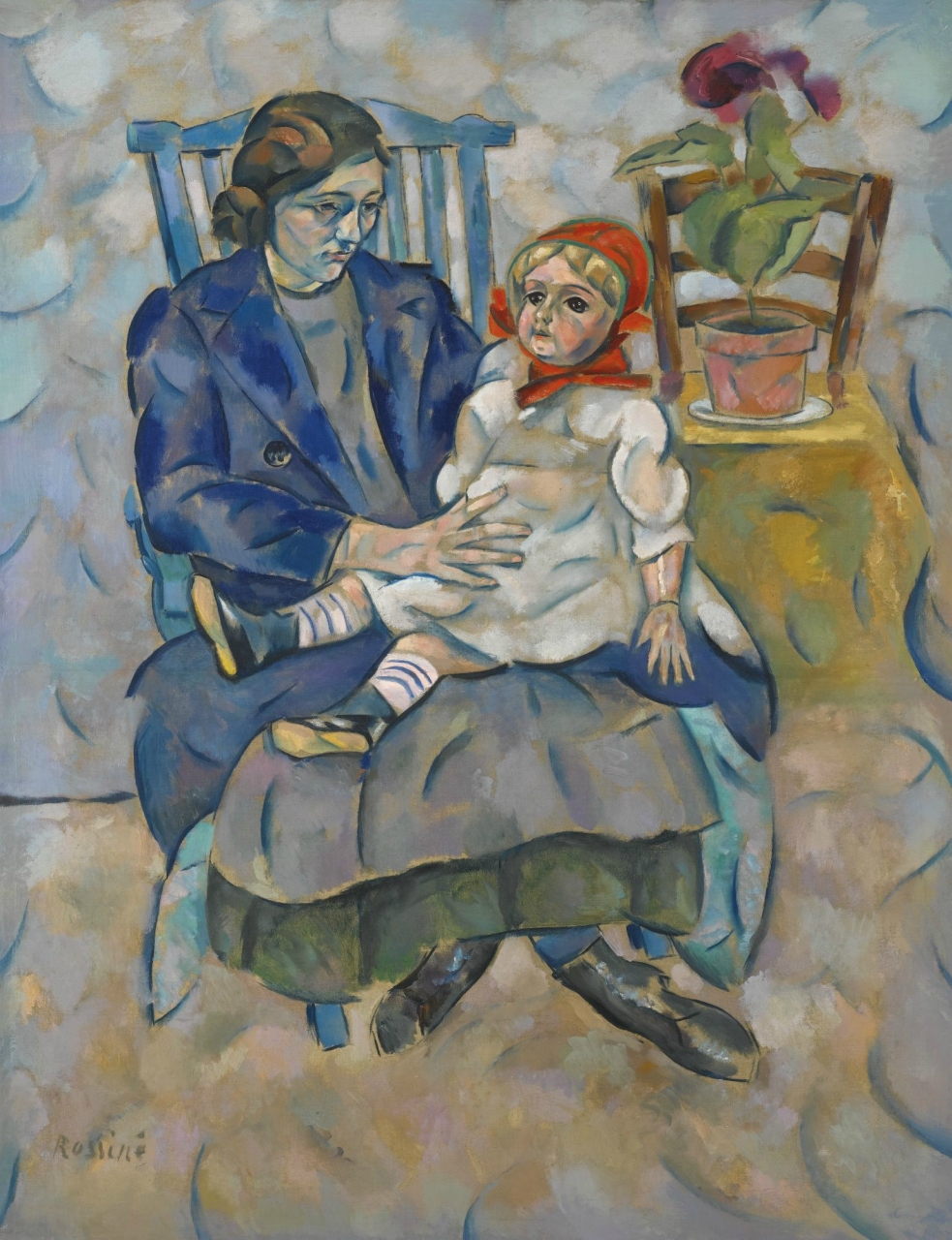
He painted Girl with a Doll in 1911, soon after he had arrived in Paris, but before transitioning to sculpture.
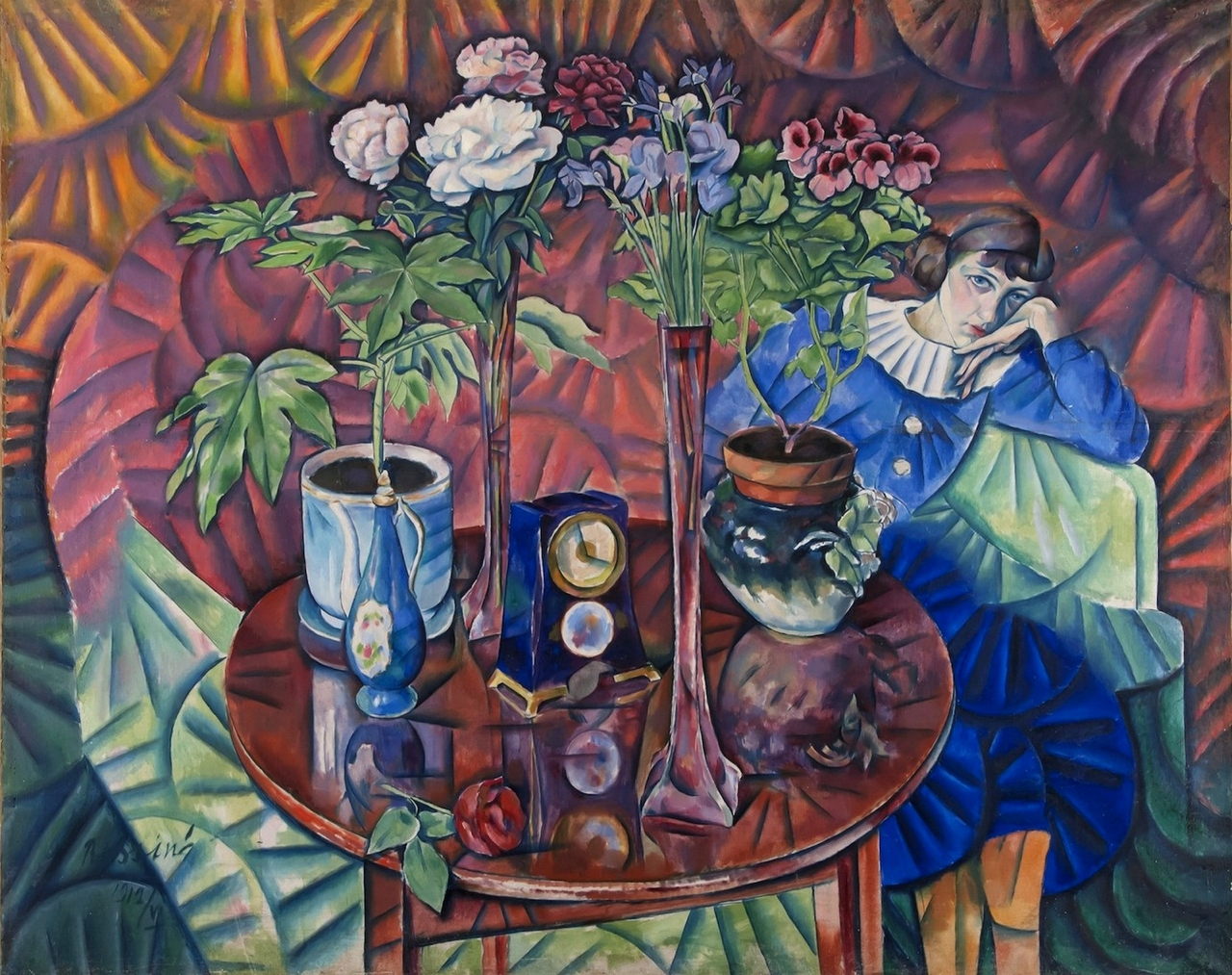
Cousin with Flowers from 1912 is set against a decorative background of colour wheels.

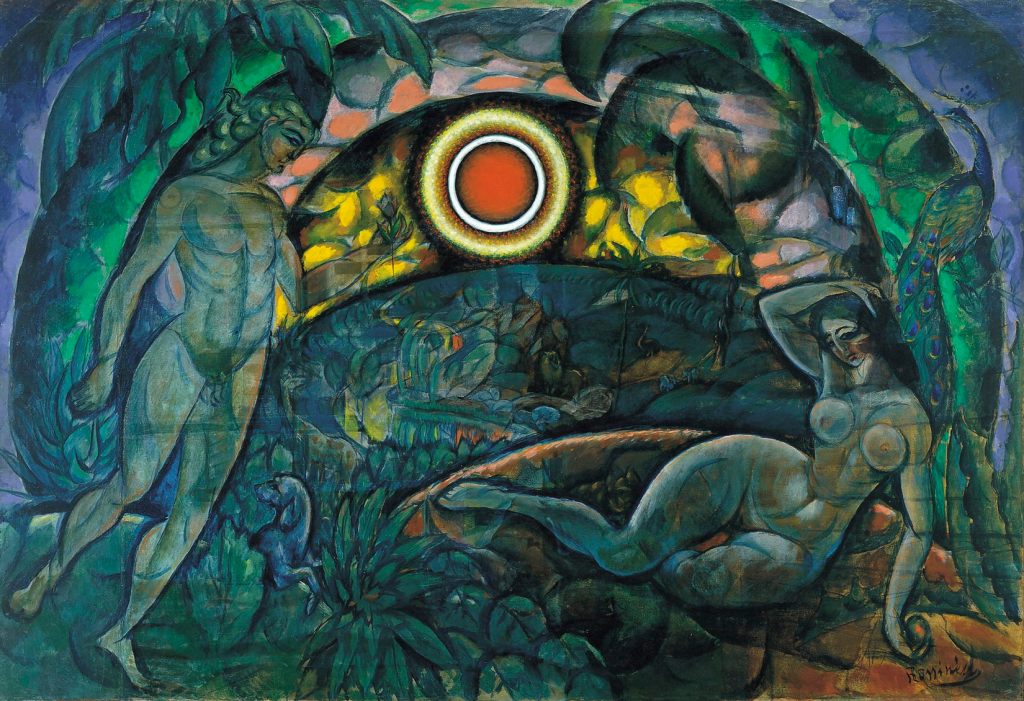
Baranoff-Rossiné’s best-known painting is this large vision of Adam and Eve, painted in 1912. It combines rich details such as the peacock at the right, the deep greens of the Garden of Eden and its dense vegetation, with an elaborate geometry and its two dominant figures. This is one of a series of paintings he made of Adam and Eve.
When in Paris, he was close friends of the Delaunays; Sonia Delaunay had been born in Odesa, although she moved to Saint Petersburg when still a young child, then to Germany in 1903, and to Paris two years later.
During the First World War, Baranoff-Rossiné lived and worked in the Nordic countries, then went to live in Russia after the February Revolution of 1917. In 1920 he started teaching in Moscow, where he continued to develop his invention, the optophonic piano. That displayed coloured shapes on a screen in response to the music played on its keyboard. He later invented an early vending machine for carbonated drinks, and a device for assessing precious gems. He was also active in the development of military camouflage.
As the regime in Russia became more oppressive, he moved back to Paris in 1925, where he remained.
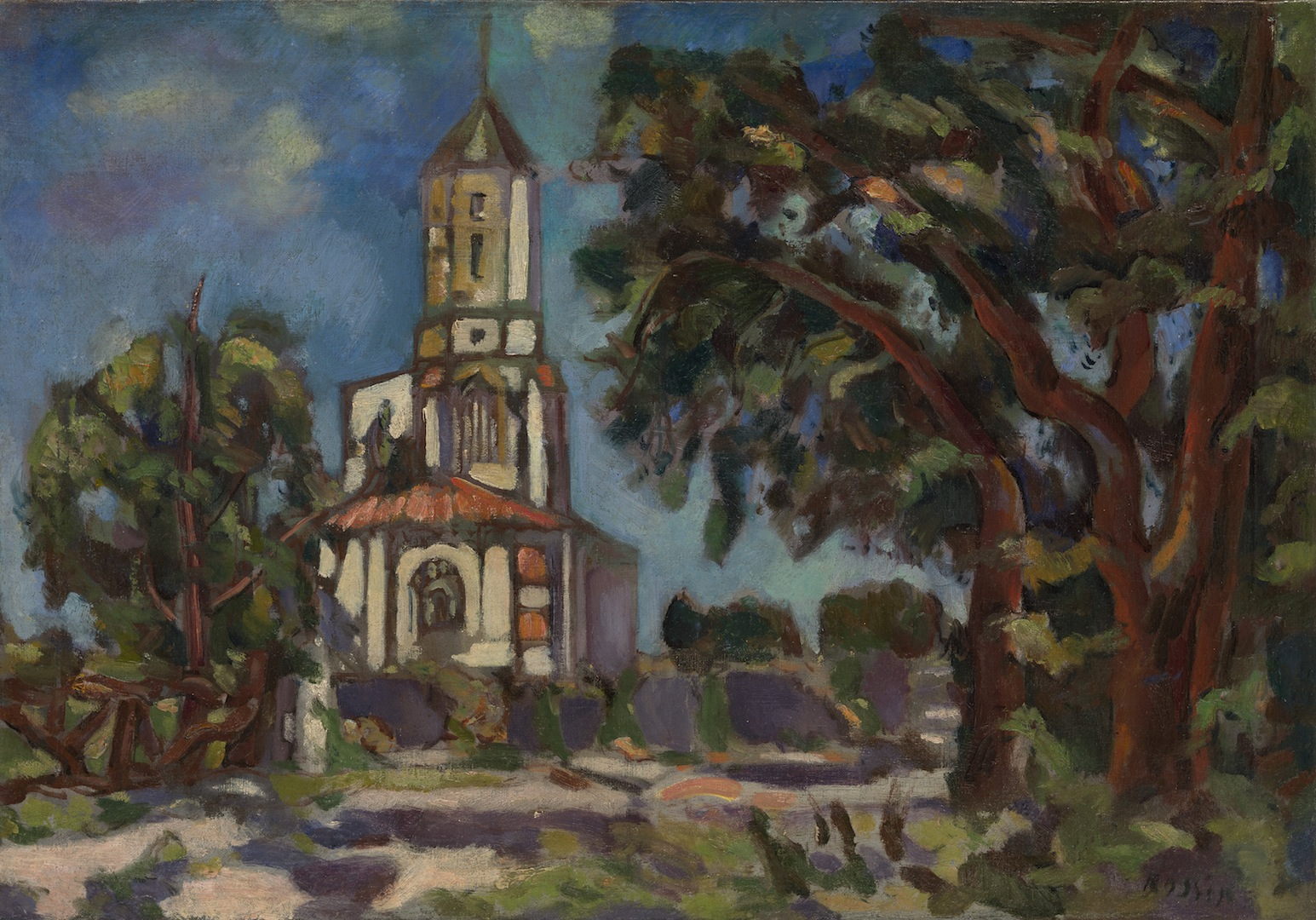
He painted this Church in Arcachon, France in 1935. Arcachon is a beach resort about halfway down the western coast of France, in the Bay of Biscay. It had become popular with artists including Pierre Bonnard during the 1920s.
When Paris was occupied by Nazi forces, as a Jewish painter who was responsible for what was deemed ‘degenerate art’, he knew he was vulnerable but refused to leave the city. He was arrested by the Gestapo in 1943 and was transported to the concentration camp at Auschwitz, where he died the following year.
Strangely, since his death he has been associated more with the Russian avant garde, than the land of his birth and initial training, or France, where he worked for most of his highly productive career.
References
Wikipedia
Dedicated website (under construction) by his family
Andrey Kurkov and others (2022) Treasures of Ukraine, A Nation’s Cultural Heritage, Thames & Hudson. ISBN 978 0 500 02603 8.
Konstantin Akinsha and others (2022) In the Eye of the Storm, Modernism in Ukraine 1900-1930s, Thames & Hudson. ISBN 978 0 500 29715 5.
 The Eclectic Light Company