
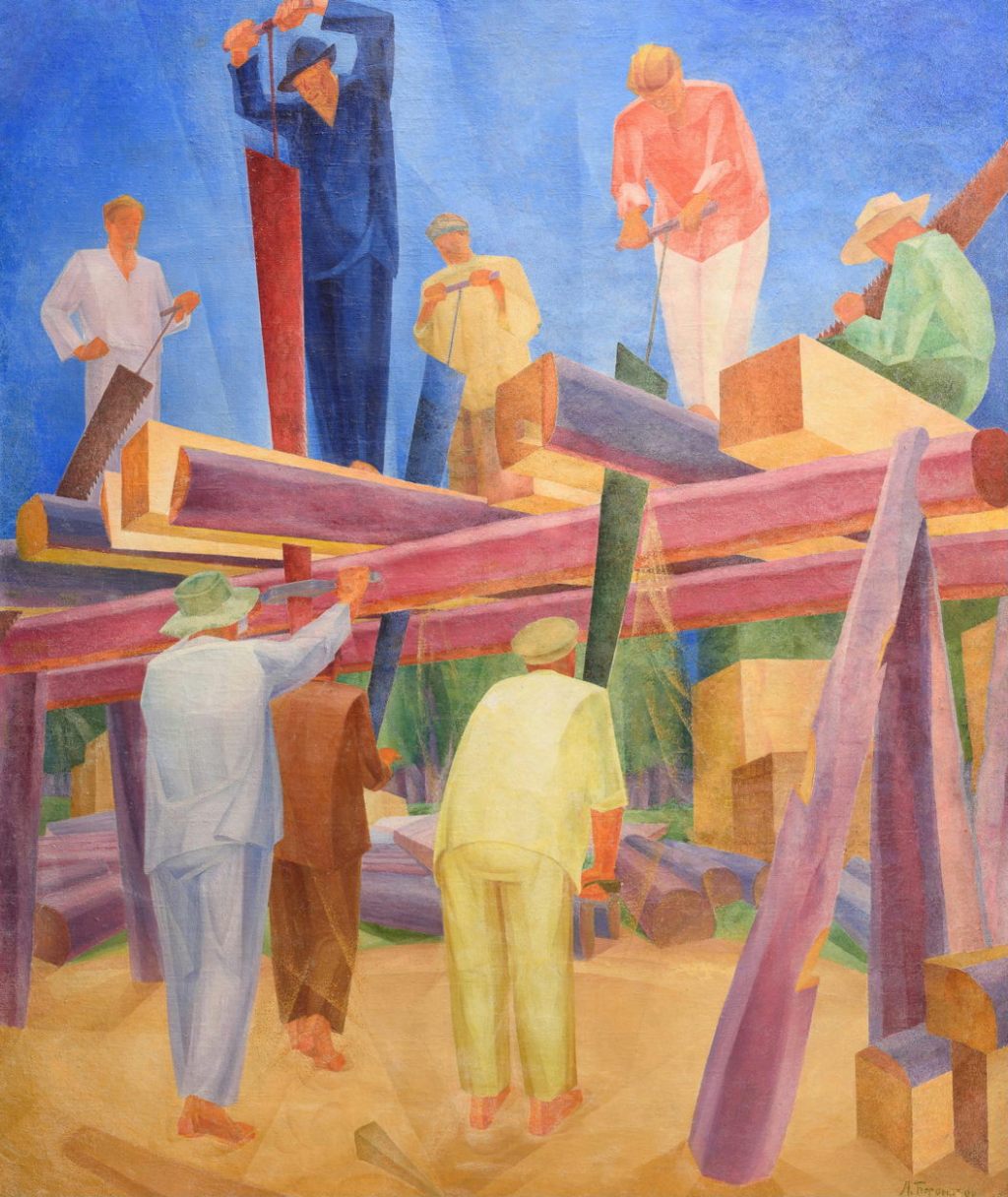
This week’s Ukrainian painter is now recognised as one of the most important in the development of avant garde art in Ukraine in the first couple of decades of the twentieth century, and was a contemporary of Oleksandra Ekster: he’s Oleksandr Bohomazov (also known as Alexander Bogomazov) (1880–1930), who was born in Yampil, near Lyman in the east of Ukraine, where his father was an accountant. Although he showed an early inclination for painting, his father insisted that he studied agronomy at Kherson Agricultural School, from where he graduated in 1902.
That year he was finally allowed to study at Kyiv Academy of Arts, where his fellow pupils included Oleksandra Ekster and the sculptor Oleksandr Arkhypenko, and his teachers included Mykola Pymonenko. He became involved in politics, leading to his expulsion in 1905. He then moved to the studio of Serhiy Sviatoslavskyi in Kyiv, and spent the summer of 1907 sketching in Crimea. From there he went to study in Moscow, and returned to Kyiv in 1908, where he joined the Burliuk brothers, Ekster and others in the first major Modernist exhibition in the city.
In 1911, as a correspondent for a Kyiv publication, he travelled in what is now Finland, painting a large series of landscapes there.
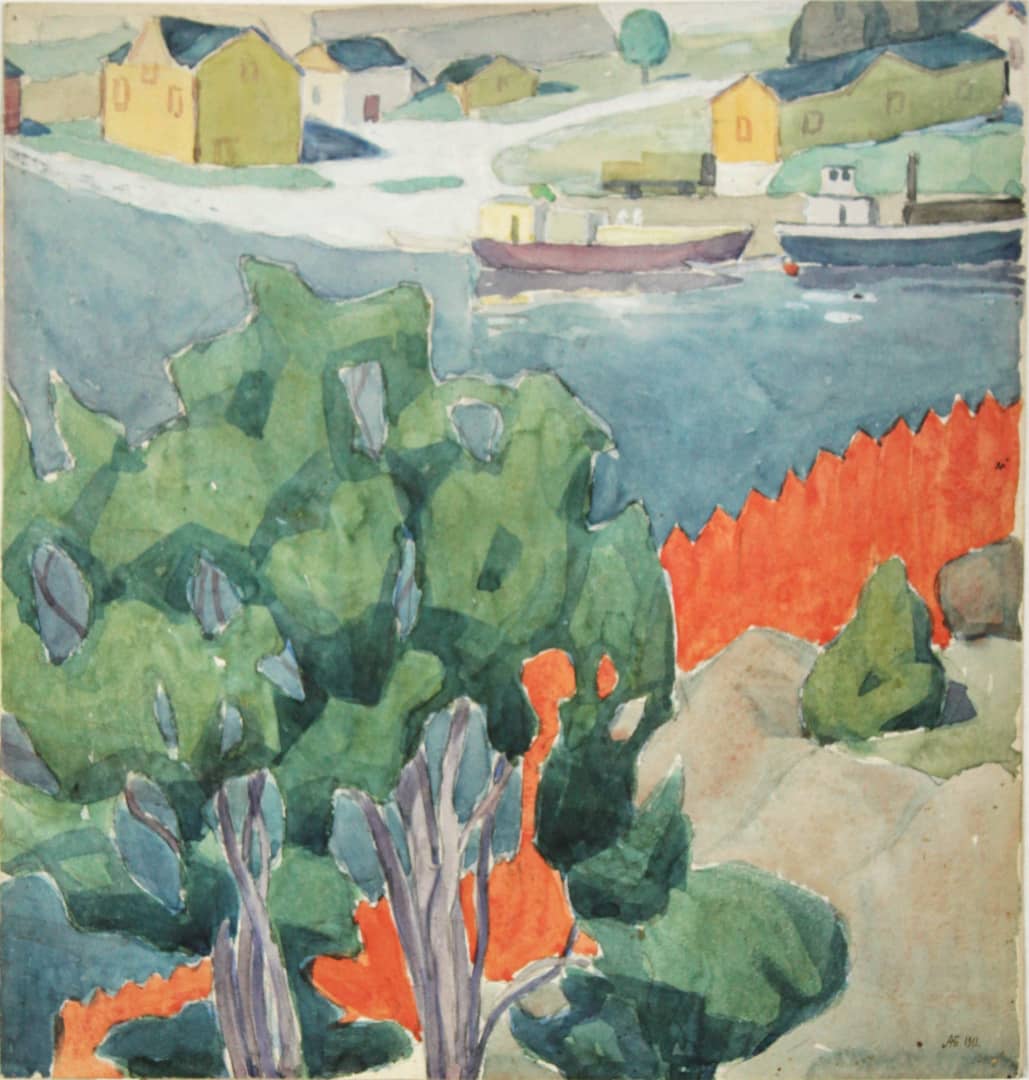
He painted this Finnish Landscape in 1911, most probably in front of the motif.
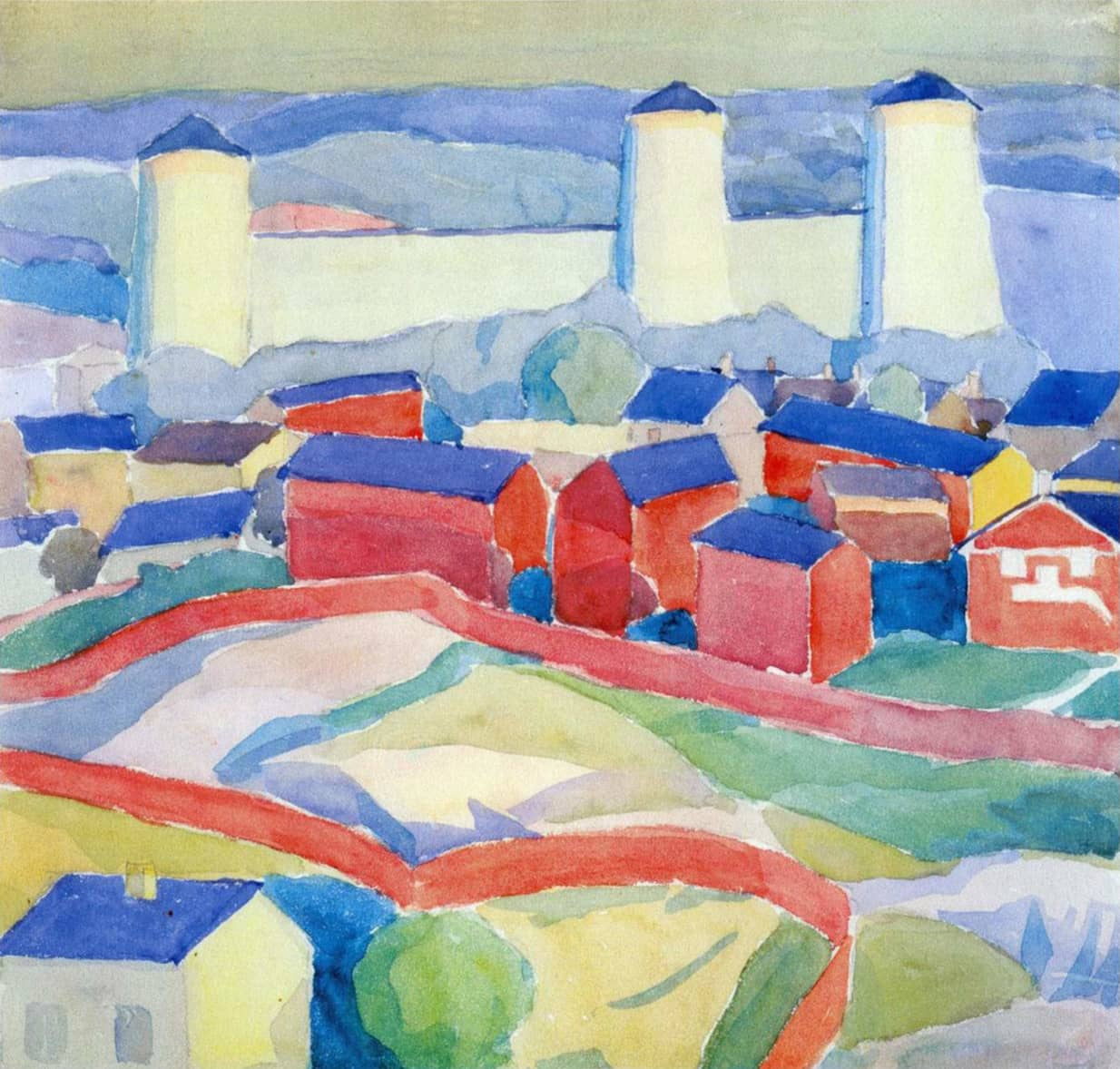
Bohomazov’s A Castle in Finland, also from 1911, shows the famous castle of Olavinlinna in Savonlinna, in south-east Finland. The following year it opened its doors for its first opera festival, which has continued annually ever since.
That year he finally graduated from Kyiv School of Fine Art.
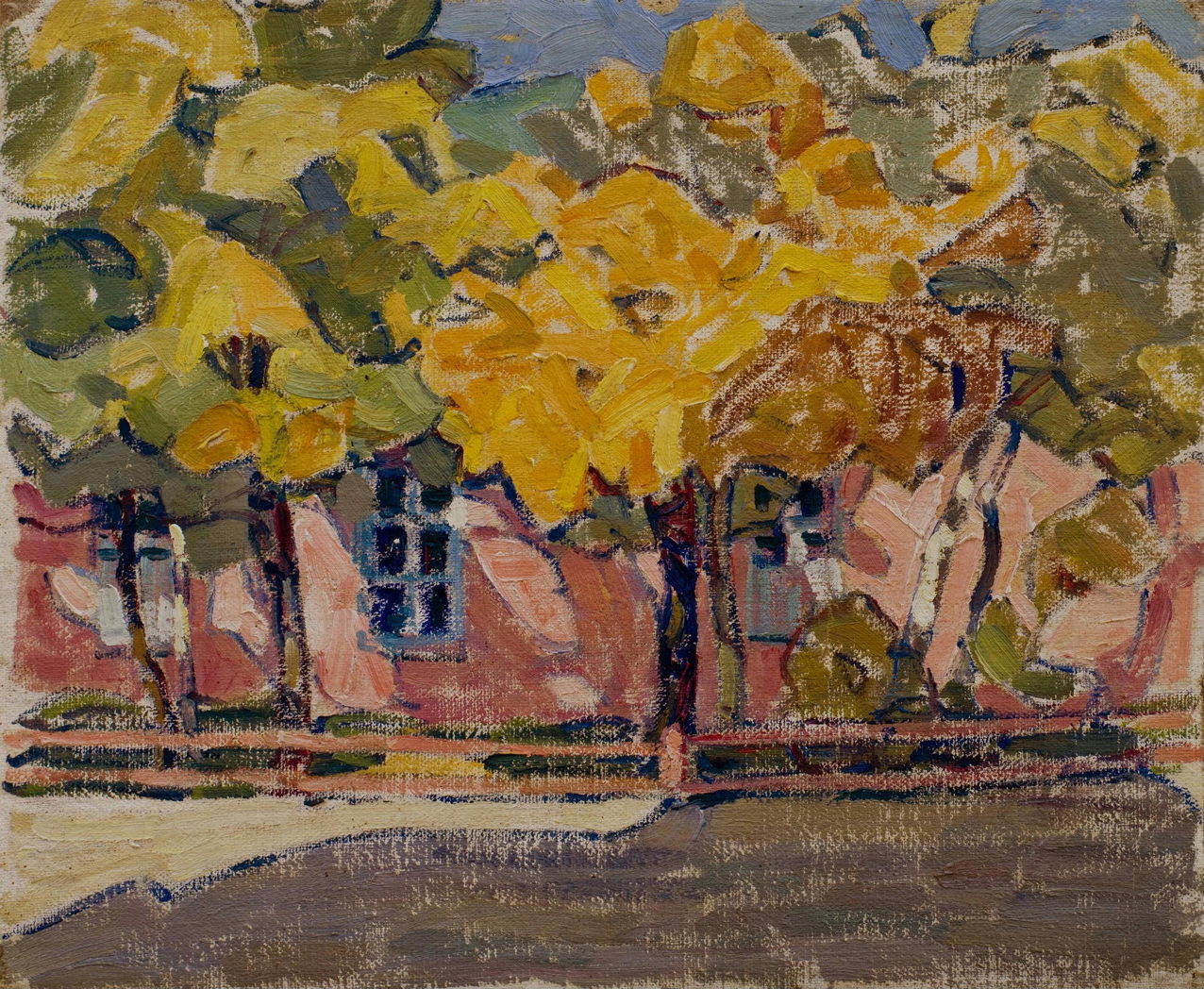
His Street on Podil from 1912 shows one of the oldest parts of Kyiv, the lower city, and marks his transition to more modern style.
During 1914, Bohomazov lived in Boyarka, then a village to the west of Kyiv, and the birthplace of his teacher Mykola Pymonenko. He experimented extensively as he wrote his treatise on modern painting, Painting and its Elements. This anticipated many of the later developments in the theory of visual art that were expounded by others in Europe over the coming years, and formed the basis for much of his subsequent teaching. Although he completed the writing that year, it wasn’t published until 1996.
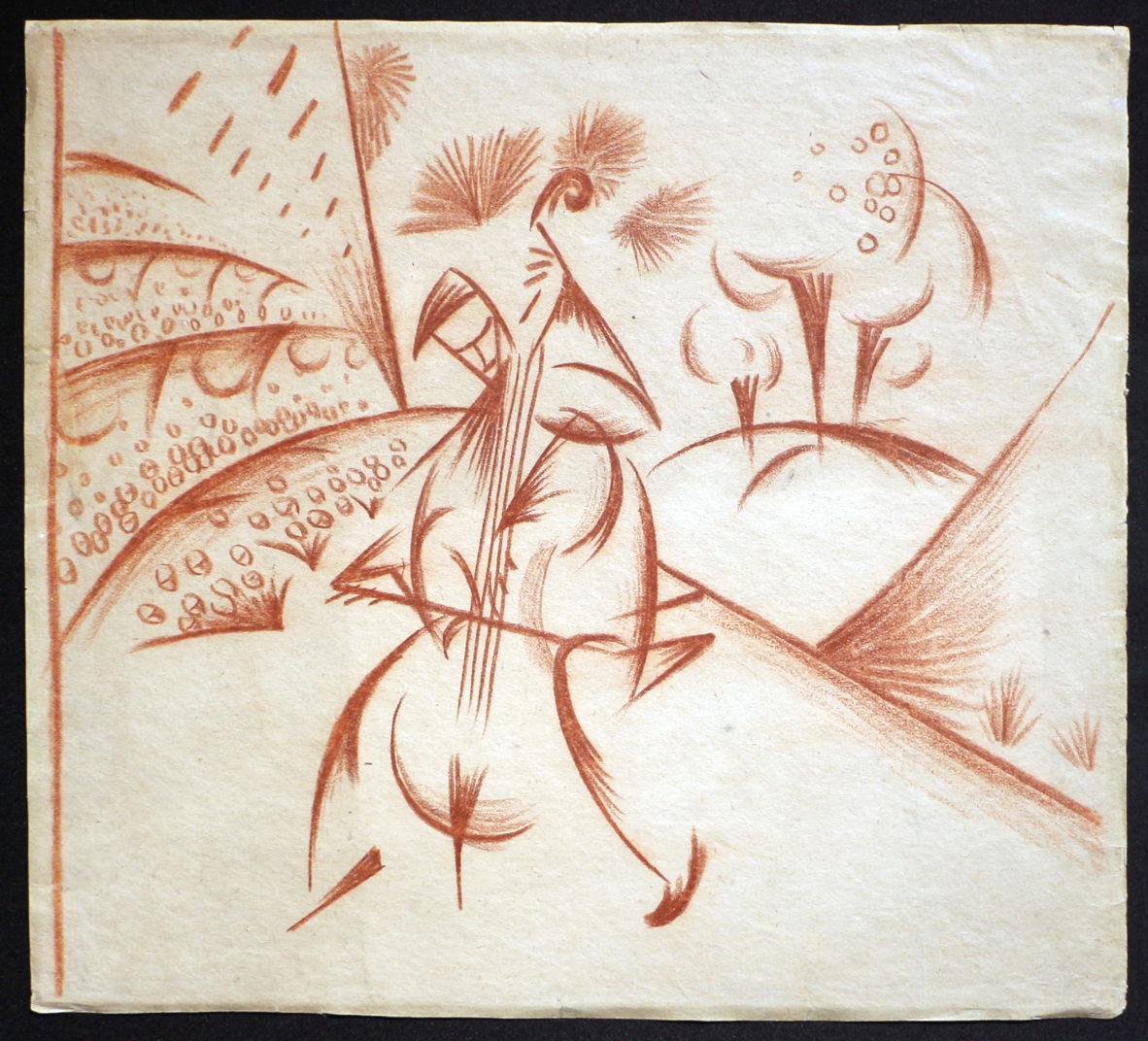
Cellist – Self-portrait from 1914 illustrates some of the principles he laid down, including the importance of diagonals and other lines that aren’t parallel to those marking the rectangular edge of the picture plane. He viewed those diagonals as being essential to imparting the dynamism and sense of movement that made a painting.
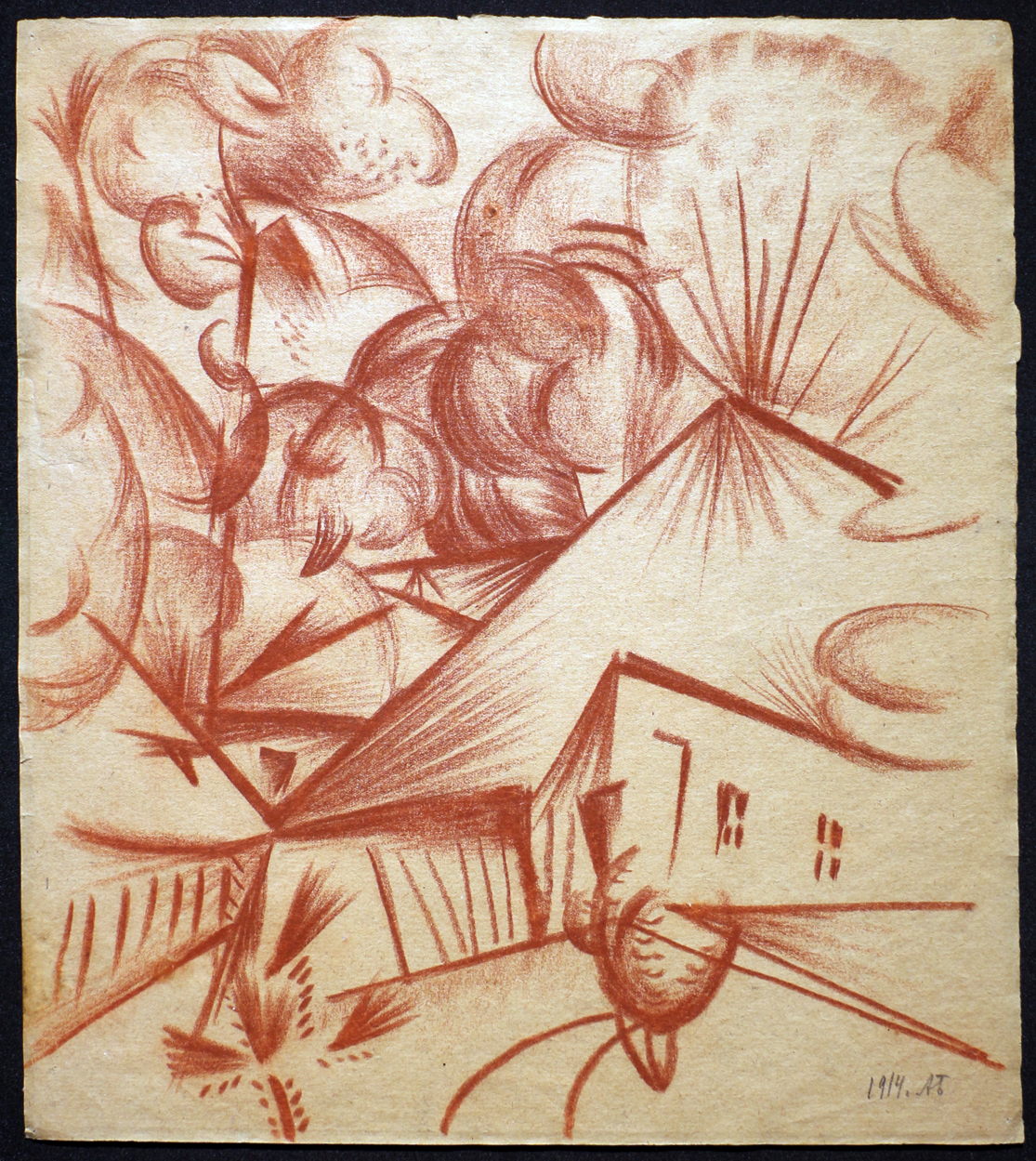
Dacha – Boyarka (1914) shows buildings in Boyarka, again with his distinctive preference for non-parallels. This village was also the setting for the fictional dacha of Boyberik, where the events in Sholem Aleichem’s Yiddish tales from 1894 of Tevye the Dairyman take place. Those are the basis for several later adaptations, including the musical Fiddler on the Roof.
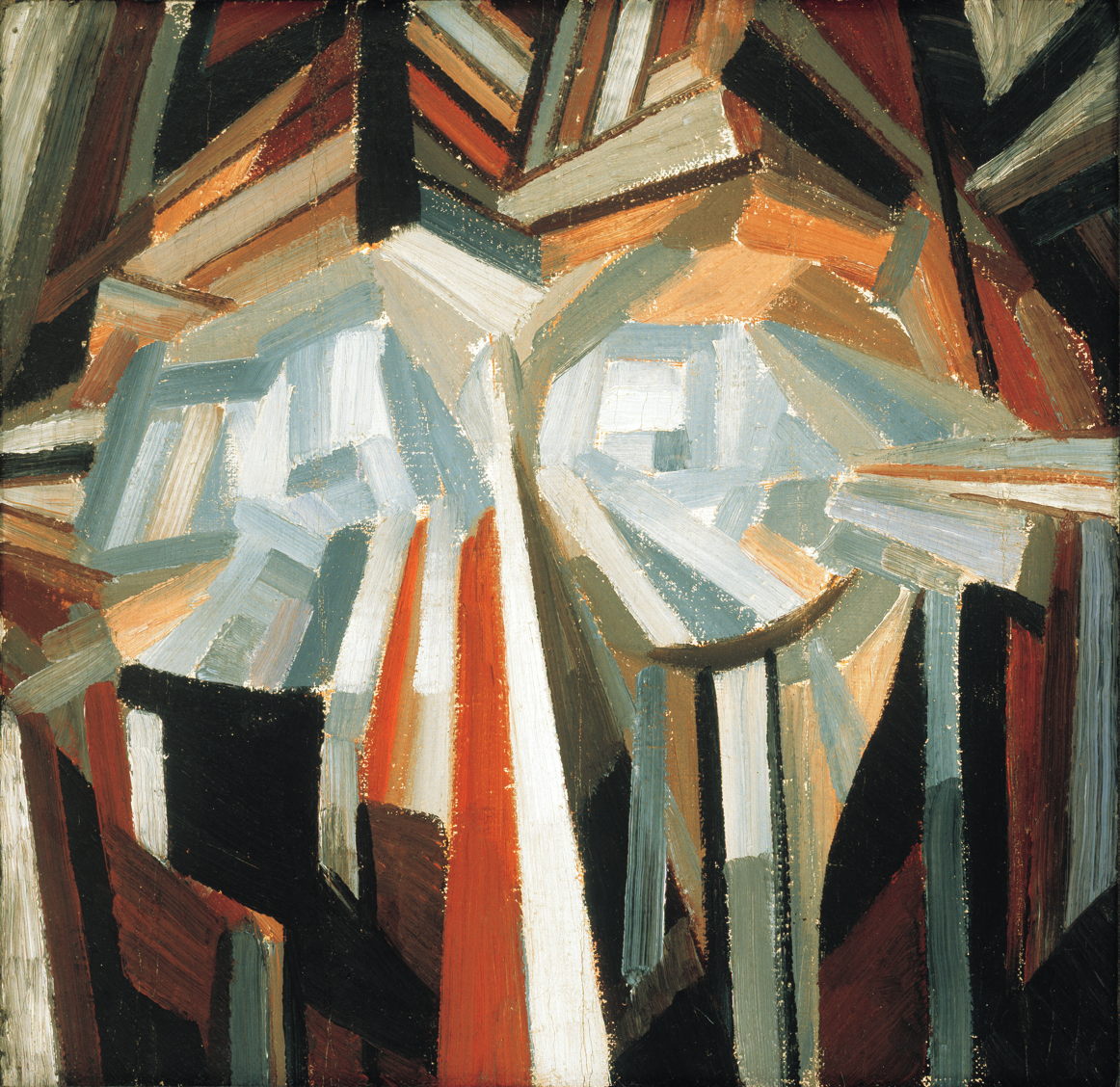
Cubist Head from 1914-15 is an example of his more Cubist painting.
In 1915 Bohomazov moved to the city of Goris in Armenia, in the Caucasus, where he taught drawing.
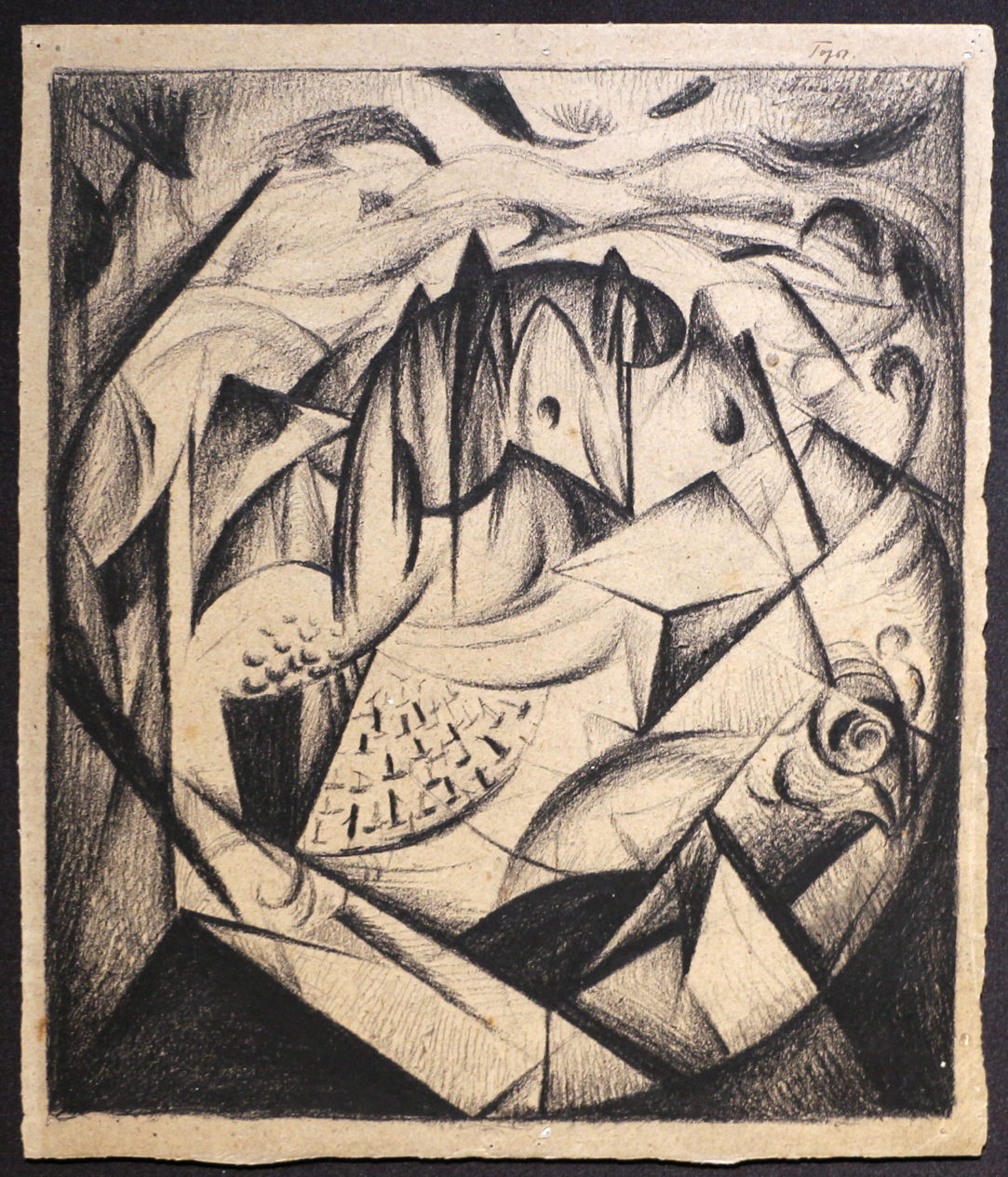
Memories of the Caucasus (1916) is one of a series of works he made there, again following the theory he set out in his treatise.
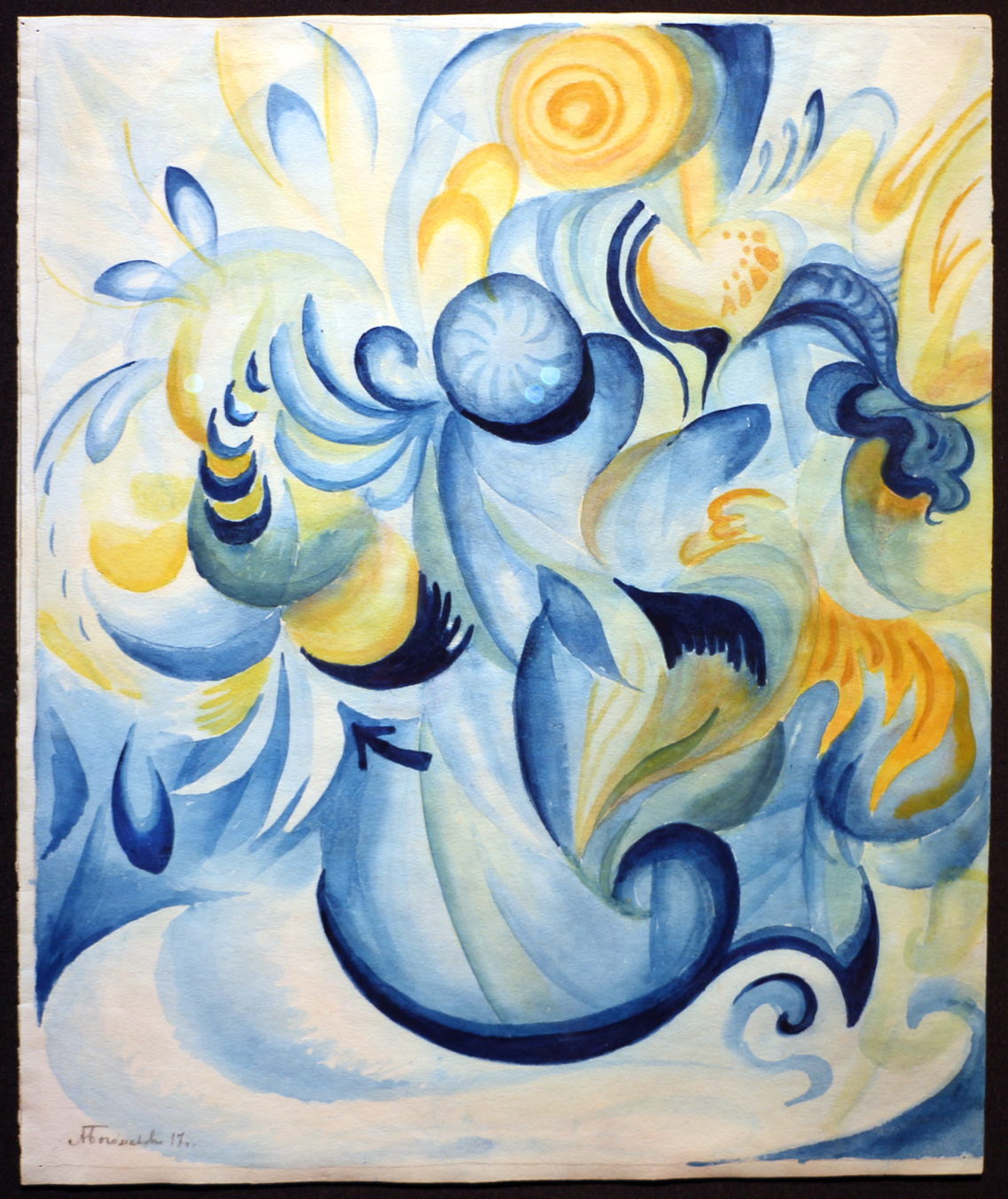
Bouquet from 1917 was apparently one of his wife’s favourite paintings. Late that year he returned to Kyiv, where he continued to teach.
In 1920, he developed the first signs of tuberculosis, which was to progressively erode his health over the next decade. In 1922, he was appointed professor at Kyiv Arts Institute, where he was able to teach from the theory he had developed in his Painting and its Elements and his subsequent studies.
In 1927, he started work on a major triptych with the theme of the sawmill and the sawyers who work in it. Over a period of three years he created more than three hundred sketches and studies for it, and two of its panels, but he died from complications of tuberculosis in 1930, before he could complete the third and final panel.
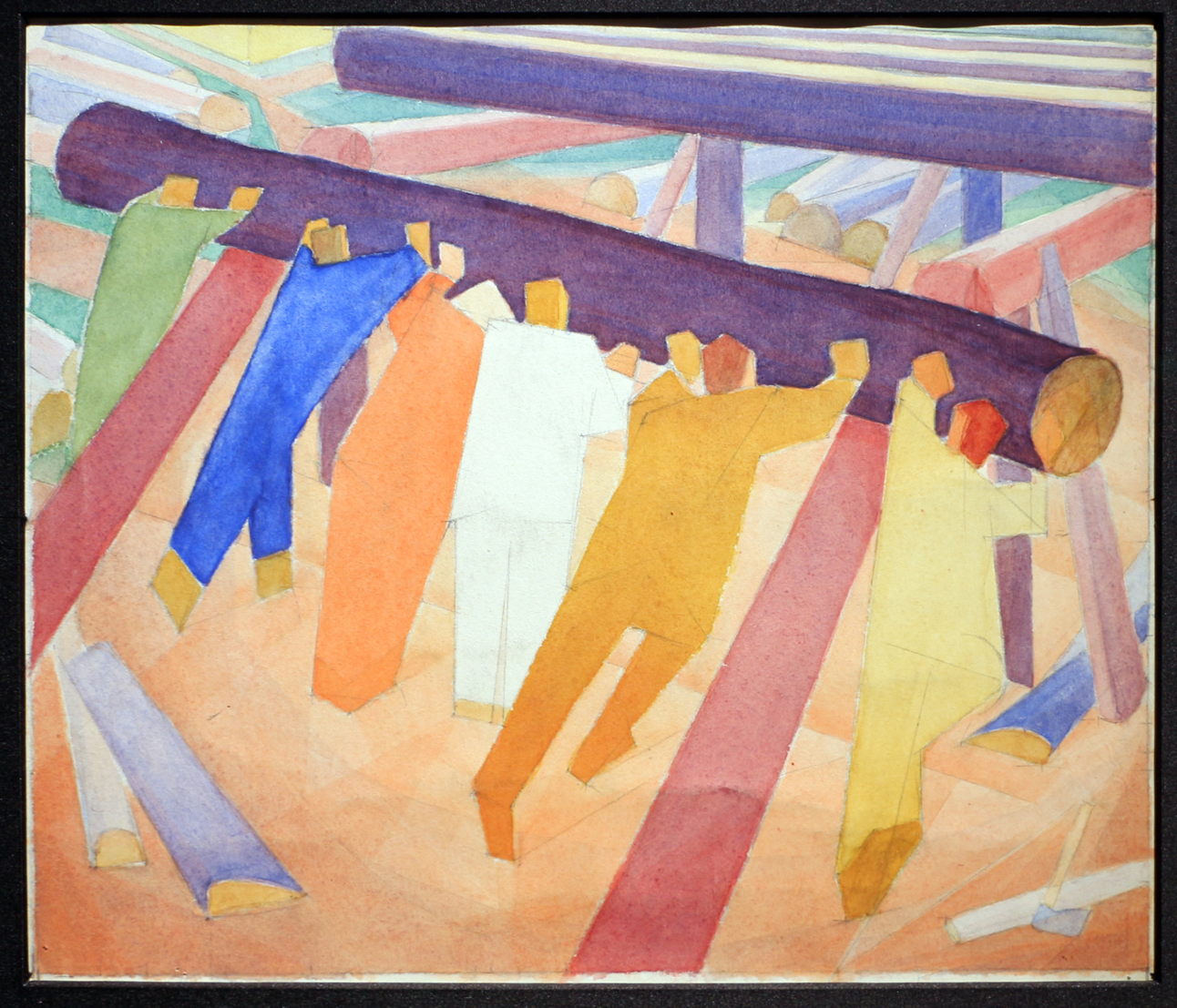
Rolling the Logs (1928-29) is a watercolour study for the left-hand panel of the triptych, and shows a line of men turning one of the large logs they were to cut up.

Sawyers (1929) is the centre panel of the triptych, and shows the team of men at work with their saws cutting logs to shape. This work was unfortunately quite badly damaged when it was transported to Venice for exhibition at the Biennale in 1930. It was restored in NAMU (the National Art Museum of Ukraine) in Kyiv over a period of three years, in time for the museum’s 2019 exhibition of his work.
Following his death in 1930, Bohomazov’s work was almost completely neglected, although his widow Wanda protected and preserved what she could. As late as 1970, his paintings were still being suppressed, even in Ukraine. In the 1960s, this started to change, and by the 1990s his reputation was re-established, and his importance in the development of twentieth century visual art has been finally recognised.
References
Wikipedia
James Butterwick’s richly illustrated catalogue from 2016
Andrey Kurkov and others (2022) Treasures of Ukraine, A Nation’s Cultural Heritage, Thames & Hudson. ISBN 978 0 500 02603 8.
Konstantin Akinsha and others (2022) In the Eye of the Storm, Modernism in Ukraine 1900-1930s, Thames & Hudson. ISBN 978 0 500 29715 5.
 The Eclectic Light Company