

In the first of these two articles looking at what our ancestors wore on the beach, I had reached 1890 with just a glimpse of lower leg and arm from the wild young things as they paraded themselves in the sun. Otherwise, adults only bared the absolute minimum, most even wearing hats. The only members of the family who could, in the right place, get away with anything less were children, and even they were often well covered up.

The citizens of New York often went to the beaches of Long Island, NY, although here William Merritt Chase has travelled far from the crowds, out among the Hamptons, where the more affluent were building their holiday mansions. Chase was a key figure in American art in the late nineteenth century: trained in Europe, he adopted an Impressionist style and for many years ran a large and influential summer school in this part of Long Island, teaching plein air painting, but clearly not au naturel.
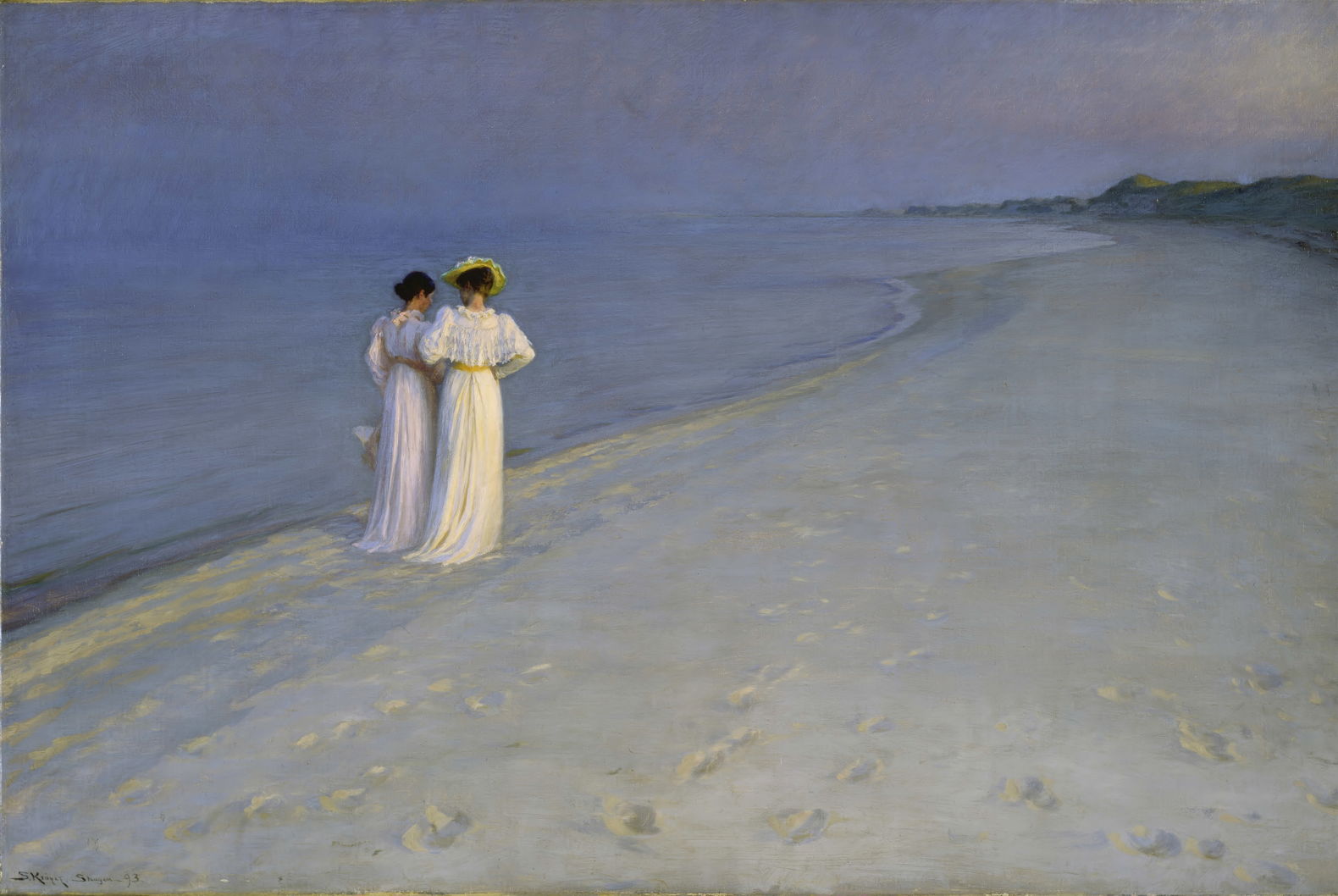
Just as French Impressionism was born on the beaches of northern France, so the movement spread around the world on its sand coasts, under the warm light of the sun. Danish Impressionists like Peder Severin Krøyer gathered to enjoy a Summer Evening on Skagen’s Southern Beach (1893): one of a series of similar views painted by Krøyer on this remote strand at the northern tip of Jylland (Jutland), the northernmost part of Denmark. One of these two ladies has at least removed her hat.

In 1890, Charles Conder left Australia for Europe. After a turbulent time in France, he came to Britain in the mid 1890s, and visited Cornwall. Although he appeared sickly and engaged in bouts of heavy drinking, his painting seemed to thrive, and some of his works from these years are among his best. This oil painting of The Sands, Newquay from about 1900 shows this beach and the conservative dress of those enjoying it.
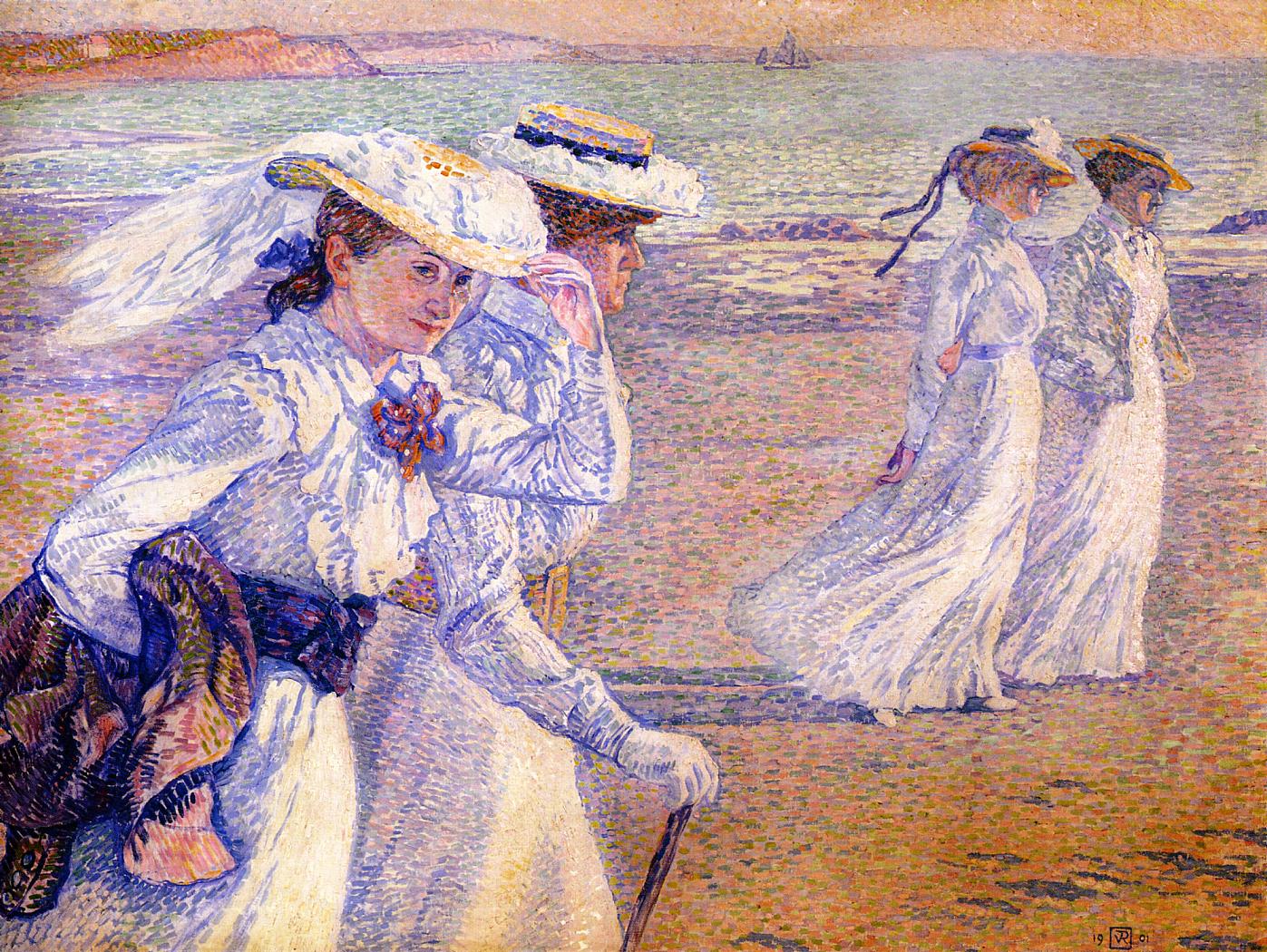
Théo van Rysselberghe’s Divisionist La Promenade (1901) captures the rich light of one of the beaches in the south of France, and the correctness of dress of these ladies, one of whom is even wearing white cotton gloves.
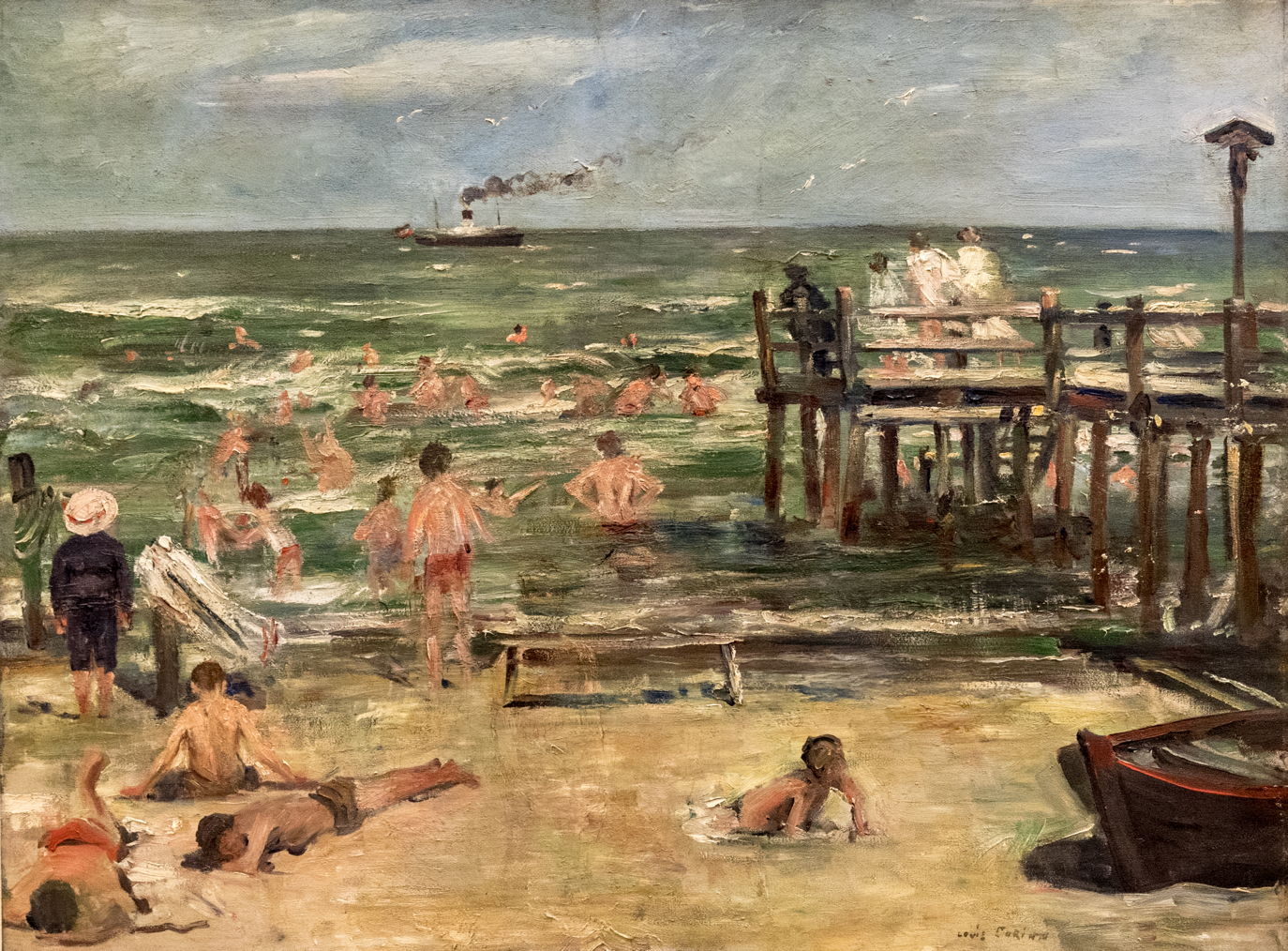
With the new century came growing accommodation between fashion and modesty: the progressive adoption of clothes designed for wear when bathing, and on the beach. In Lovis Corinth’s view of Swimming in Horst – Ostsee (1902), the more bracing waters of the Baltic are proving popular with these men in their new-fangled bathing trunks.
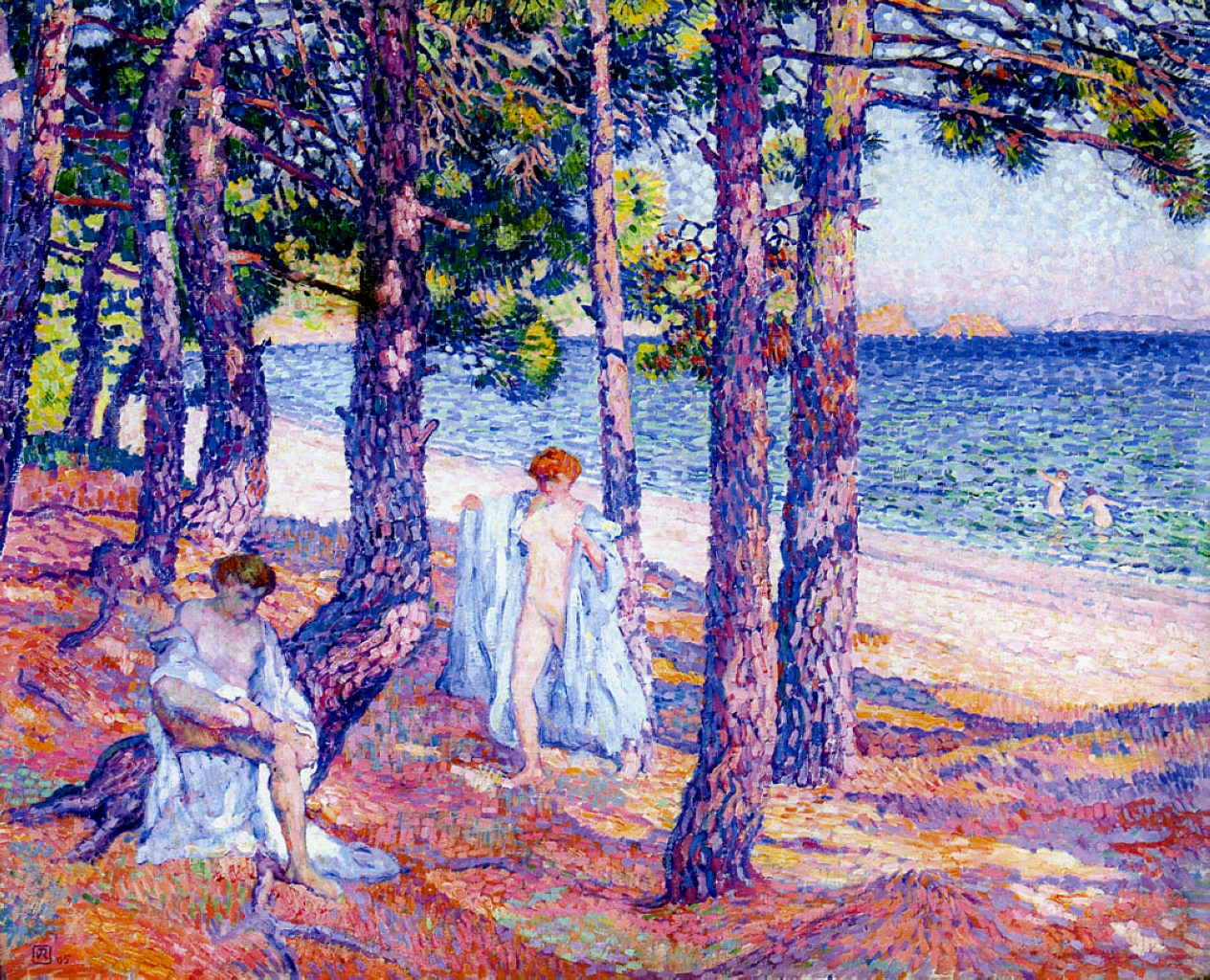
In Théo van Rysselberghe’s more secluded Bathers under the Pines at Cavalière (1905), though, these young women were able to follow the older tradition and go naked. This beach has changed enormously over the last century too: this area has become a very popular resort at Lavandou, near Saint-Tropez.

As Frederick Carl Frieseke demonstrates in his Afternoon at the Beach from 1905-6, larger groups remained fully dressed, although these descendants of Boudin’s gatherings are at least wearing lighter, summer dresses.

The young woman in Paul César Helleu’s On the Beach (1908) remains more traditional.

For the more traditional families in eastern Spain, there had been little relaxation in dress in spite of increasing visits to the beach. Joaquín Sorolla’s Beach of Valencia by Morning Light (1908) shows mothers still modestly-clad, even with their heads covered.

For the more formal promenade, when being seen was probably the main purpose, full dress, from exuberant hat to immaculate white shoes, was still required, as shown in Sorolla’s Strolling along the Seashore (1909).

Between 1908 and 1912, William Orpen spent his summers on the coast to the north of Dublin, Ireland, at the resort of Howth. In 1910, he painted Midday on the Beach capturing the pre-war day out: lightweight clothing, parasols, and a large wicker hamper containing a packed lunch.

Jacques-Émile Blanche’s painting of Dieppe Beach from 1910 confirms how little had changed on the north coast of France before the war.

When the former Nabi artist Maurice Denis spent the summer of 1912 in Brittany, he painted an unusual work there, Female Bathers at Perros-Guirec. Unlike Pierre Bonnard, Denis painted very few nudes, and those shown here not only reflect changing social standards, but his changing art.

At last, in the early twentieth century, we see a more recognisably modern beach scene, on Good Harbor Beach in Gloucester, MA, in 1915. Adults are now wearing light clothing which exposes their arms and legs, taking the shade beneath large brightly-coloured beach umbrellas. This is reflected well in Louise Upton Brumback’s bold and crisp style. Those down in the water wear bathing costumes, and there’s not a coat in sight.
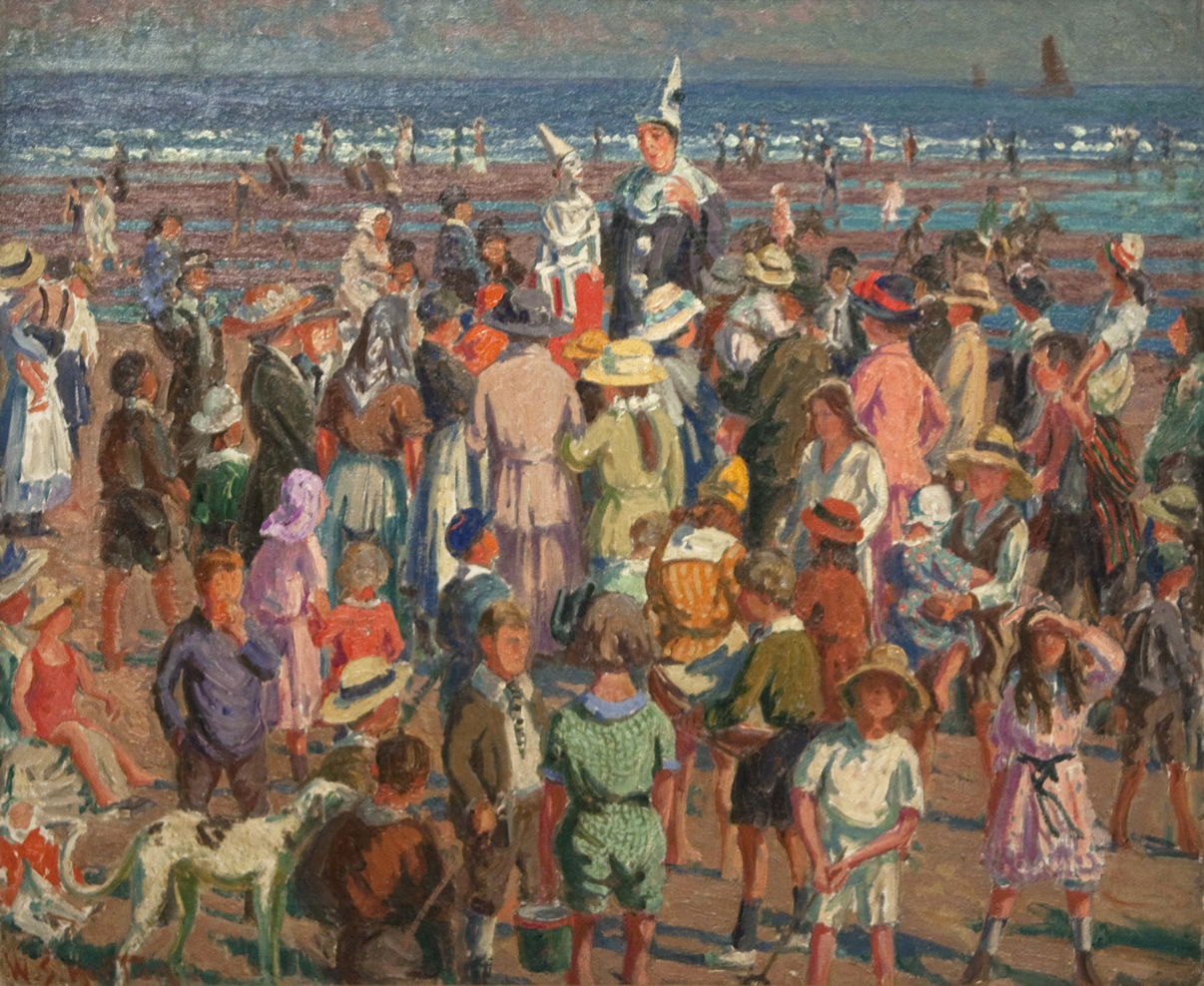
In about 1917, William S Horton, a native of Grand Rapids, Michigan, arrived in Britain, and in 1920 painted this Punch and Judy show taking place on the beach at Broadstairs, Kent – a traditional family beach resort at the extreme eastern tip of the south-east coast of England. As you might expect, clothing has also remained more traditional, tolerating some bared arms and lower legs, but with many of the women and girls still wearing hats.

My final painting, dating from about 1922, shows this beach in south-west France, in the southern part of the Bay of Biscay. Pierre Bonnard’s The Beach (Arcachon) (c 1922) is packed, with tents and awnings covering the golden sand, crowds of people and moored yachts in the distance. There are some exceptions, but many of the adults still seem over-dressed.
At least sunburn and skin cancers don’t appear to have become problems until the latter half of the twentieth century.

