
During the 1880s Bruno Liljefors excelled as a wildlife artist, and was appointed head of the art school in Gothenburg, Sweden, in succession to Carl Larsson. But his personal life was in turmoil, and the 1890s were barren years when he often ran short of money.
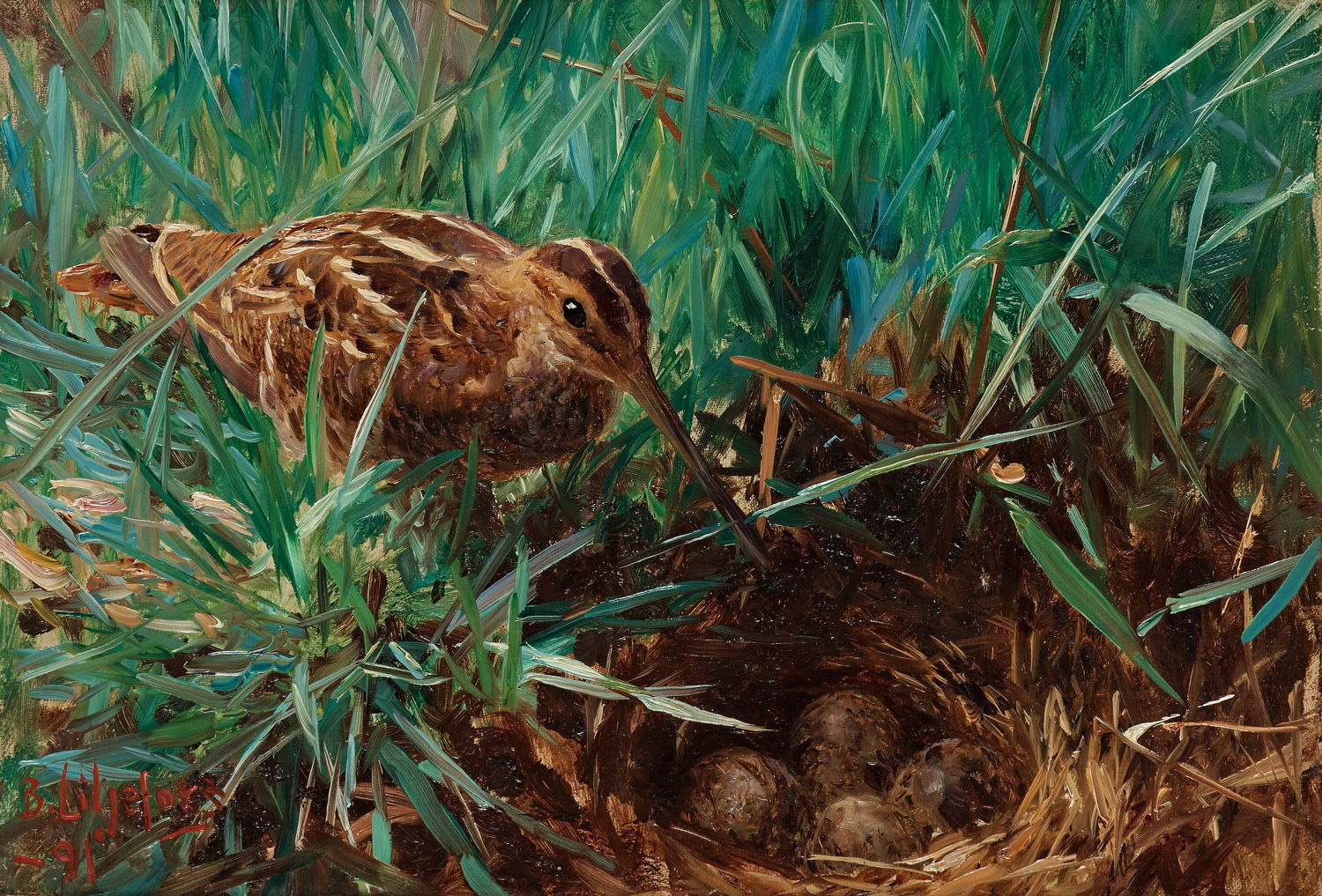
His Common Snipe at its Nest from 1891 is a fine painting, but lacks the brilliance of his earlier works, with their loose backgrounds.
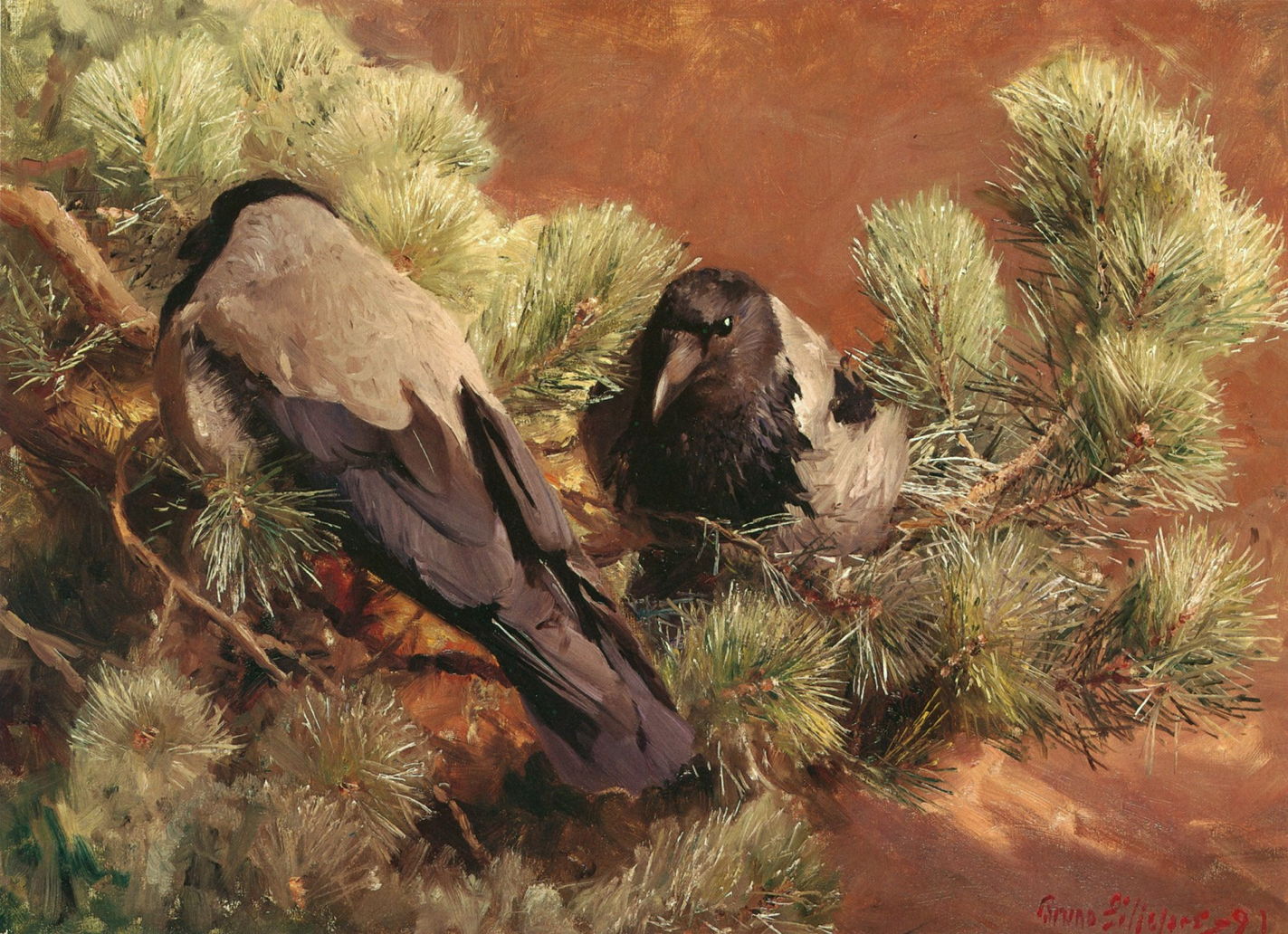
Hooded Crows (1891) captures these northern members of the crow family well, though.
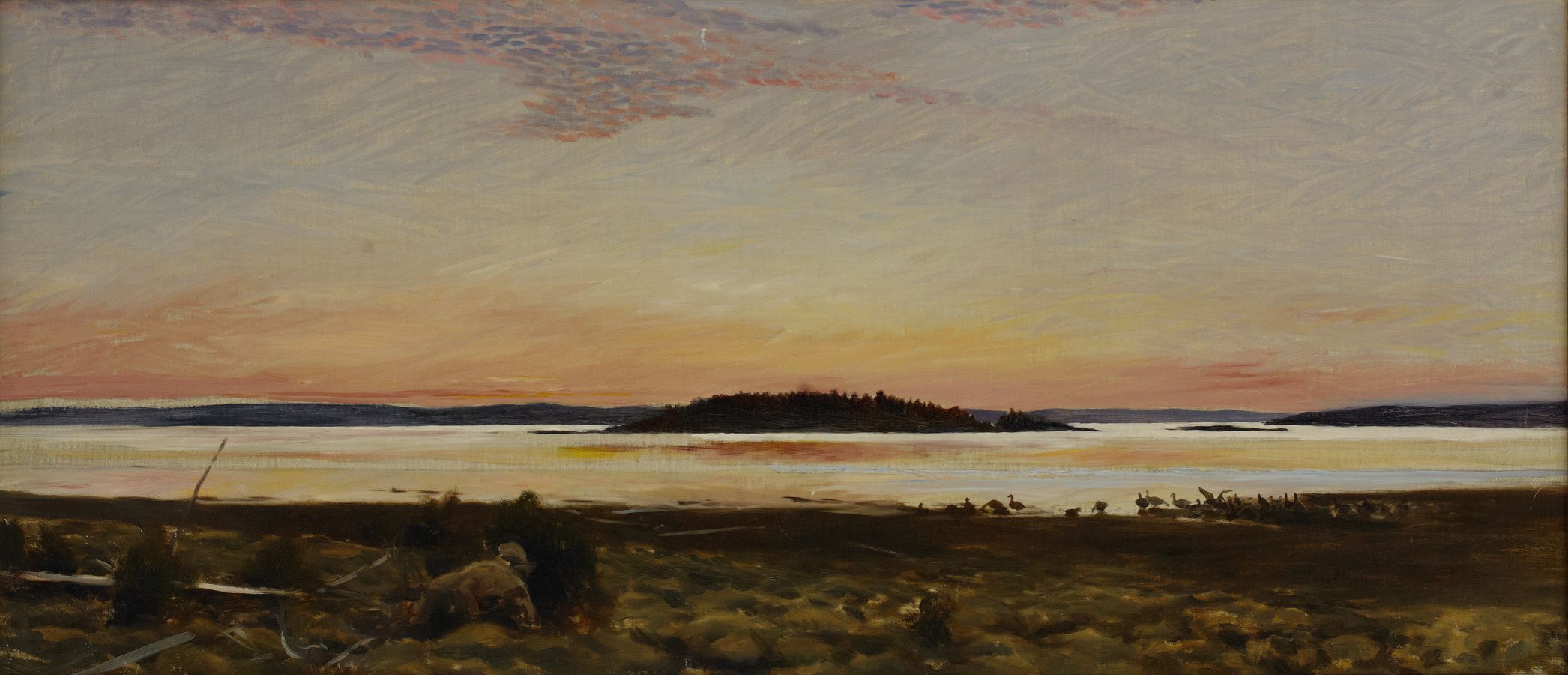
Some of his finest paintings from this period are almost pure landscapes, such as his Hunting Geese (1896) with its superb mackerel sky.

He seems to have recovered his earlier form in the early twentieth century, as his new family grew around him. Spectacular paintings such as this Sea Eagle’s Nest from 1907 were often set around the fragmented coast of the Baltic. Although photographic technology was advancing rapidly, wildlife photography was still in its infancy: for instance, the National Geographic magazine had only published its first monochrome wildlife photos the previous year.

This is one of the many paintings that Liljefors made of a Winter Hare, here from 1910.

His later works include some substantial groups of birds, such as these Long-tailed Ducks in the Outer Archipelago (1911).

In 1917 Liljefors moved his studio to the village of Österbybruk near Uppsala, but continued to work from hunting lodges when necessary. Some of his landscapes became more post-Impressionist, as seen in this Autumn Landscape with Fox (1918).

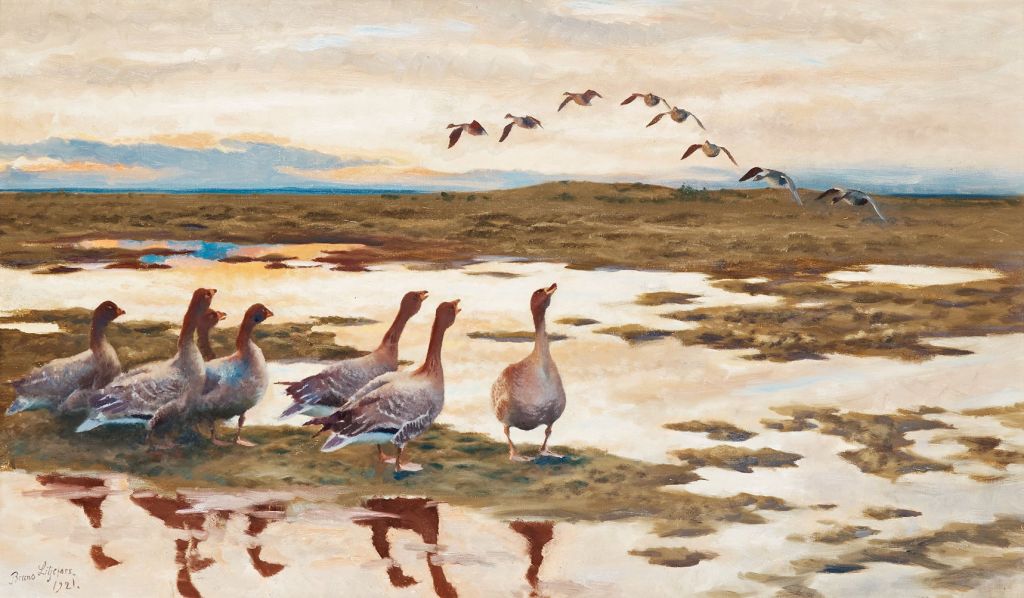
His dedicated wildlife works didn’t weaken, as he concentrated on coastal wetlands, as in these Bean Geese Landing (1921).

Some of these late paintings have wonderful dialogues between the sky and water, as in these Geese in Wetlands (1921).

Liljefors never lost his fascination for the relationship between predators and prey, as seen in his Sea Eagles Chasing an Eider from 1924.
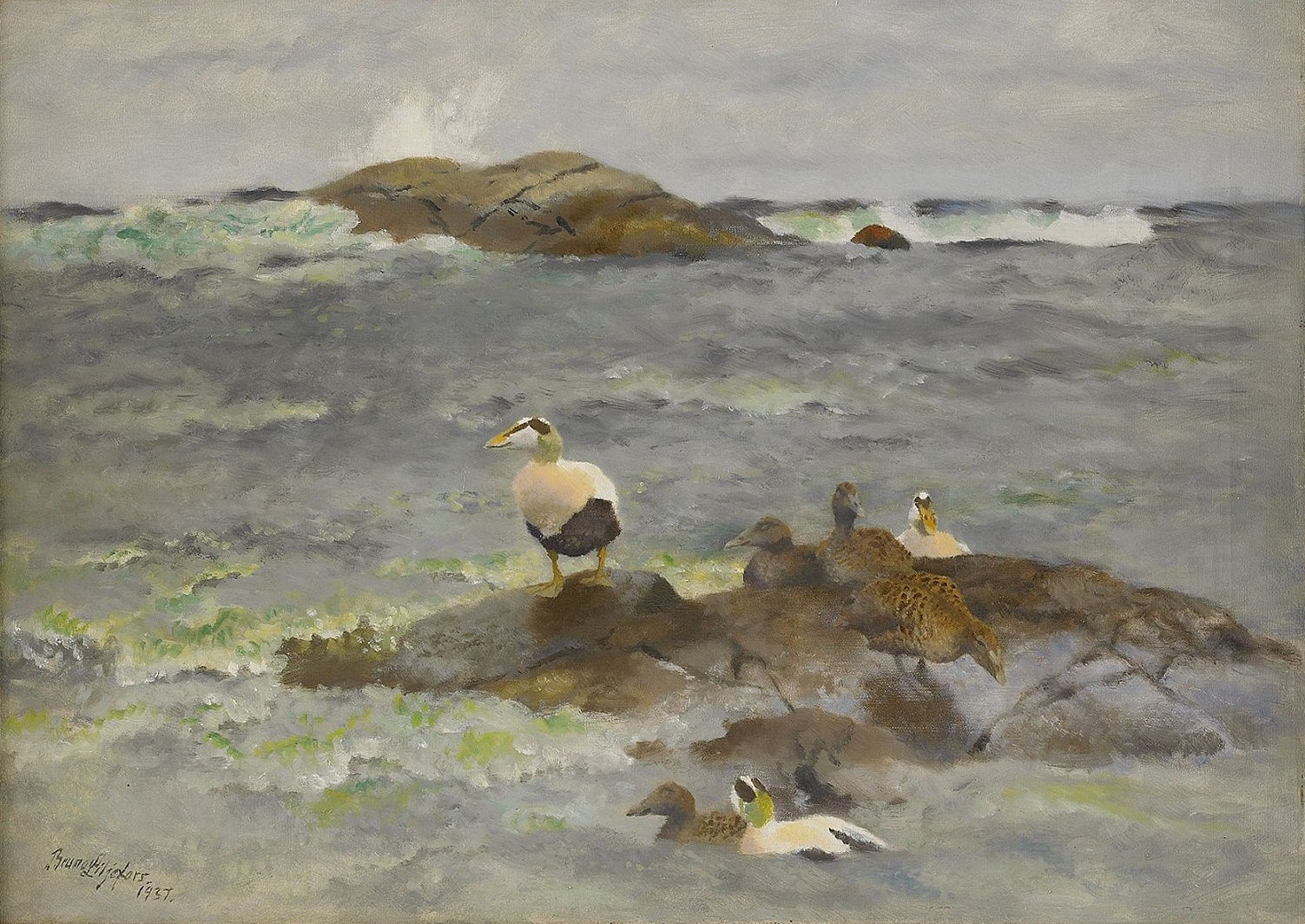
Eider on the Islet, painted in 1937, must be one of his last works from the coast.
Liljefors was also an accomplished gymnast, acrobat, and variety artist. With his two brothers, he formed the Manzodi Brothers, an acrobatic group who entertained Swedish audiences.
He died in Stockholm on 18 December 1939, a few months after the start of the Second World War. He had outlived his contemporary Anders Zorn by almost twenty years.
Reference
Wikipedia (in Swedish).
 The Eclectic Light Company