

When the Swedish artist Bruno Liljefors specialised in natural history painting in the late nineteenth century, he wasn’t the first to depict wild creatures and their surroundings.

It was probably Albrecht Dürer who pioneered faithful depictions, first in his meticulously rendered watercolour of this Hare in 1502.
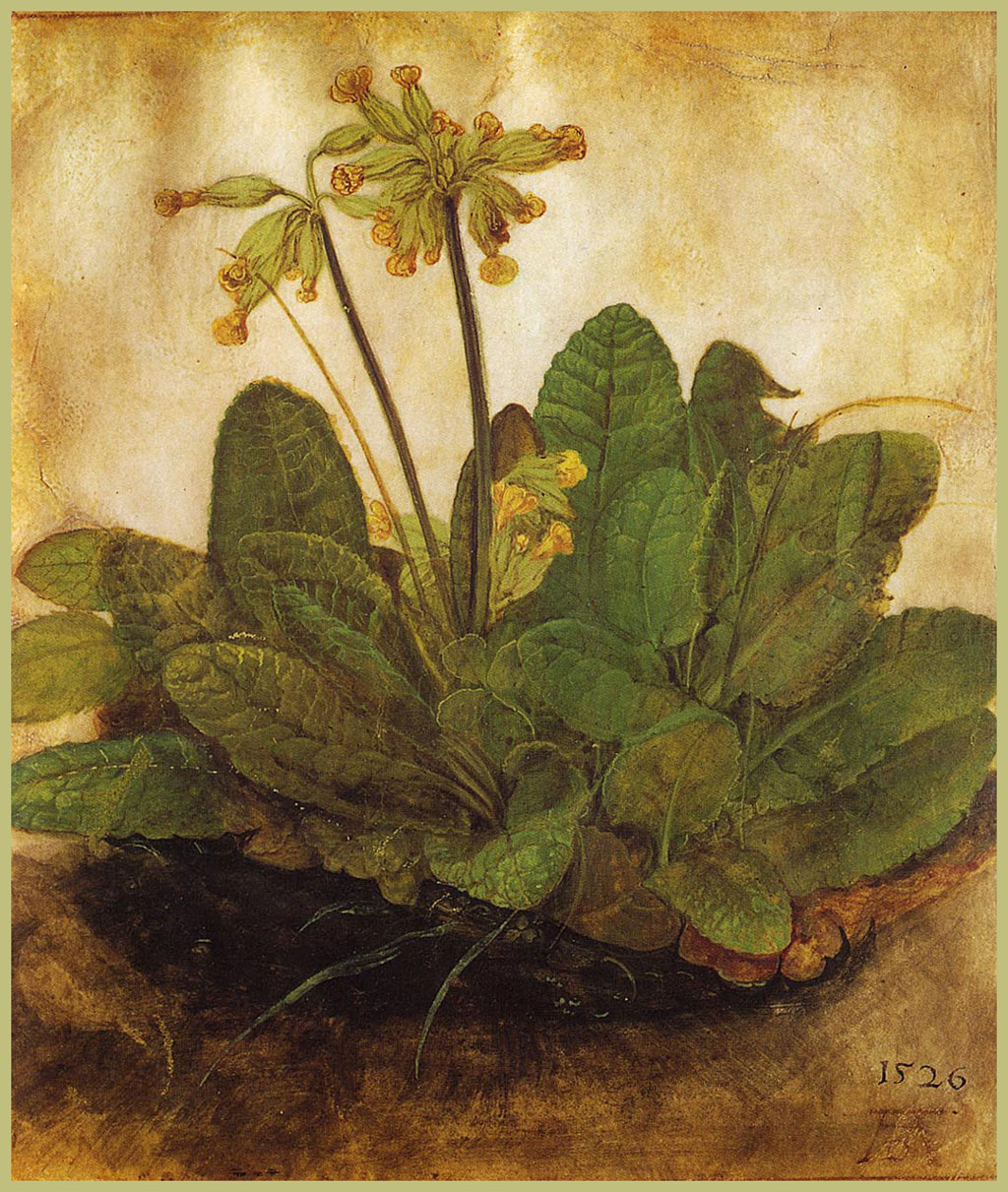
Dürer followed that with some of the earliest botanical watercolours, such as this Primula from 1526. Despite those, few painters showed any interest in the genre.

Some of the Dutch artists who travelled to the Republic’s colonies were exceptions. This is Albert Eckhout’s Study of Two Brazilian Tortoises believed to have been painted in Brazil in about 1640.
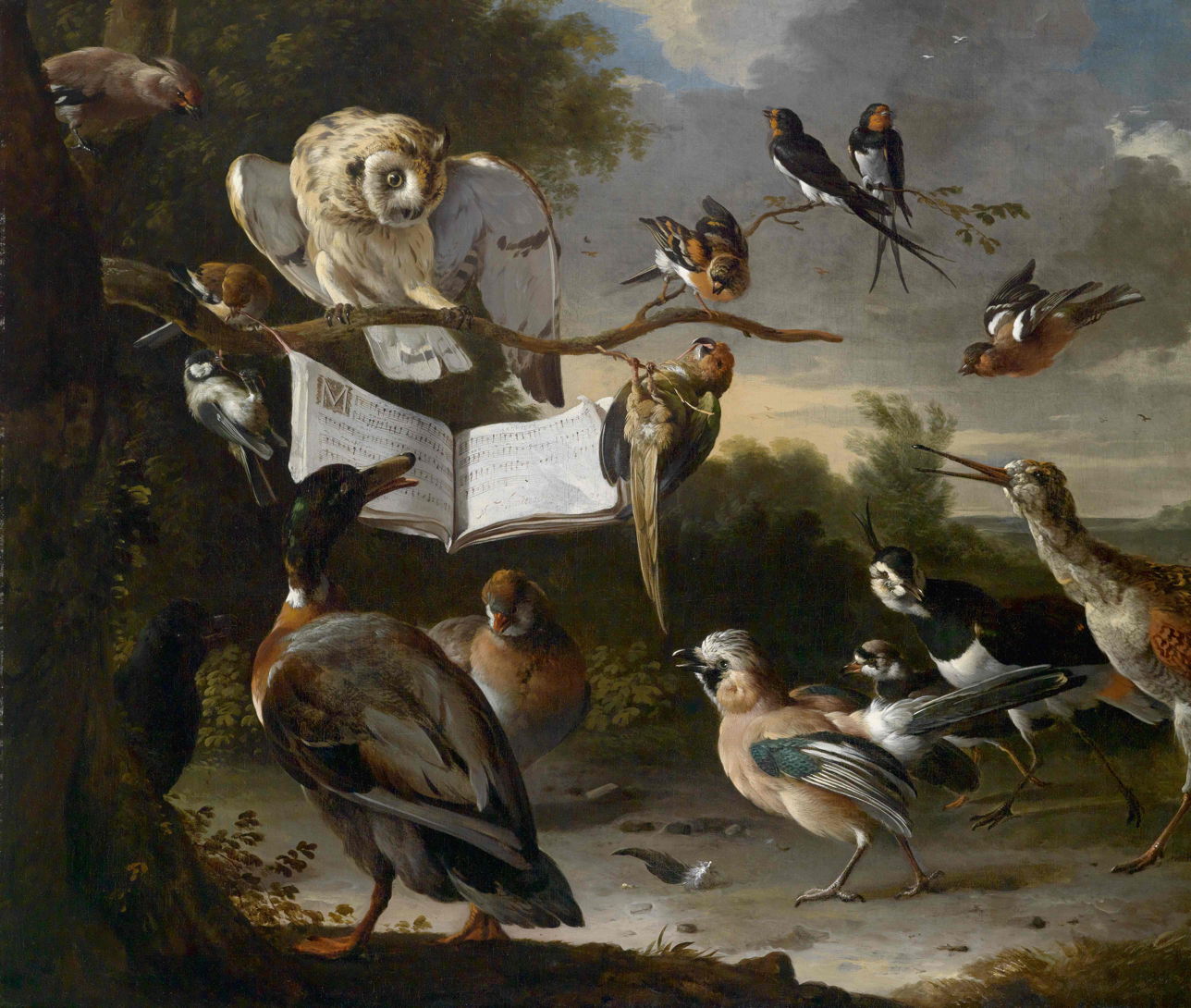
Other painters of the Golden Age set faithful images of native species in more entertaining surroundings, as in Melchior d’Hondecoeter’s Concert of the Birds from 1670. But at that time, animal paintings were largely confined to domestic species.
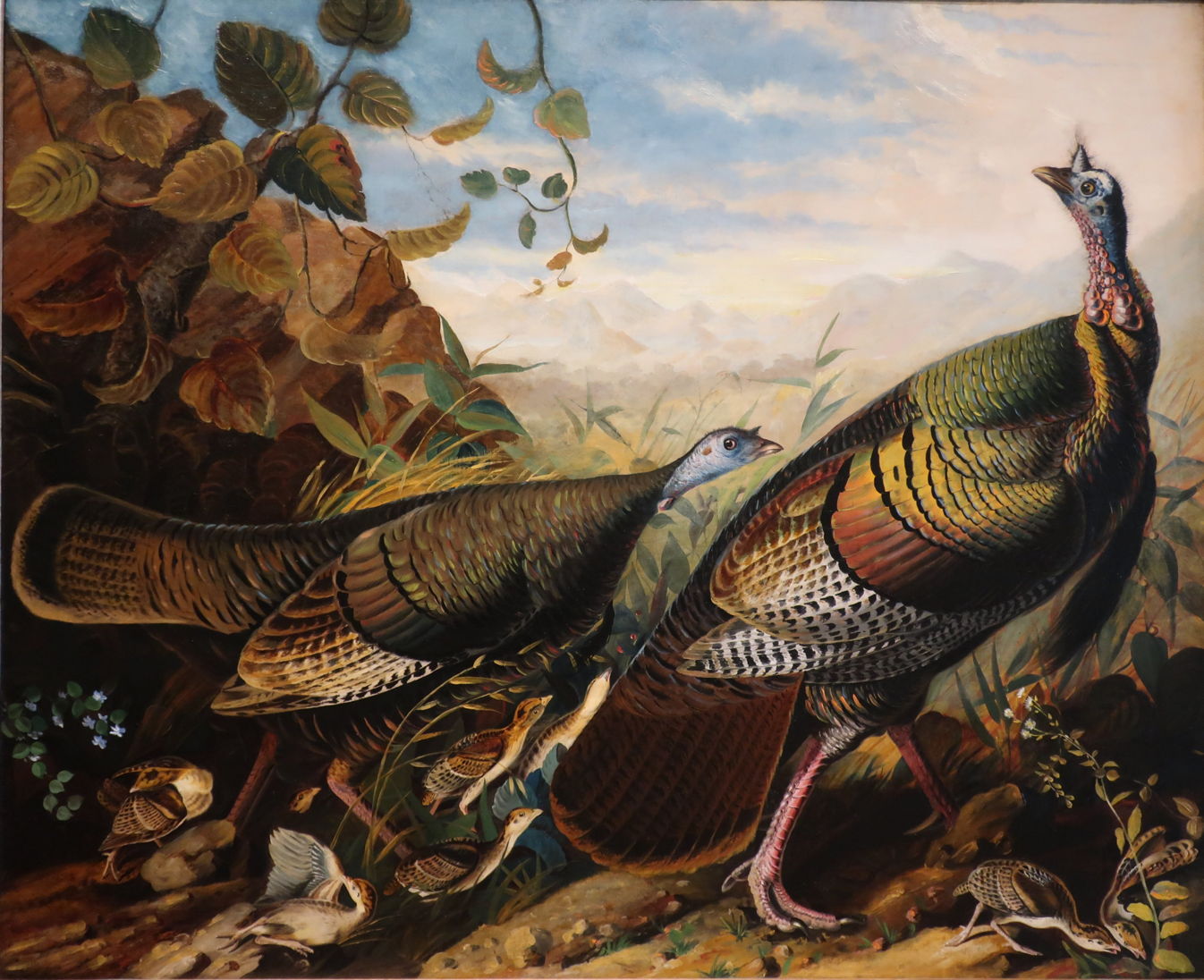
The most famous of the early natural history specialists is John James Audubon, whose paintings of birds were turned into sets of prints. Among his surviving oil paintings is this of a Wild Turkey Cock, Hen and Young (Meleagris gallopavo) from 1826. Although clearly destined for use as an illustration, the setting is intended to appear more natural.
As the century progressed a new, objective style of painting developed in botanical and ornithological work in particular. Artists like Edward Lear illustrated multi-volume scientific publications classifying and describing different species.
Liljefors is one of the pioneers who painted rather than illustrated wildlife, and is revered today as one of the genre’s most influential figures. In this weekend’s two articles I show examples of his paintings that remain some of the finest artistic depictions of wildlife in the history of art.
Bruno Liljefors was born in Uppsala, in the east of Sweden, in the same year as Anders Zorn. He doesn’t appear to have been as precocious a painter, and started his studies at the Royal Swedish Academy of Arts in Stockholm four years later than Zorn, in 1879. He left the Academy after three years, and went to Dusseldorf to learn to paint animals.
In the early years of his career he travelled to Rome, Naples, and Paris, and was particularly inspired by the artists’ colony at Grez-sur-Loing, then dominated by the ideas and style of Jules Bastien-Lepage. Liljefors perfected his plein air painting technique, and became influenced by the Japanese woodcuts that were so popular at the time. He also aligned himself with the ‘Opponents’, a large group of Swedish artists who effectively seceded against the conservatism of the Academy.

During the early 1880s, Liljefors started to paint wildlife set in natural surroundings. Hawk and Black Grouse is a good example of these from 1884, showing a hawk attacking the gamebirds in a winter landscape. Although he had a deep affinity with his subjects, Liljefors was also a hunter, and many of his paintings explore the predator-prey relationship, as here. His hunting also provided him with dead specimens to use as models.

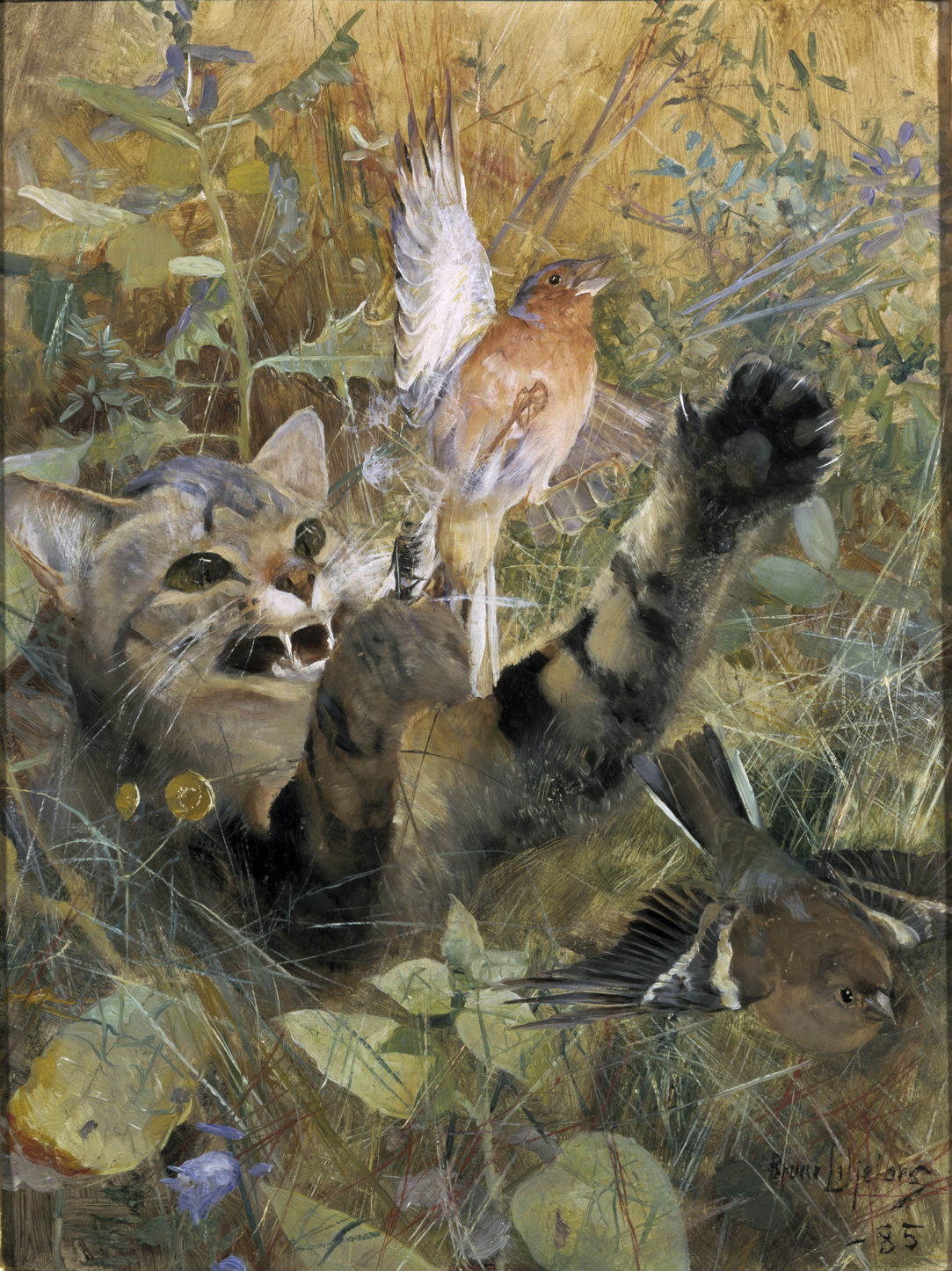
In 1885 he demonstrated his virtuoso skills in what he described as ‘five studies in a single painting’. Above is A Cat with a Young Bird in its Mouth, and below is A Cat and a Chaffinch. These were assembled from observations of living and dead animals and birds, and sketches, to produce composites that photography couldn’t match for decades, even in monochrome.

Following the tradition established by Dürer, one of Liljefors’ favourite species was the elusive hare. This page of Hare Studies from 1885 shows a tiny part of the image library he assembled, as well as the spring antics of hares. Liljefors also assembled his own wildlife park, with living and apparently quite tame creatures, including foxes, badgers, hares, squirrels, weasels, an eagle, eagle owl, and others.

The fox appears in many of Liljefors’ paintings, here A Fox Family (1886) in their role as predators, as they feast on an unfortunate bird.
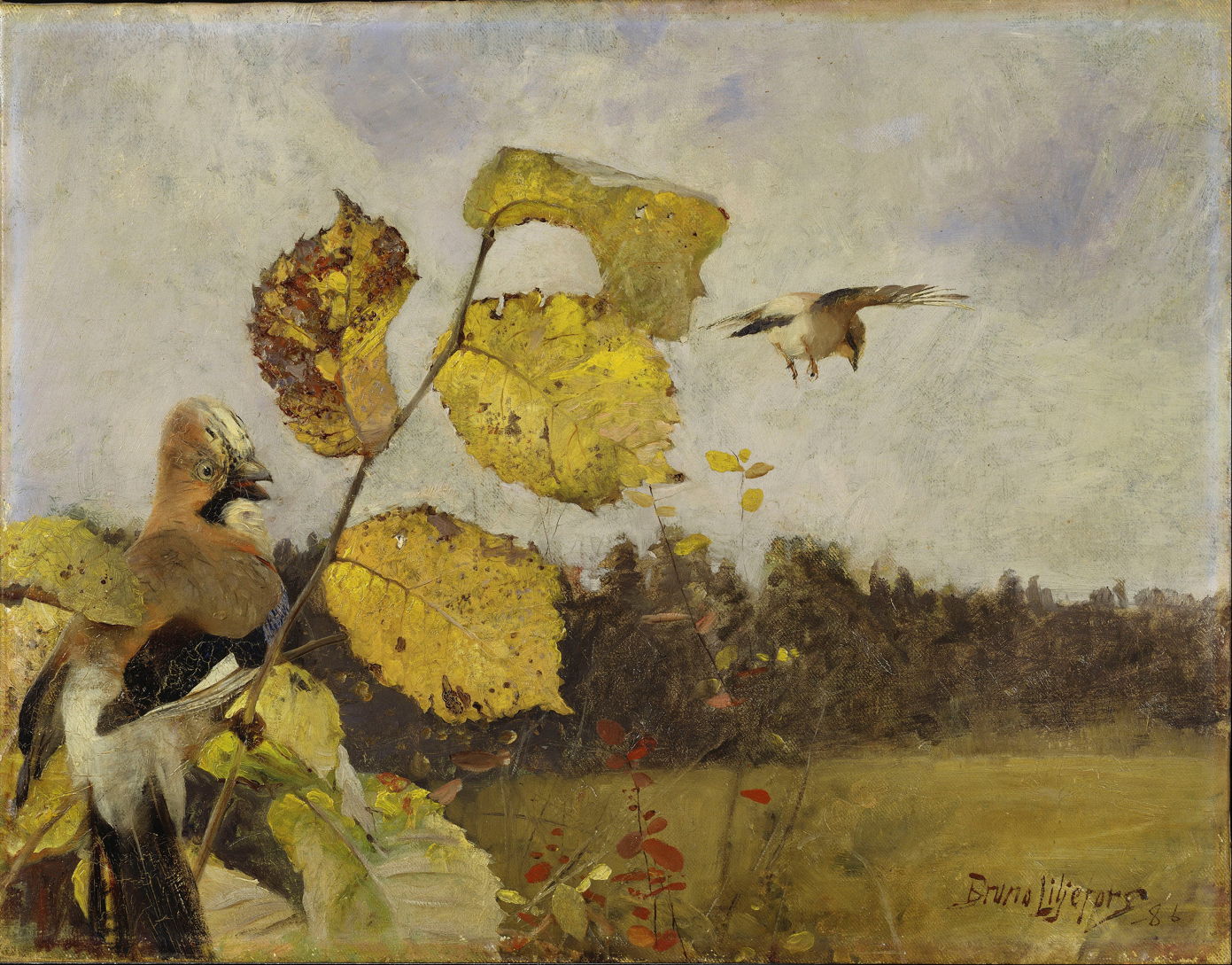
Liljefors’ paintings are often painterly, such as in Jays (1886) which gives the impression of having been painted en plein air, in front of the birds and landscape.

Even for the modern amateur photographer, the fleeting form of Common Swifts (1886) is a great challenge. Set against a riot of flowers, these birds are the product of field observation, museum specimens, and careful studies, to make them look real.
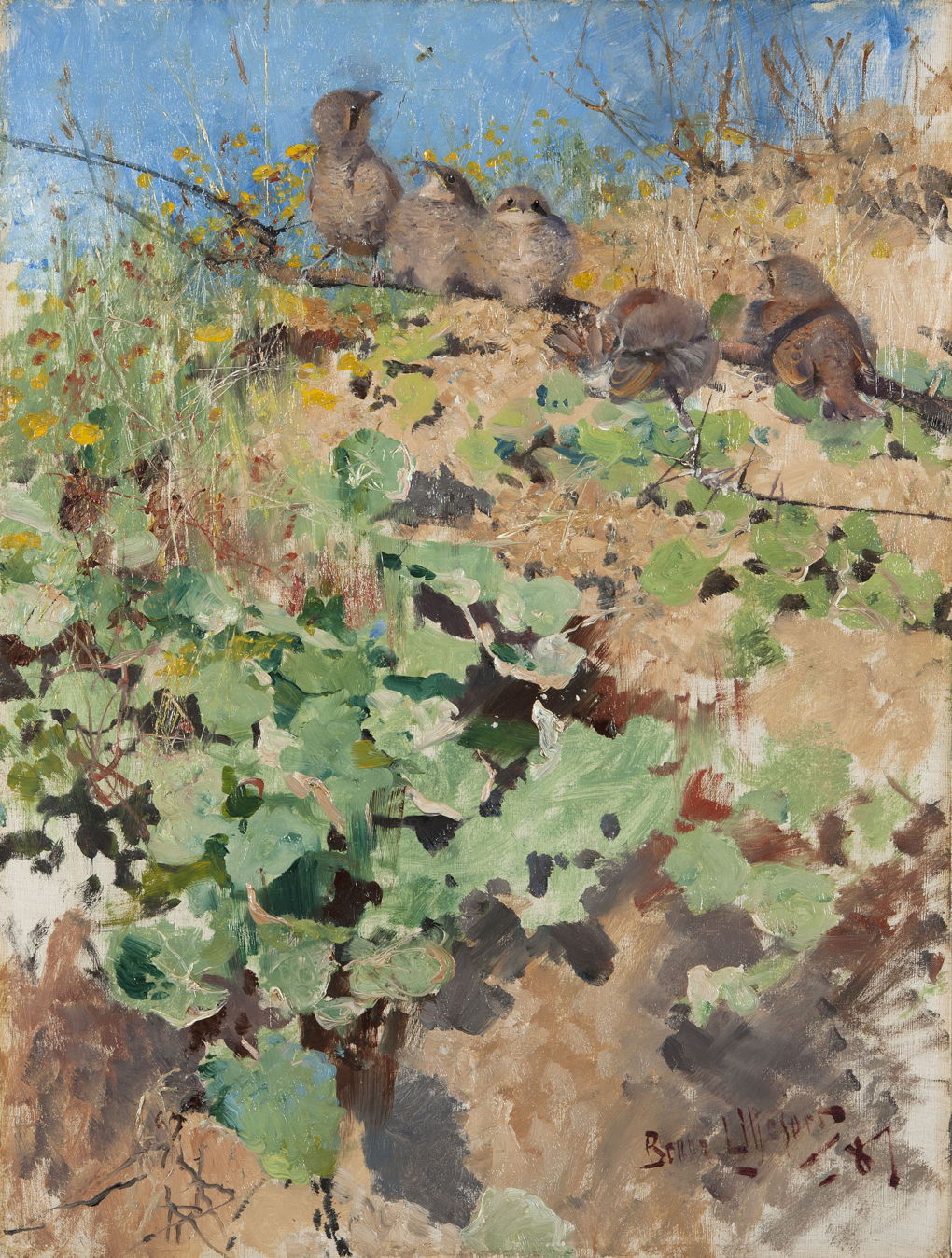
Liljefors had deep insight into the behaviour of species he painted. The five Red-Backed Shrike Chicks (1887) shown here may not, at first sight, appear in keeping with their popular name, the ‘butcher bird’, but the chick at the left end of the branch is already taking an interest in a passing bee or fly. When a little older, it will catch it and impale the corpse on thorns in its larder.
 The Eclectic Light Company