

By 1910 the streets of Berlin were becoming increasingly crowded with motor taxis, and the Post-Impressionist artist Lesser Ury (1861–1931) was still in search of his perfect motif on those streets.
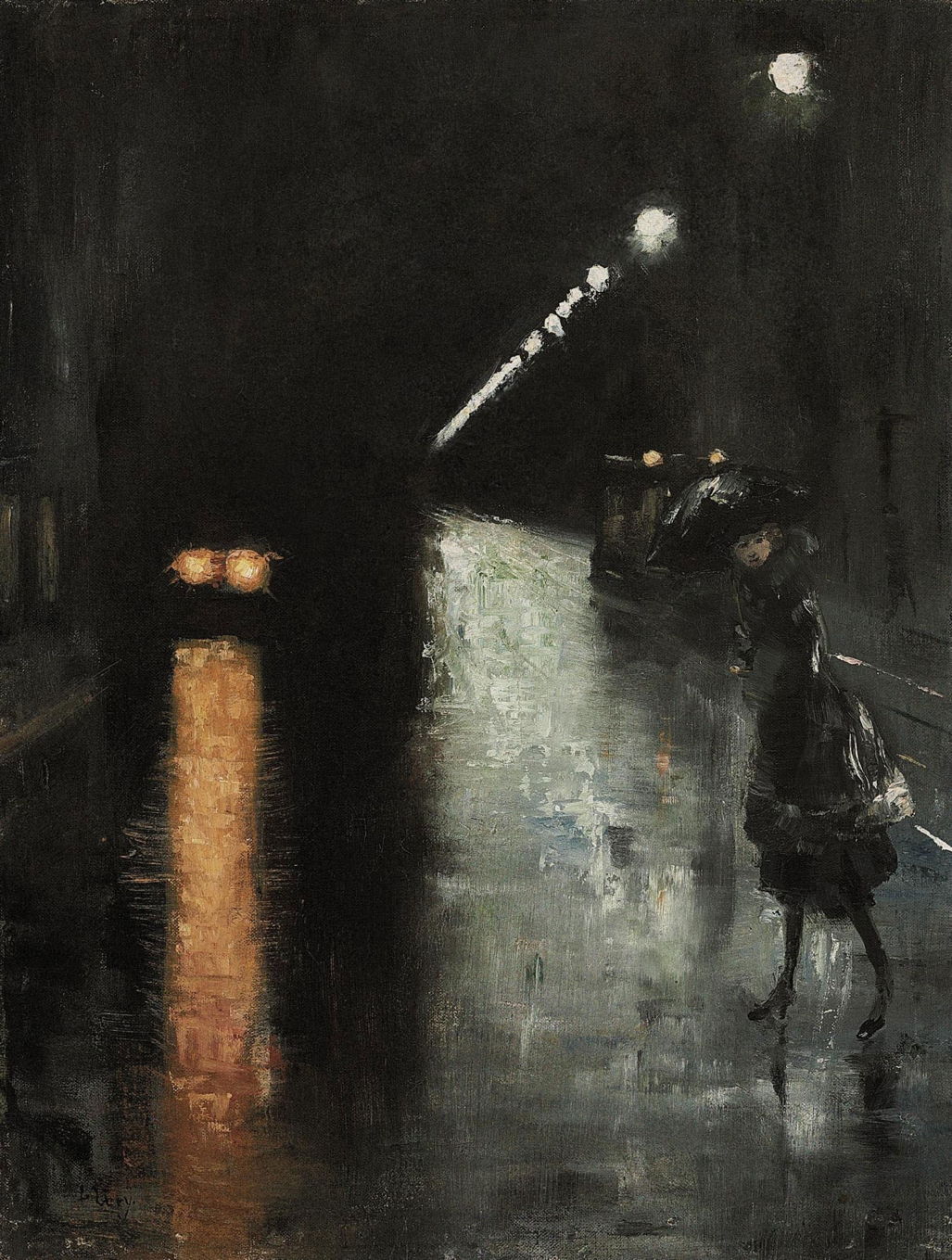
In about 1920, Ury struck gold in this Street Scene at Night, Berlin, believed to show Leipziger Straße. Its nighttime setting brings simplification of the motif by the dark, and it has lost the symmetry that had made his paintings of avenues too formal.
In 1922, there was a major exhibition of Ury’s works in Berlin, but following that he became increasingly reclusive.
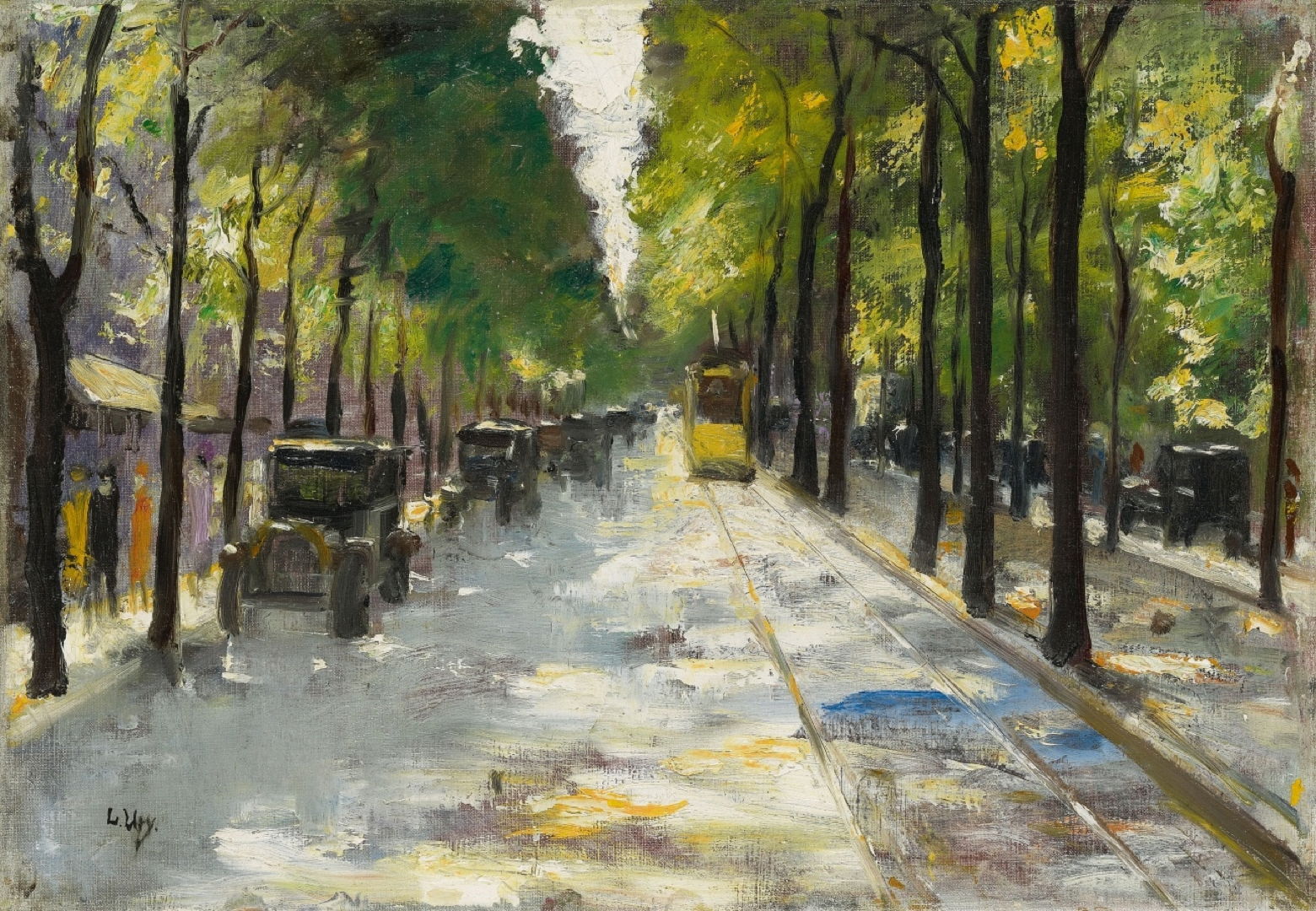
In the 1920s, when he painted this view of a Berlin Street in Sunshine, motor taxis and trams had taken the streets over. Berlin had started operating the first electric trams in the world in 1881, and its first elevated lines were opened in 1902, by which time most of the city’s tram network was powered by overhead electric lines. Here Ury introduces patches of unexpected colour in the splashes and pools of yellows and blues on the street.
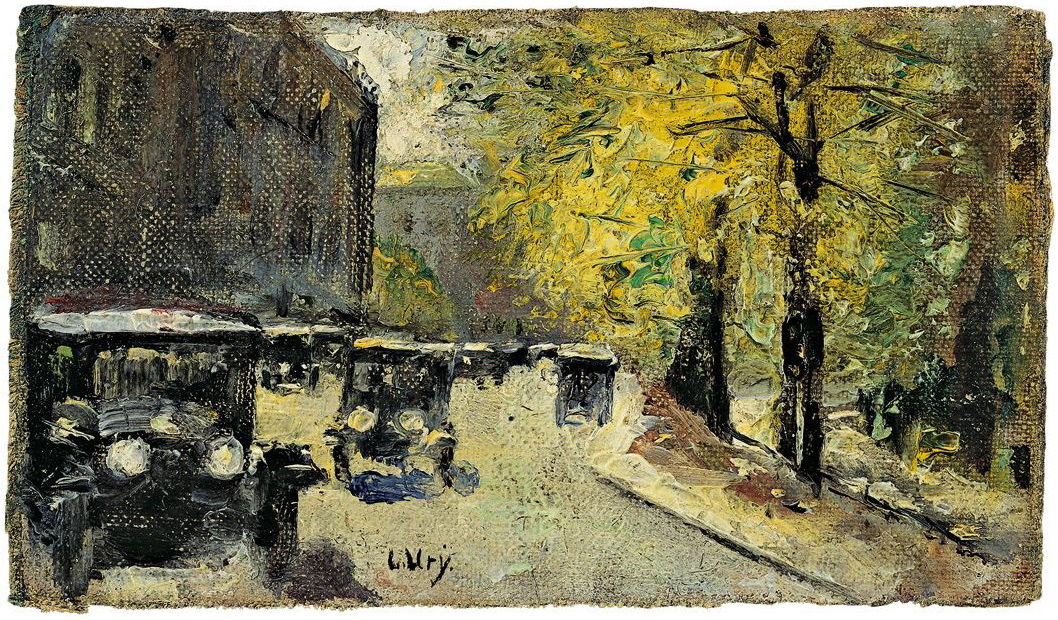
Street in Tiergarten shows the roads becoming crowded with the new motor taxis, in this tiny plein air oil sketch.
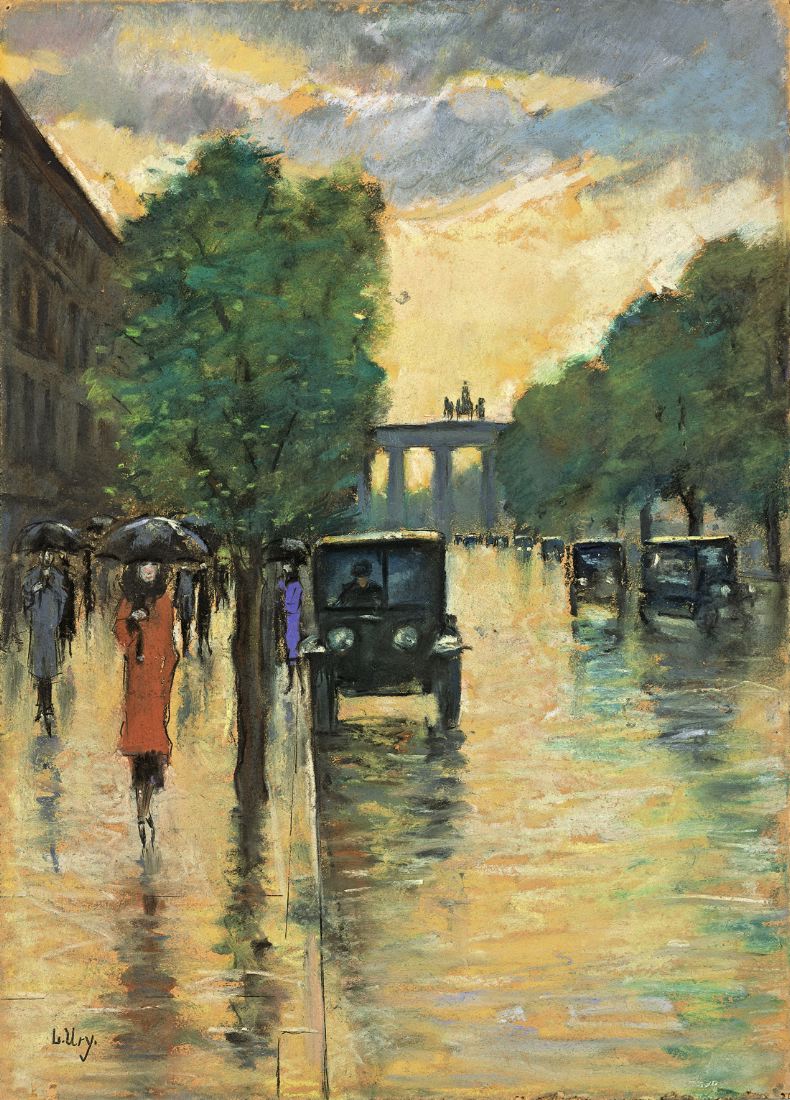
These new motor vehicles were more readily simplified almost to silhouettes, as seen in this pastel of Unter den Linden with View of The Brandenburger Gate from the 1920s. This is at the western end of Unter den Linden and shows the edge of the Tiergarten on the far side of the Gate.
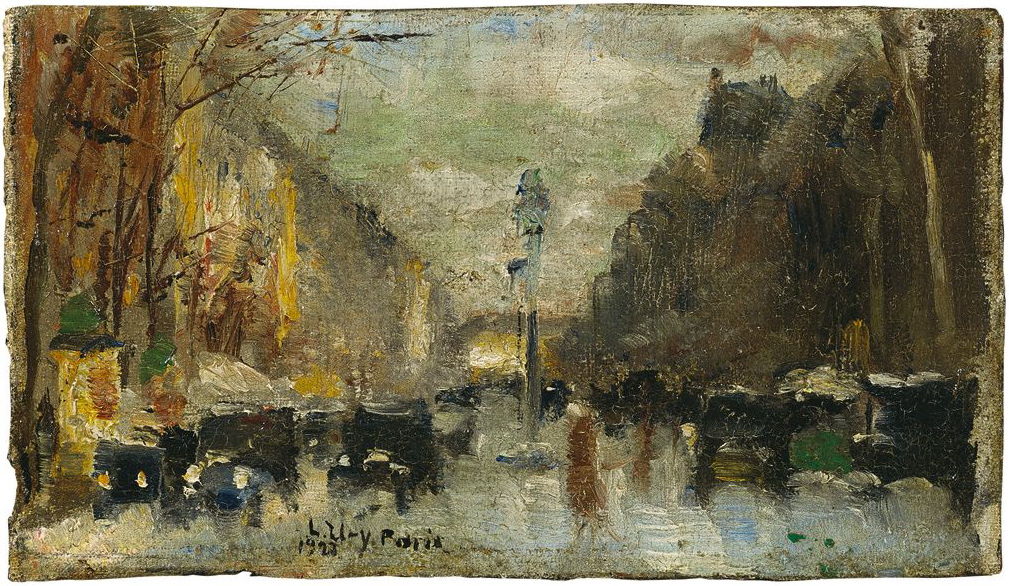
Boulevard in Paris (1923) is a small oil sketch painted during one of Ury’s visits to France, with even more gestural depiction of its motor taxis.

Nollendorfplatz Station at Night from 1925 is a masterly oil sketch of this busy railway station to the south of the Tiergarten, in another of Berlin’s shopping districts.

In this view of London in Fog from 1926, Ury looks across the River Thames with the street lights lit on its multiple bridges. I suspect that this looks south to the Elephant and Castle from the Embankment, on the northern bank of the river.
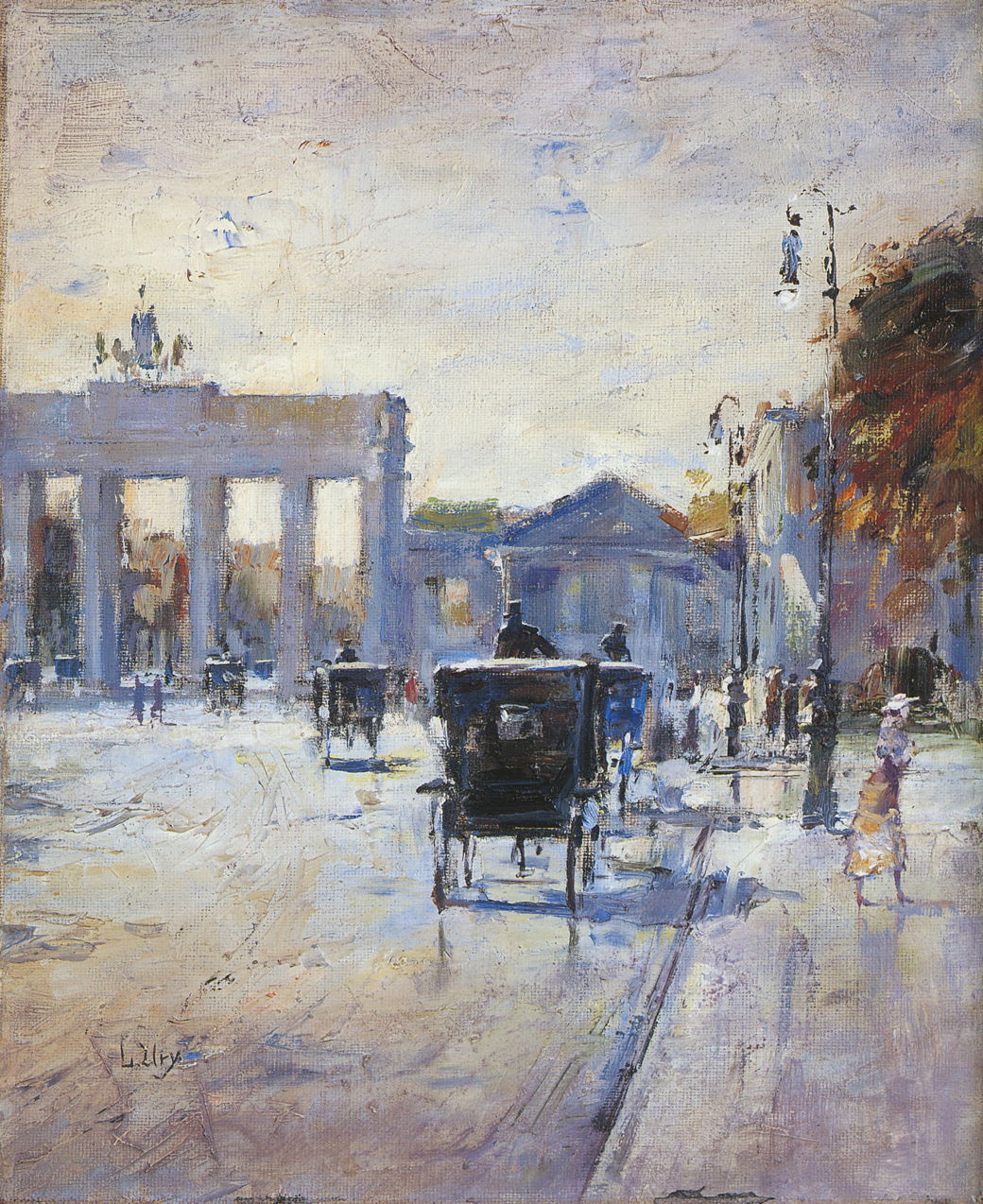
Among the last of his city views is this of Pariser Platz in Berlin, from about 1930. This is by the Brandenburger Tor at the western end of Unter den Linden, just as the leaves on its lime trees start to turn golden brown with the arrival of autumn.
Lesser Ury died in Berlin on 18 October 1931. Given the rise of Nazism followed by the Second World War, it’s remarkable that any of his paintings have survived.
 The Eclectic Light Company