
Mountain ranges form natural barriers to the movement of animals, birds and humans. Finding the best route through the mountains is a major challenge, one that people have risen to since long before recorded history. Here are some paintings of mountain passes and a representative range of travellers.
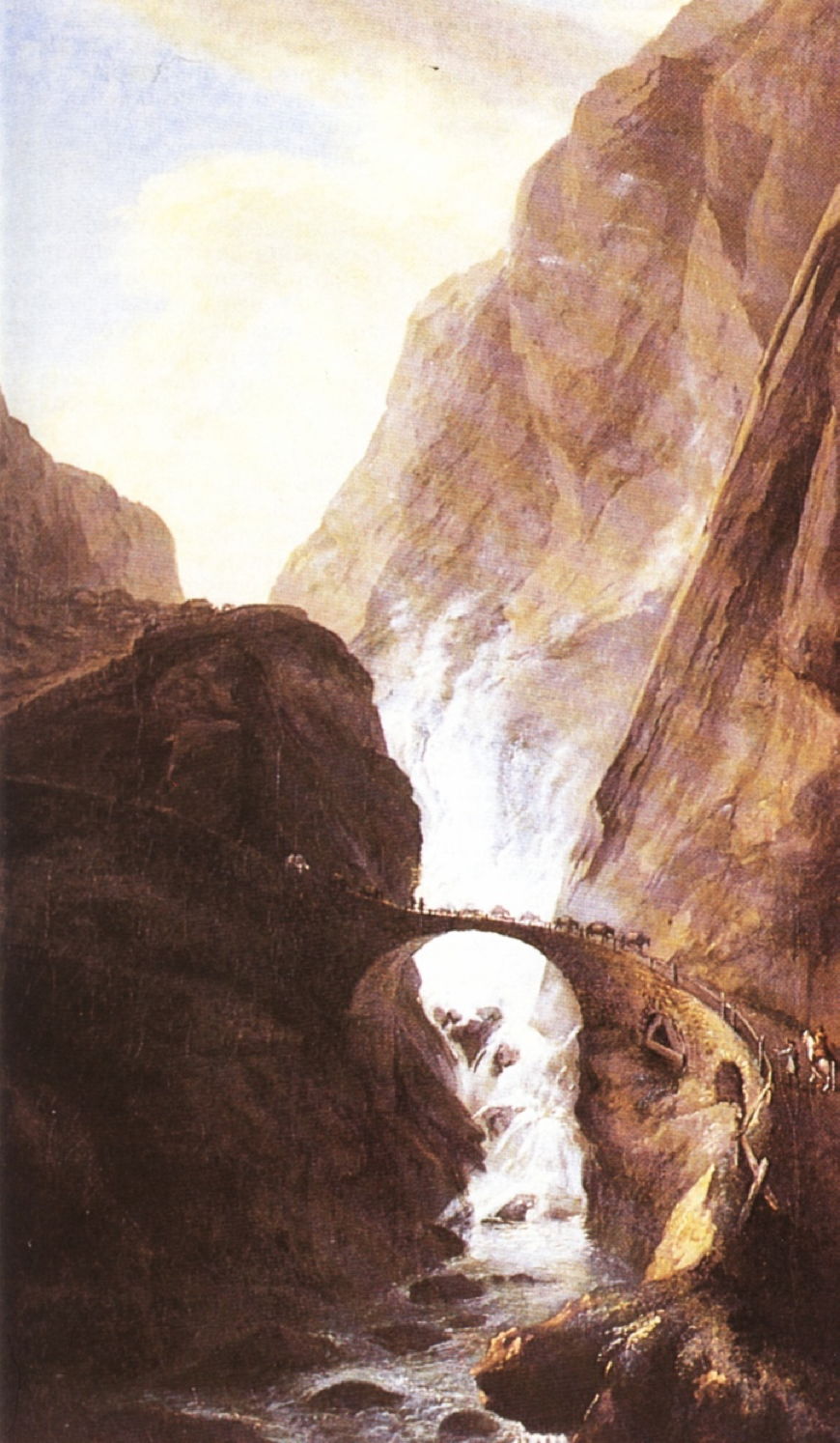
One of Caspar Wolf’s most popular paintings was this view of the Devil’s Bridge in the Saint Gothard Pass, from 1777. This connects northern and southern Switzerland, and the bridge across the Schöllenen Gorge was first built in wood in around 1220. It probably wasn’t replaced by a stone bridge until the seventeenth century, and by 1775 it had become wide enough to allow passage of the first carriage. The river here is the upper Reuss, and has consumed a few who came to grief during their crossing of the gorge. This bridge was also famously painted more romantically by JMW Turner.
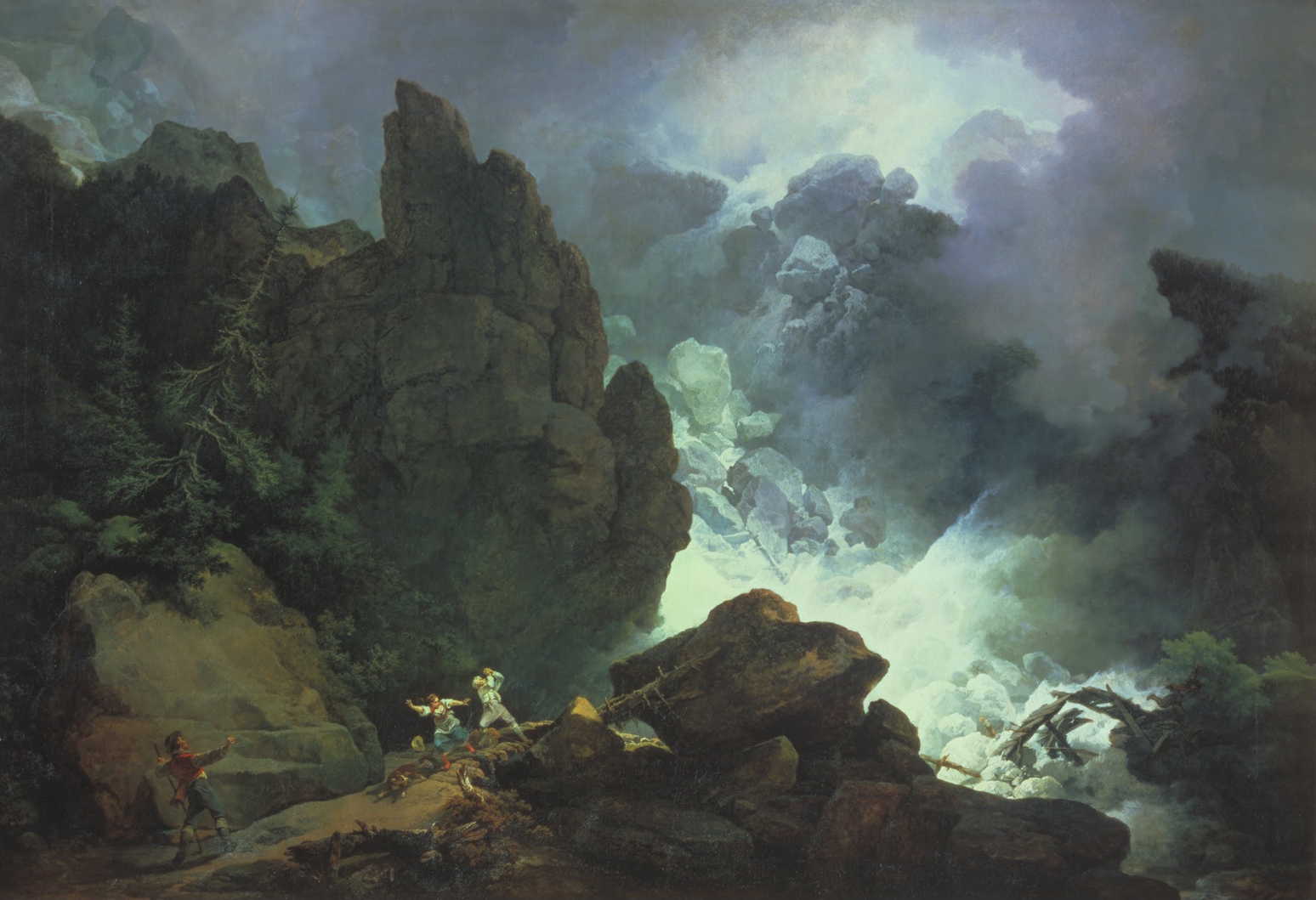
Philip James de Loutherbourg, better known for his views of the industrial revolution in England, captured one of the hazards of passes in An Avalanche in the Alps (1803). A huge torrent of ice and rock boulders is still passing diagonally across the painting at the instant shown. This has swept away a wooden bridge, fragments of which are seen engulfed in ice. Three people are seen on the undamaged section of road; each is posed to add to the dramatic effect, one clearly praying to the heavens; animals are also trying to flee to safety.
Among those who used passes to great advantage were army generals, who have surprised their victims by crossing mountains that were considered impassable.

One of JMW Turner’s most radical early works, showing Snow Storm: Hannibal and his Army Crossing the Alps (1812), must have been influenced by the artist’s own firsthand experience of crossing Alpine passes. This is also radical in that the famous elephants are downplayed almost to the point of being invisible under Turner’s extraordinary storm sky. In fact, in the centre foreground, under a scarlet sheet, is what appears to be the black form of an elephant lying on the ground.

In early 1800, Napoleon made moves to reinforce French troops in Italy, so that they could repossess territory lost to the Austrians in recent years. Leading his Reserve Army, he crossed the Alps via the Great St Bernard Pass in May, and his troops fought their first battle at Montebello on 9 June. Paul Delaroche was commissioned to paint a more faithful account of this than that of Jacques-Louis David. His Napoleon Crossing the Alps from 1850 does at least mount the emperor on a mule, the only mount capable of carrying him in these conditions, but it’s still a good way from the truth. Napoleon’s face is bare, his left hand uncovered and resting on the pommel of his saddle, and he’s wearing a thin cloak and thin riding breeches.

By July of 1833, the explorer Godfrey Thomas Vigne had reached Hazar Chum Mazenderan – Persia, in mountains midway between the port of Chalus on the Caspian Sea and Tehran in Iran. Layers of low cloud create a spectacular effect as the distant mountain ridges float in the sky high above this gorge cut deep by the River Chalus. This pass is now known as the Chalus Road, and one of the busiest long-distance routes in Northern Iran.

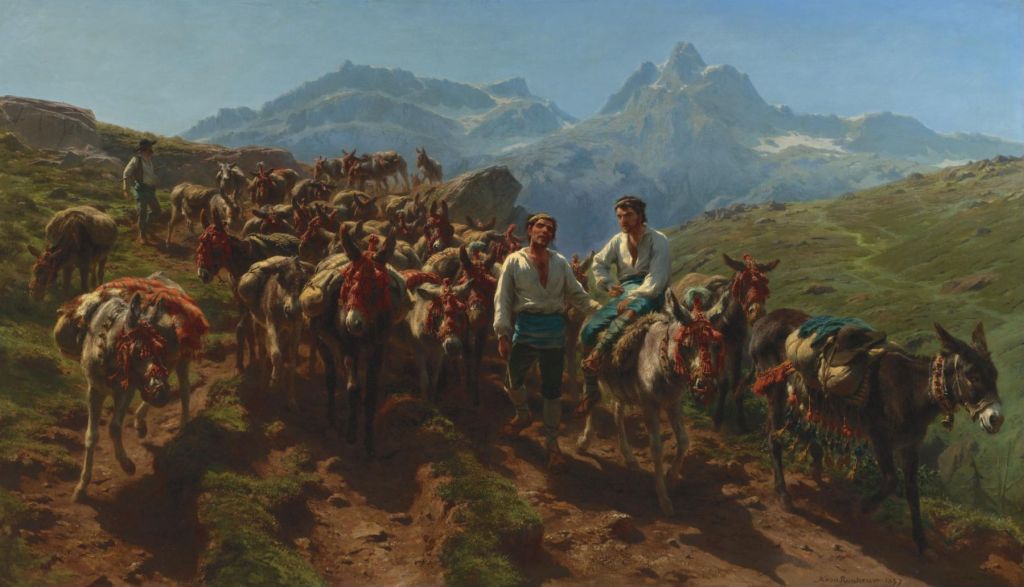
Although dominated by the mules themselves, Rosa Bonheur’s Spanish Muleteers Crossing the Pyrenees (1857) incorporates one of her most spectacular landscapes, which she may have painted in collaboration with her father. Mules like these were an important means of trade over the Pyrenees at the time, via traditional routes over passes that have been used by animals and humans for millennia.
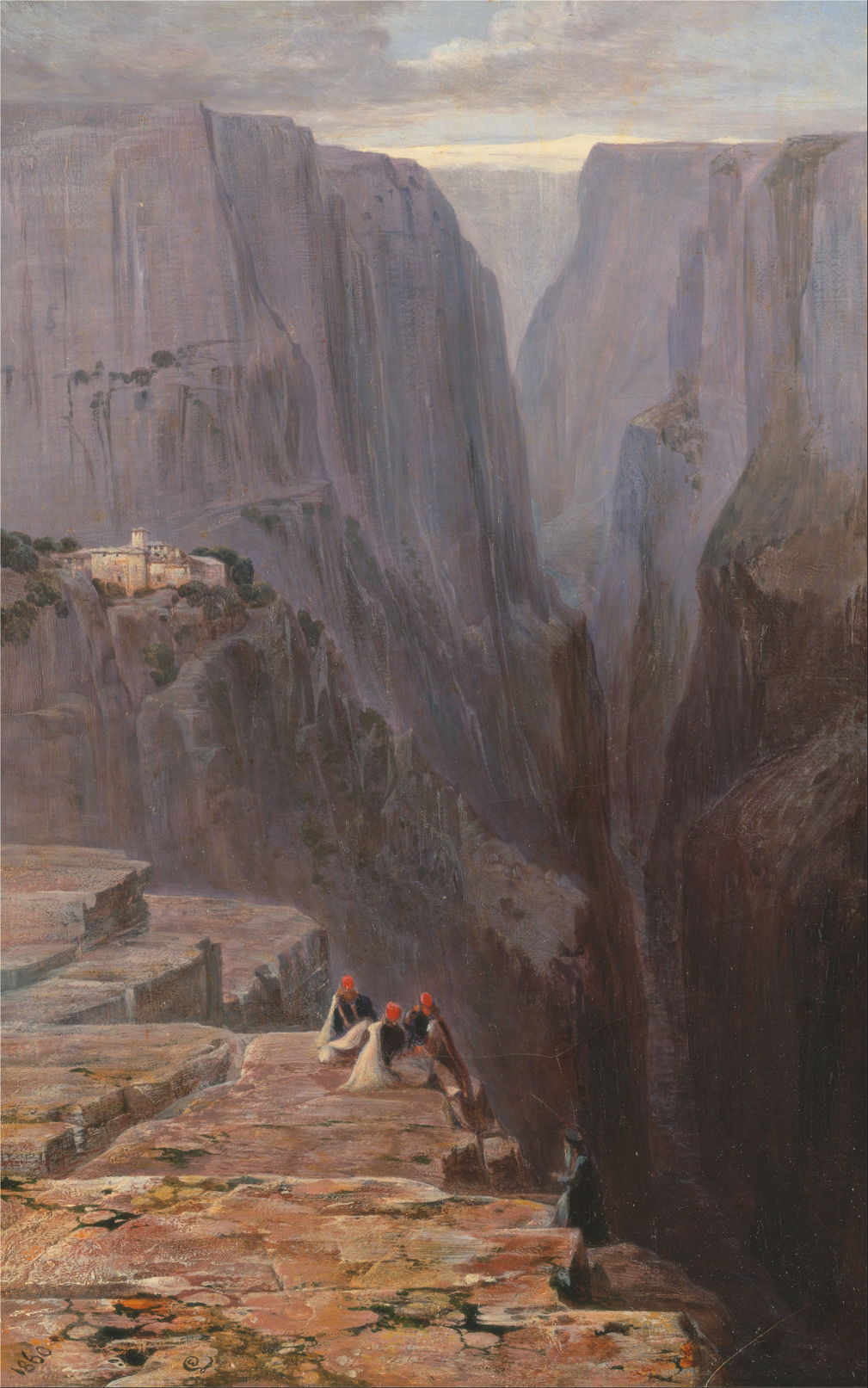
Edward Lear was an extraordinary traveller who loved dramatic scenery, as shown in his view of the Pindus Mountains in Zagori, Greece, painted in 1860. This is part of the spectacular Vikos Gorge, 32 kilometres (20 miles) long and carved deep through the limestone of the southern slopes of Mount Tymphe.
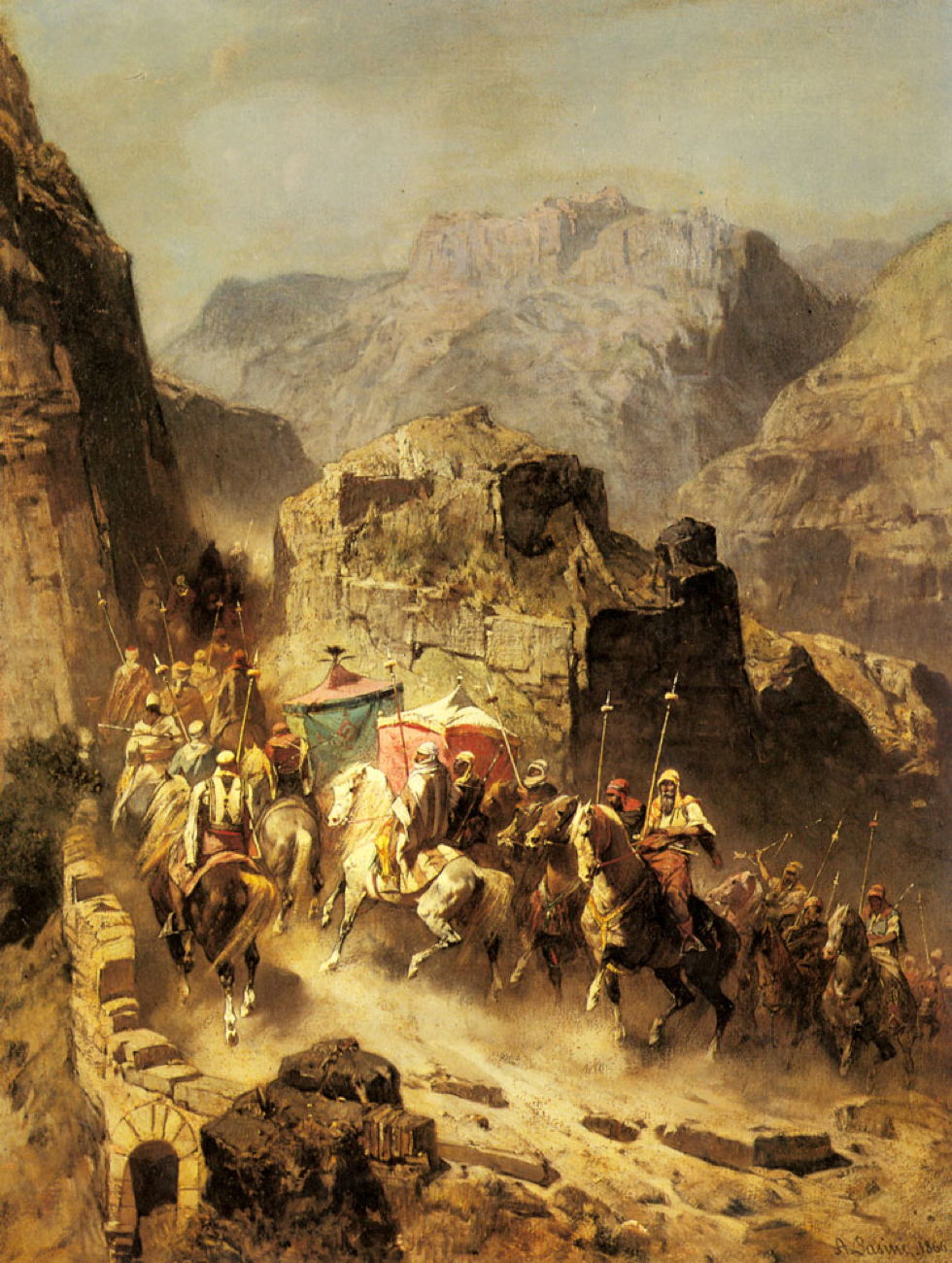
Alberto Pasini’s painting of an Arab Caravan from 1866 shows a large caravan negotiating a pass among rugged mountains, probably in Turkey or the Middle East.

Arkhyp Kuindzhi’s Darial Pass. Moonlit Night, painted following a visit in 1890-95, shows a section of this 13 kilometre (8 miles) long Military Road connecting Russia and Georgia in the tranquil conditions of summer. This gorge runs north-south through the Caucasus Mountains, and has seen extensive use by armies and traders.
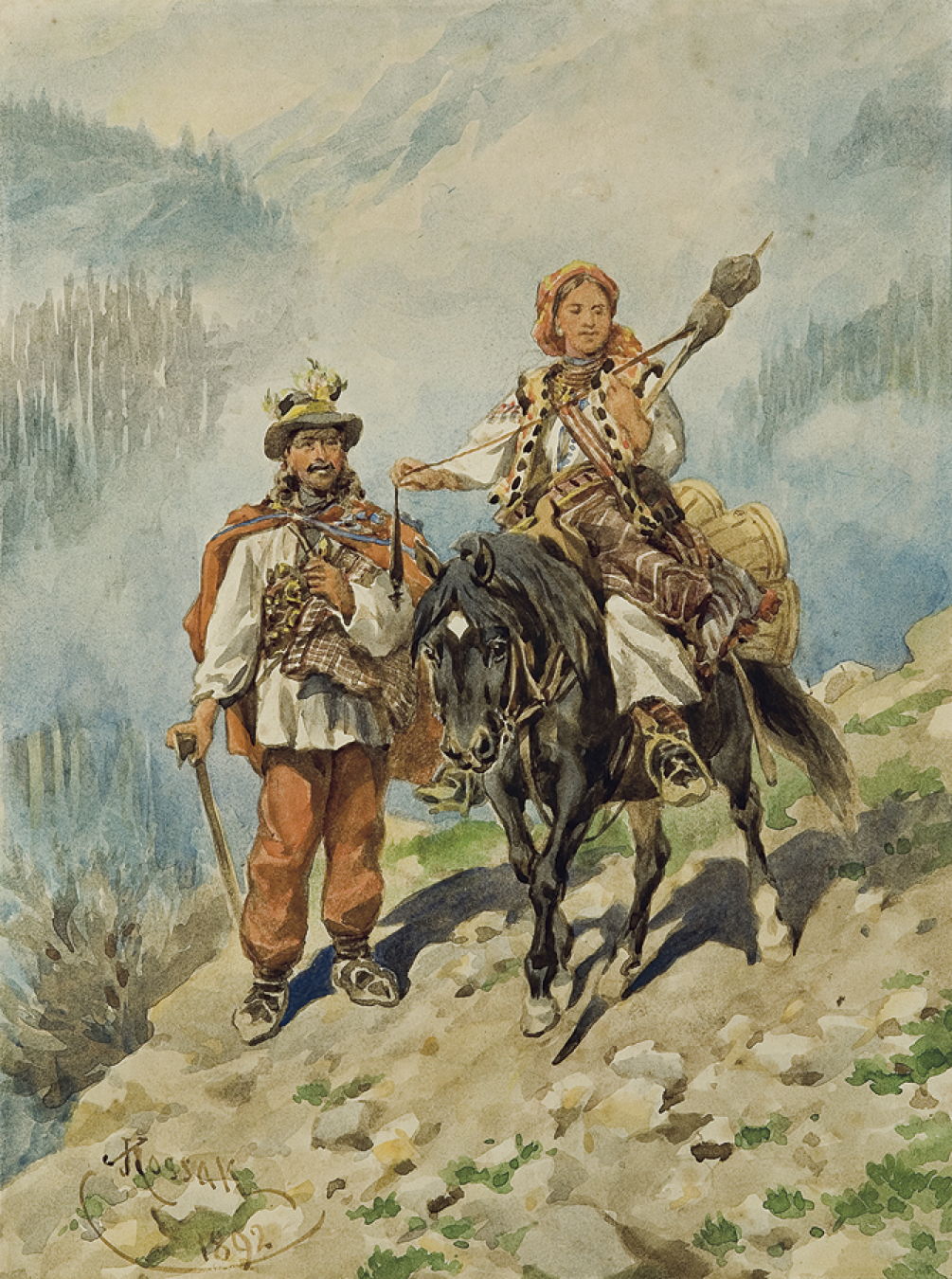
Juliusz Kossak’s watercolour painting shows two Hutsul Travelling (1892) in rugged terrain in the Carpathians. The woman is so skilled at spinning that she’s able to work while riding in the mountains.
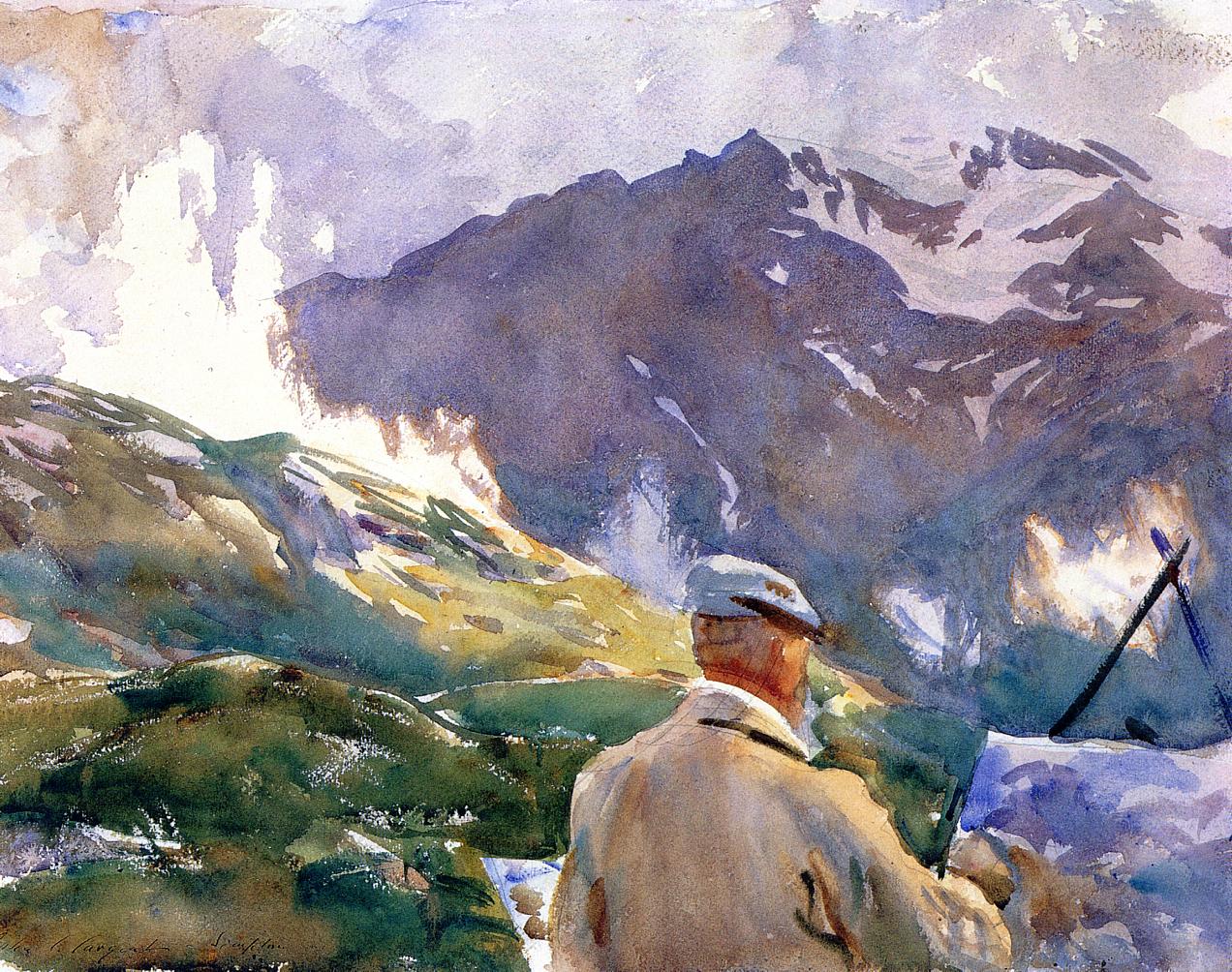
Finally, during the nineteenth century affluent travellers in Europe discovered how pleasant the summer climate can be in Alpine passes. John Singer Sargent met up with the painter Ambrogio Raffele when he returned to the Alps during the summers of 1909 to 1911, and painted this watercolour of him as an Artist in the Simplon at some time in those years. Raffele is painting a view of the Fletschhorn, to the south-west of the Simplon Pass.
 The Eclectic Light Company